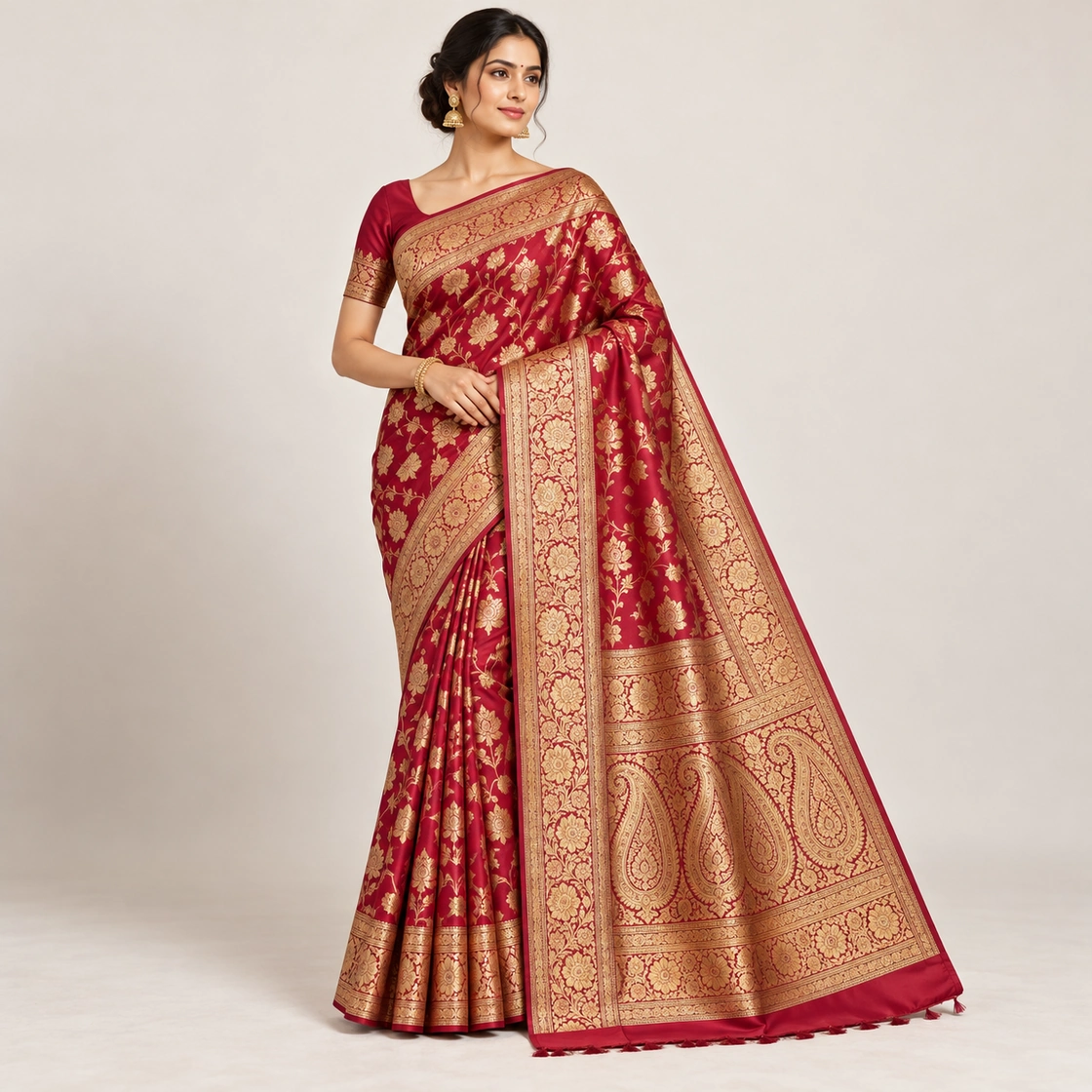
A LIKE-FOR-LIKE COMPARISON
Compare Side by Side
Pick a category, then choose two different entries from it to see them side by side: two saree traditions, two fabrics, or two motifs or techniques. Comparing like with like keeps the differences meaningful.
SELECT A CATEGORY FIRST
Showing two saree traditions.
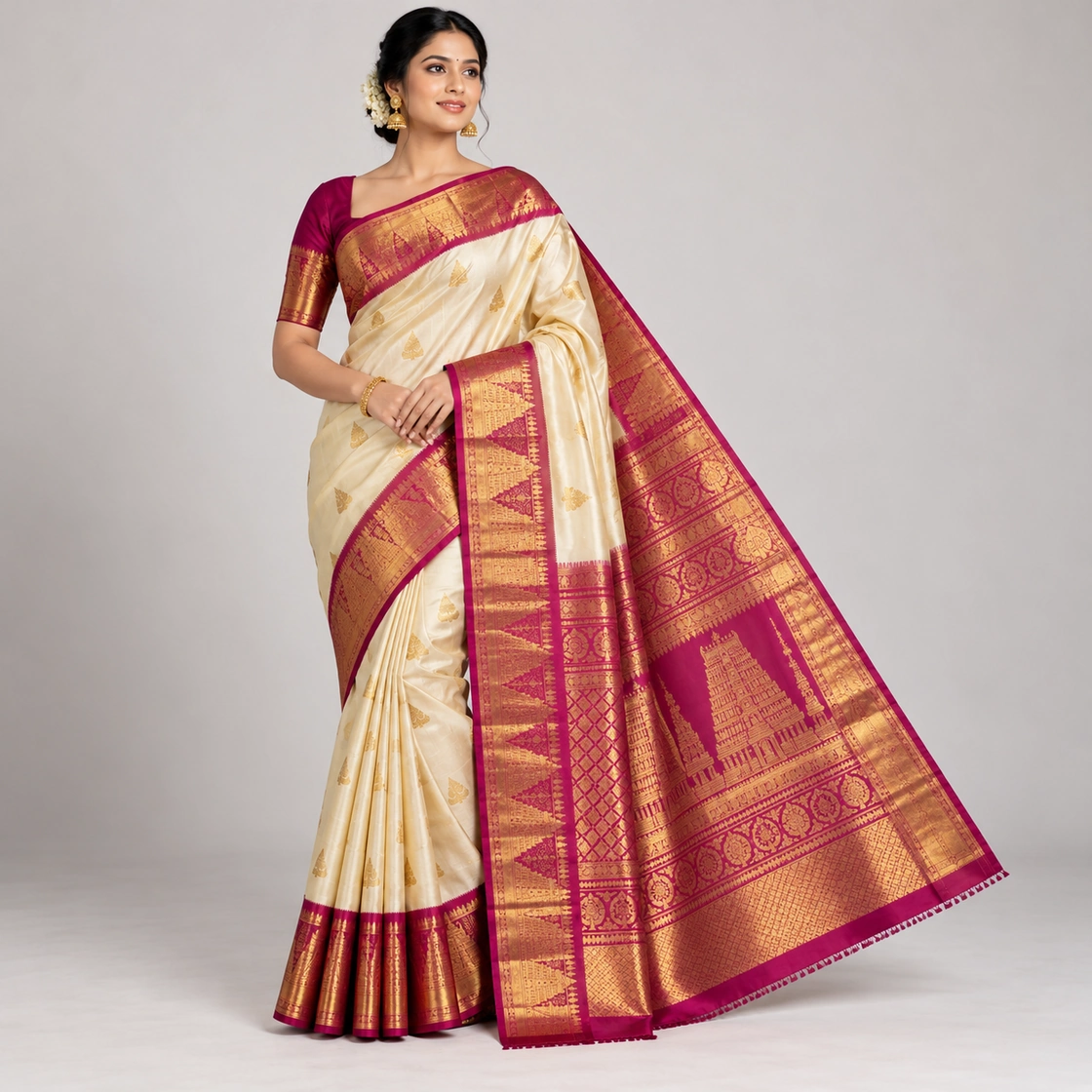
Compare the essentials
| Attribute | First selection | Second selection |
|---|
How to read this table. Each row describes a tradition, fabric or motif in general, not the particular saree in front of you. A shared look is a good reason to ask questions, but it cannot confirm fibre, handweaving, origin or certification, so for a purchase compare the seller’s written specifications. Two saree rows need a little more care. GI relationship: a Geographical Indication protects a regional name for its authorised producers; it does not certify an individual saree. Where a registry link appears, open it to see exactly what is registered or still under application. Indicative price band: a broad, provisional budget dated October 2026 for the grade described in that saree’s full entry (fibre, weave, zari and workmanship). It is not a quotation, a valuation or a sign of handloom origin, and two bands are only comparable for sarees of a similar grade.
Want help telling look-alikes apart? Walk through the illustrated look-alike comparisons, or take the questions for the seller with you when you shop.