Ten examples of showroom language, followed by three realistic buyer–seller situations and the questions that matter.
THE SAREE ATLAS · ILLUSTRATED REFERENCE
Reading showroom descriptions
Read the language of a saree showroom
Saree descriptions often combine material, motif, regional tradition and embellishment terms in a single phrase. The following examples separate those meanings.
“It's a pure Katan silk saree with a zari border.”↗
ILLUSTRATED STUDY
Katan + zari: two different claims
“It's a pure Katan silk saree with a zari border.”
1
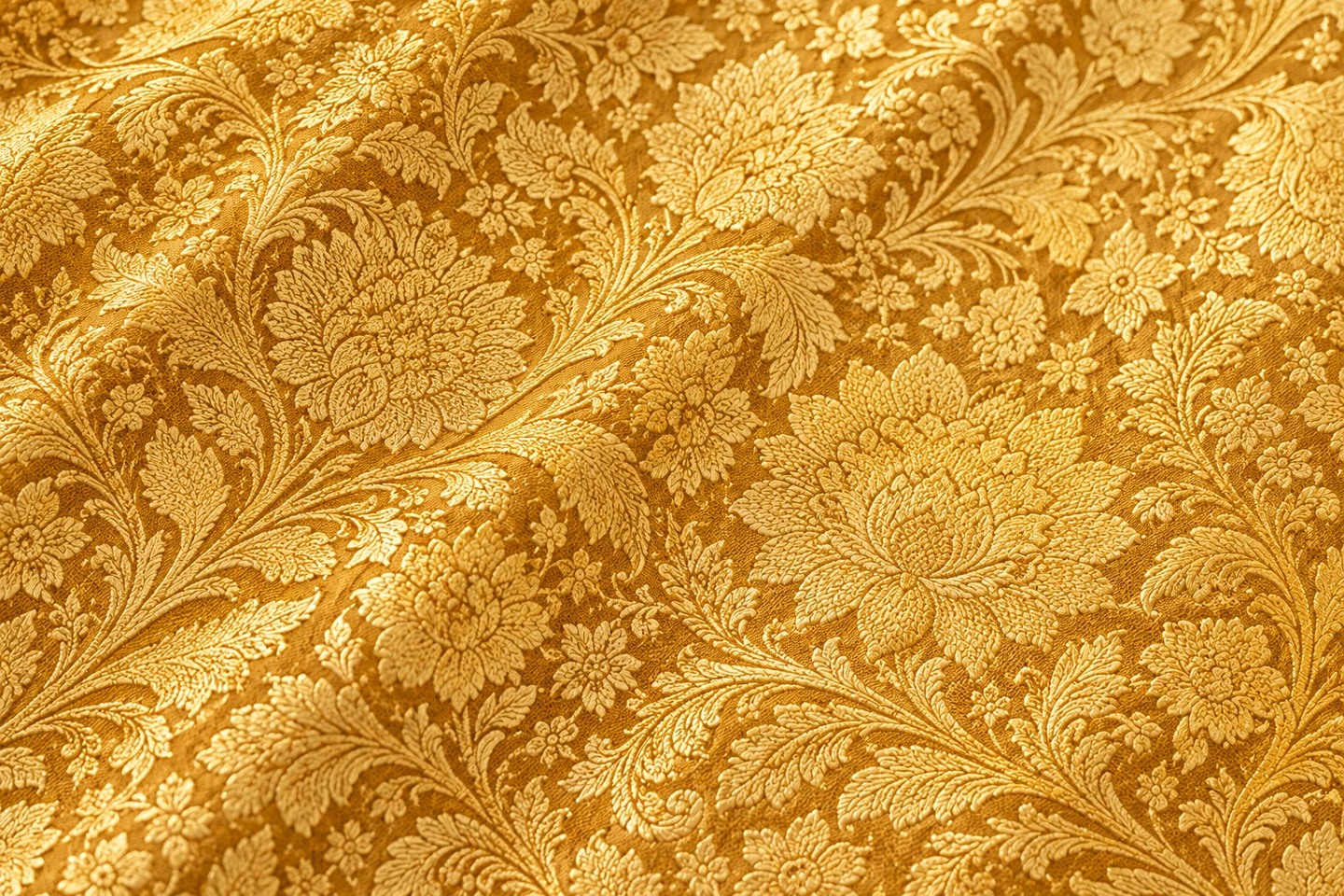
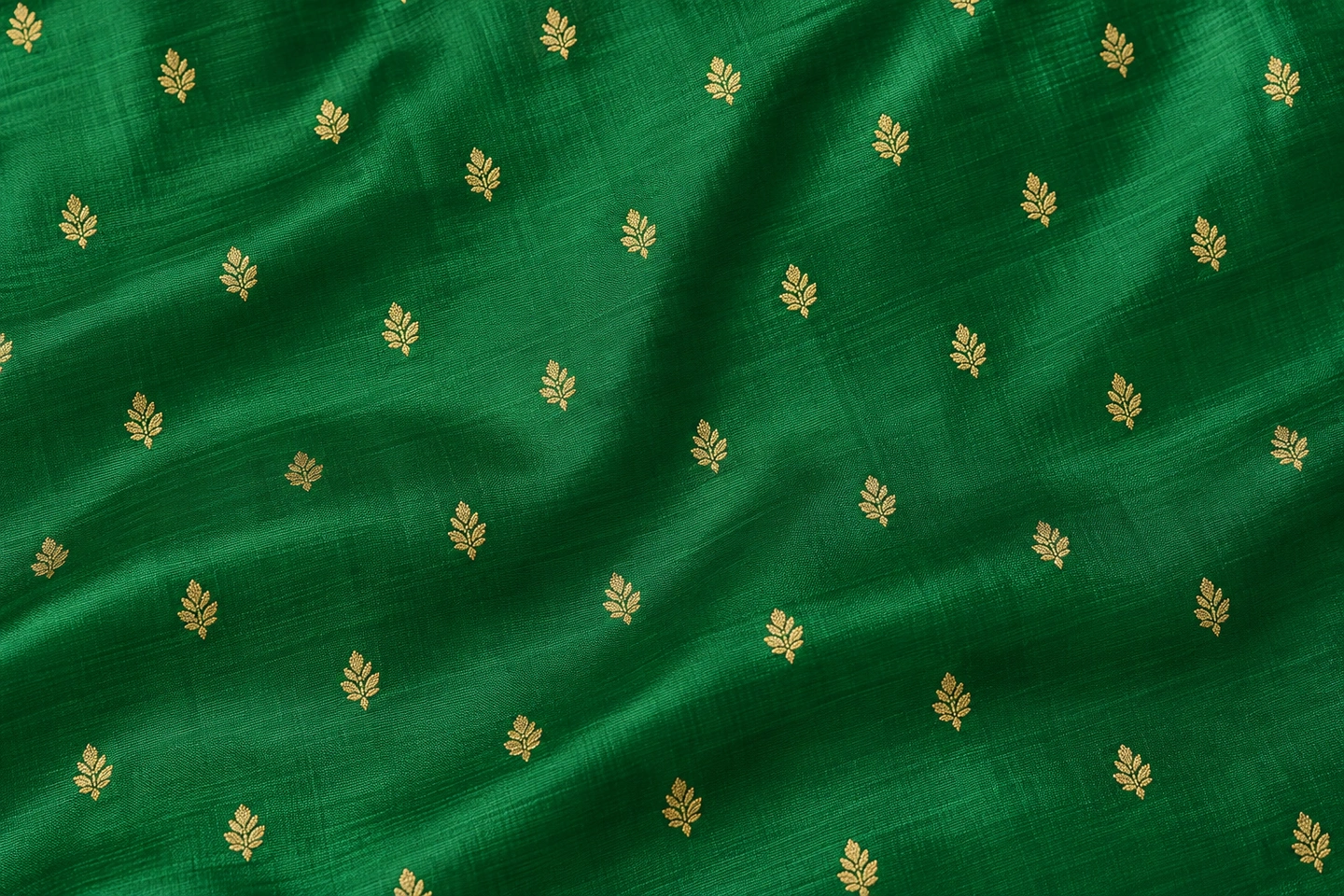
Katan-style silk groundSeparate fabric example.
1 Smooth, lustrous ground: a fabric/yarn description.
“Pure silk” is a fibre claim requiring documentation.
Yarn / fabric
Katan names a silk-yarn/fabric tradition.
Decoration
Zari names metallic or metallic-looking yarn, not a single metal composition.
The shop is claiming natural silk in a Katan yarn/fabric tradition, usually with a fairly smooth silk ground. The edge has a metallic-looking decorative band. This sentence does not tell you whether the zari contains silver, whether the saree was woven by hand, or which regional style it belongs to.
“This Kora organza has little Meenakari flowers.”↗
ILLUSTRATED STUDY
Kora ground + Meenakari detail
“This Kora organza has little Meenakari flowers.”
1
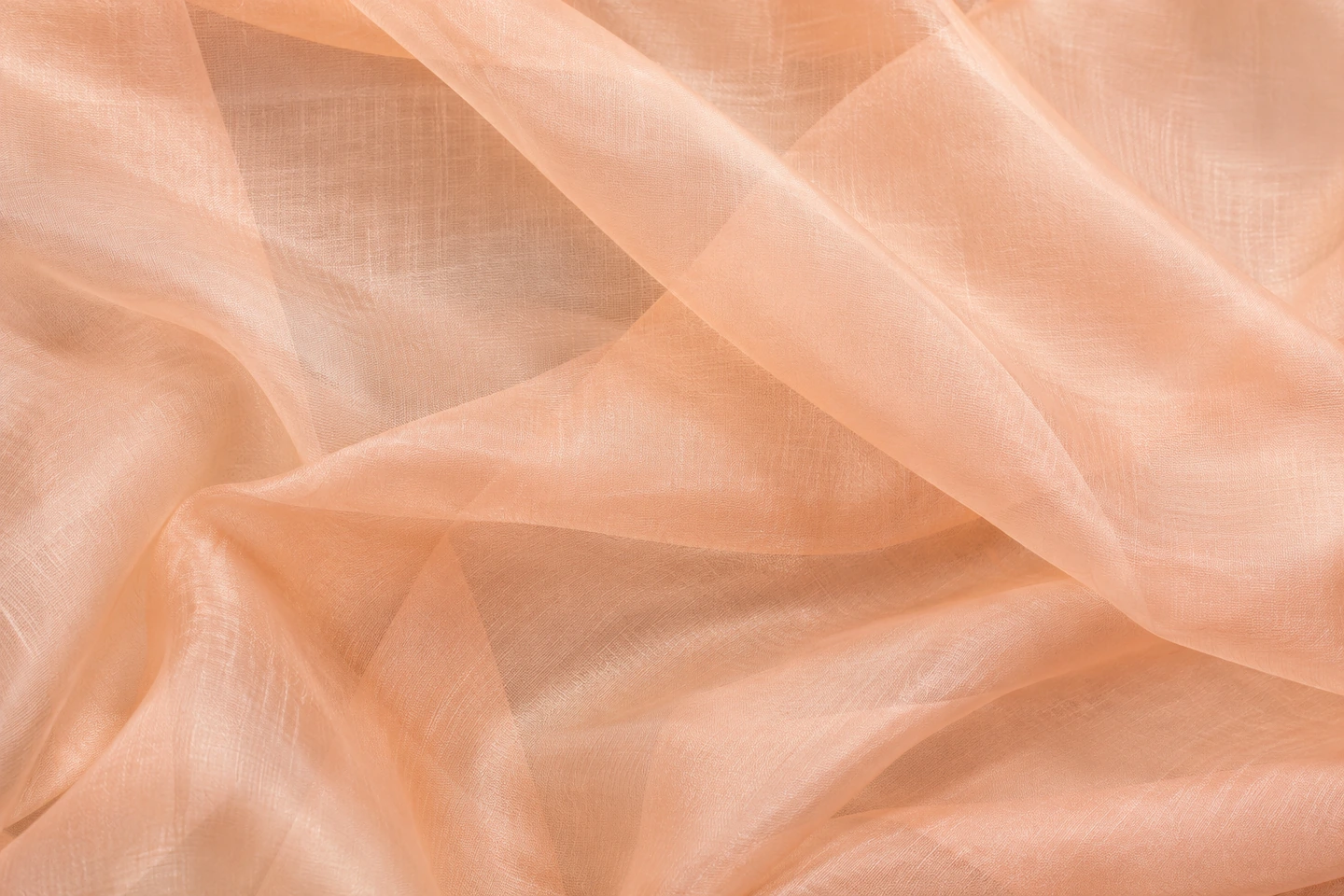
Sheer Kora-style groundLight is visible through overlapping layers.
1 Translucency and structured folds describe the base cloth.
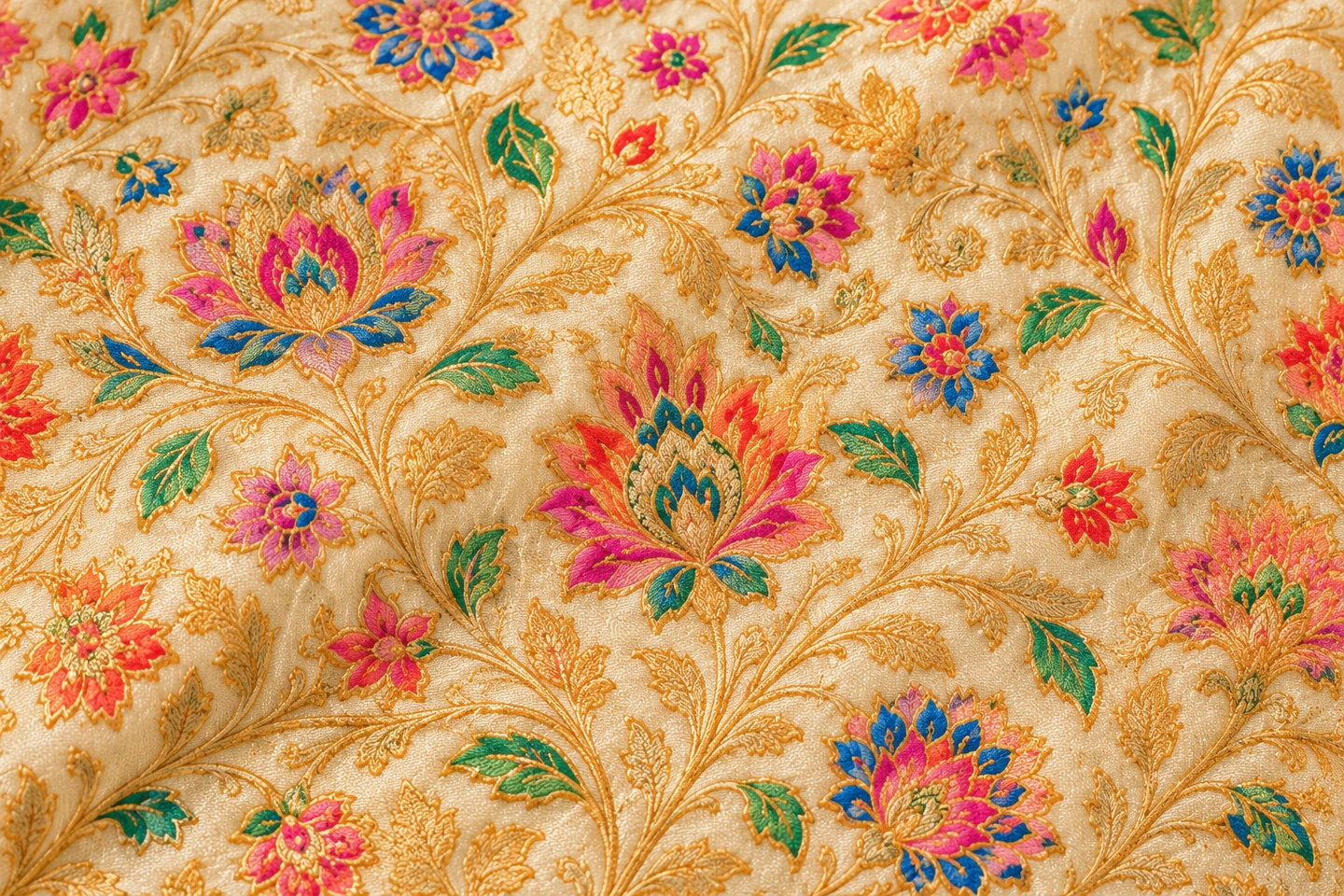
Meenakari refers to coloured accents within woven motifs.
Ask
Is the base natural silk, a blend or synthetic?
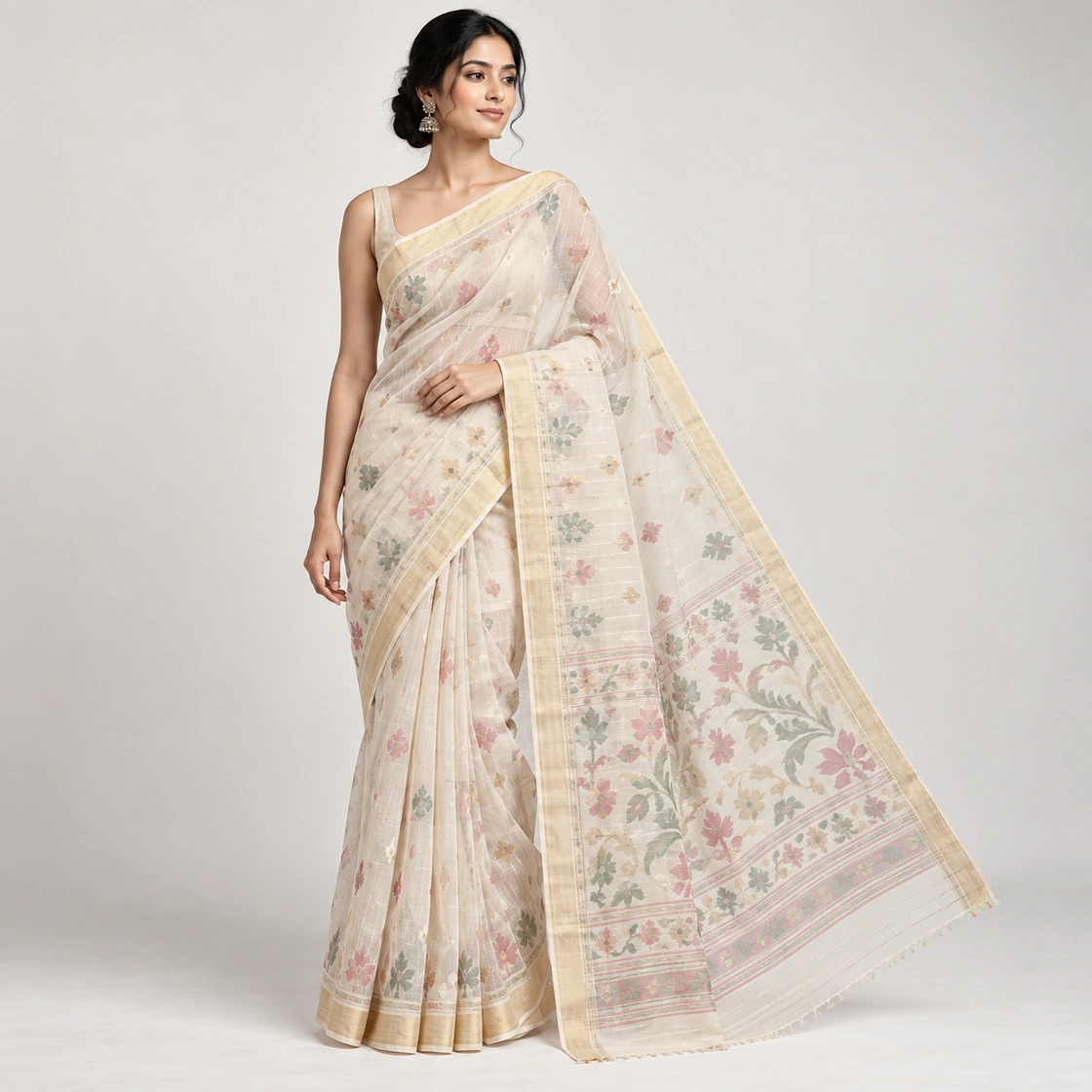
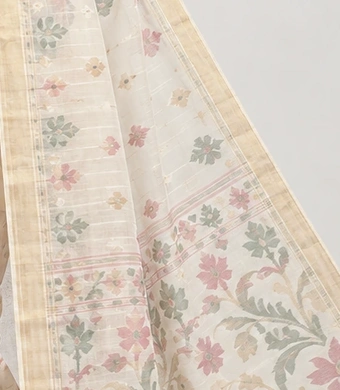
Picture sheer, crisp, light cloth that allows light through. Small floral designs have coloured details. Kora and organza may overlap as fabric descriptions here. The key question is whether the cloth is silk organza or synthetic organza.
“It's a Chanderi silk–cotton with all-over butis.”↗
ILLUSTRATED STUDY
Chanderi + butis: place, material, layout
“It's a Chanderi silk–cotton with all-over butis.”
“Silk–cotton” states two fibres, whose proportions need clarification.
Pattern
“All-over butis” means small motifs repeated across the body.
Worth checking: A silk–cotton composition is a seller claim to check; a photograph cannot establish the blend.
Picture a light Chanderi-style cloth made using silk and cotton, with small designs repeating over much of the body. All-over tells you how many motifs appear; it does not mean the saree must be heavy.
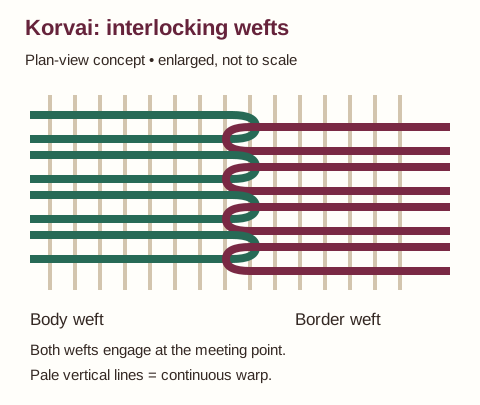
Concept schematic: the border is integrated through weaving, not sewn on.On small screens, scroll the diagram sideways to inspect the labels.
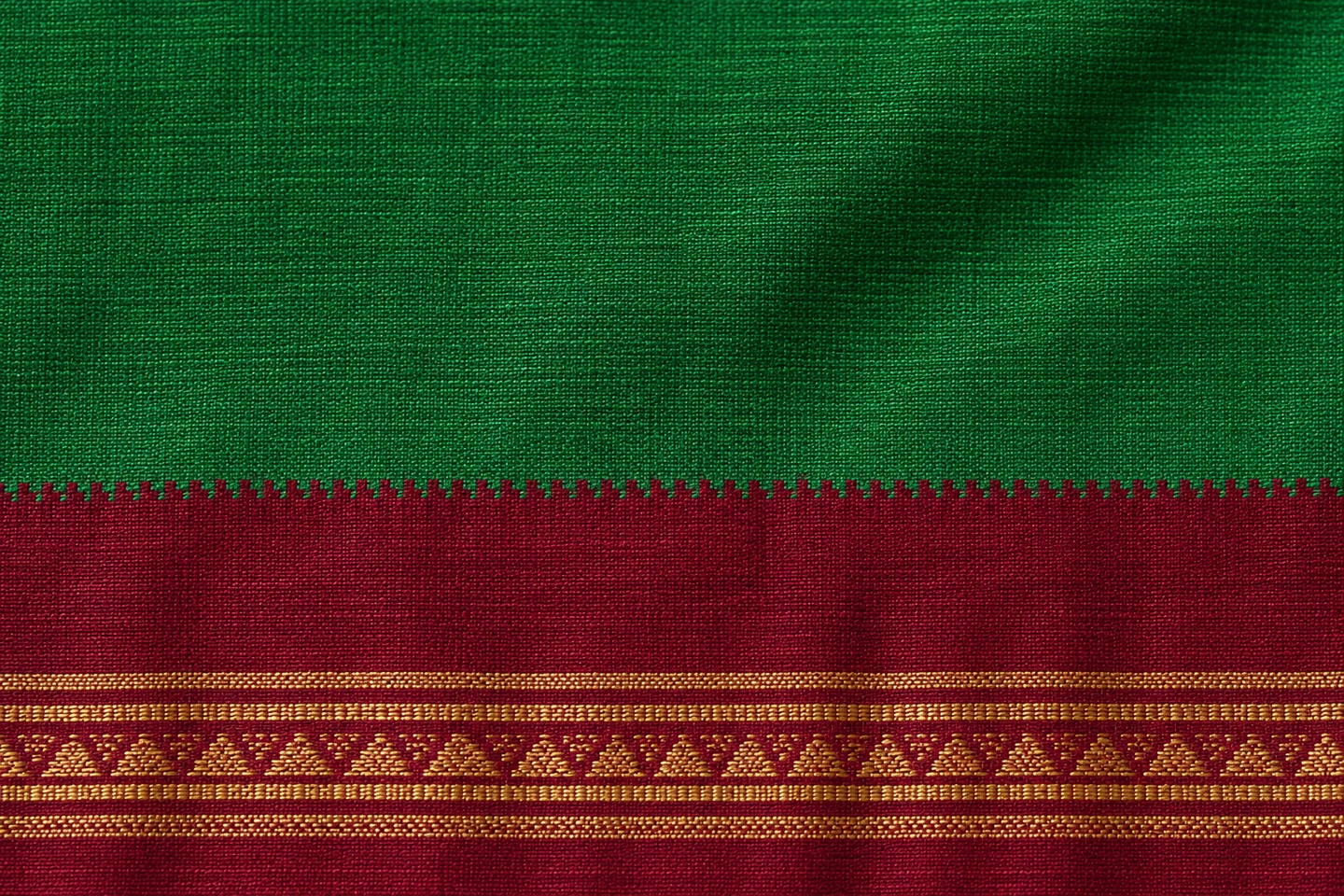
Worth checking: A contrast border alone does not establish Korvai construction. Ask how the border is joined to the body.
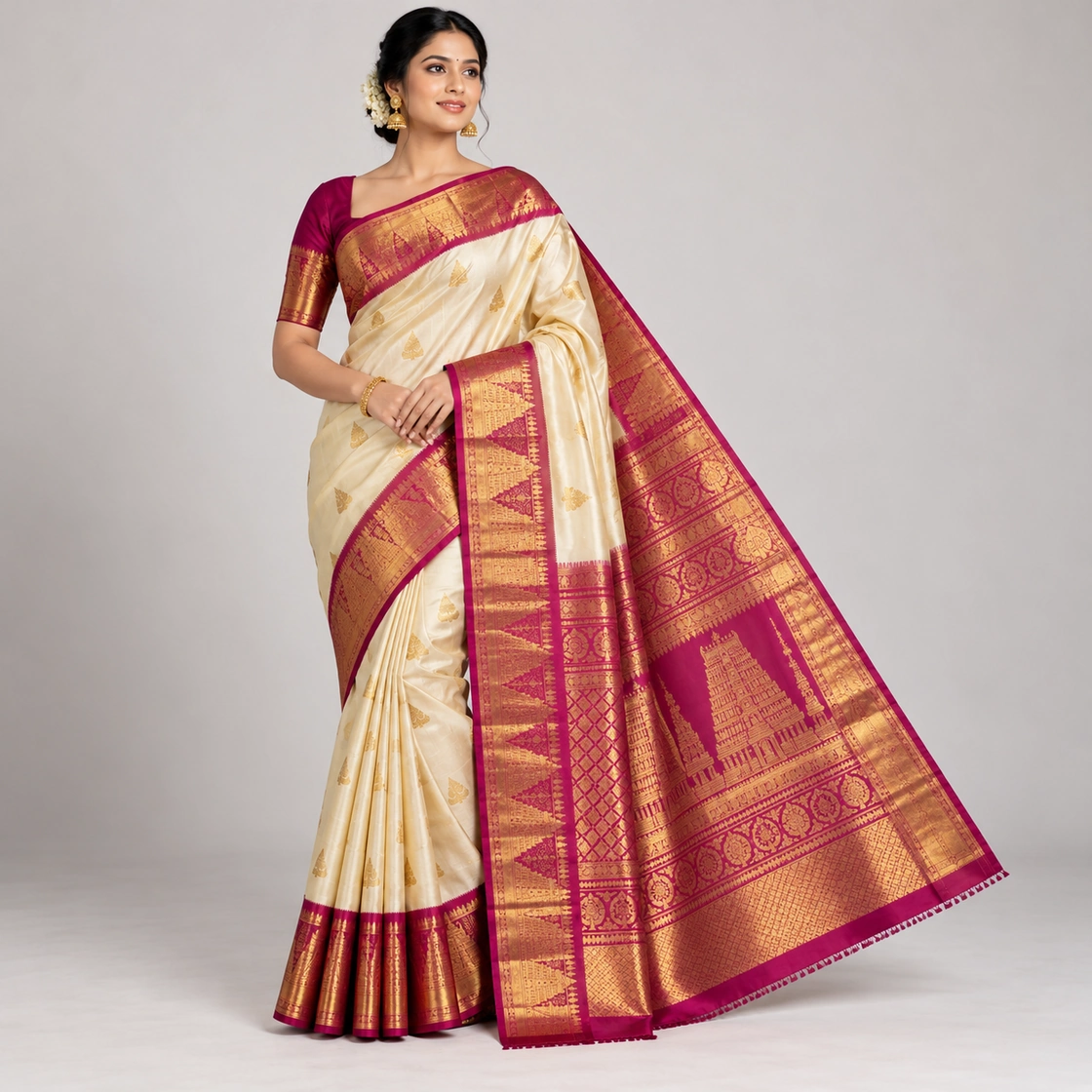
Picture a South Indian silk saree with a clearly contrasting border. Korvai refers to the border's special construction, not just a colourful stripe. The construction claim may require closer inspection and supporting information.
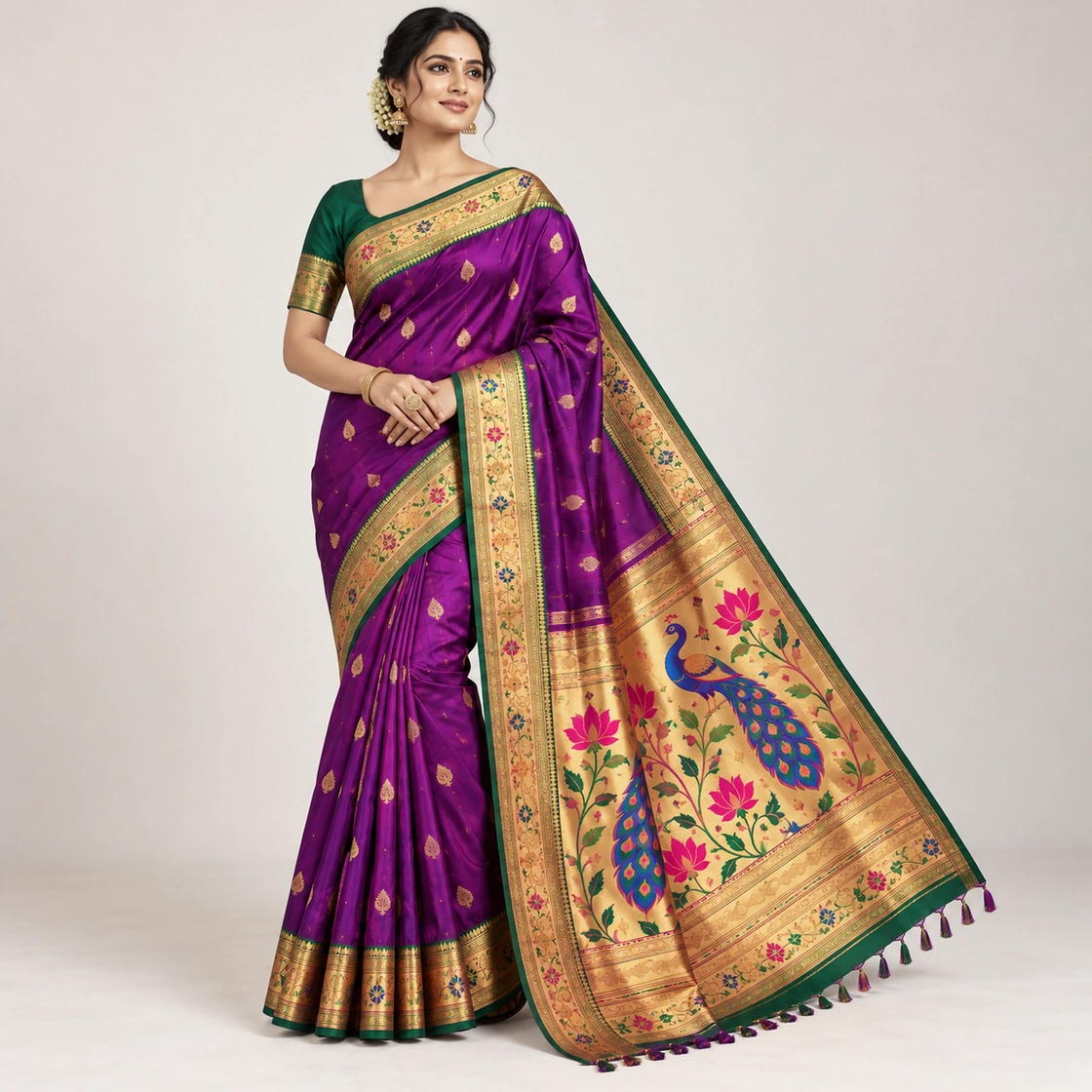
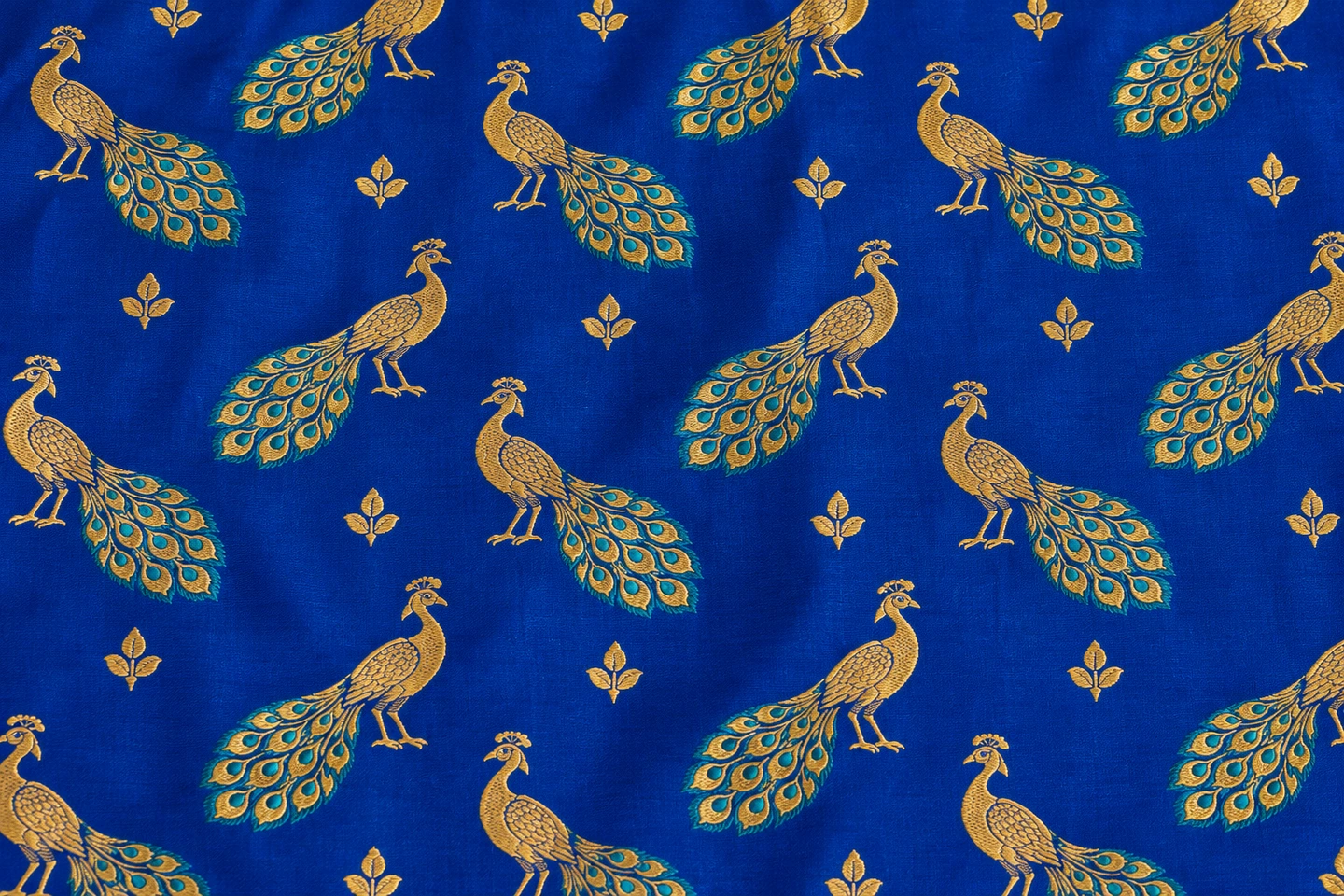
The peacocks decorate the end of the saree worn over the shoulder. Paithani is the regional tradition; peacocks are the motif; pallu is the location. That is all three categories working together in one ordinary sentence.
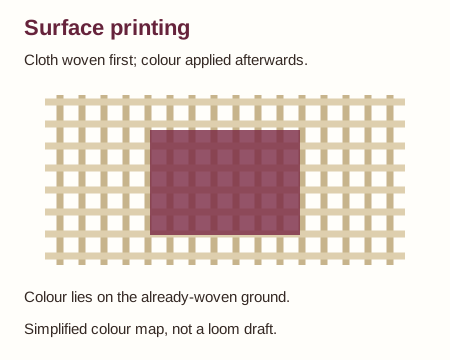
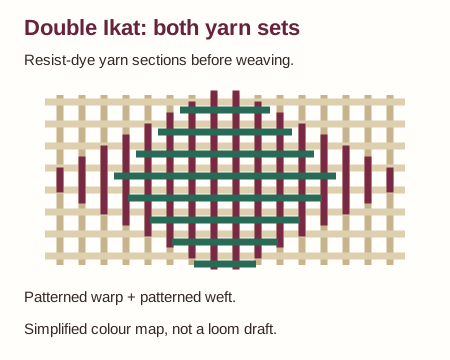
“This is a printed Patola design, not a Patan double Ikat.”↗
ILLUSTRATED STUDY
Patola-look print + double Ikat
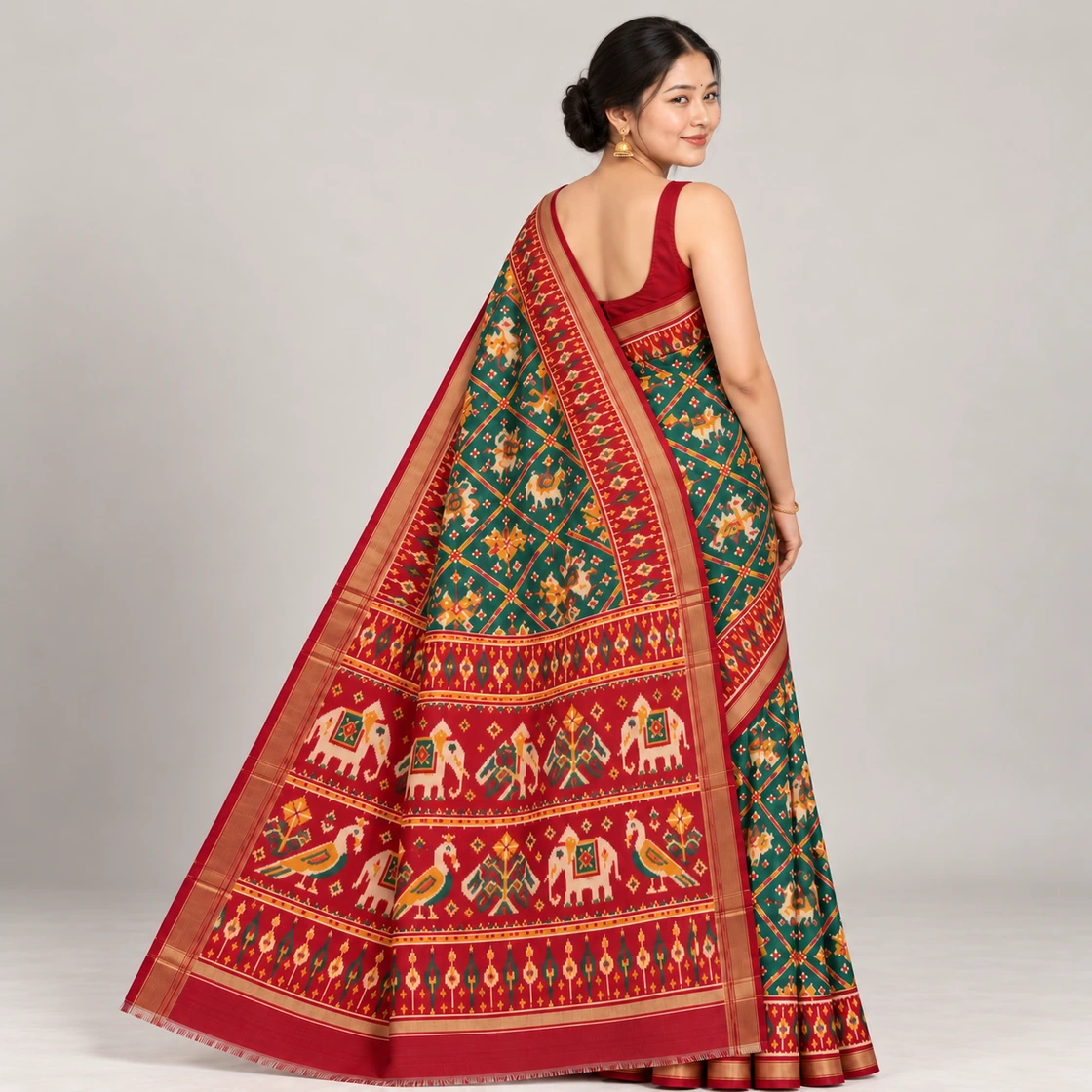
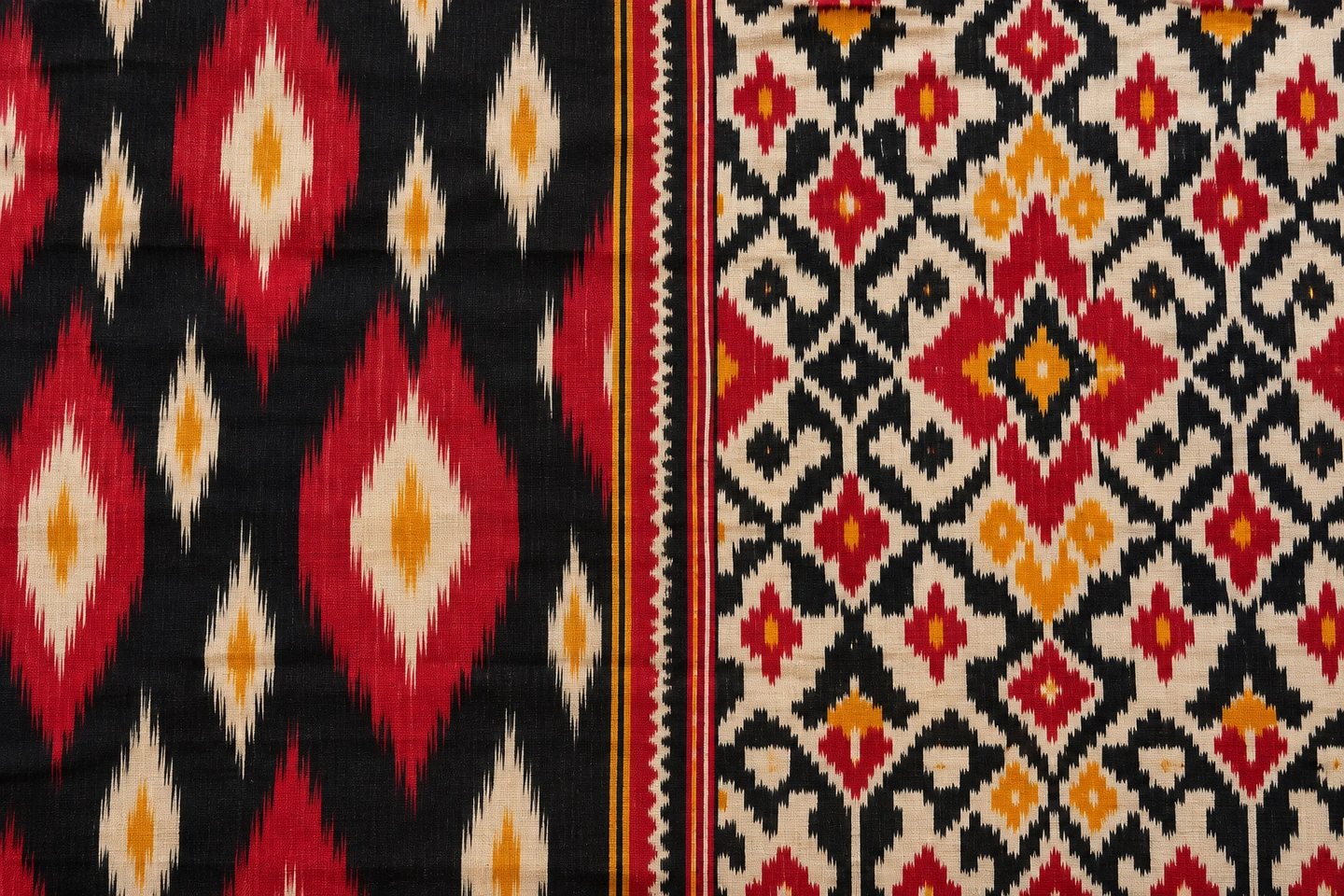
“This is a printed Patola design, not a Patan double Ikat.”
Ikat-style geometric patternA schematic comparison of printed and yarn-dyed pattern making.Open full-resolution image
Surface colour is applied to cloth.On small screens, scroll the diagram sideways to inspect the labels.
Both yarn sets are patterned in advance.On small screens, scroll the diagram sideways to inspect the labels.
Worth checking: Printed motifs and double Ikat result from different processes. Confirm the method before paying for a handwoven claim.
The saree borrows Patola's visual vocabulary, but the pattern is printed onto fabric rather than built into both dyed-yarn sets. It may be perfectly attractive; it is simply a different textile product and should be described accordingly.
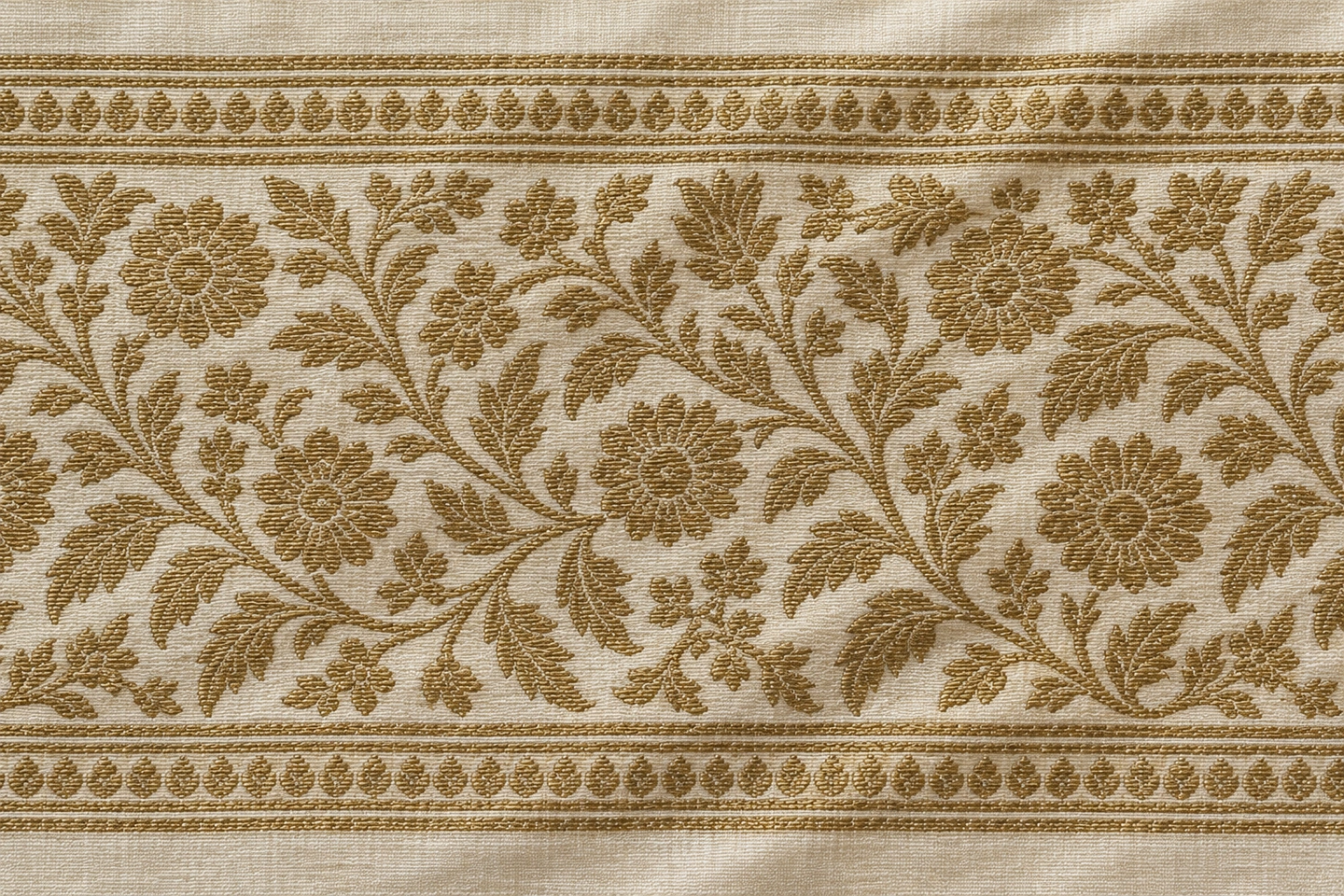
Separate metallic-looking decorationAn existing decorative-thread illustration.Open full-resolution image
Appearance
“Antique gold” describes a muted old-gold colour or finish.
Material claim
Silver, gold plating, base metal and metallised yarn require separate specifications.
The phrase usually describes a muted, old-gold-looking colour or finish. It is not proof that antique gold metal, real gold or silver was used. The same visual tone can be produced with different decorative yarns.
“Statement” means visually prominent, not a manufacturing method.
The main length is fairly quiet, while the pallu does the visual work—perhaps with large birds, bold colours, gold-coloured designs or a narrative panel. Statement is style language, not a technical manufacturing term.
“This is a contemporary take on a traditional saree.”↗
ILLUSTRATED STUDY
A contemporary interpretation
“This is a contemporary take on a traditional saree.”
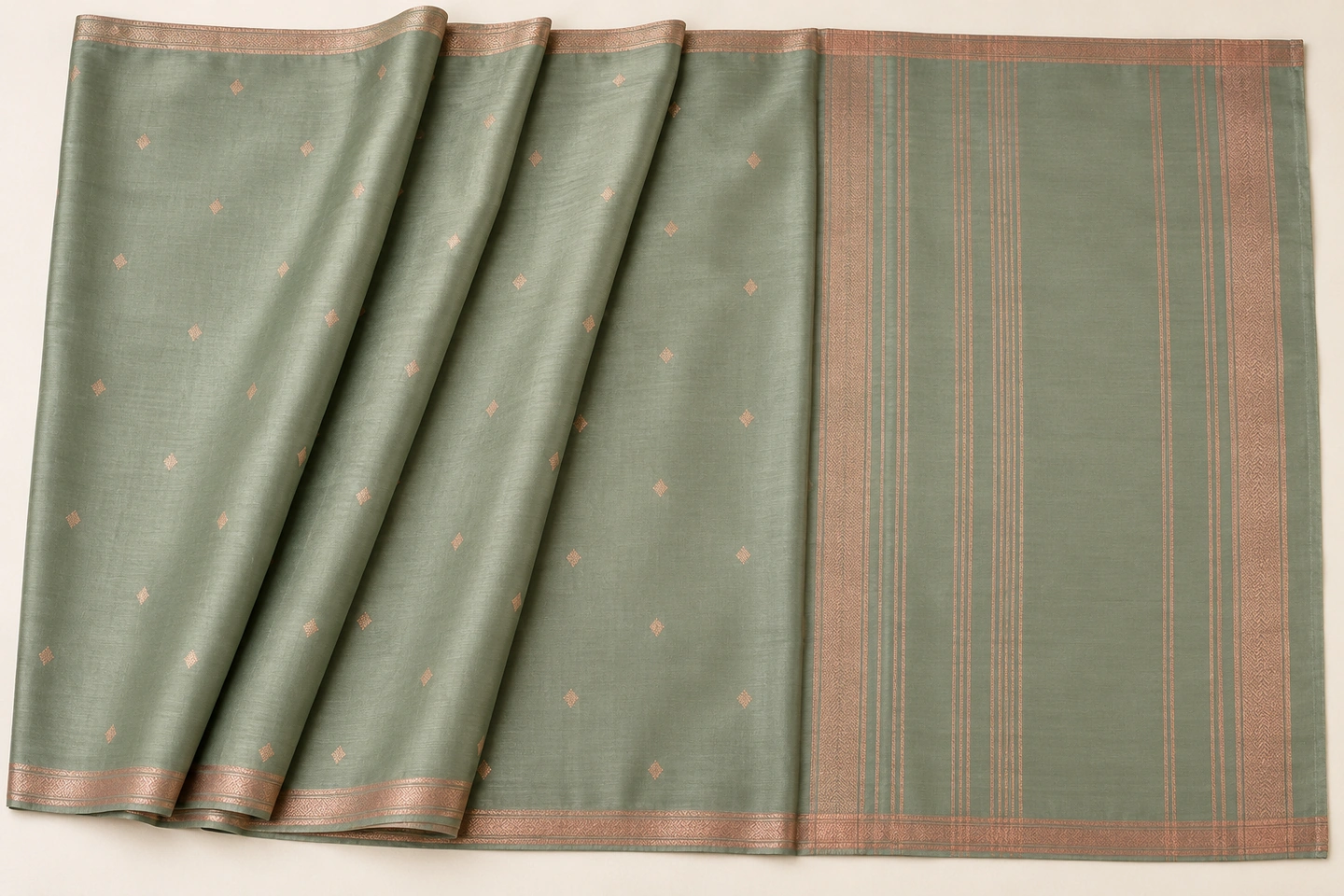
Traditional-style visual approachBold contrasting border and ceremonial pallu.Open full-resolution image
Compare the strong red–ivory contrast with the quieter sage–copper relationship.
The saree borrows a recognized tradition but changes something significant: perhaps the colour palette, motif size, width of the border or overall pattern density. It does not necessarily mean the textile is machine-made; the term describes the look.
Jamdani involves motifs introduced while weaving the ground cloth.
Production claim
“Handloom” identifies human-powered weaving.
Material
Cotton, silk or a blend must still be specified.
Worth checking: Jamdani-style motifs alone do not establish handloom weaving or individually inserted pattern threads.
The seller is combining a production claim (handloom) with a design technique or textile tradition (Jamdani). To understand what you are buying, you still need to know the fibre—cotton, silk or a blend—and what kind of Jamdani work it contains.
These are fictional conversations based on common shopping situations—not reports of actual retailers. Each ends with a question that turns a vague claim into something verifiable.
Situation 01 · The “pure silk” label
“Madam, this is pure Katan silk.”
The problem: The statement describes a material claim, but not how it was woven or what the zari contains.
Ask: “Is the body declared 100% natural silk? Is the product Silk Mark labelled, and is the loom type recorded separately?”
Decision: Request the specific composition and product documentation, not a demonstration that the cloth happens to shine.
Situation 02 · The surprisingly inexpensive Patola
“Same Patola design, a fraction of the price.”
The problem: The design could be a print, single Ikat or double Ikat. Those are different production methods.
Ask: “Is this printed, single Ikat or double Ikat? Which threads were resist-dyed before weaving?”
Decision: Buy the look if you like it, but make sure the invoice identifies the process actually being sold.
Situation 03 · The heirloom zari claim
“Real gold zari. It will last generations.”
The problem: Gold-coloured thread and precious-metal composition are not the same claim; condition and care affect longevity.
Ask: “What exactly is the zari composition? Is it documented, and does the seller's invoice state that claim?”
Decision: Evaluate the saree's work and appearance independently of any unsupported precious-metal premium.