VISUAL IDENTIFICATION
Visual Index
Browse illustrated fabrics, motifs and regional sarees; open each entry for a fuller explanation.
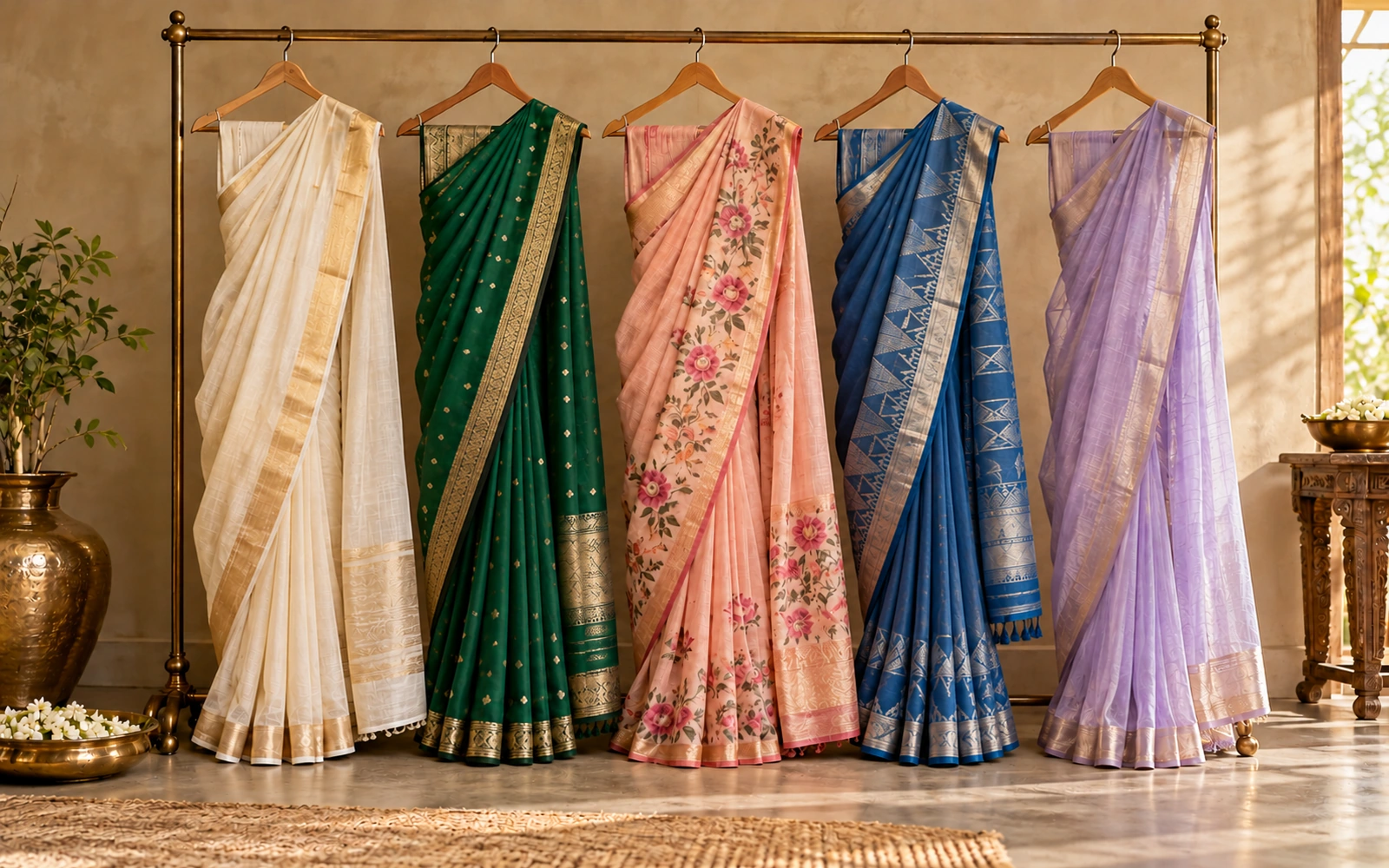
VISUAL INDEX
Explore by what you see
Image-led referenceBrowse illustrated entries by category or region. Select an image to read its full reference entry.
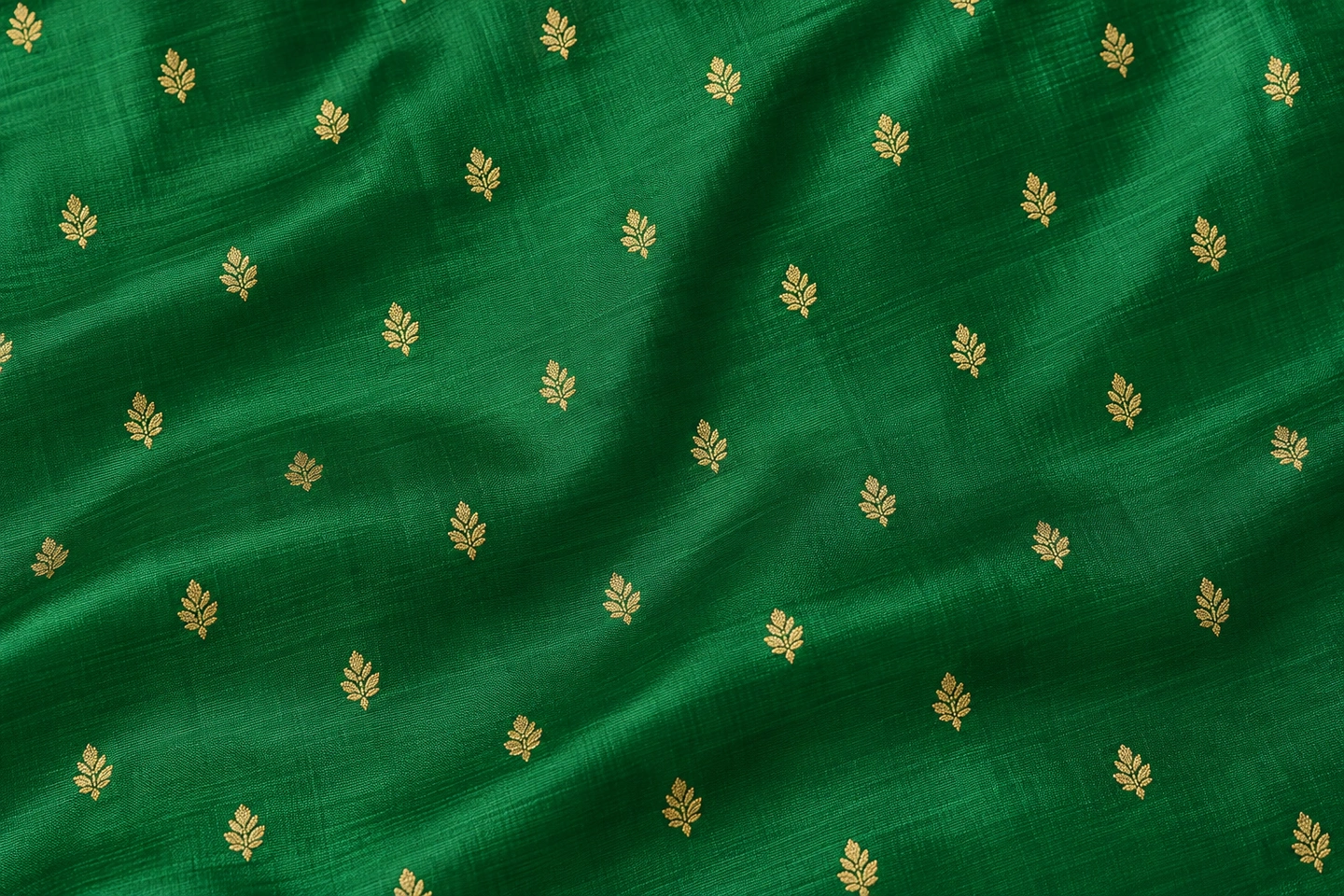 Buti — a small repeated decorative shapeA buti is a small motif, often a flower, leaf, star or paisley, repeated across the body of the saree. Think of neat little decorations separated by s…
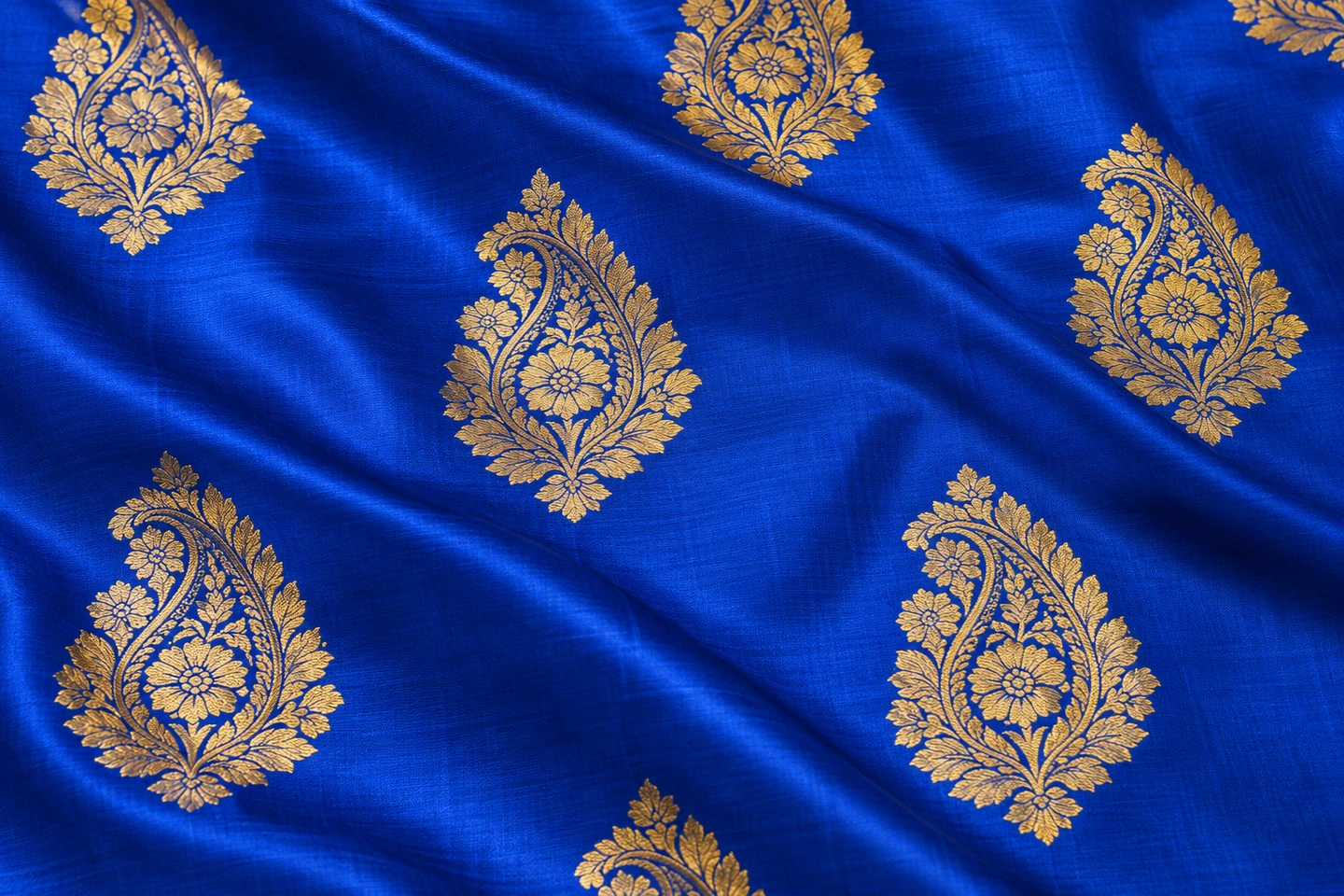 Buta — a larger, more noticeable motifA buta is generally a larger individual decorative design: perhaps a big flower, a bouquet or a broad paisley. It becomes a feature you notice from ac…
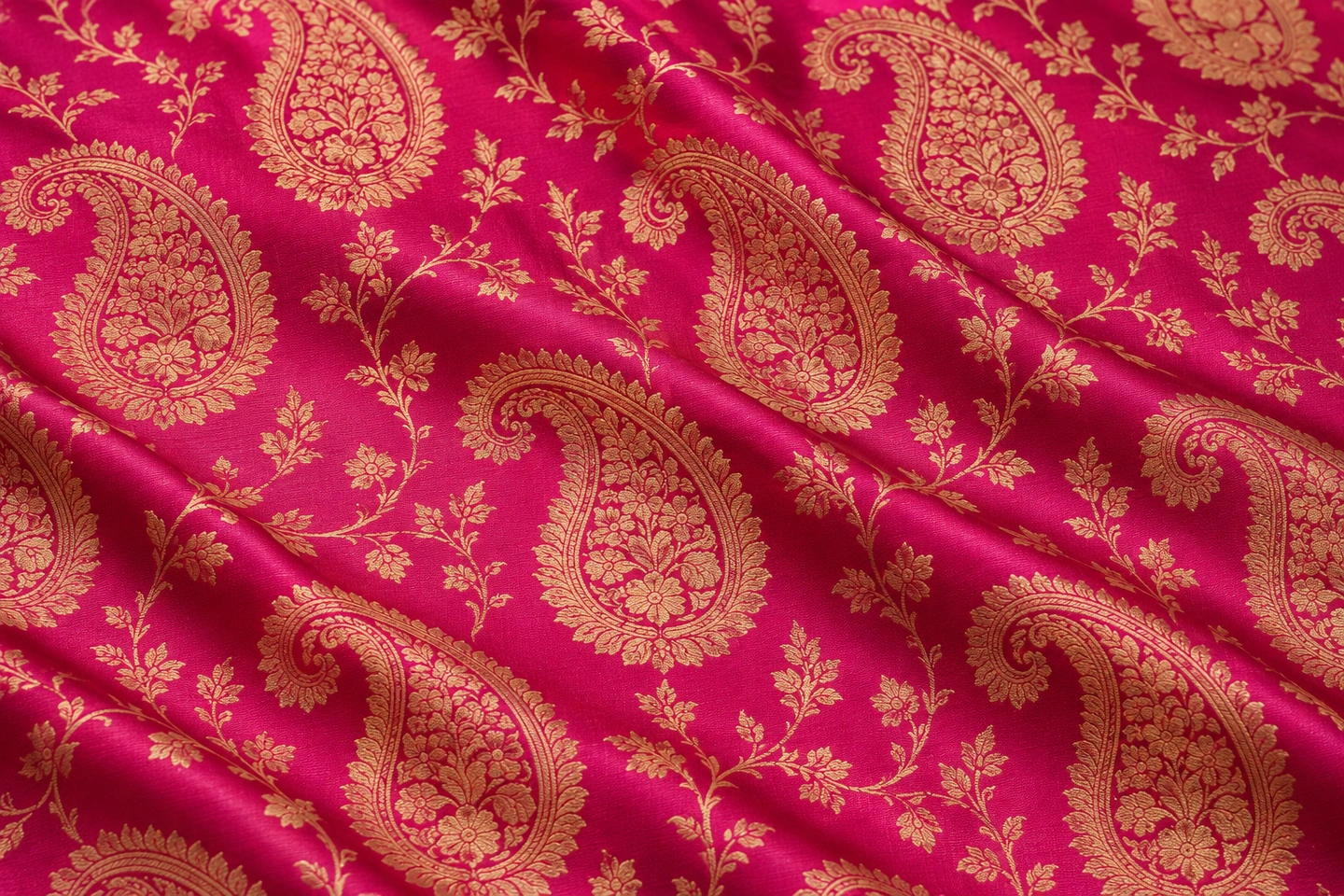 Paisley / Kairi / Ambi — the curved mango shapePaisley is the familiar curved teardrop shape, with a wider rounded end and a pointed tip that often curls. Indian names include kairi and ambi , rela…
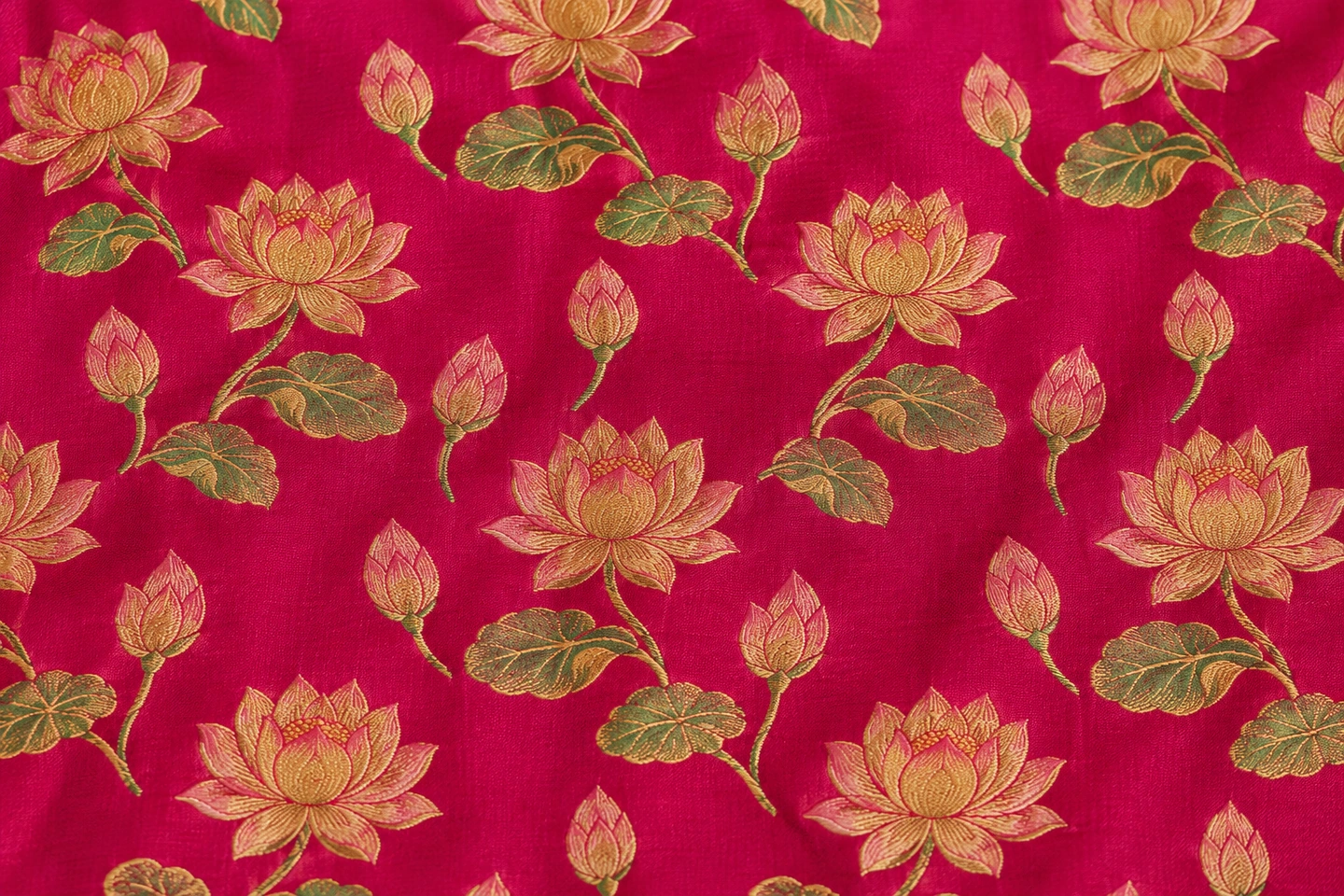 Lotus — a stylized flower, sometimes geometricThe lotus is usually shown as an open flower with pointed petals, or as a simplified bud. In some sarees the petal outline is obvious; in others the s…
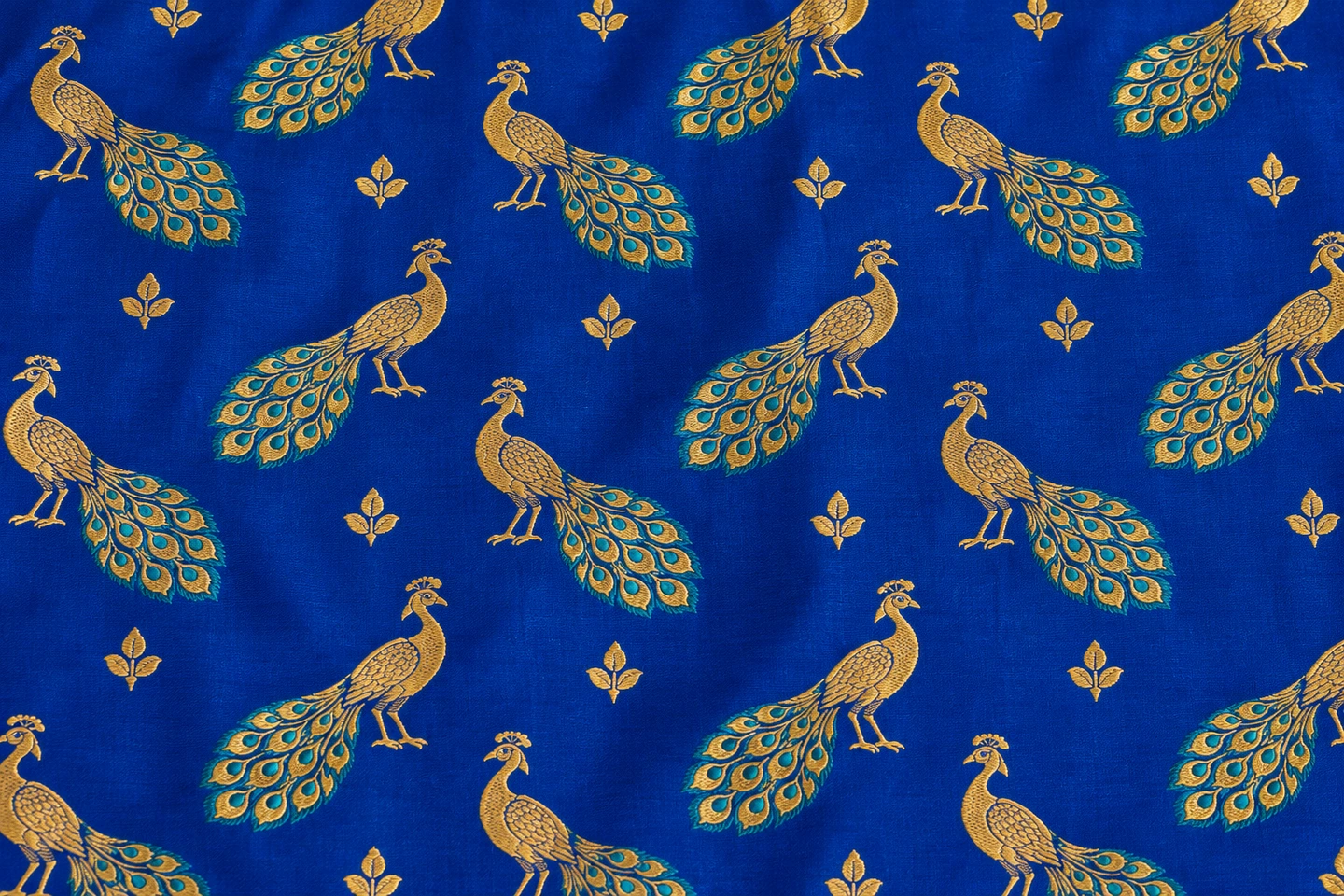 Peacock / Mor — the long-necked bird with a showy tailThe peacock is one of the most recognisable Indian saree motifs. It may appear as a complete bird, as two facing birds, or mainly as a sweeping feathe…
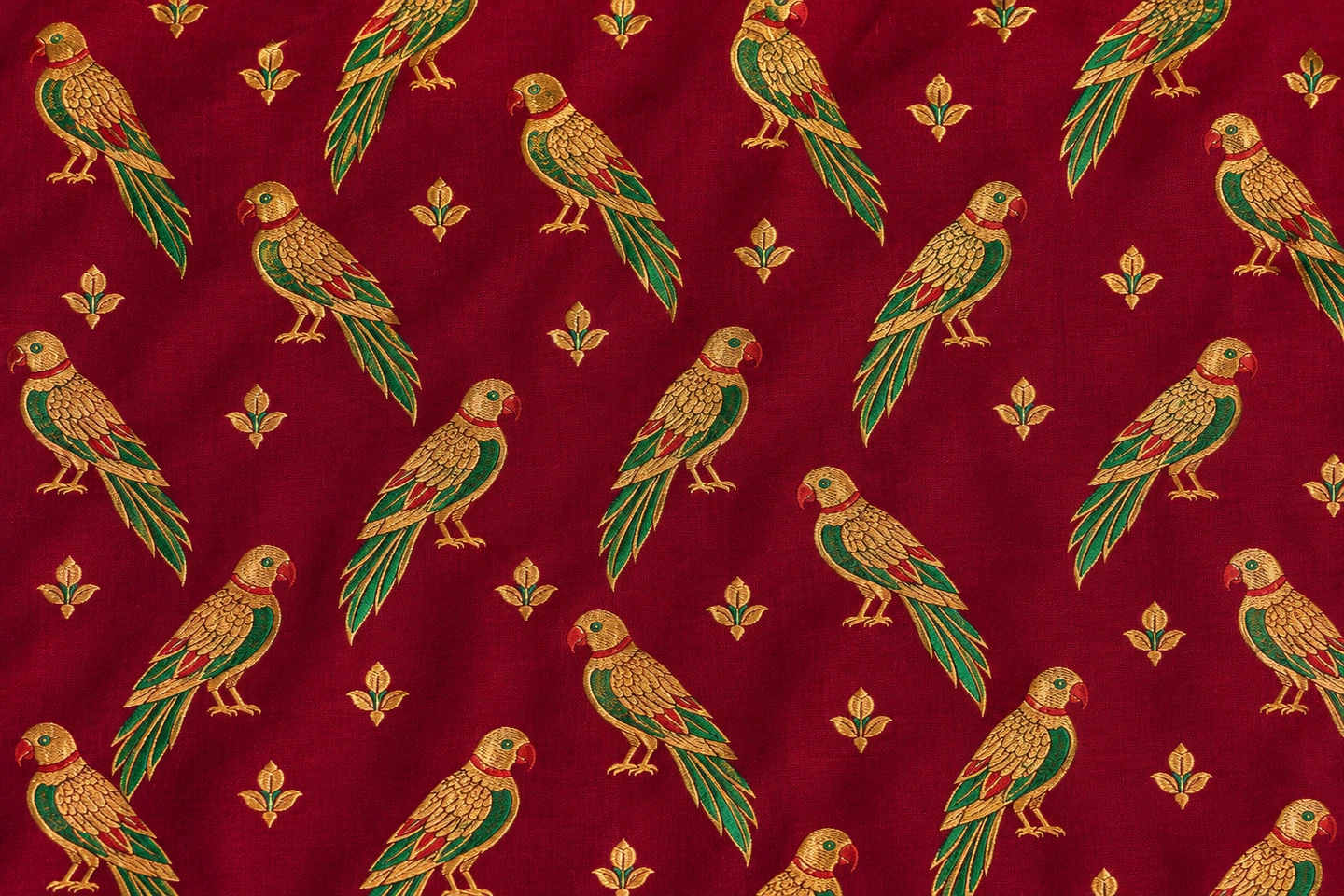 Parrot / Munia — a small, colourful bird motifMunia is used for small parrot-like birds in some textile traditions, notably Paithani design vocabulary. These are often depicted as rows of short, p…
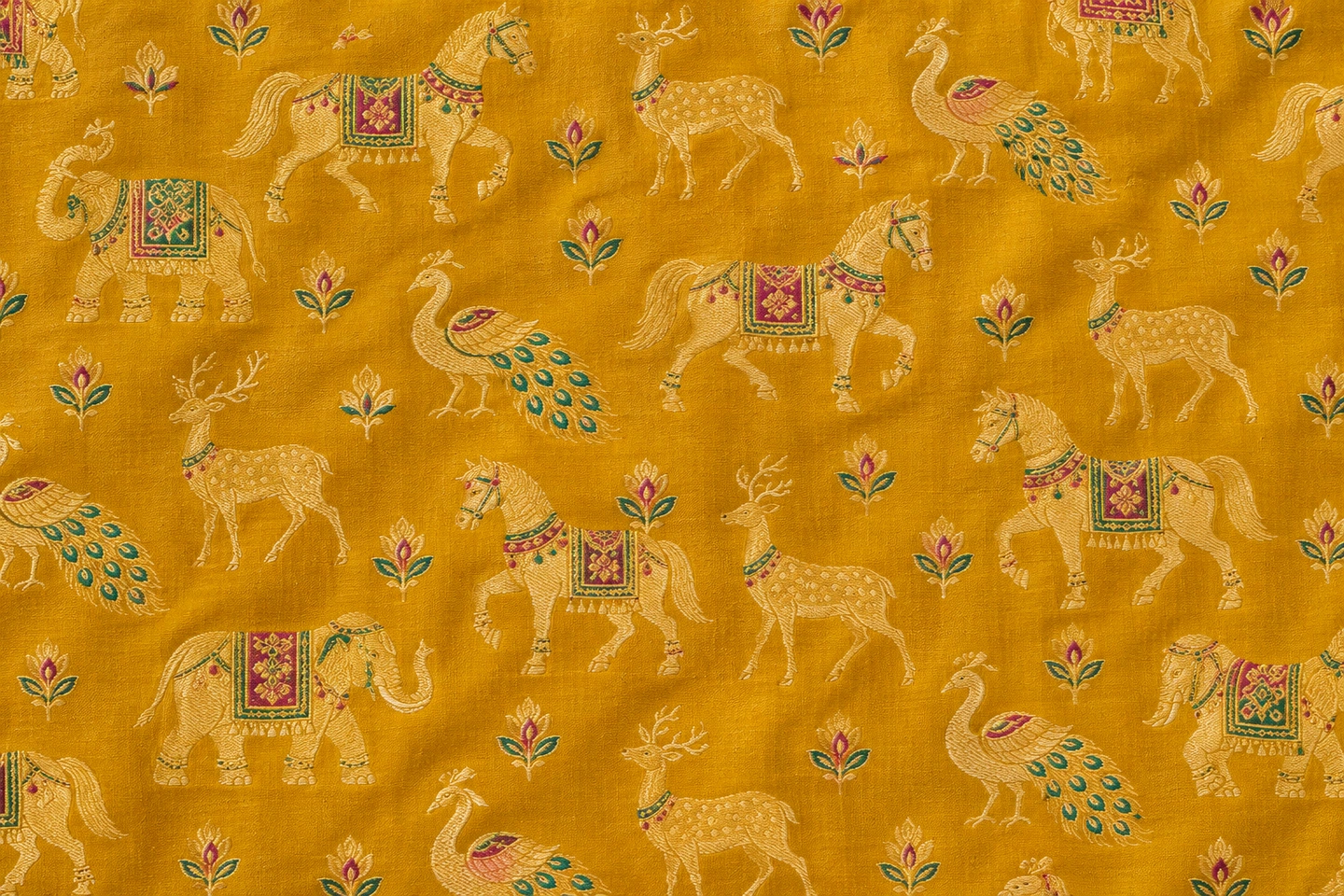 Elephant, horse and other animal motifsElephants commonly look stately or ceremonial; horses may appear alone or within scenes; deer and other animals often belong to narrative patterns. An…
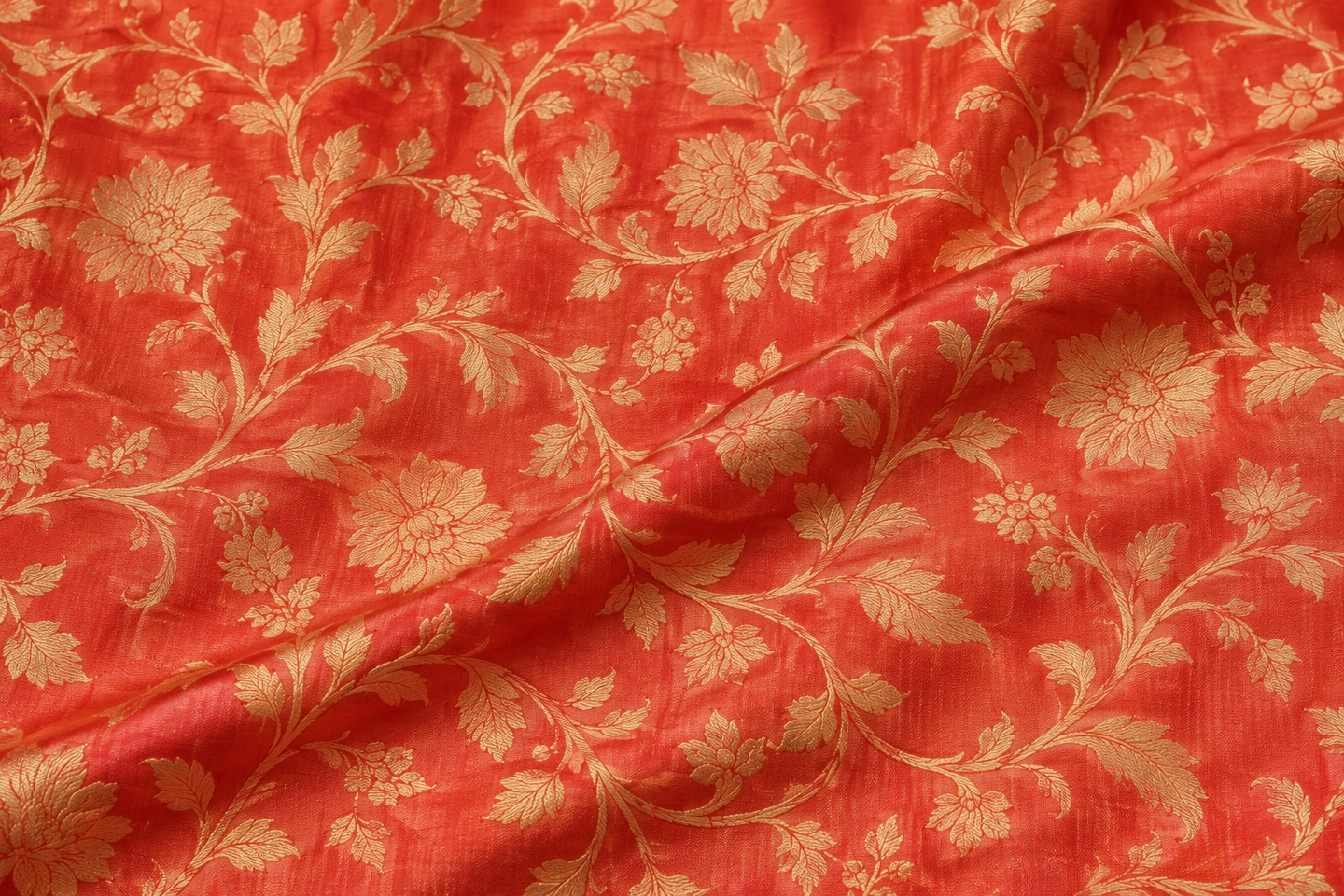 Bel — a continuous vineA bel is a creeping or curling vine, often carrying flowers or leaves. Instead of separate flowers floating across the cloth, the designs are connecte…
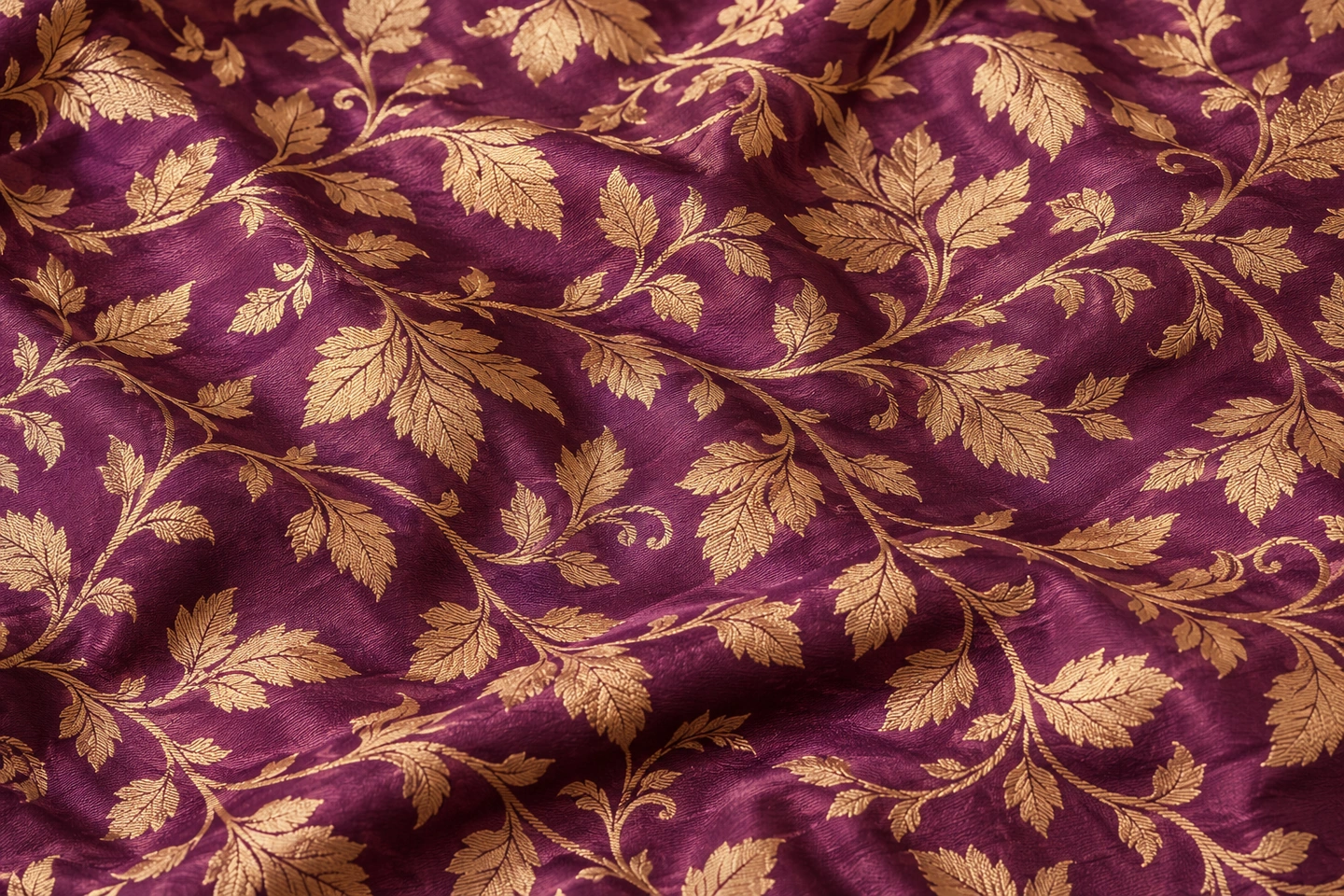 Bel-patti — a vine emphasizing leavesPatti means leaf. Bel-patti usually suggests a leafy vine or scrolling leaf design. It is especially easy to recognise when a border consists of small…
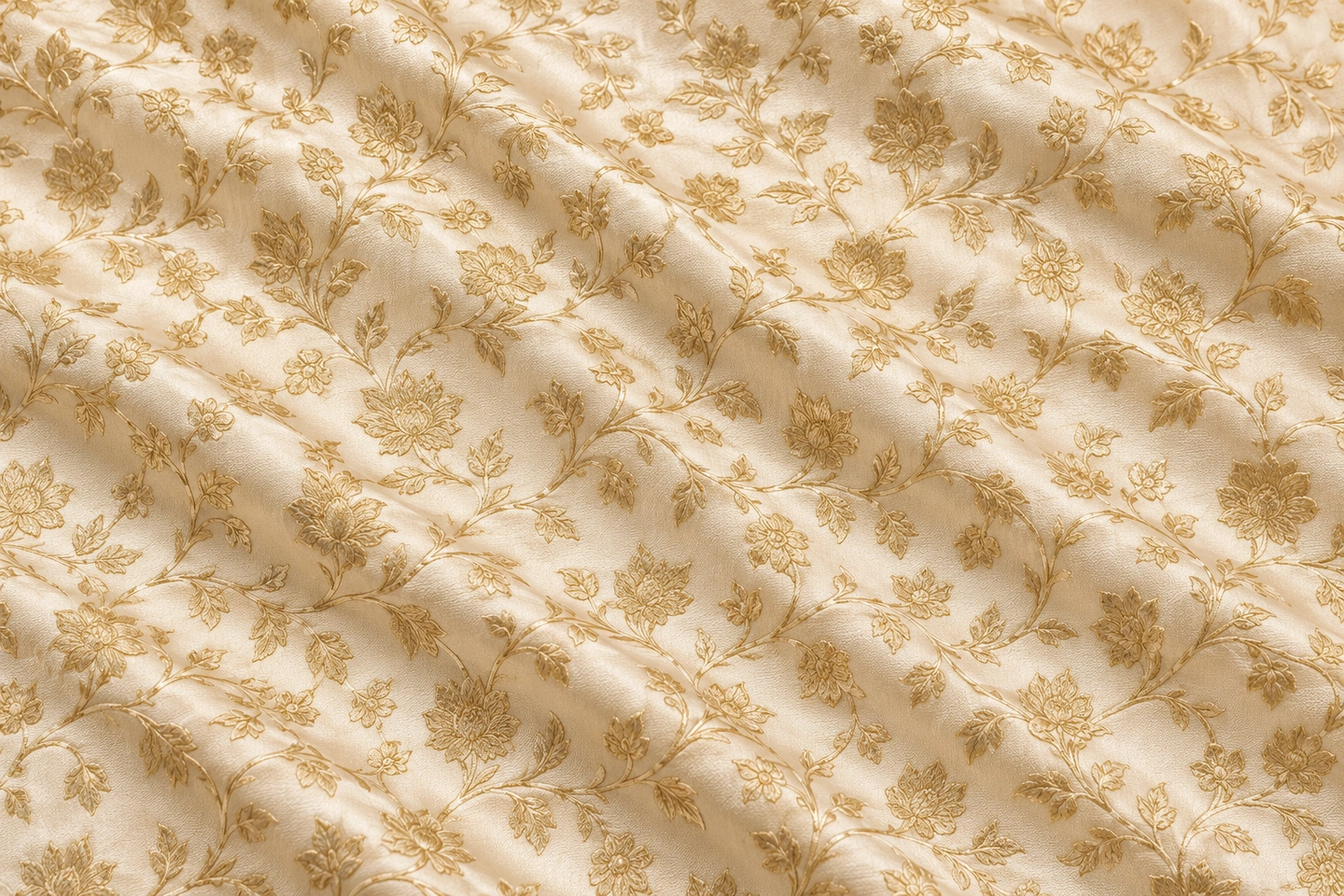 Jaal — a connected web of patternJaal literally suggests a net. On a saree, think of flowers, vines or geometric shapes joined across the body , making a repeating network rather than…
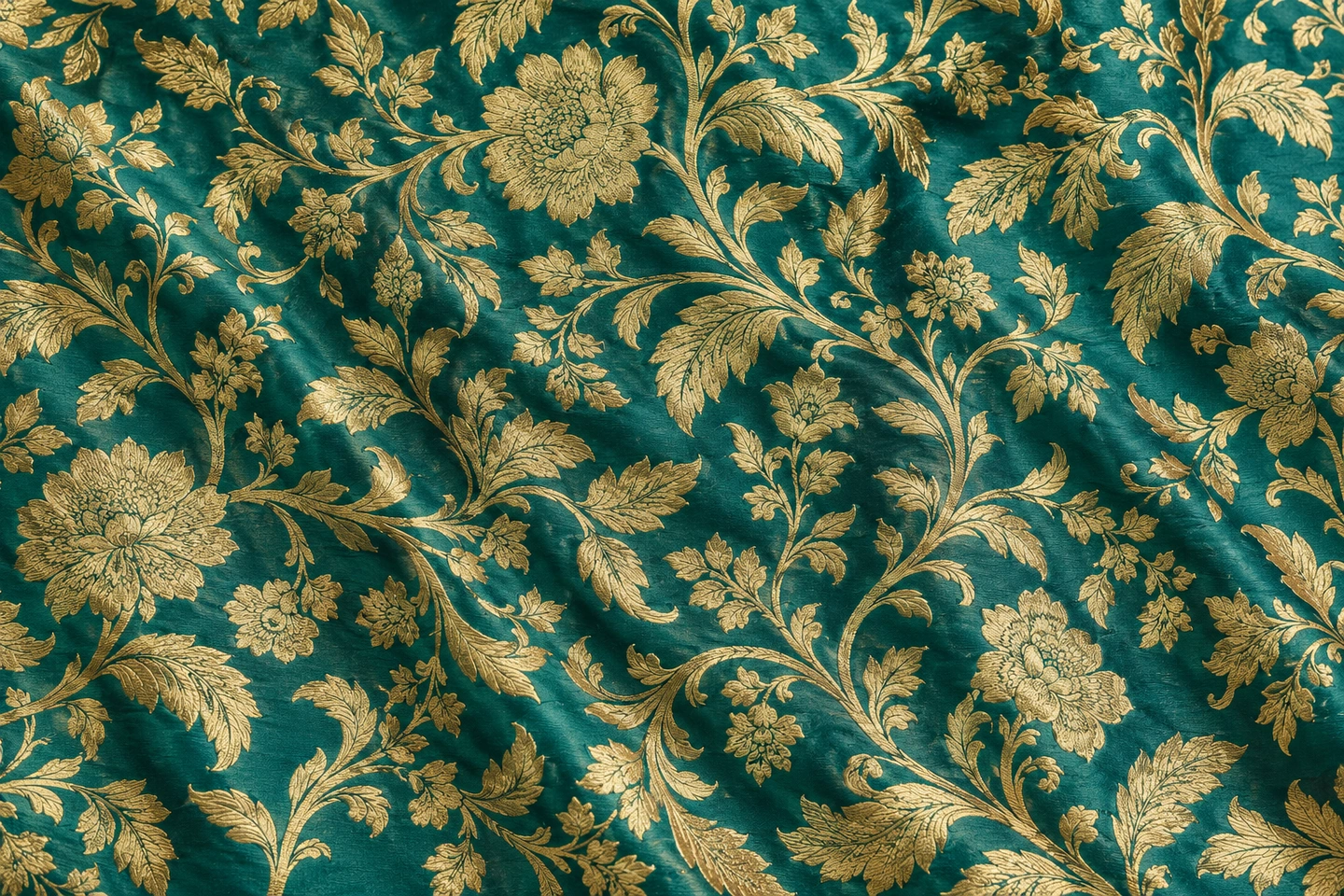 Jangla — a luxuriant garden-like designJangla is commonly used for rich, extensive patterns of flowers and winding plants, especially in Banarasi design language. The impression is closer t…
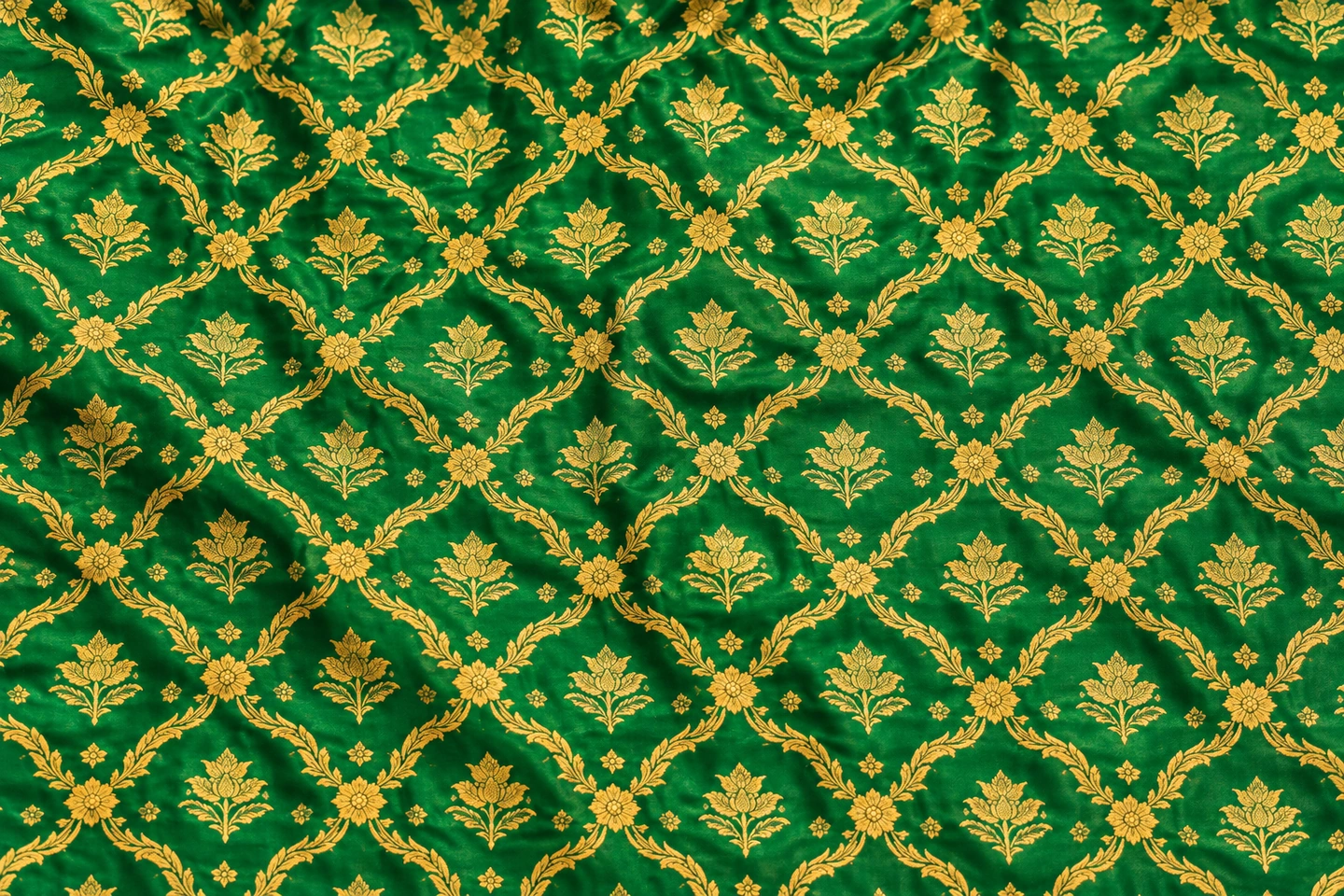 All-over / jaal-dar body — very little plain groundAll-over is ordinary descriptive language: a pattern covers almost the entire body. It could be flowers, checks, small butis, abstract shapes or dense…
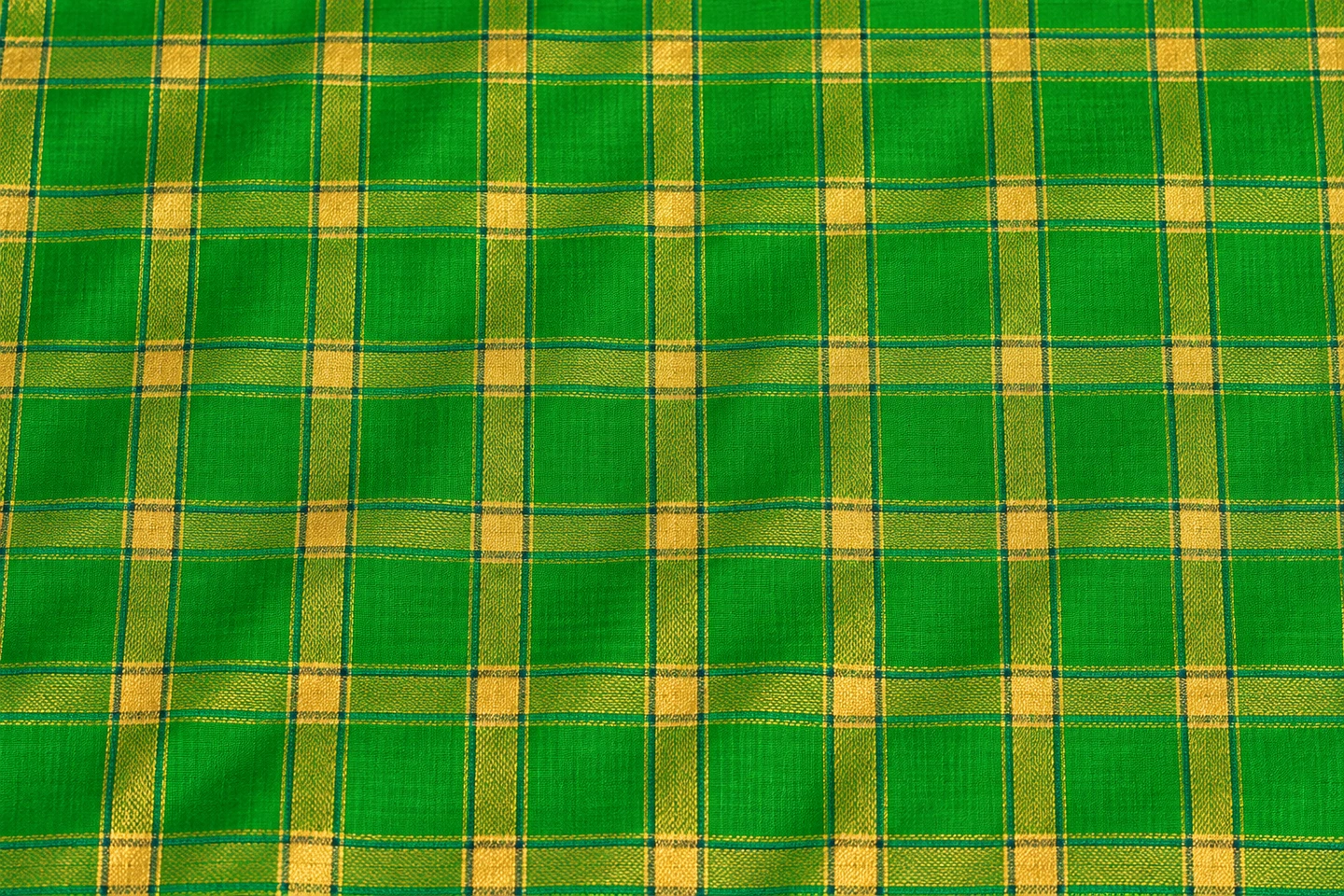 Checks — lines crossing to make squaresChecks are made by horizontal and vertical lines crossing each other. They may be tiny, broad, balanced or irregular. In some traditions the square st…
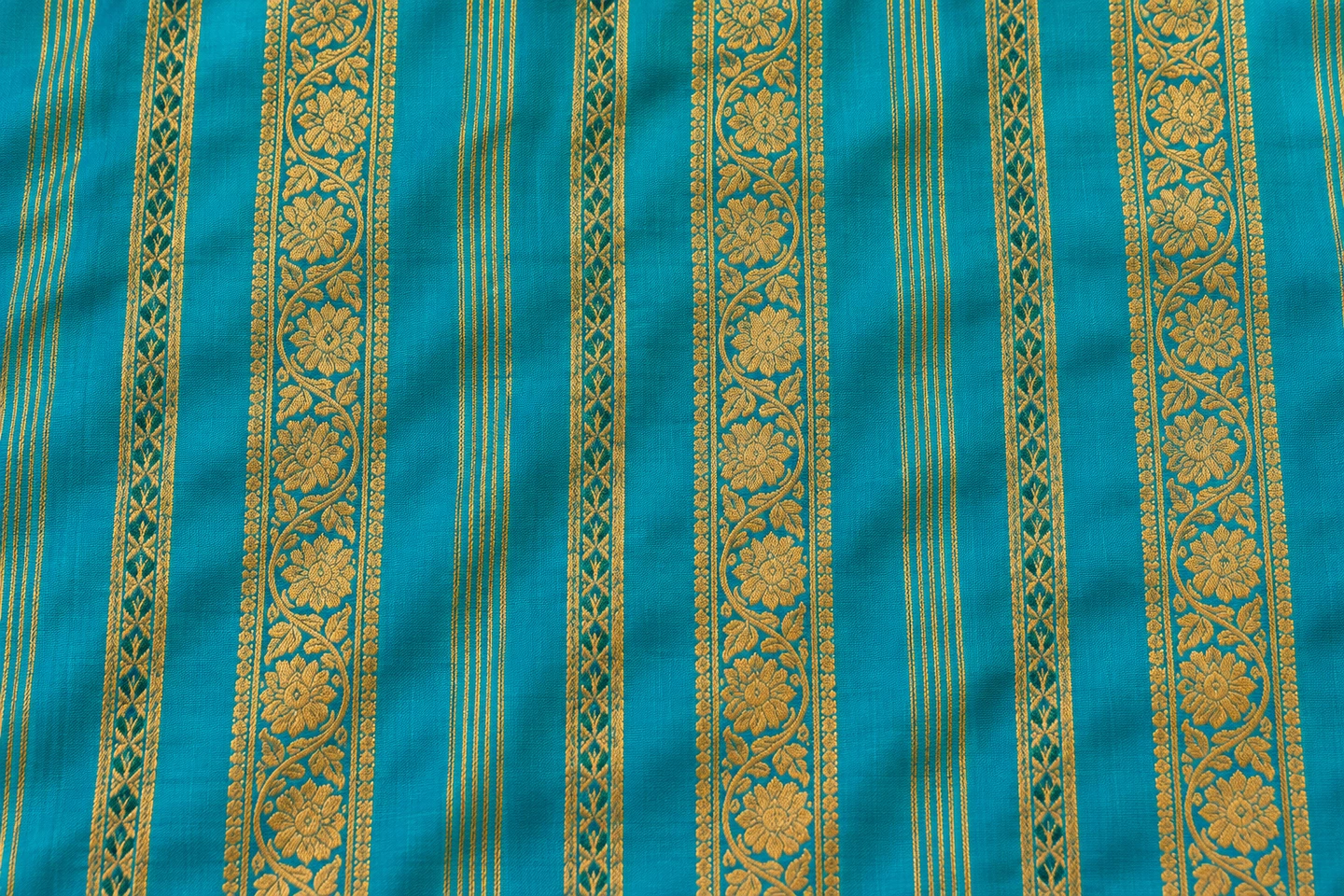 Stripes — repeated straight bandsStripes may run the length of the saree or across it, and they can be narrow, broad, coloured or metallic-looking. A striped body can look modern and …
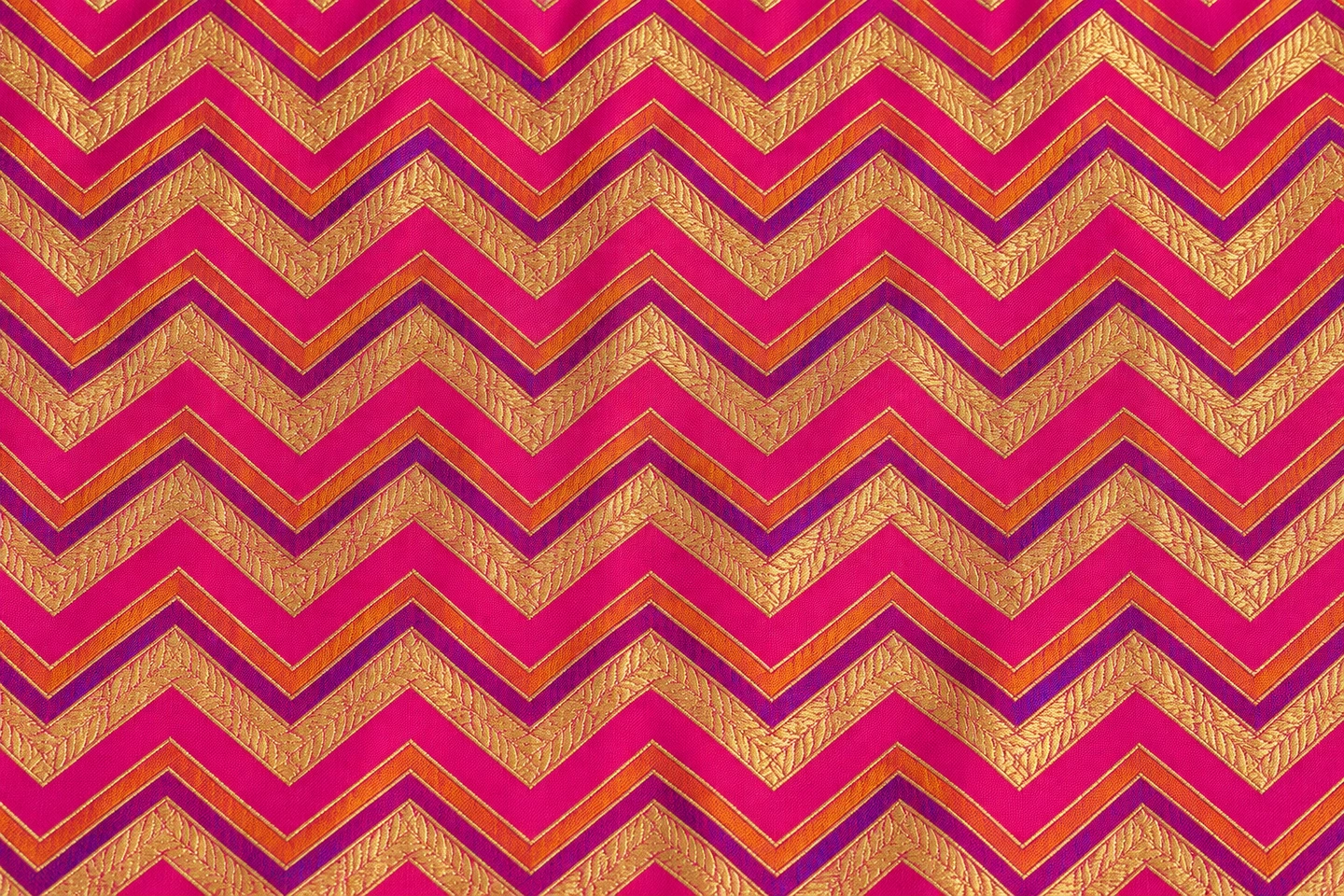 Chevron / zigzag — repeated V-shaped linesA chevron repeats pointed V-shapes, often connecting into a zigzag band. It may be sharp and geometric or softened by dyed yarn effects. Zigzag border…
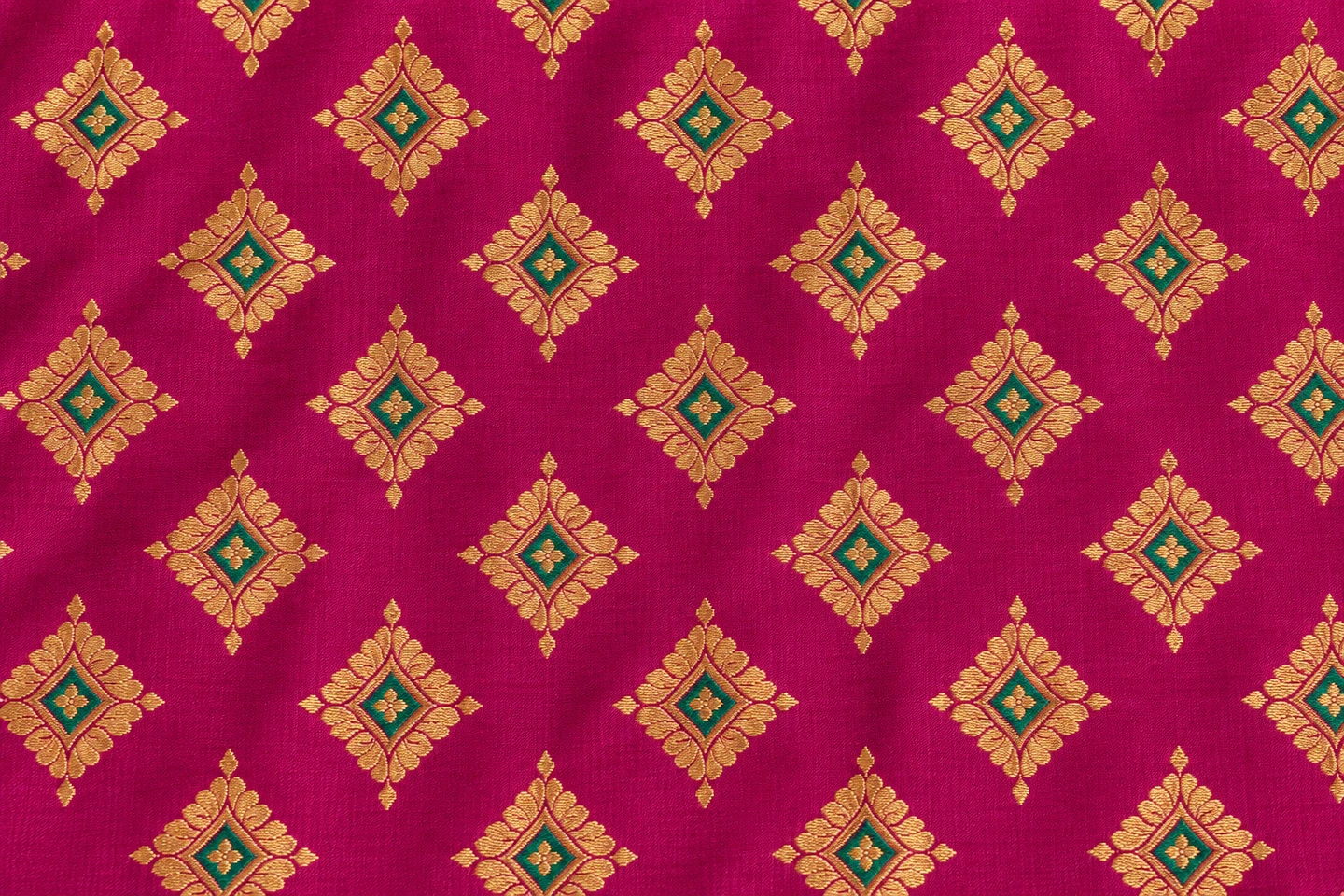 Diamond / lozenge — pointed four-sided shapesA diamond is a square turned onto one corner or an elongated four-sided figure. Repeated diamonds are common in geometric sarees and Ikat designs, but…
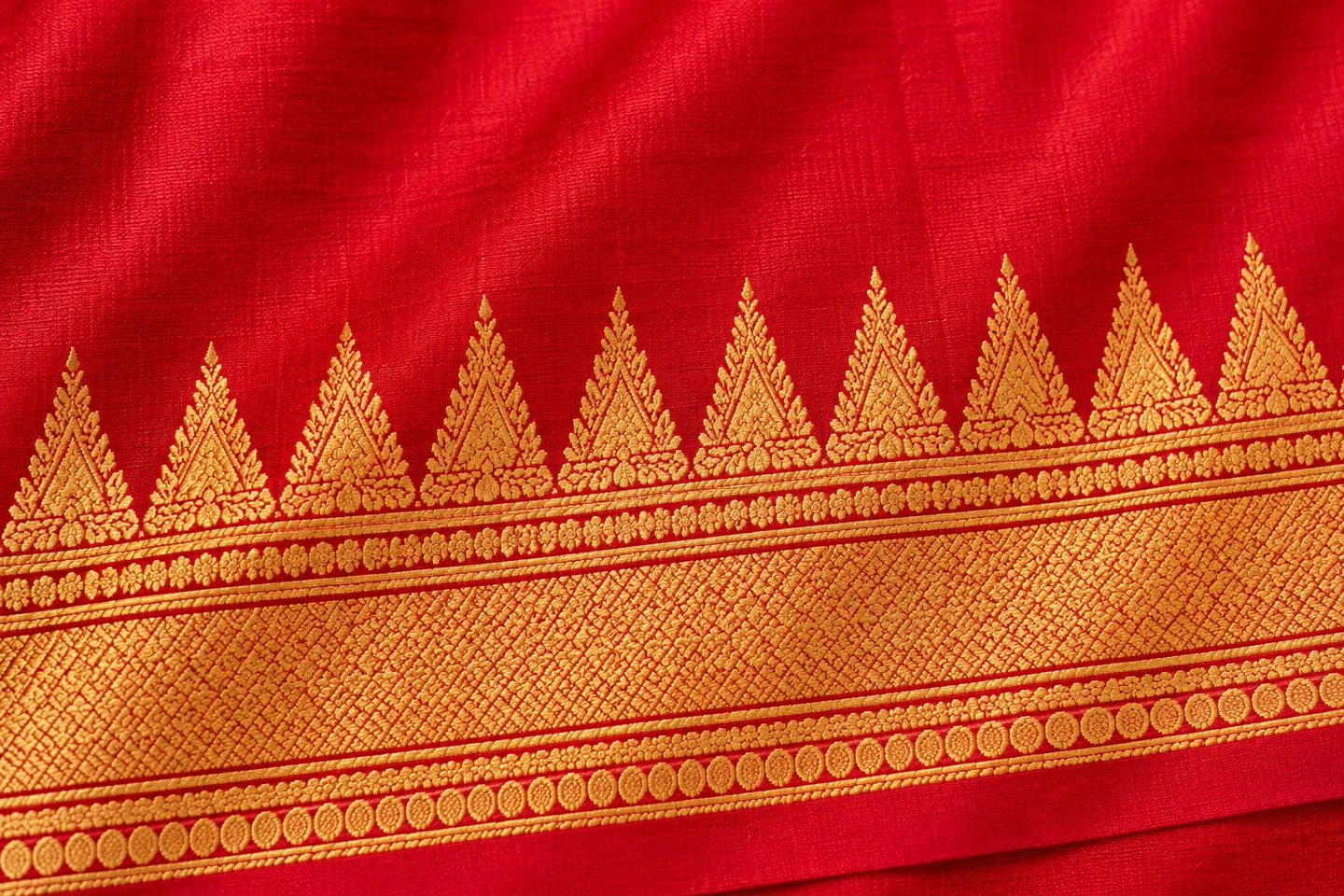 Temple border — a row of pointed formsA temple border commonly has repeated triangular or stepped shapes along the edge, inspired by temple towers or architectural outlines. Imagine a neat…
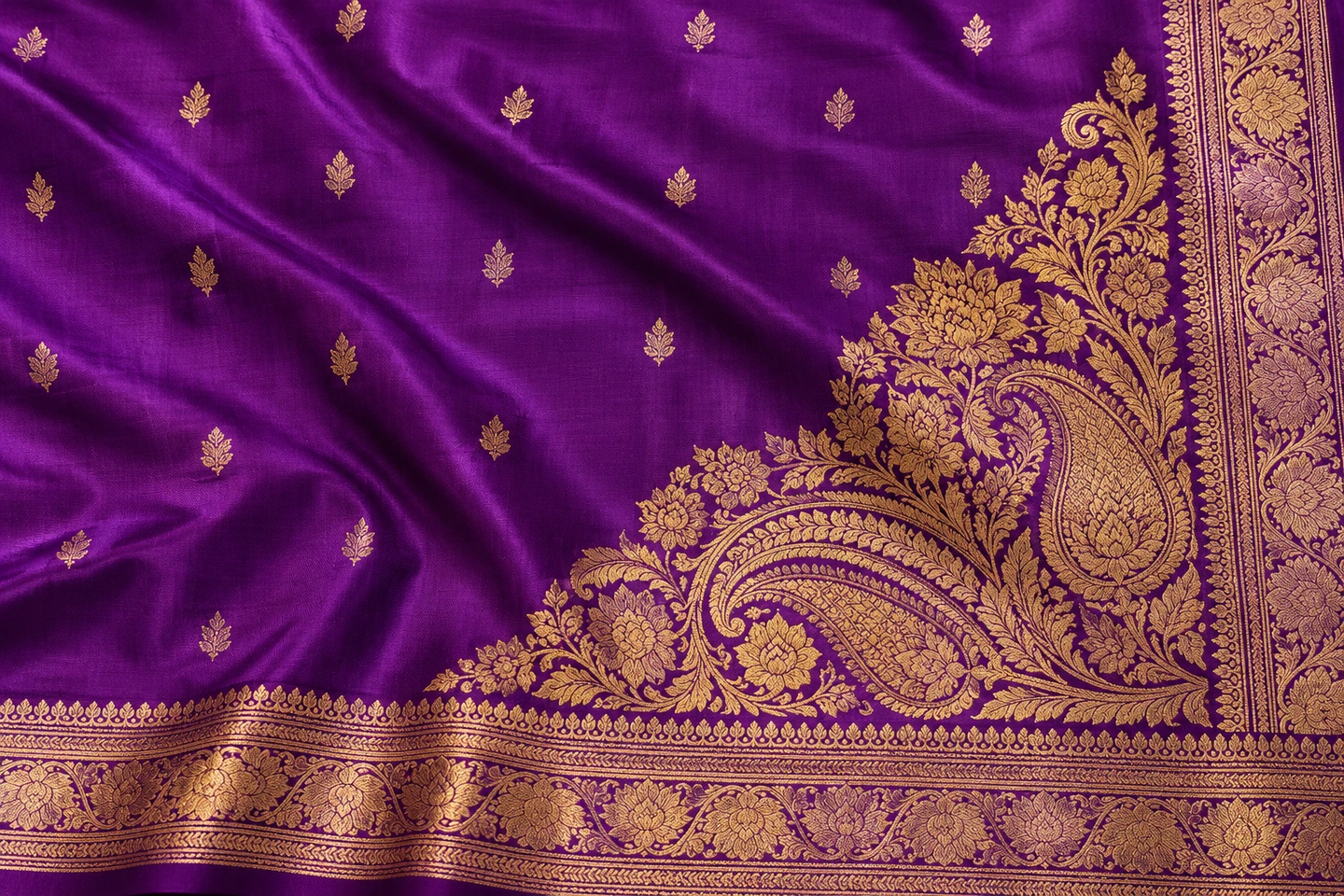 Konia — a design in the cornerKonia refers to an ornamental element placed at a corner, especially where a border meets the pallu. It might be a paisley, flower or another large mo…
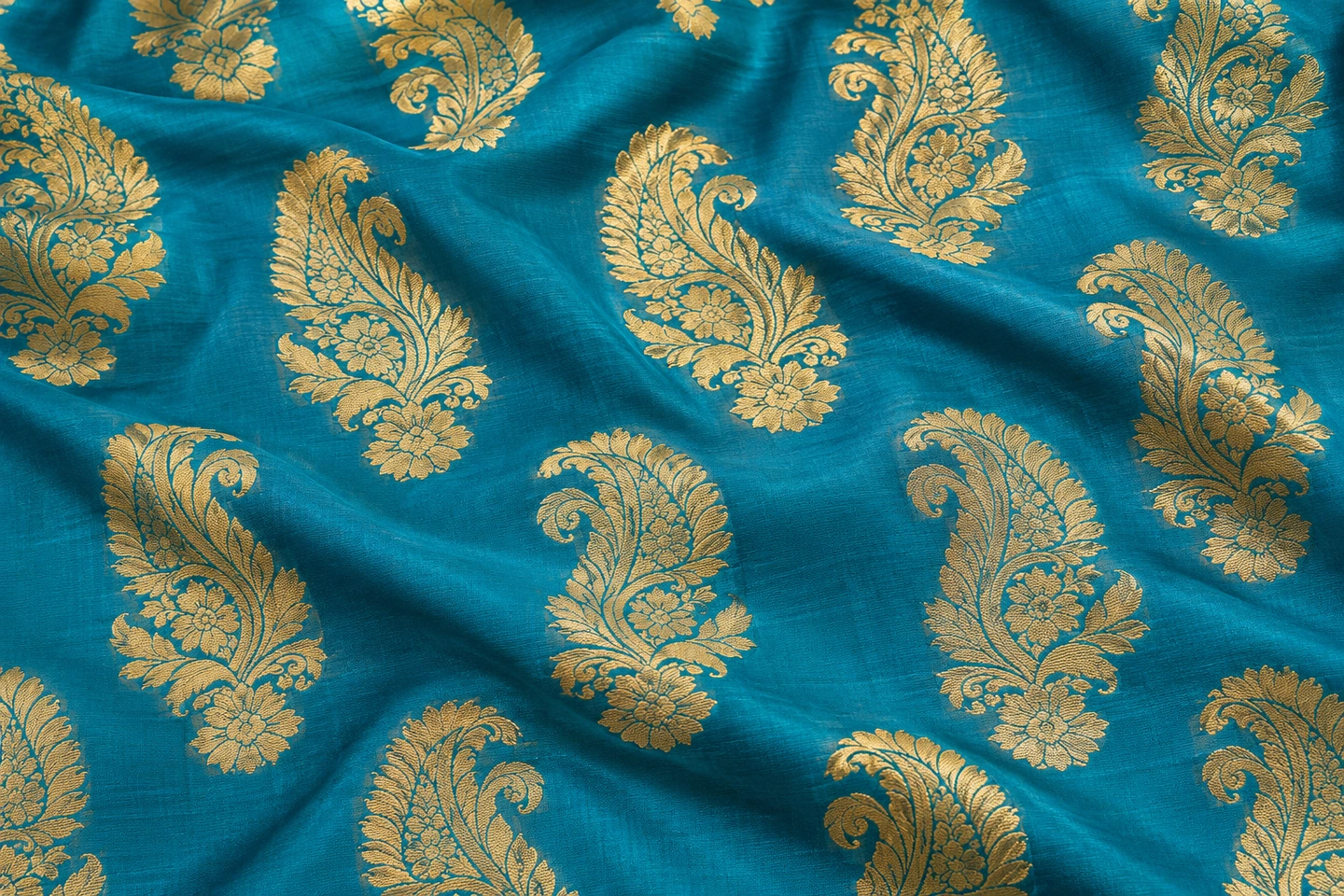 Kalga — an ornamental plume or curved botanical designKalga is used for a stylised decorative form that can resemble a curling leaf, plume or elaborated paisley. Its exact appearance varies by design trad…
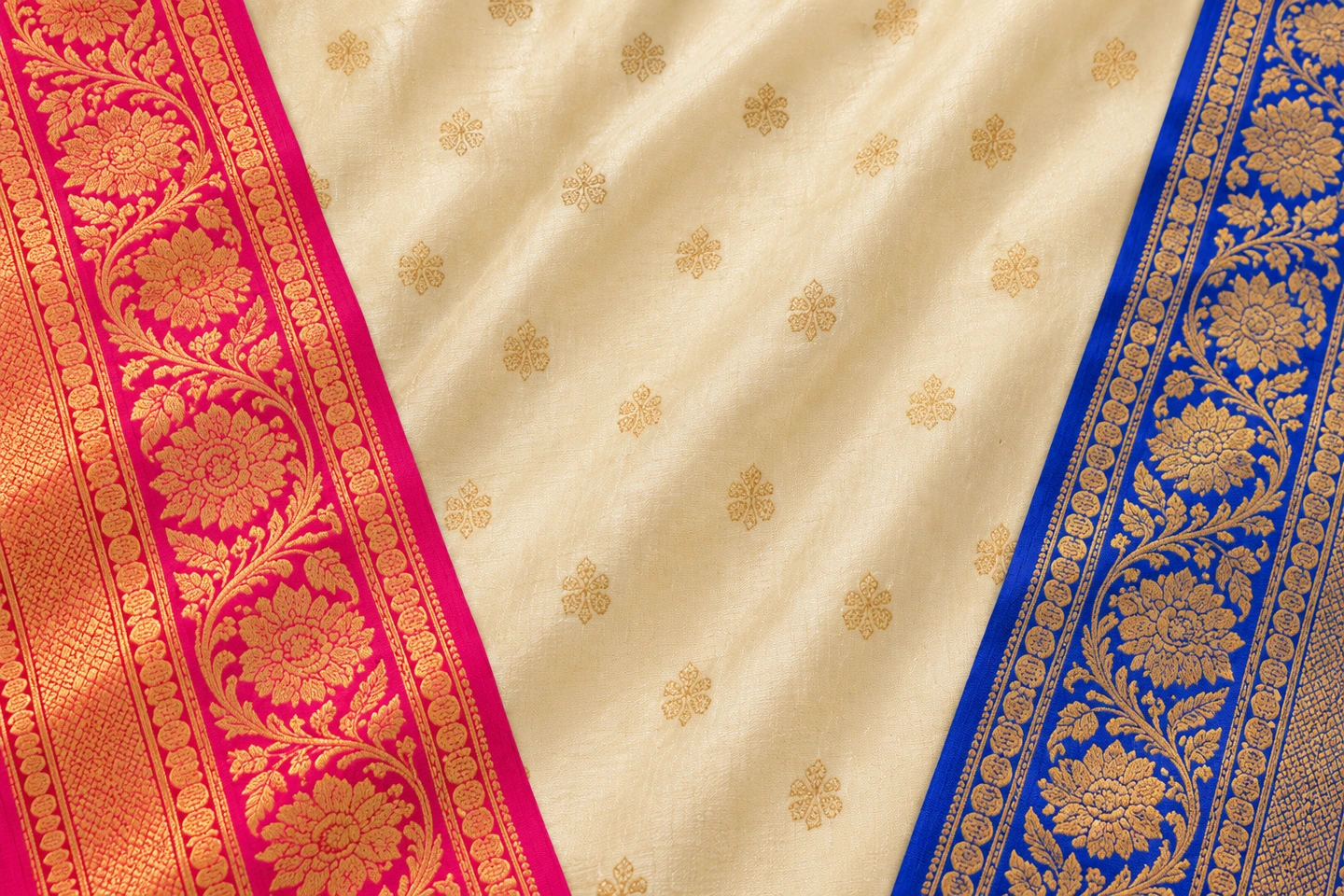 Ganga–Jamuna border — different colours on opposite edgesA Ganga–Jamuna saree has the two long borders in different colours, or sometimes different treatments, instead of matching each other. Picture a saree…
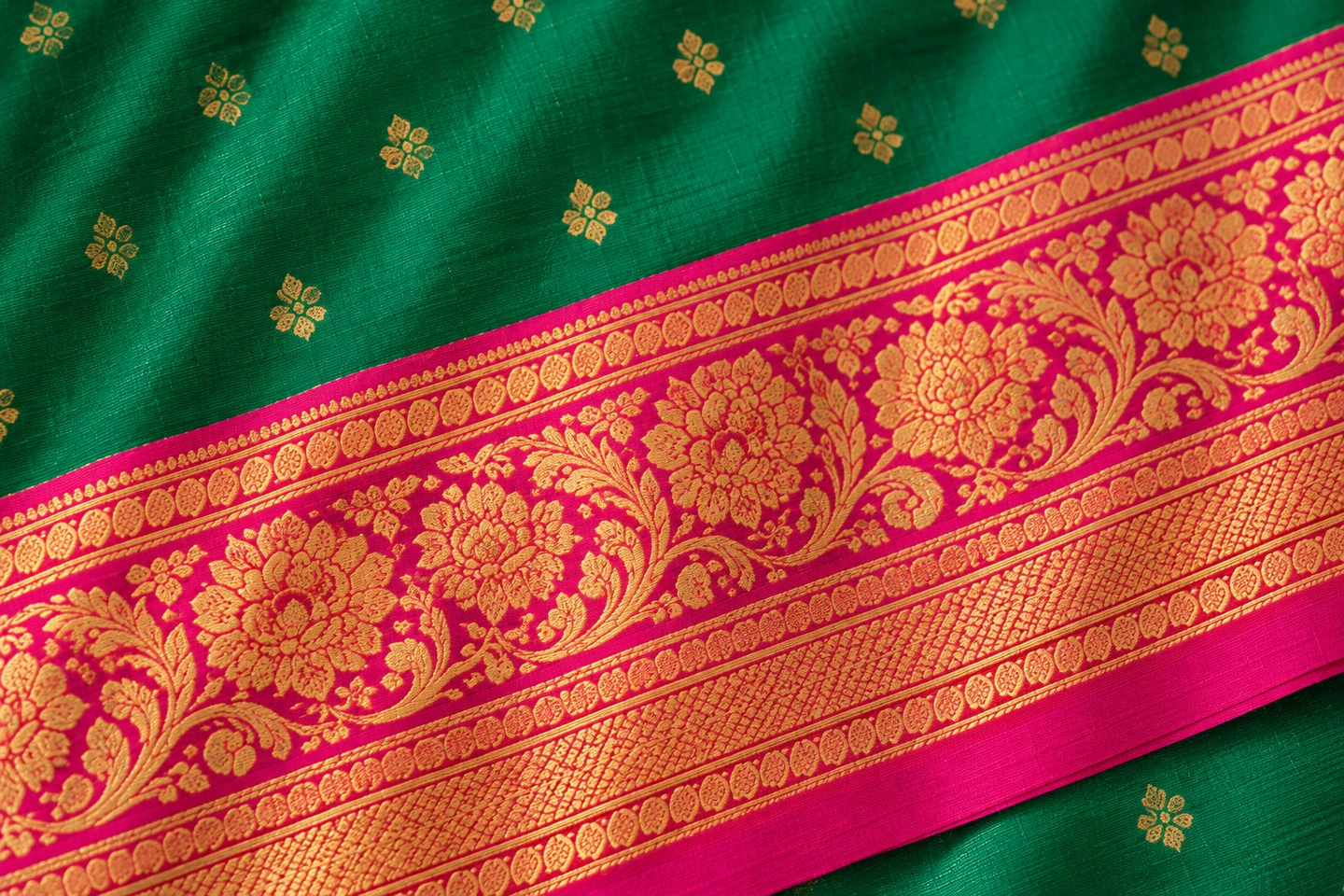 Contrast border — a border in a noticeably different colourA contrast border is easy to spot: a blue body with a bright pink border, for example. It can be narrow or broad, simple or decorated. Some traditions…
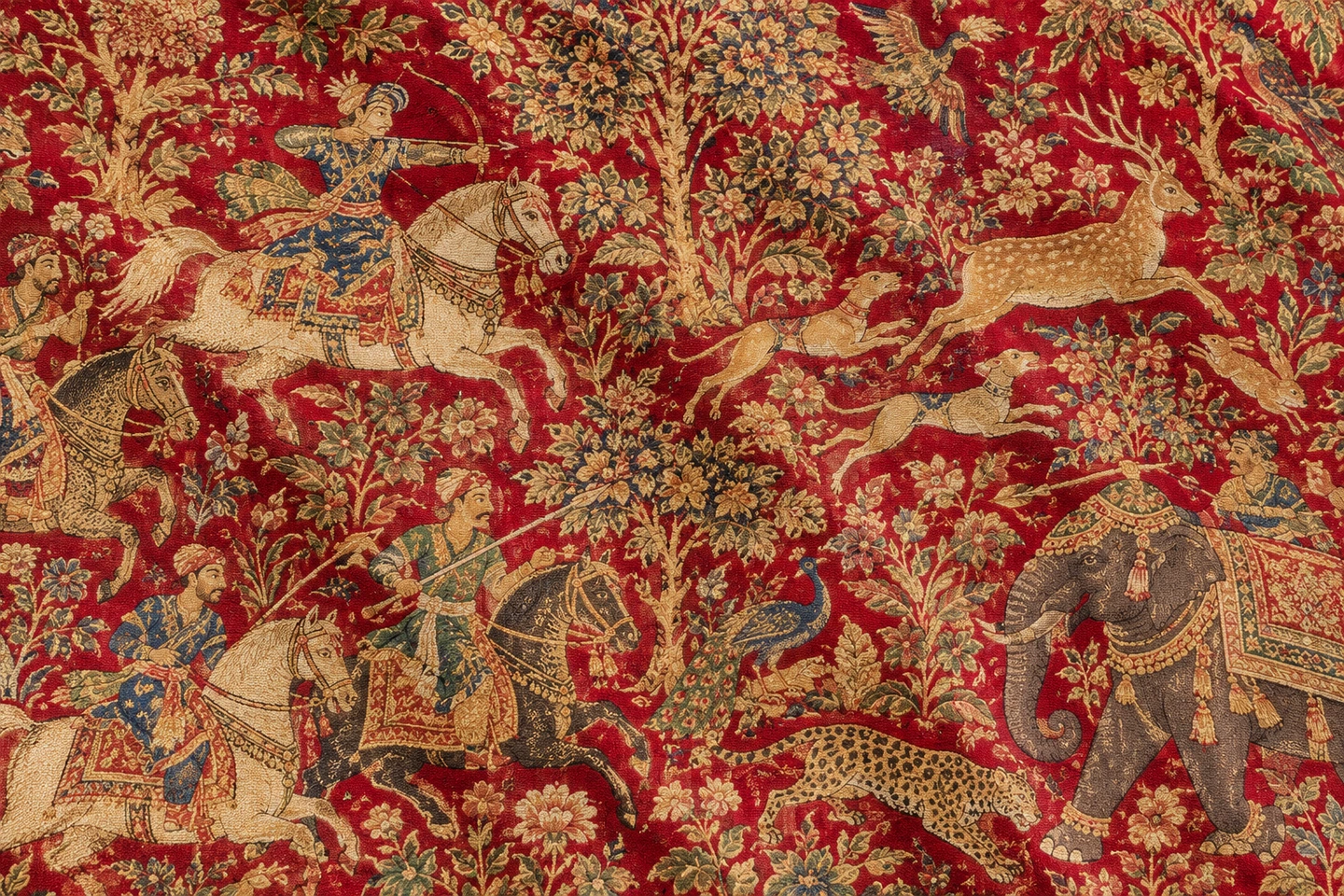 Shikargah — hunting-scene decorationShikargah describes designs depicting a hunt or related scenes, often with animals, riders, birds and trees arranged together. Instead of noticing a s…
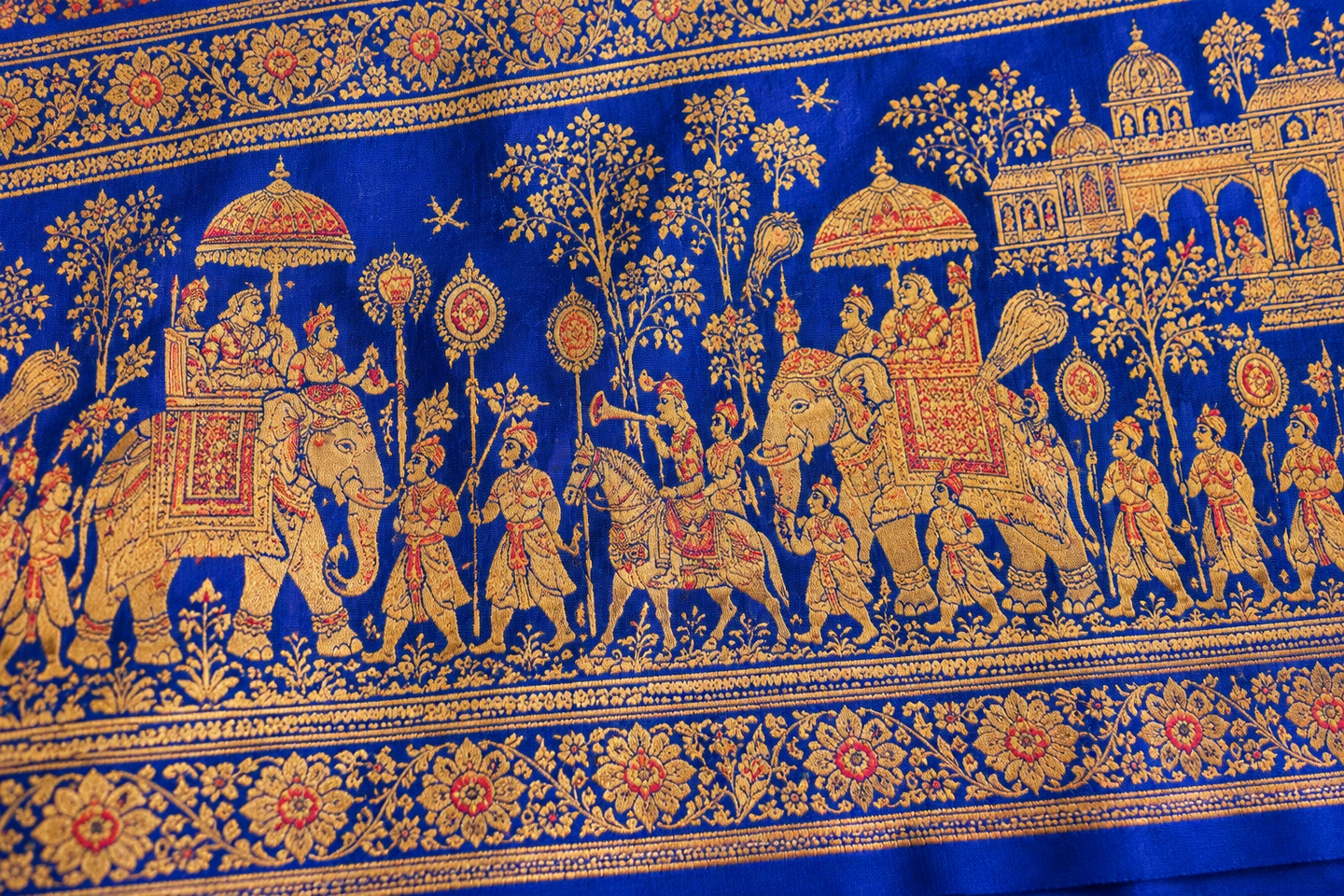 Narrative pallu — images arranged like story panelsA narrative pallu carries scenes rather than only decorative shapes. These may show people, architecture or episodes from stories and mythology. Baluc…
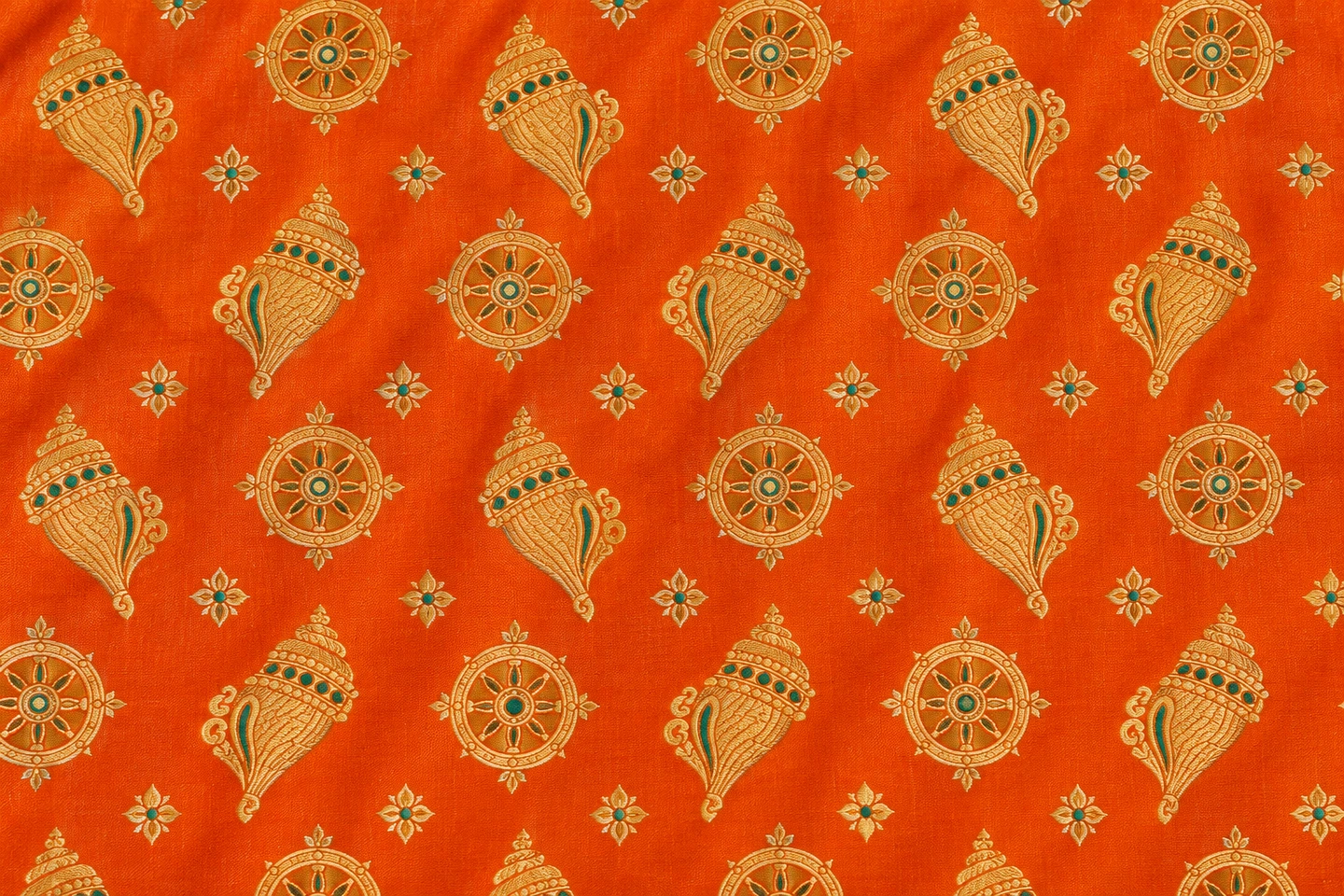 Shankha and Chakra — conch and wheel motifsShankha means conch shell; Chakra means wheel or disc. These are traditional symbolic motifs, found particularly in some eastern Indian decorative voc…
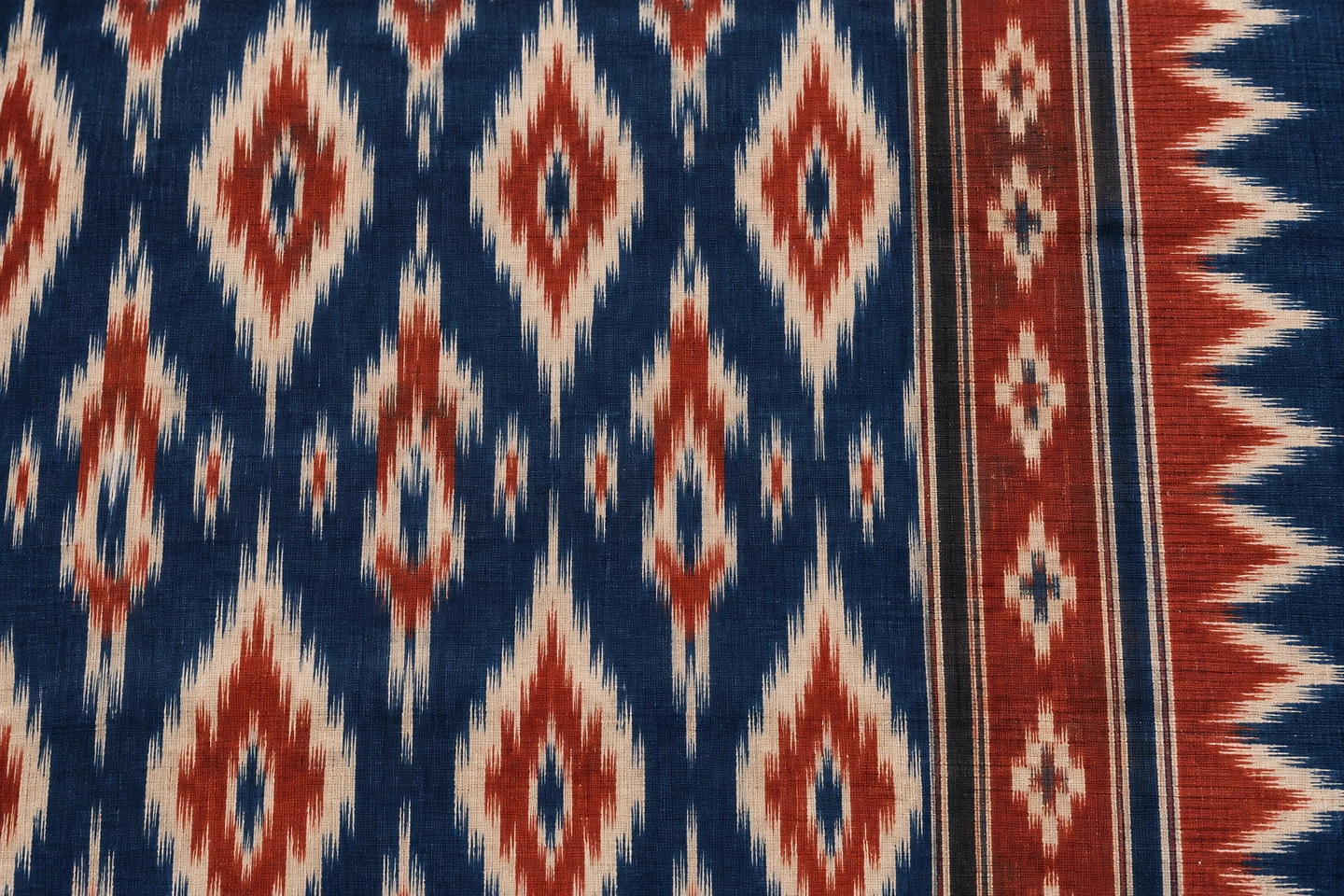 Ikat — colour patterns prepared on the threads before weavingIn Ikat, groups of yarns are tied or otherwise protected from dye in carefully chosen places before they are woven. The coloured sections line up to f…
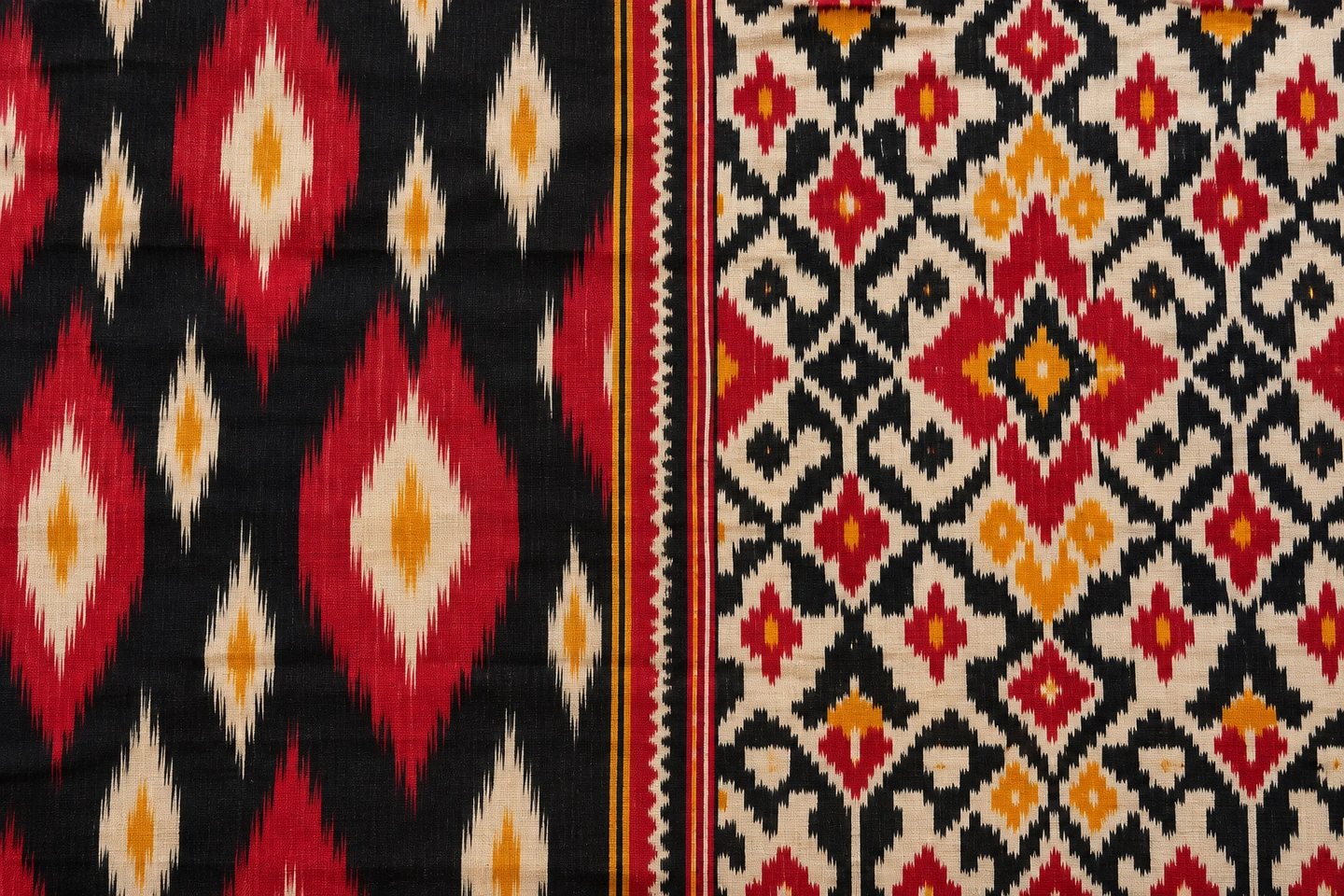 Single Ikat and double Ikat — one set of yarns or bothA saree has lengthwise yarns and crosswise yarns. In single Ikat, typically one set is resist-dyed to create the planned shapes. In double Ikat, bot…
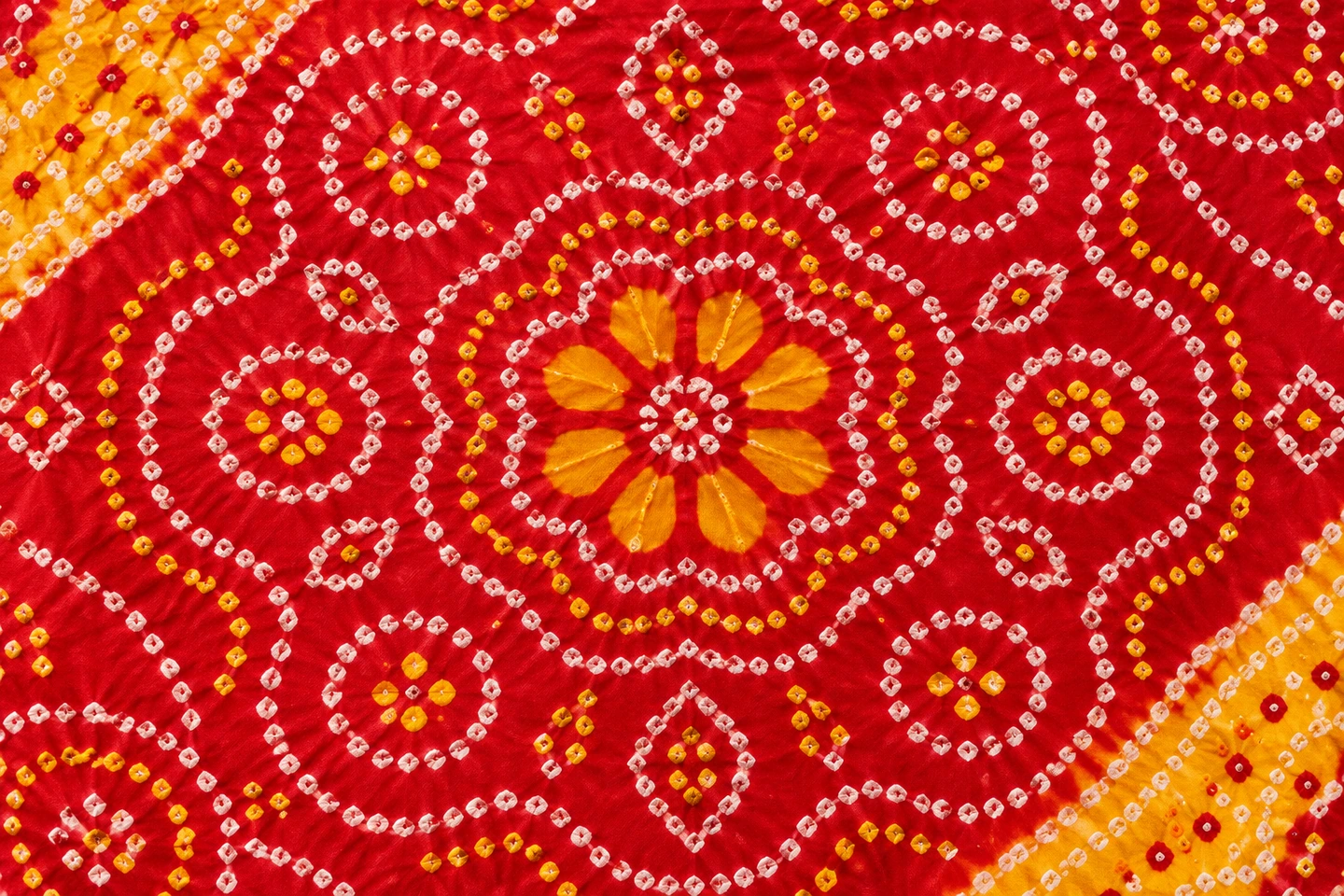 Bandhani / Bandhej — tiny tied dots and patterned clustersBandhani is made by tying small points on cloth before dyeing. The tied spots resist the dye, creating dots. Groups of these dots can form flowers, ci…
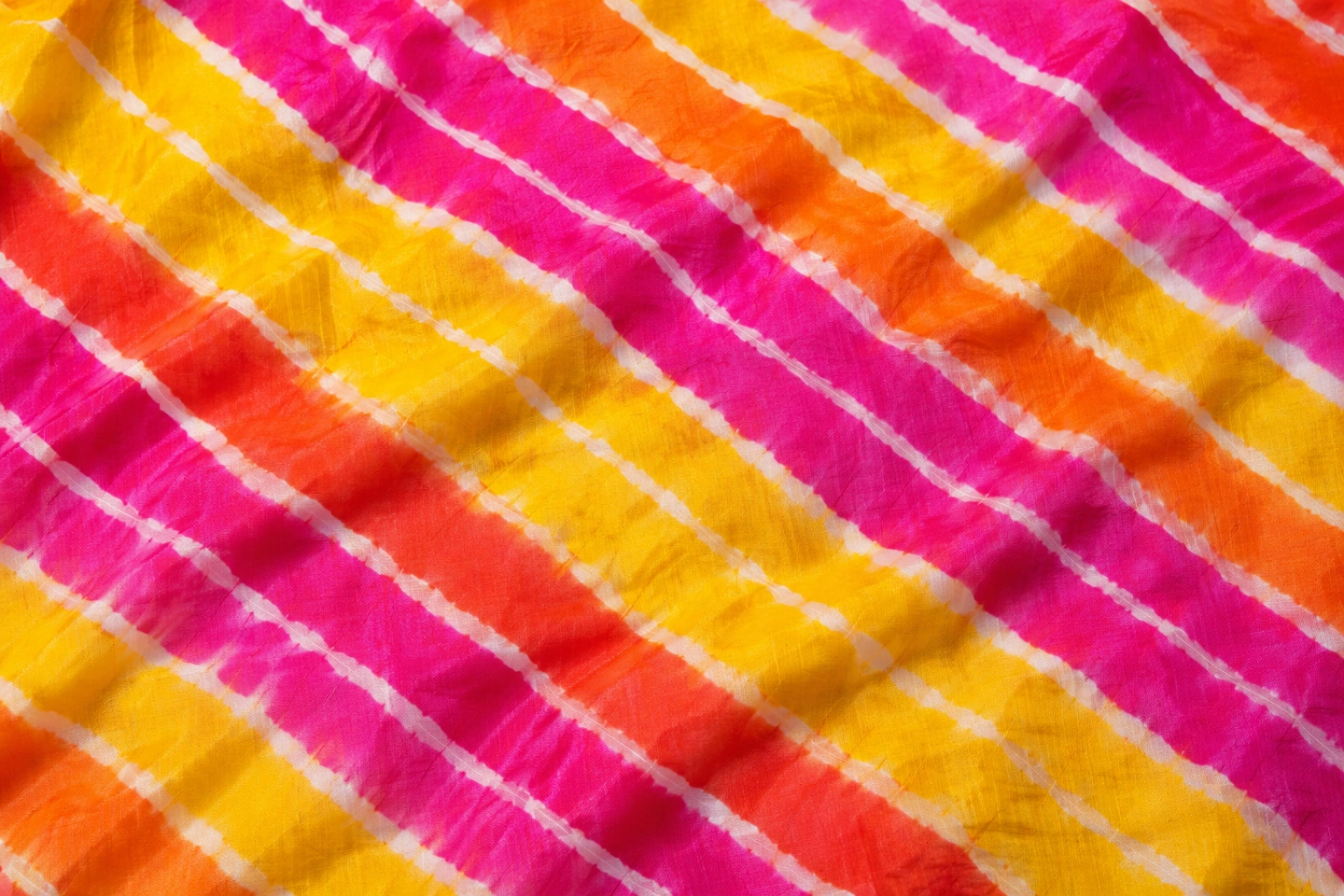 Leheriya — flowing diagonal waves and stripesLeheriya is a Rajasthani tie-dye tradition especially known for diagonal, wave-like stripes, often in vibrant colours. The stripes are typically softe…
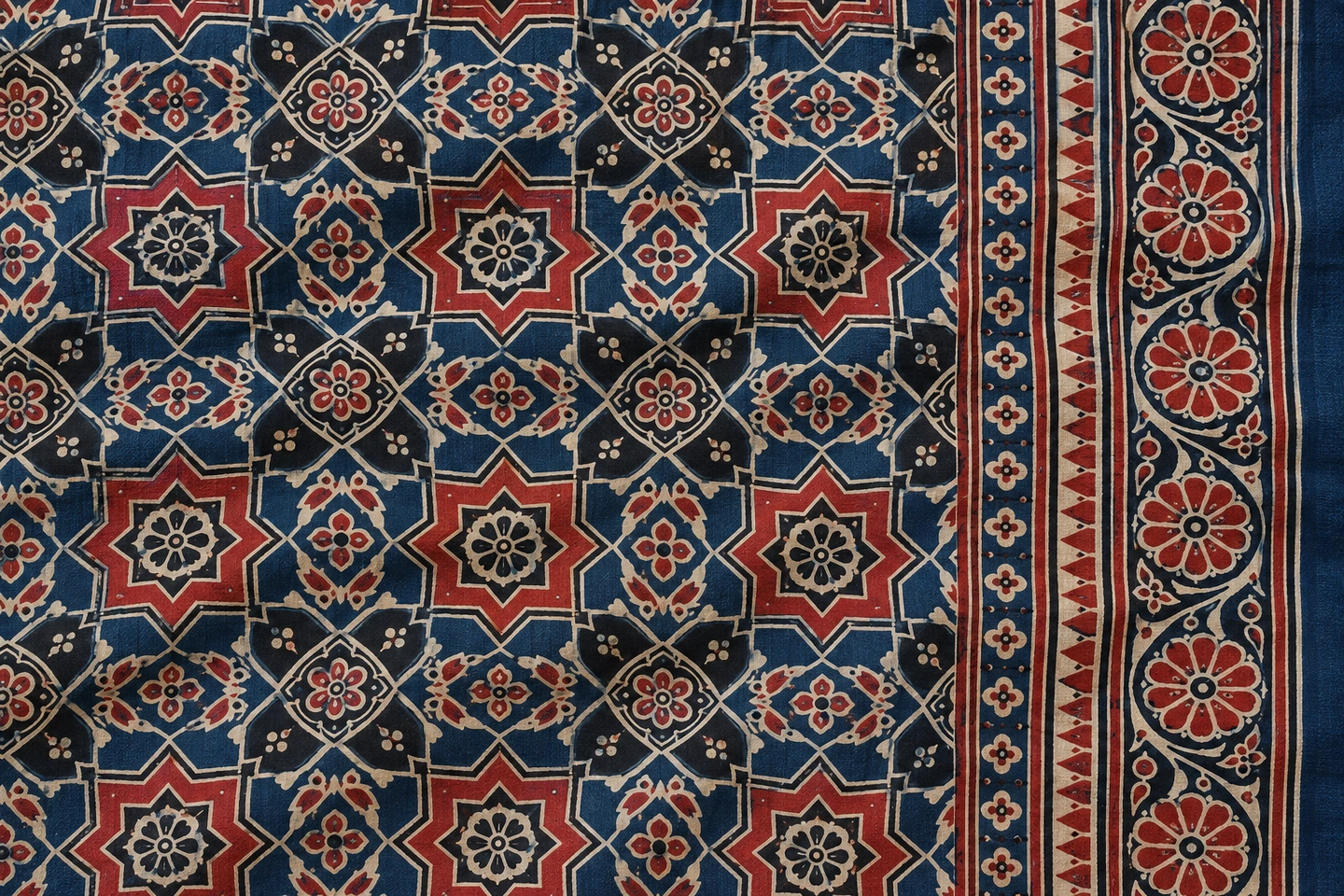 Ajrakh — complex repeated printed patternsAjrakh is a traditional resist and block-printing practice associated particularly with parts of Gujarat, Rajasthan and Sindh. Many well-known example…
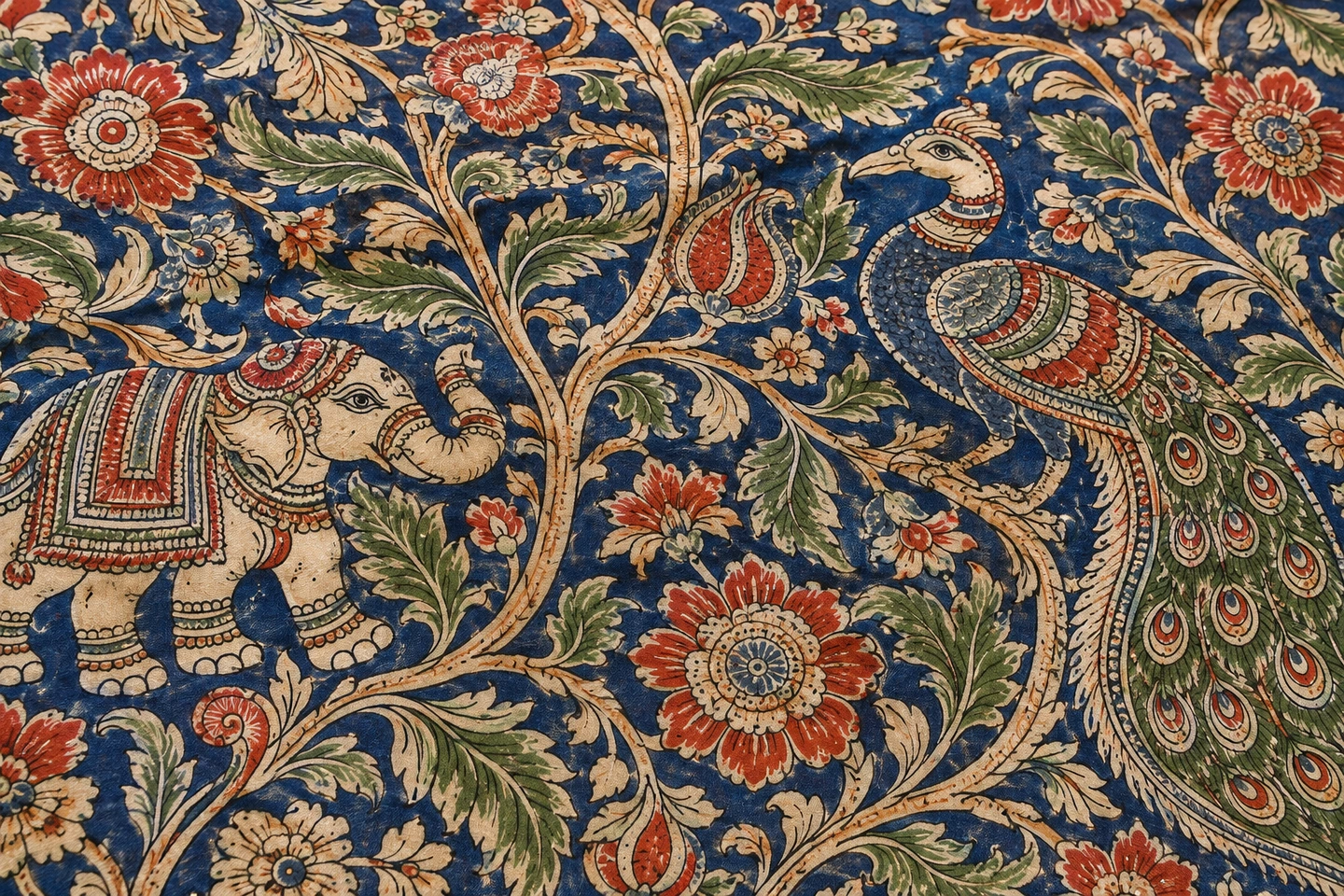 Kalamkari — drawn or block-printed storytelling and flowersKalam refers to a pen; traditional Kalamkari includes hand-drawn work as well as block-printed practices associated with different centres. Sarees can…
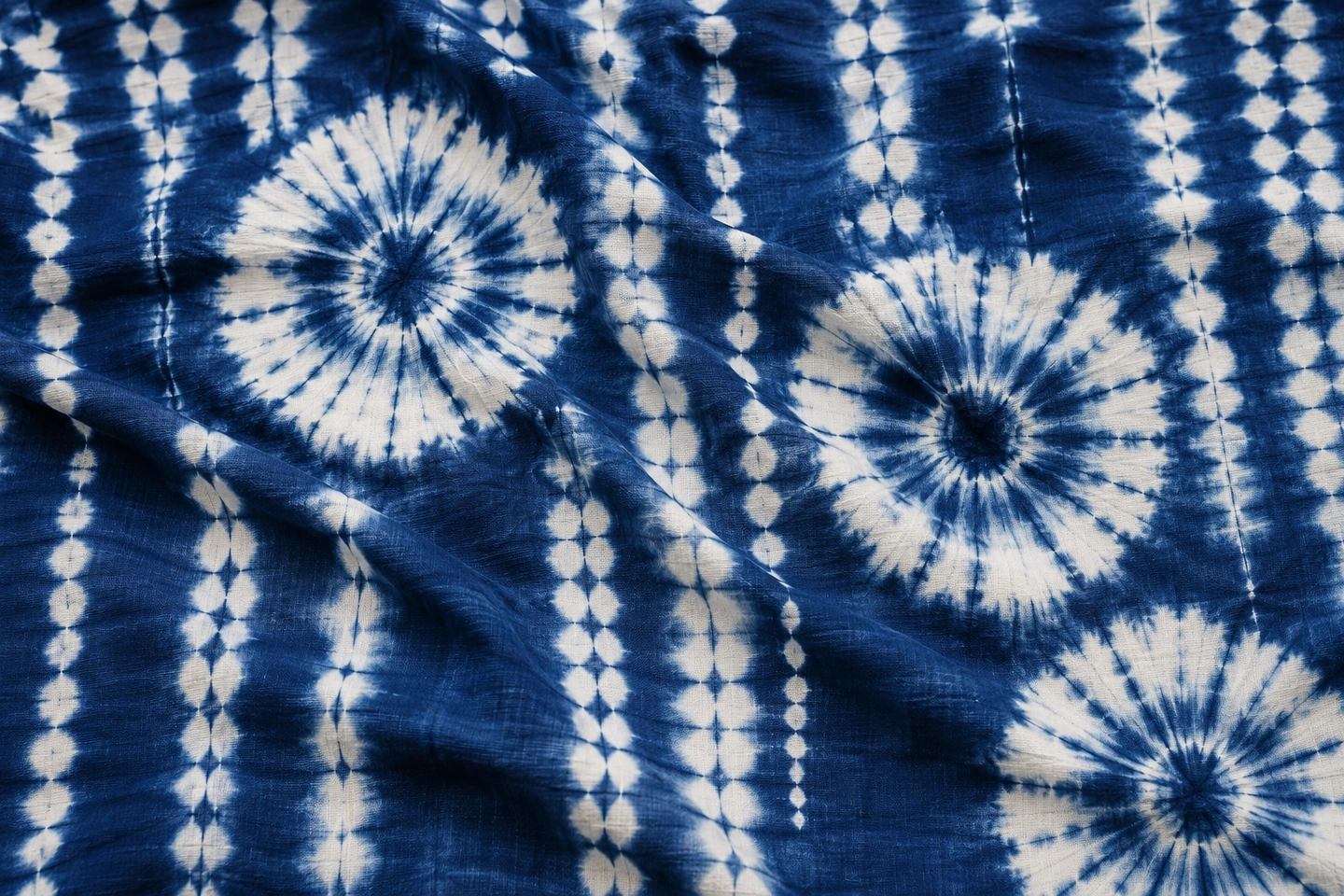 Shibori — patterns formed by binding or folding clothShibori is a family of resist-dyeing techniques in which cloth is folded, stitched, bound or compressed before dyeing. The result may be irregular cir…
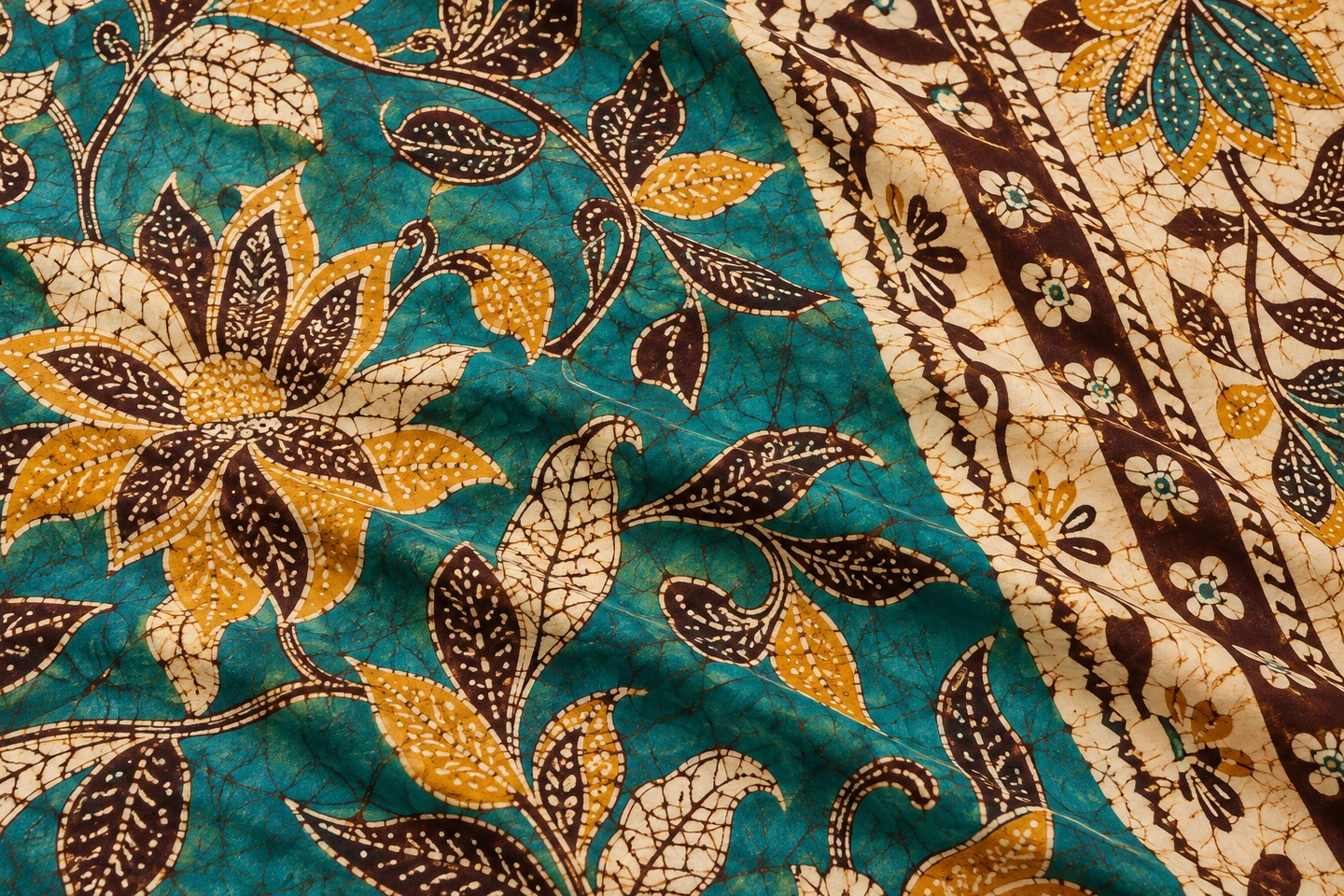 Batik — designs made using a wax resistIn batik, wax blocks dye from reaching selected areas of the cloth. When the wax is removed, shapes and colours remain. Some batik fabrics show fine c…
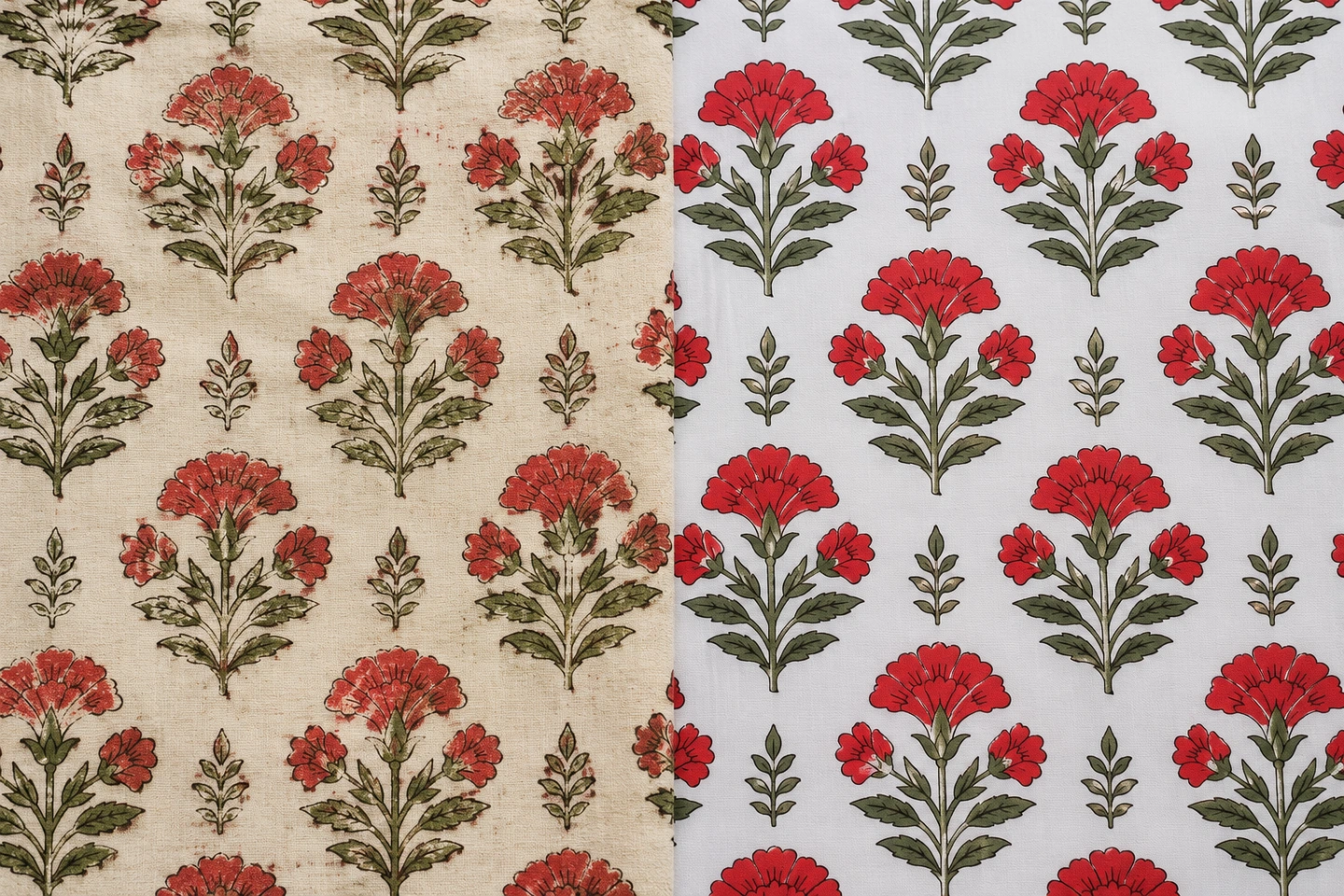 Block printing versus digital printingBlock printing uses carved blocks applied to cloth, often one colour at a time. It can produce beautiful repeated designs and small variations in regi…
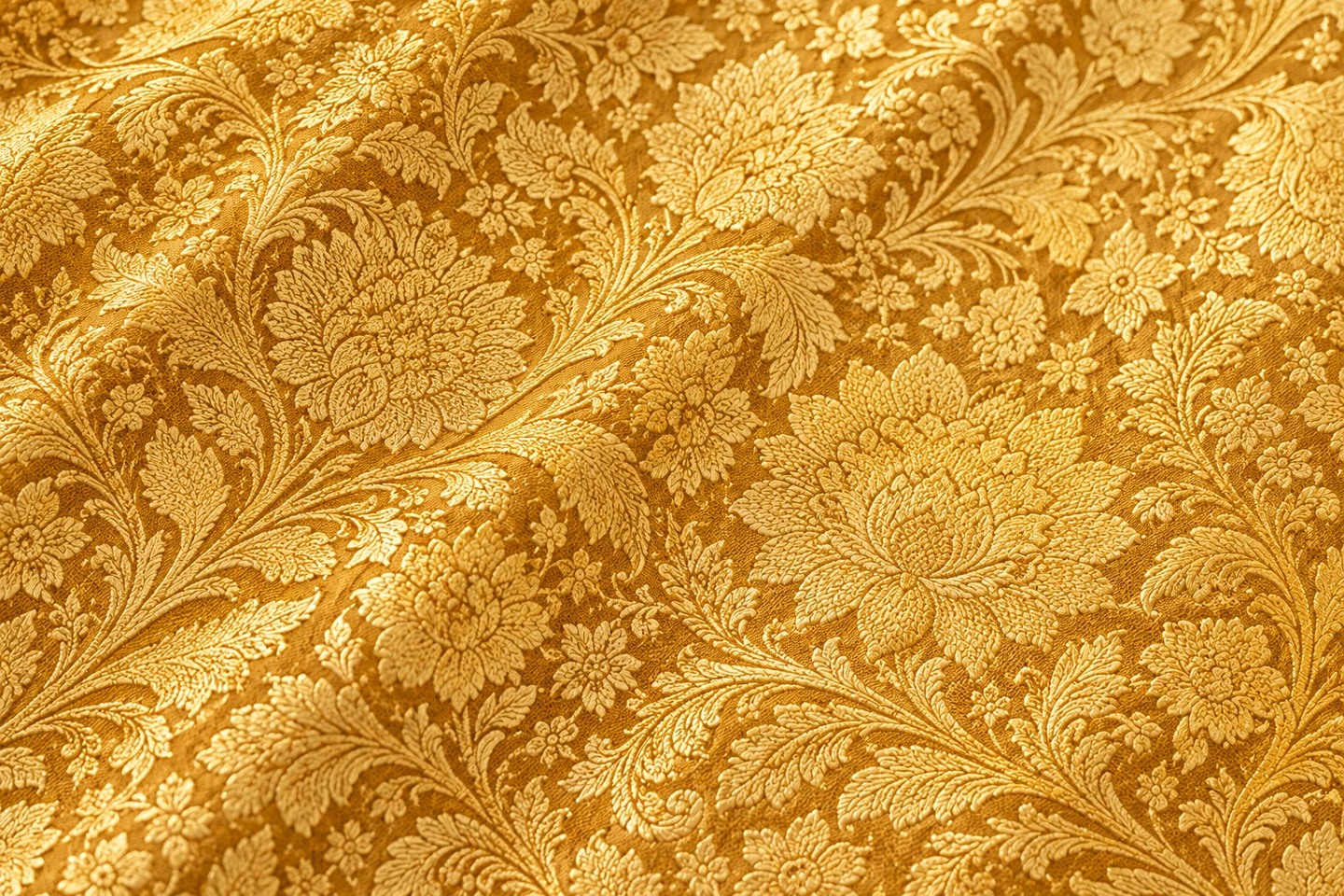 Zari — the metallic-looking threadZari is the gold- or silver-looking thread often used in borders and decorative patterns. Historically some zari used precious-metal components; moder…
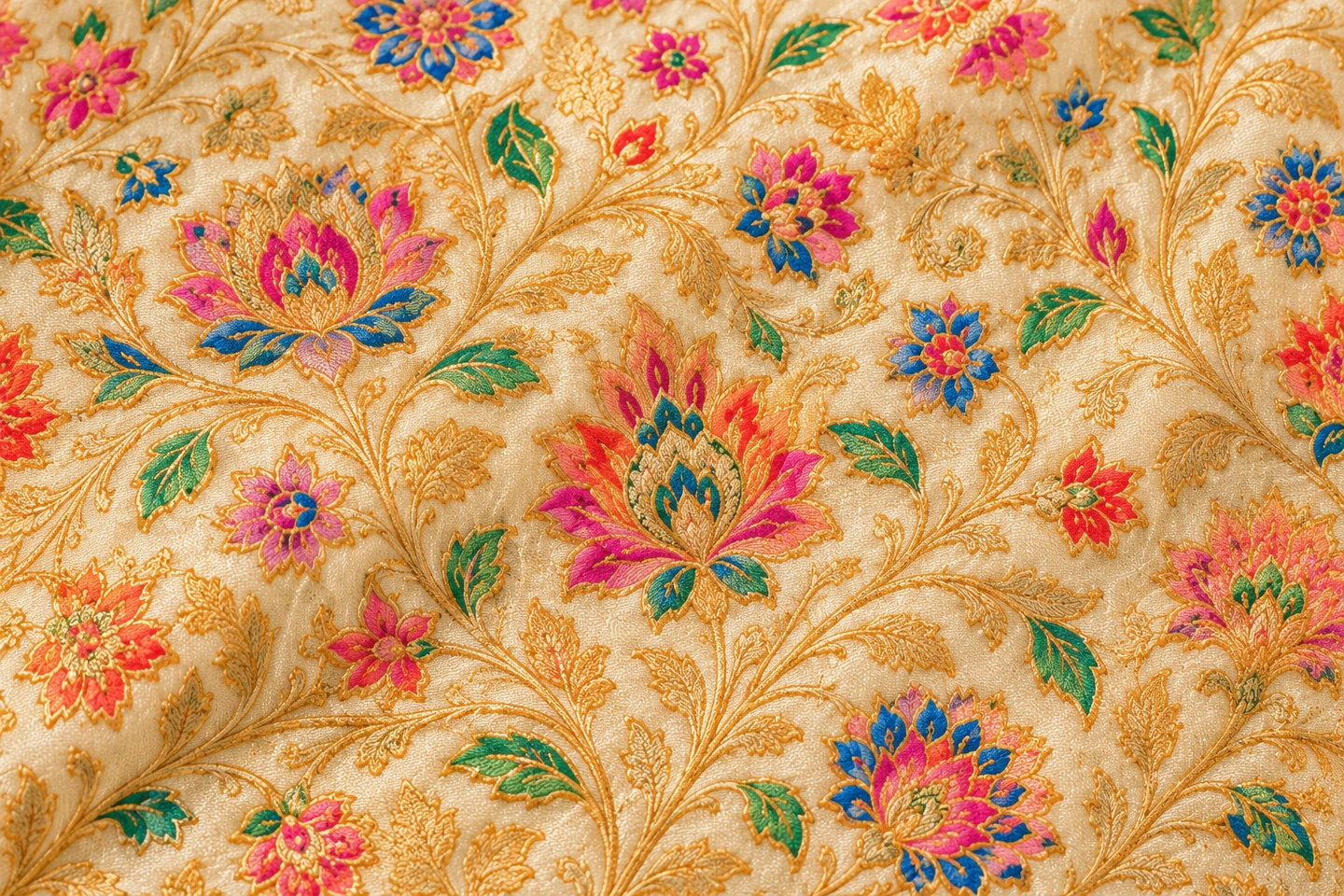 Meenakari — small coloured details inside woven decorationIn the language of certain silk brocades, Meenakari usually refers to coloured silk details added into the main decorative motifs. Picture a gold-colo…
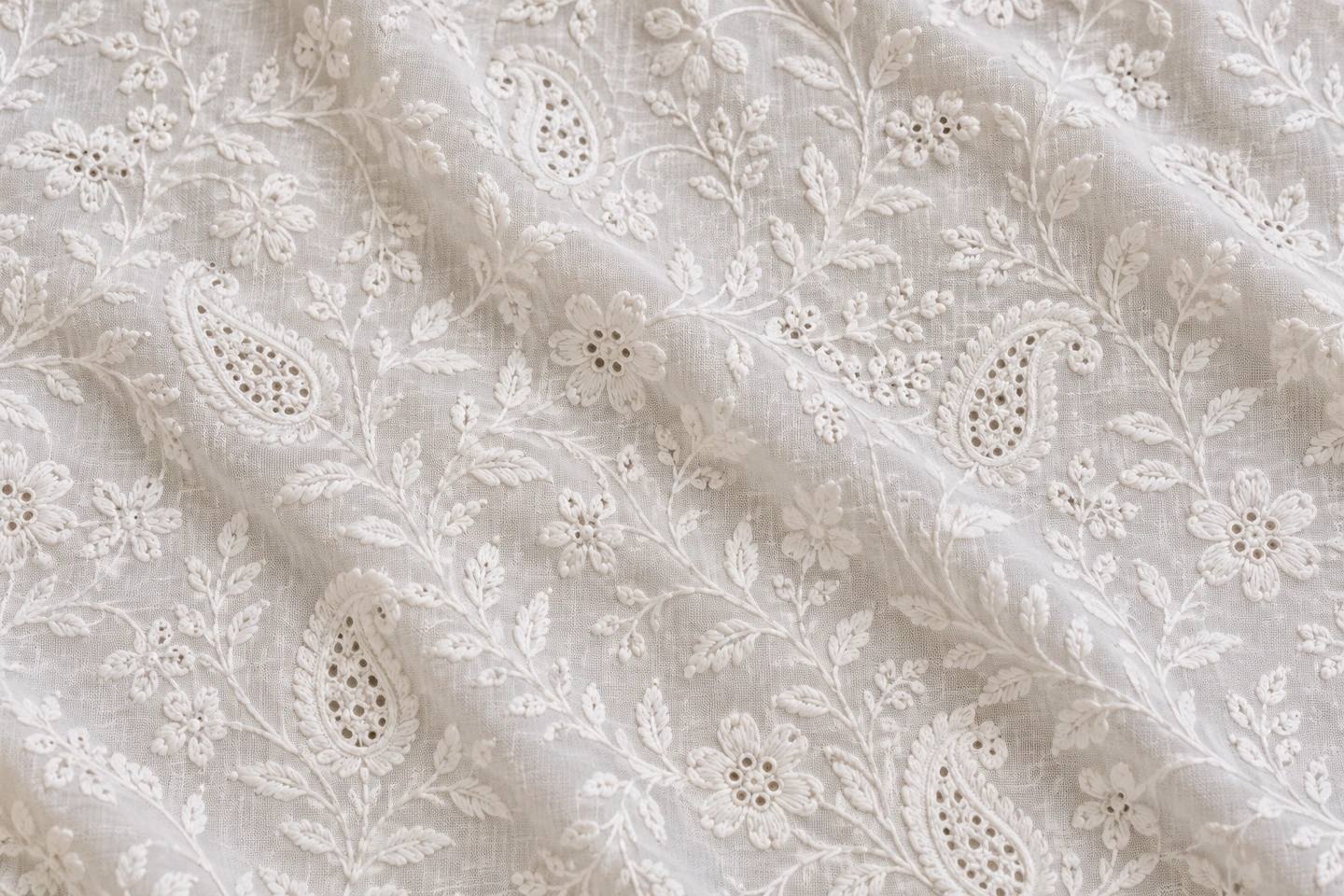 Chikankari — fine, often delicate embroideryChikankari is a traditional embroidery associated strongly with Lucknow. Many designs are floral or leafy, worked with a variety of stitches that can …
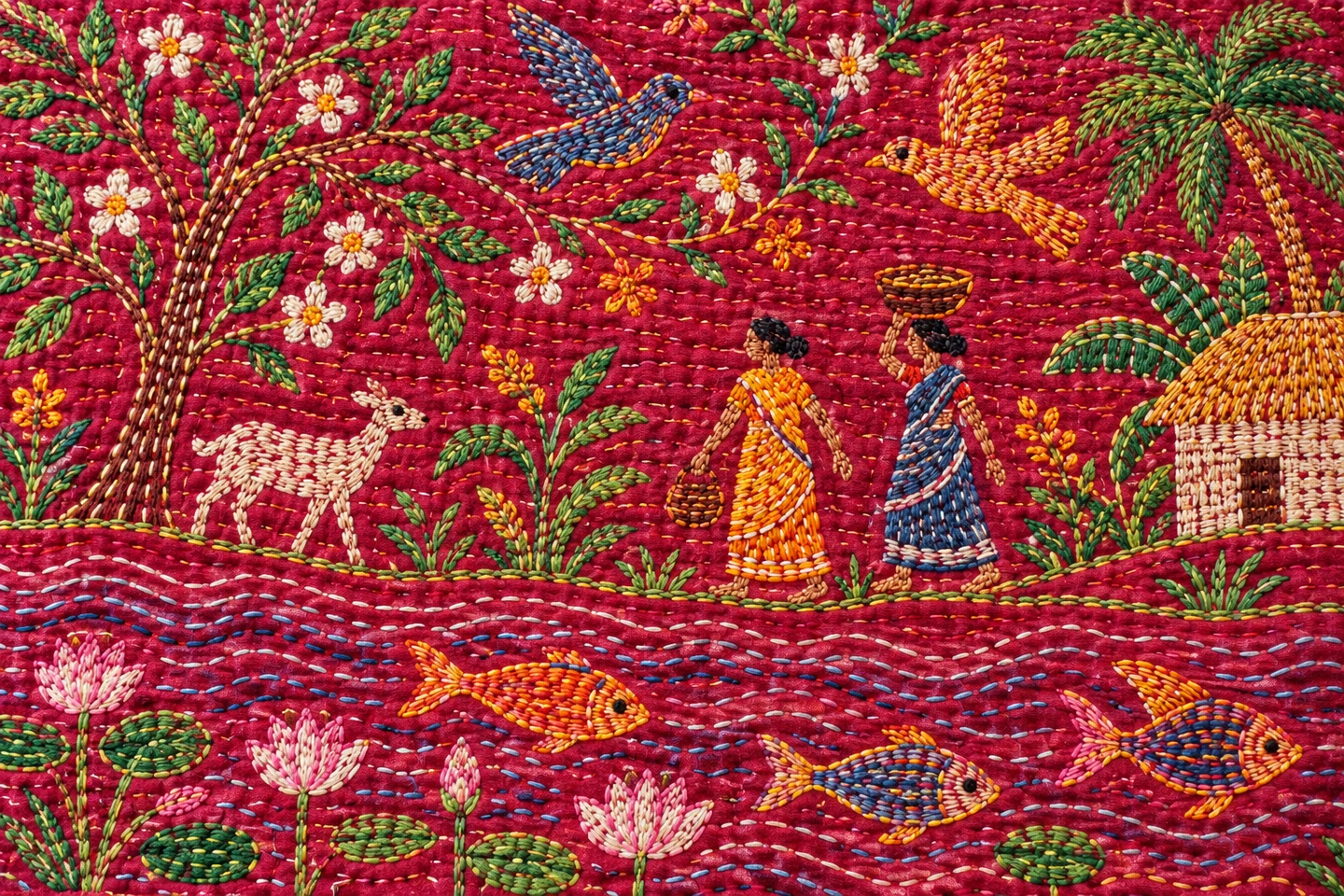 Kantha — running-stitch embroidery and storytellingKantha is associated with eastern India, especially Bengal. Running stitches create outlines, patterns and sometimes richly illustrated scenes. Some p…
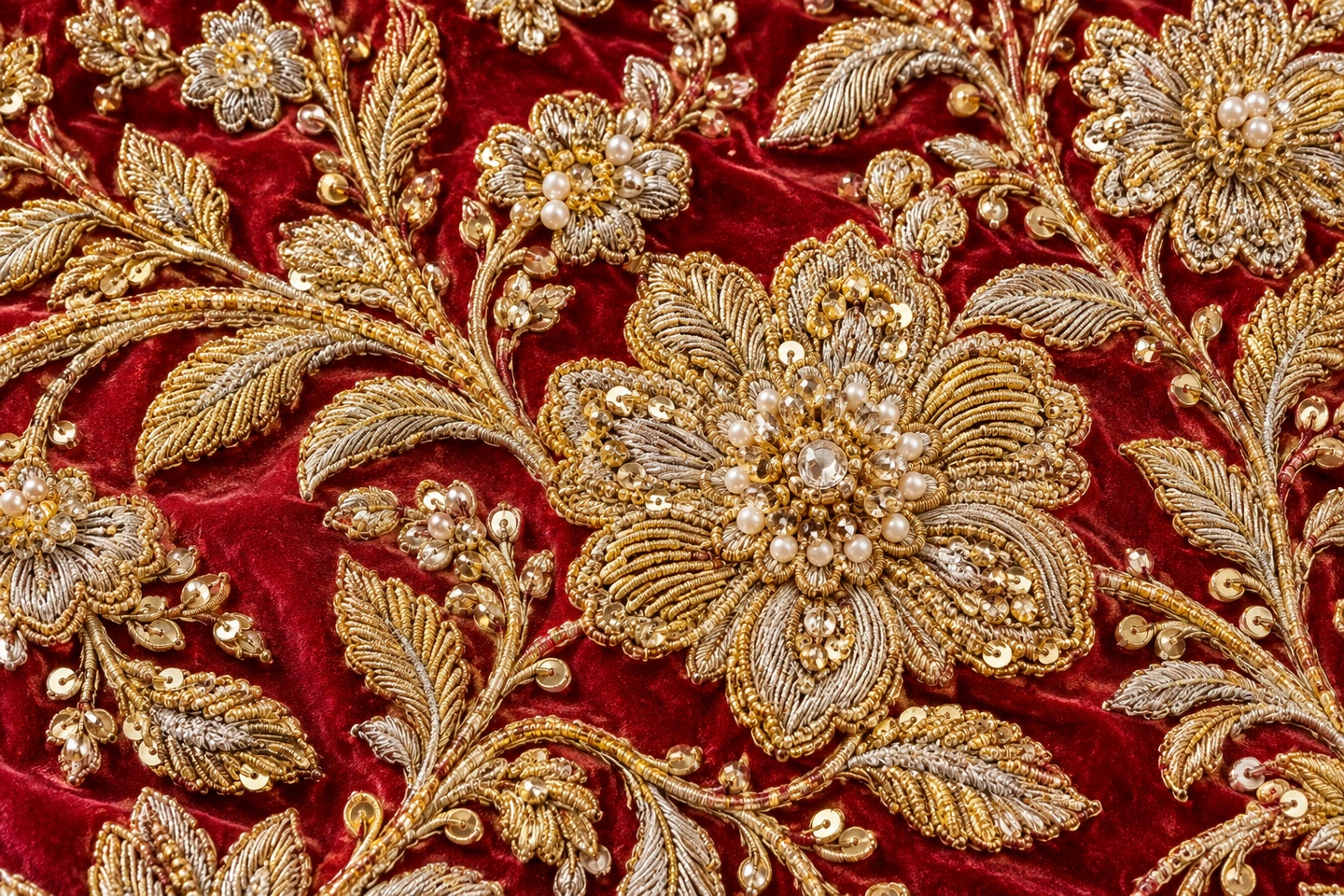 Zardozi — elaborate metallic embroideryZardozi is a form of richly decorative embroidery, historically using metal-related threads and materials, often with beads, stones or sequins. It is …
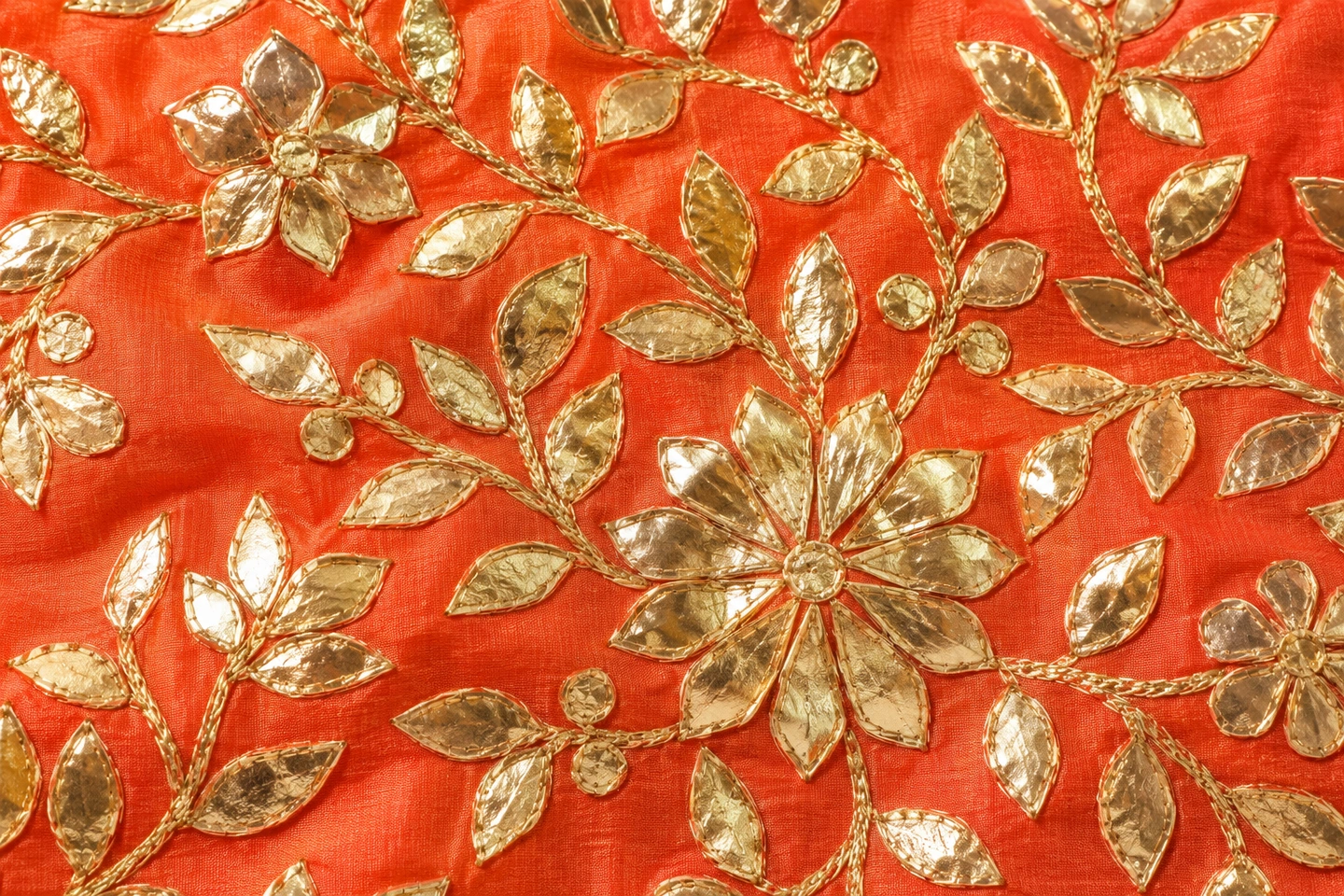 Gota Patti — applied shiny ribbon piecesGota Patti decoration uses pieces of metallic-looking ribbon or trim attached to the cloth, commonly arranged as petals, leaves or geometric shapes. I…Cutwork — a label used in more than one wayThe word cutwork can refer to actual cut-out embroidery in some textiles. In Banarasi silk commerce, it can also describe a brocade approach where unu…
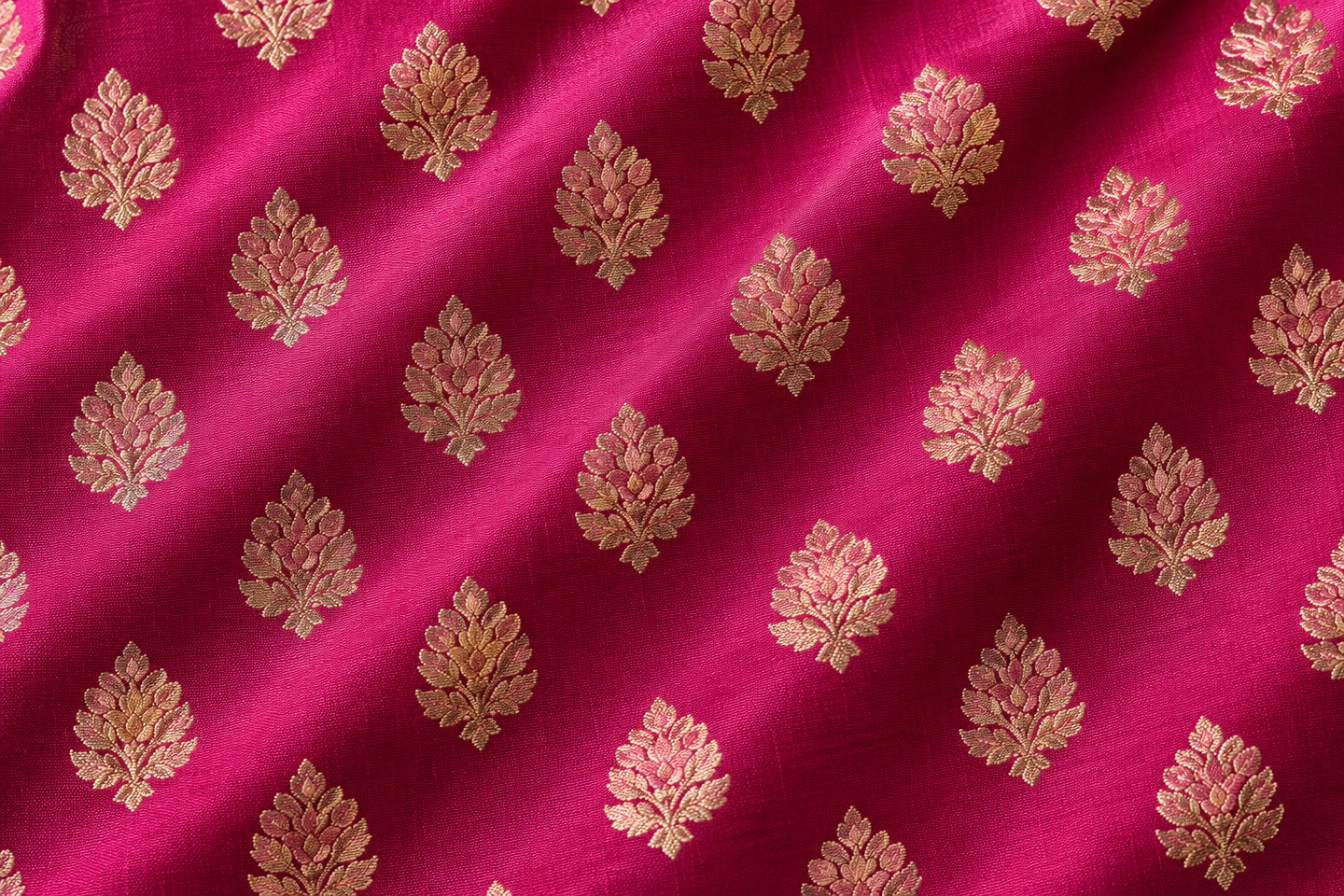 Kadwa / Kadhua — decorative motifs formed individuallyA Kadwa saree has motifs woven separately with their own decorative threads, rather than simply carrying one decorative thread across long empty space…
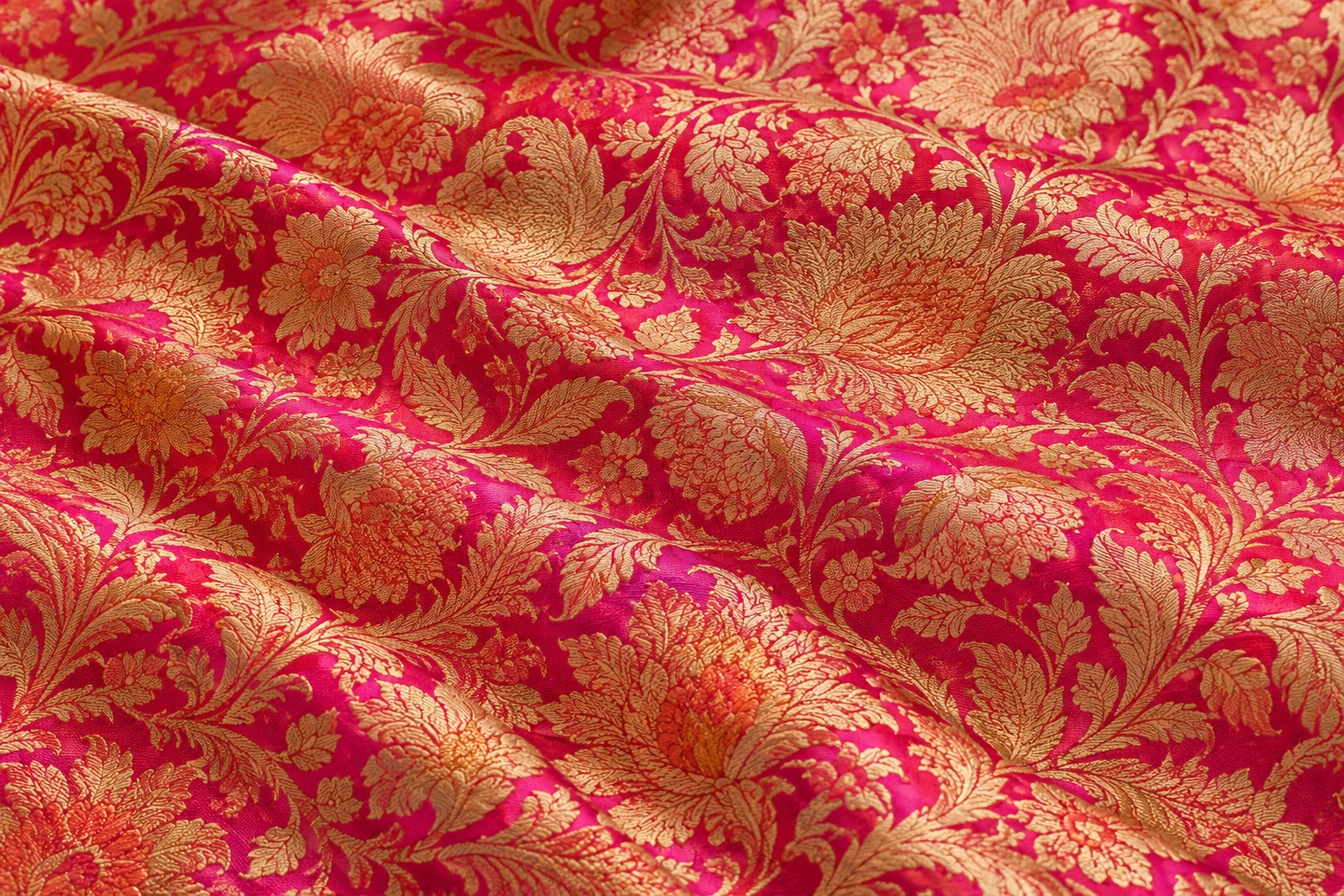 Fekwa / Phekua — decorative thread carried across wider areasIn Fekwa descriptions, supplementary decorative thread is often carried across larger portions of fabric, producing motifs with connecting floats visi…
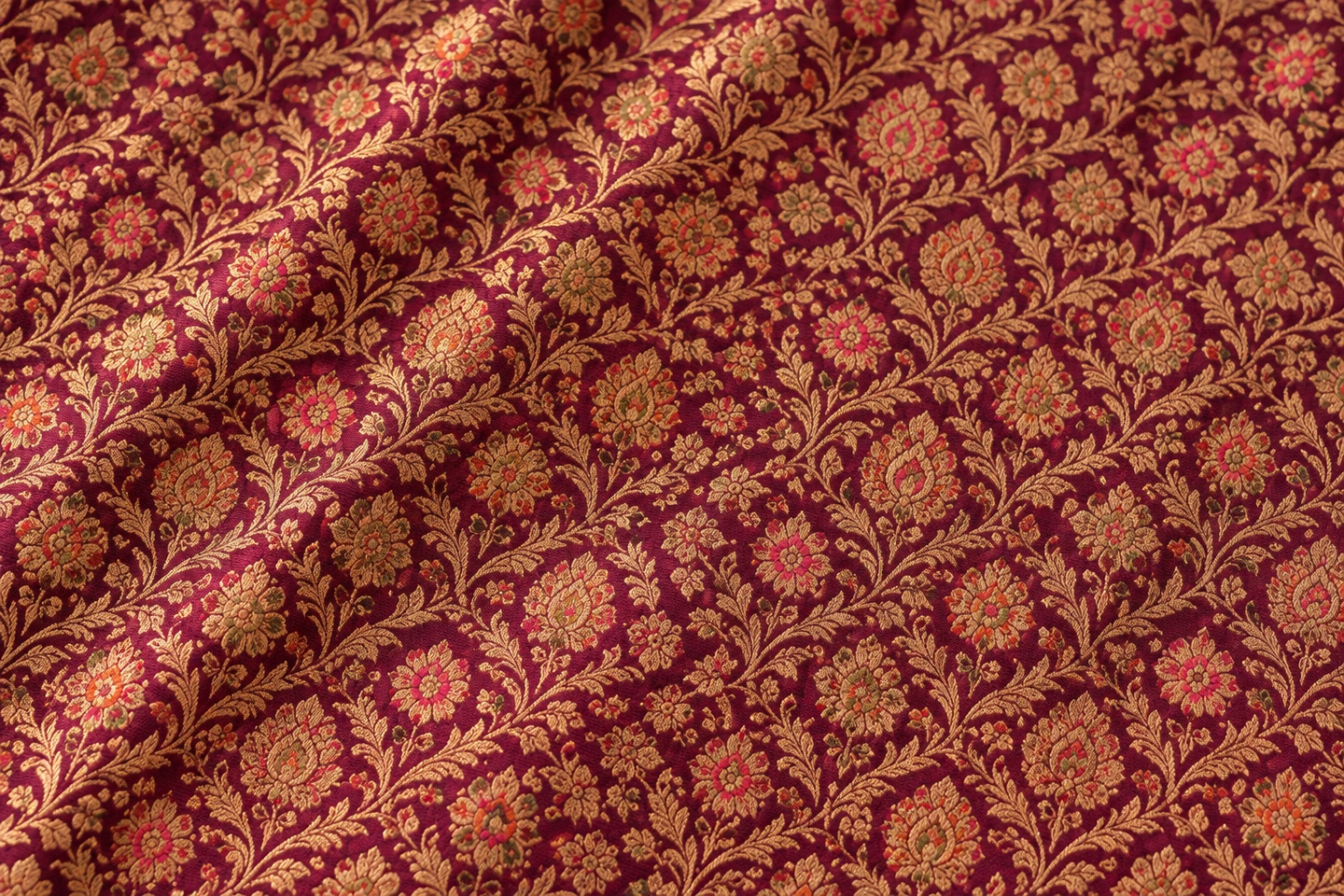 Tanchoi — densely patterned silk designsTanchoi usually describes a silk weaving style with finely detailed, often continuous patterns made with multiple coloured yarns. Its surface can look…
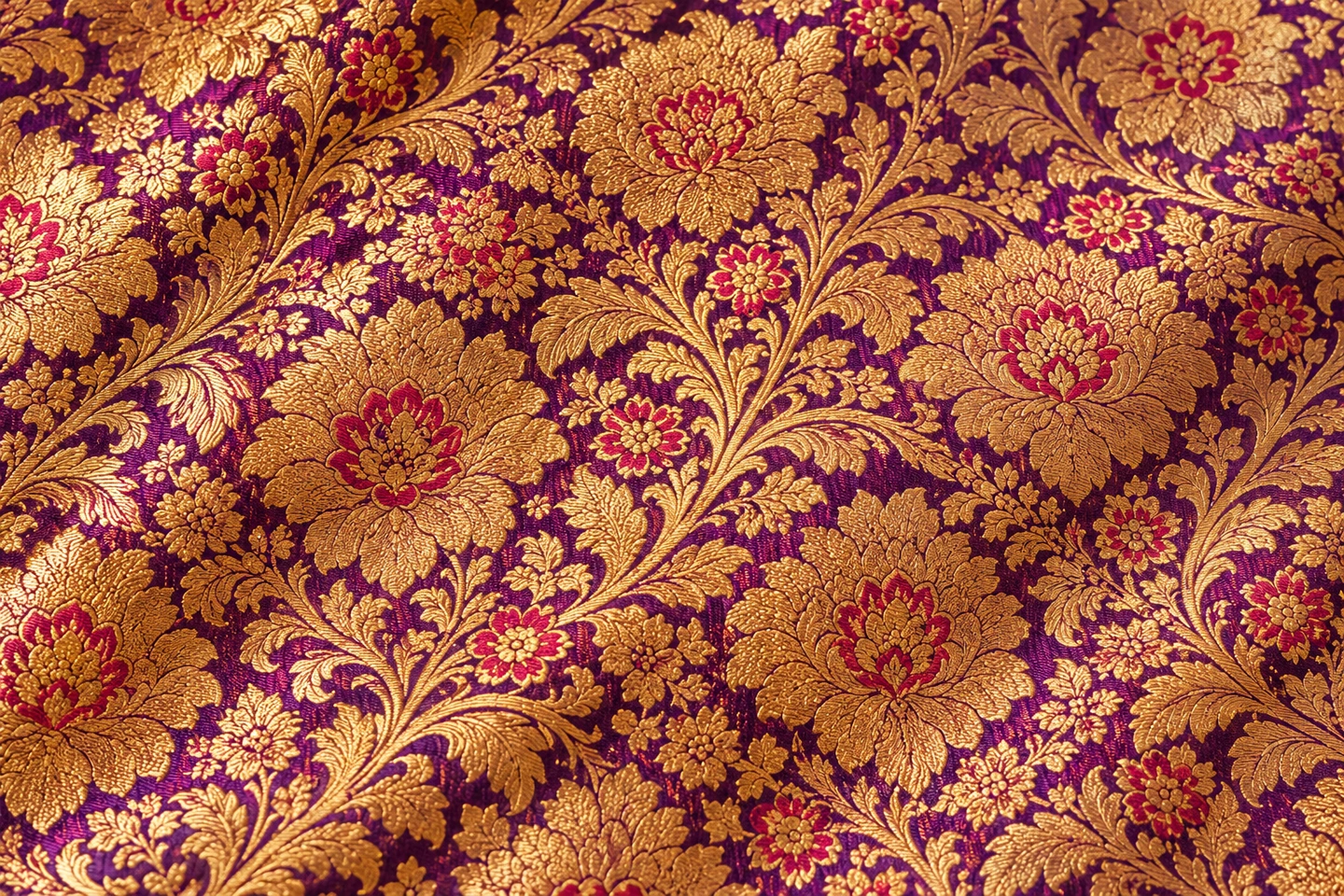 Kimkhab / Kinkhab — very rich brocadeThis is a traditional name associated with sumptuous, dense brocade in which decorative metallic threads can occupy much of the visible surface. Histo…
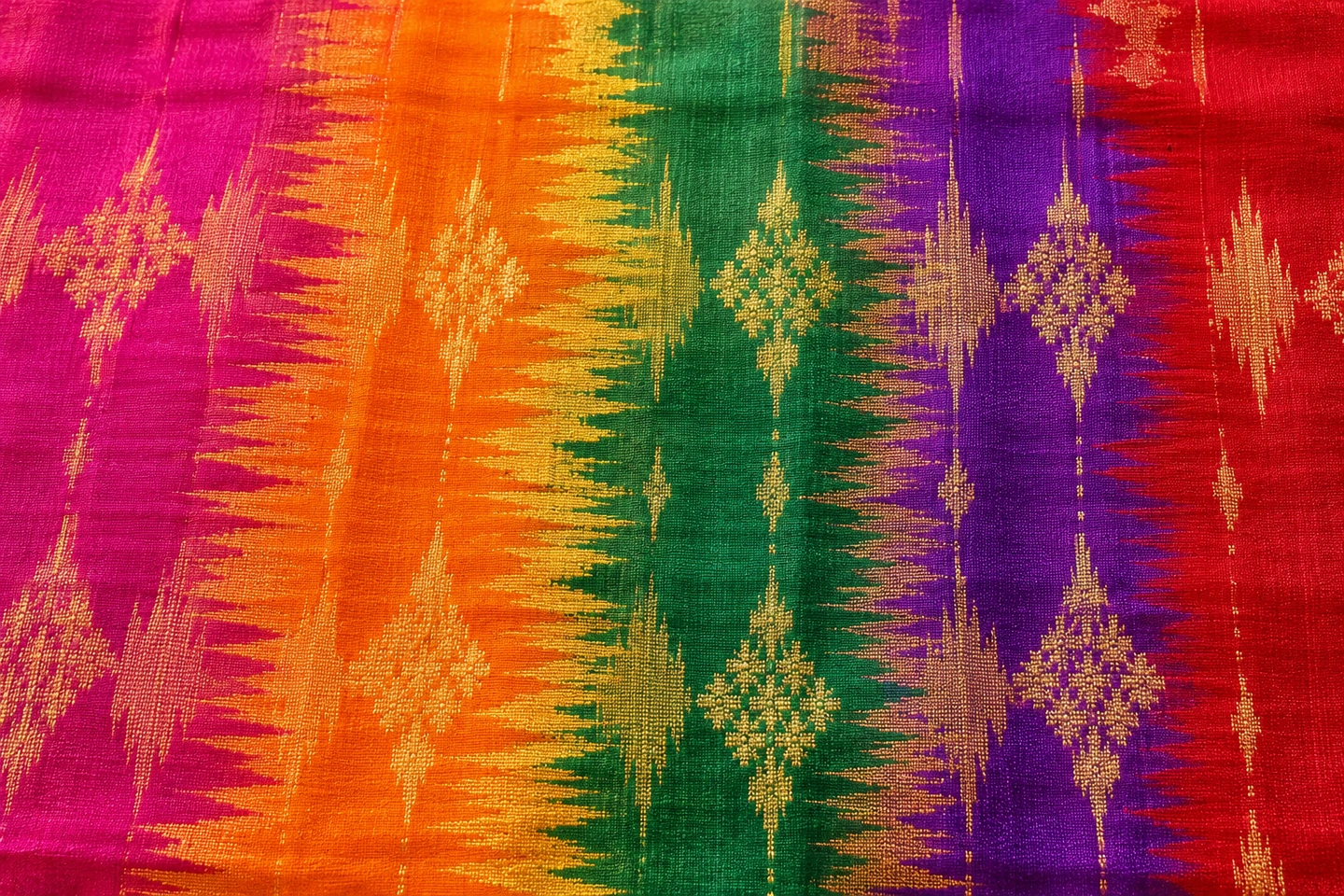 Rangkat — bold areas of changing coloursRangkat is associated with multi-colour arrangements, particularly in Banarasi textile vocabulary. A saree may show distinct bands or areas of contras…Korvai — a separately worked contrast borderKorvai is associated especially with traditional Kanjivaram-style silk sarees. It refers to a particular border joining method that can produce a str…
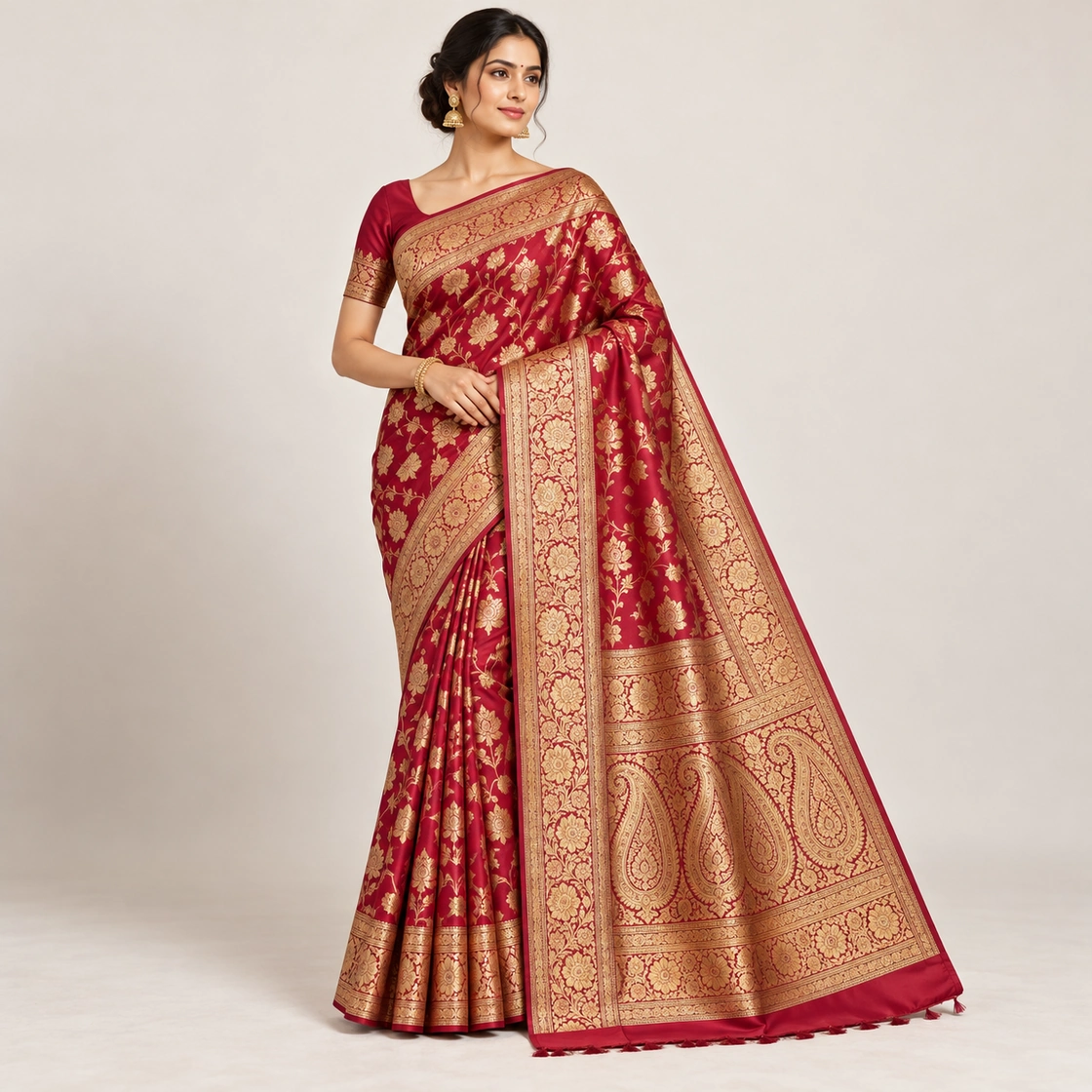
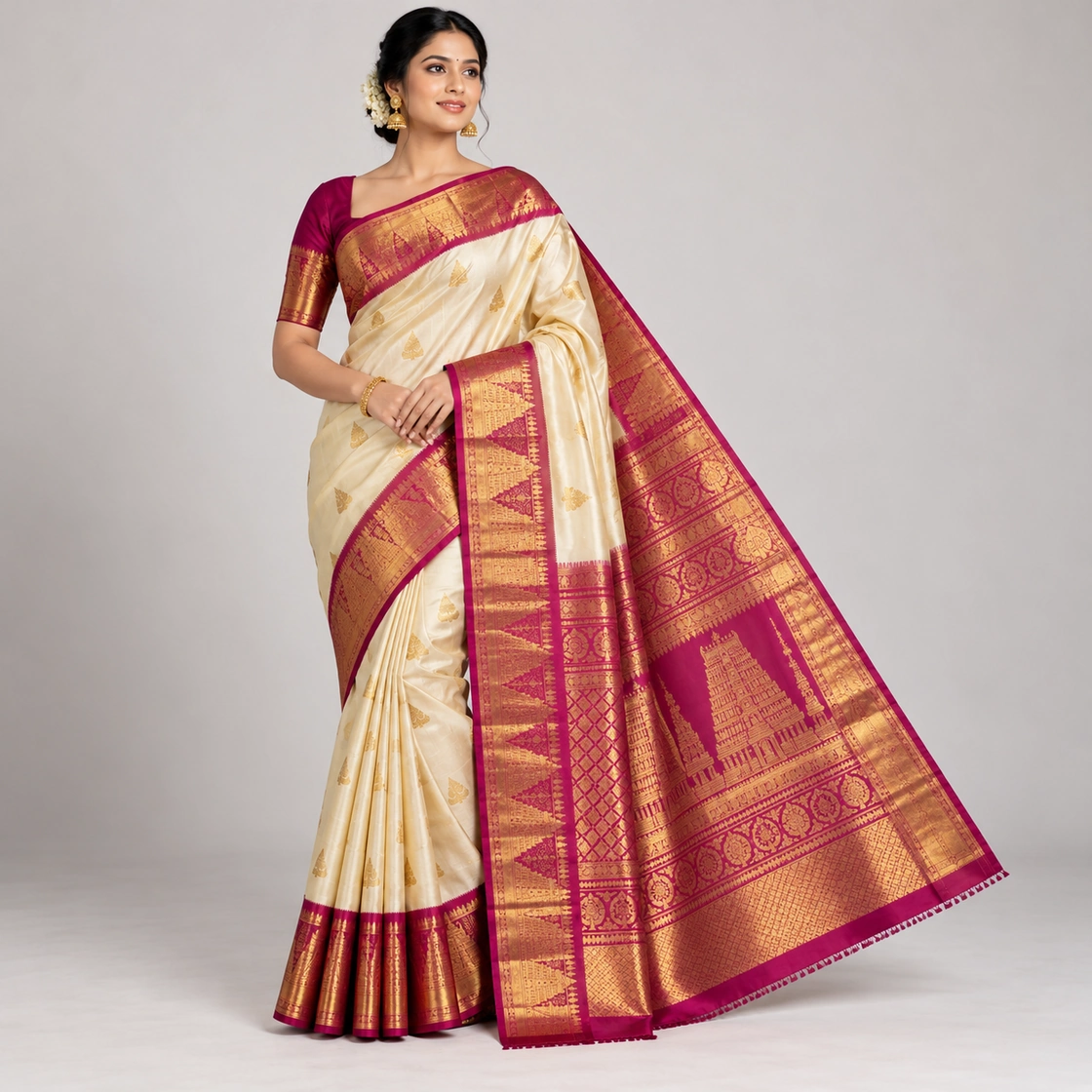 Banarasi versus Kanjivaram: two different kinds of visual richnessThink of a richly patterned Banarasi with flowers and leaves climbing across the body, and a traditional Kanjivaram with a plain purple body, broad m…
 Jamdani versus Banarasi brocade: the difference is often in the weight of the designA classic fine Jamdani may look almost weightless, with small white or coloured flowers appearing to hover on a thin ground. A familiar Banarasi broca…
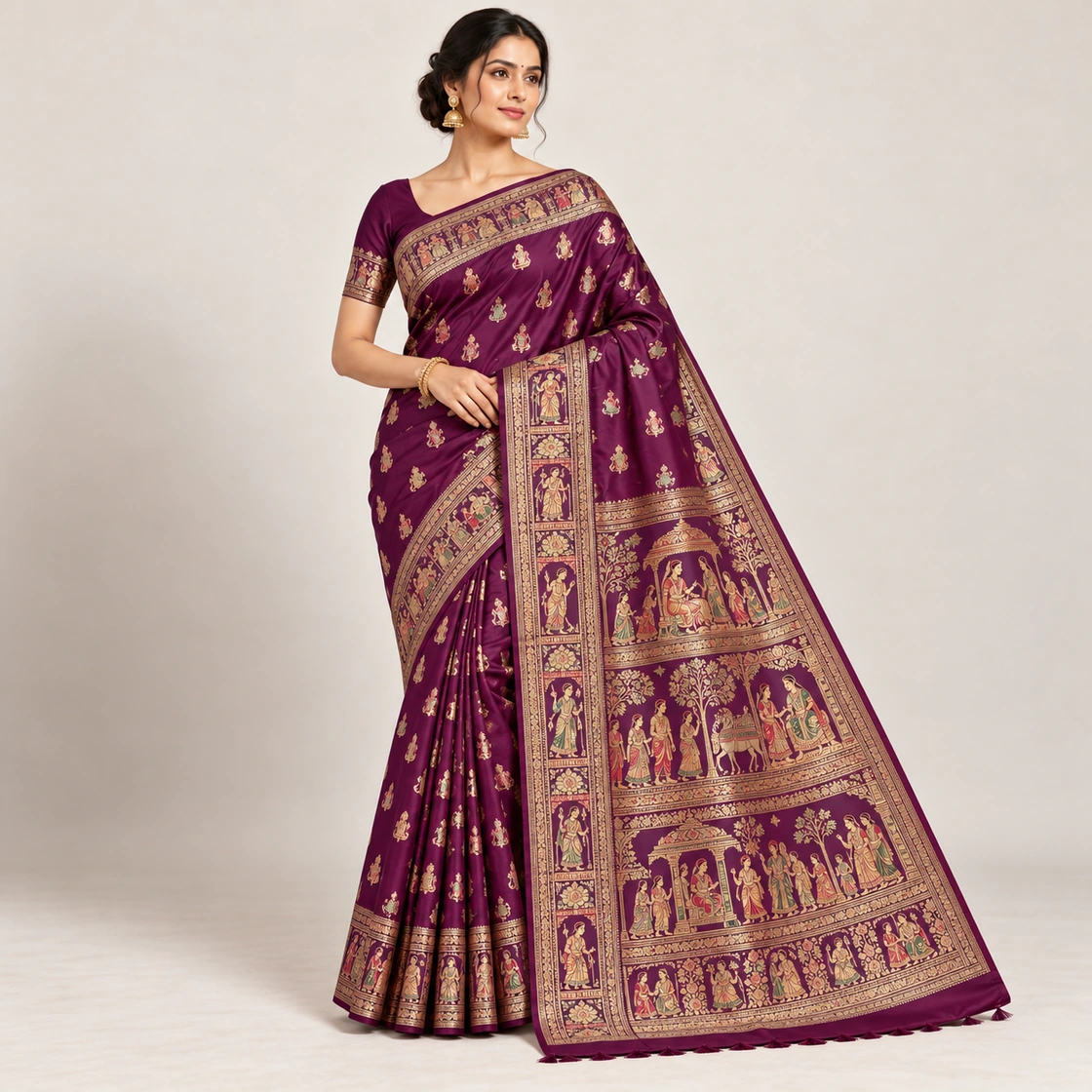 Paithani versus Baluchari: which kind of pictorial pallu?Both may draw the eye to the saree's end. A Paithani often builds its visual drama around peacocks, parrots, floral creepers, lotus and geometric arra…
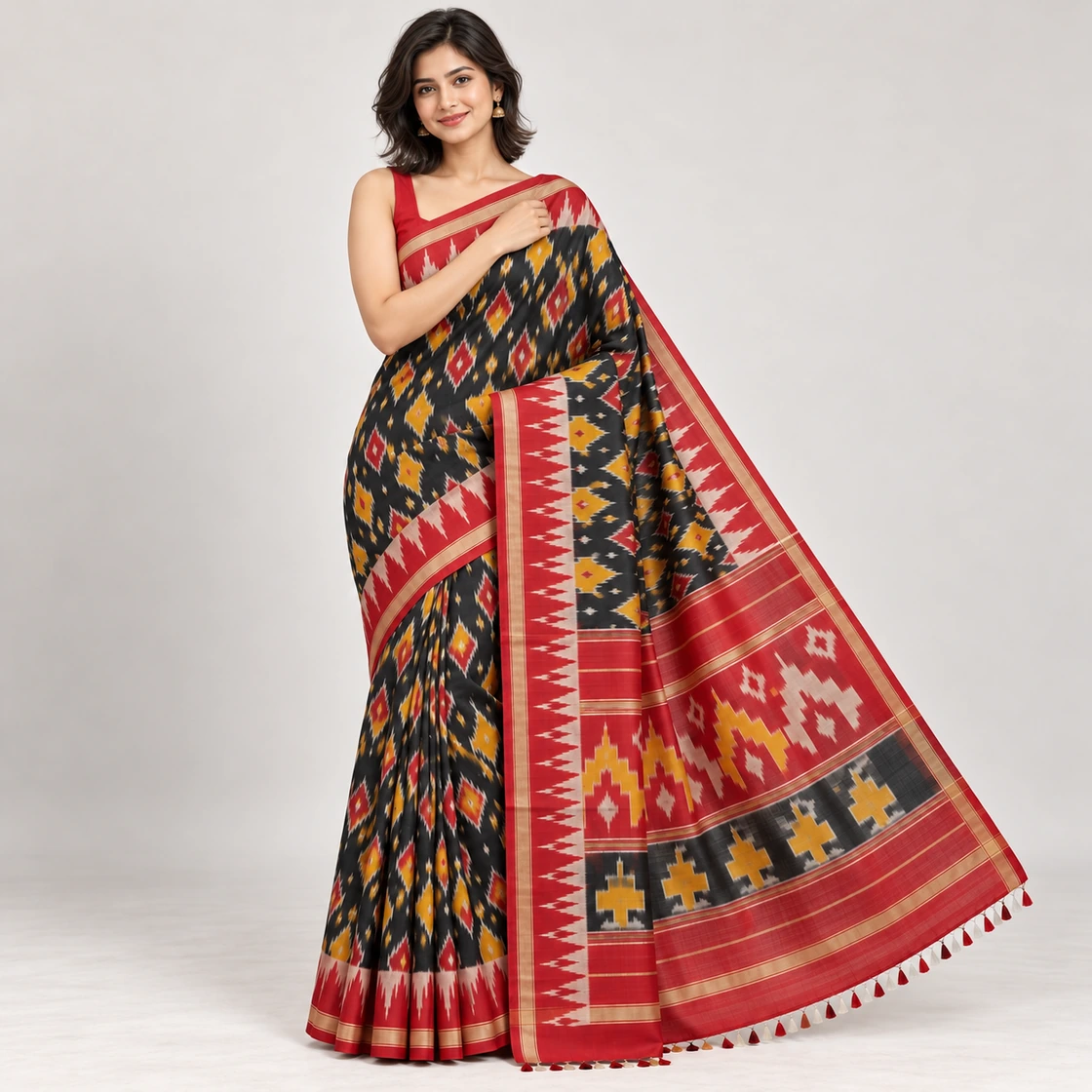 Patola versus Pochampally versus Sambalpuri: the same principle, different visual vocabulariesAll three can be associated with yarn-resist dyeing, or Ikat. Patan Patola is renowned for its sophisticated double Ikat, often arranged in meticulou…
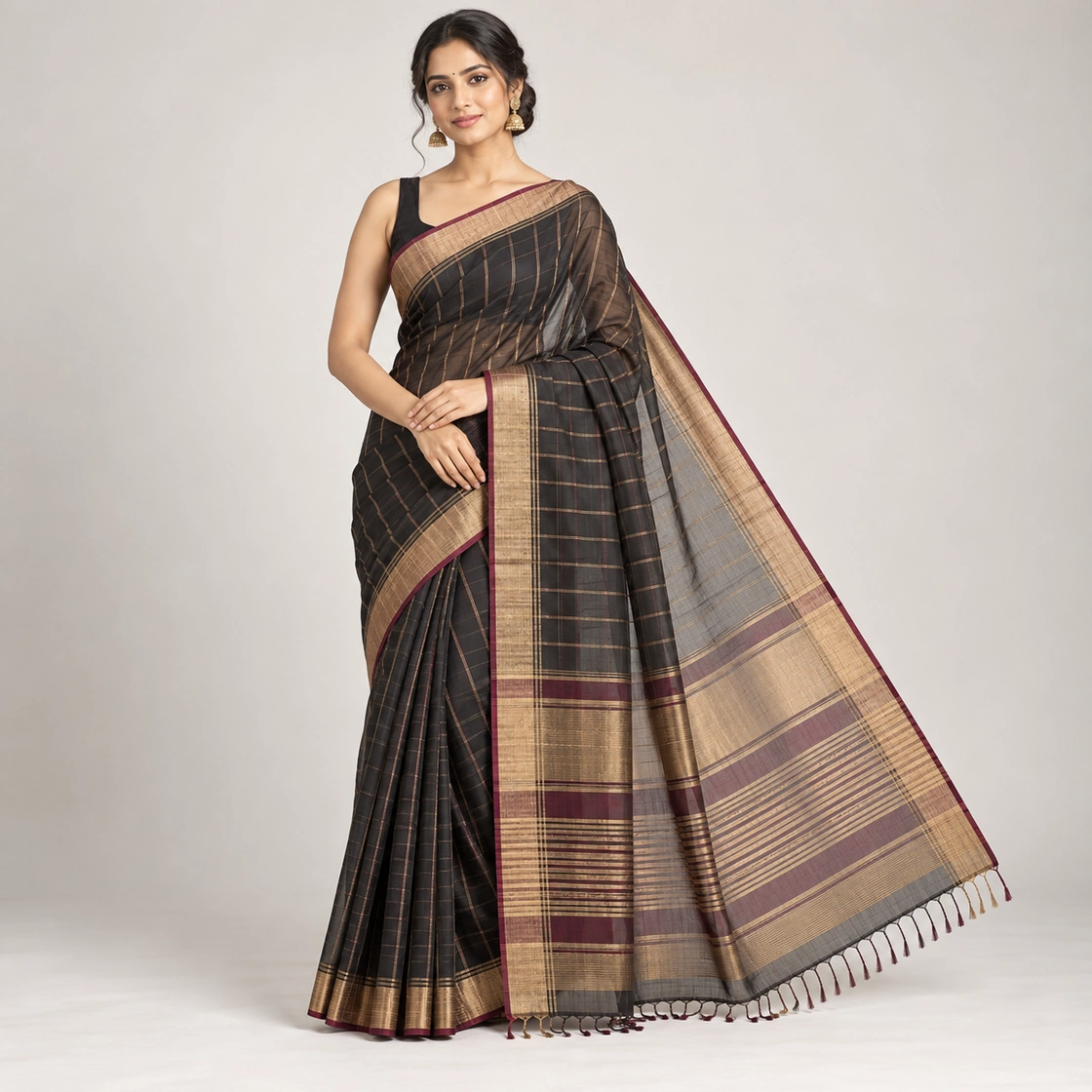 Chanderi versus Maheshwari versus Kota Doria: start with the body, then the borderChanderi often has delicate translucency and refined scattered butis, with a subtle shine that makes it attractive for dress occasions. Maheshwari is …Banarasi — Uttar Pradesh (Varanasi)When people imagine a richly decorated Banarasi saree, they often picture silk covered with woven gold-coloured flowers and a substantial pallu. That …
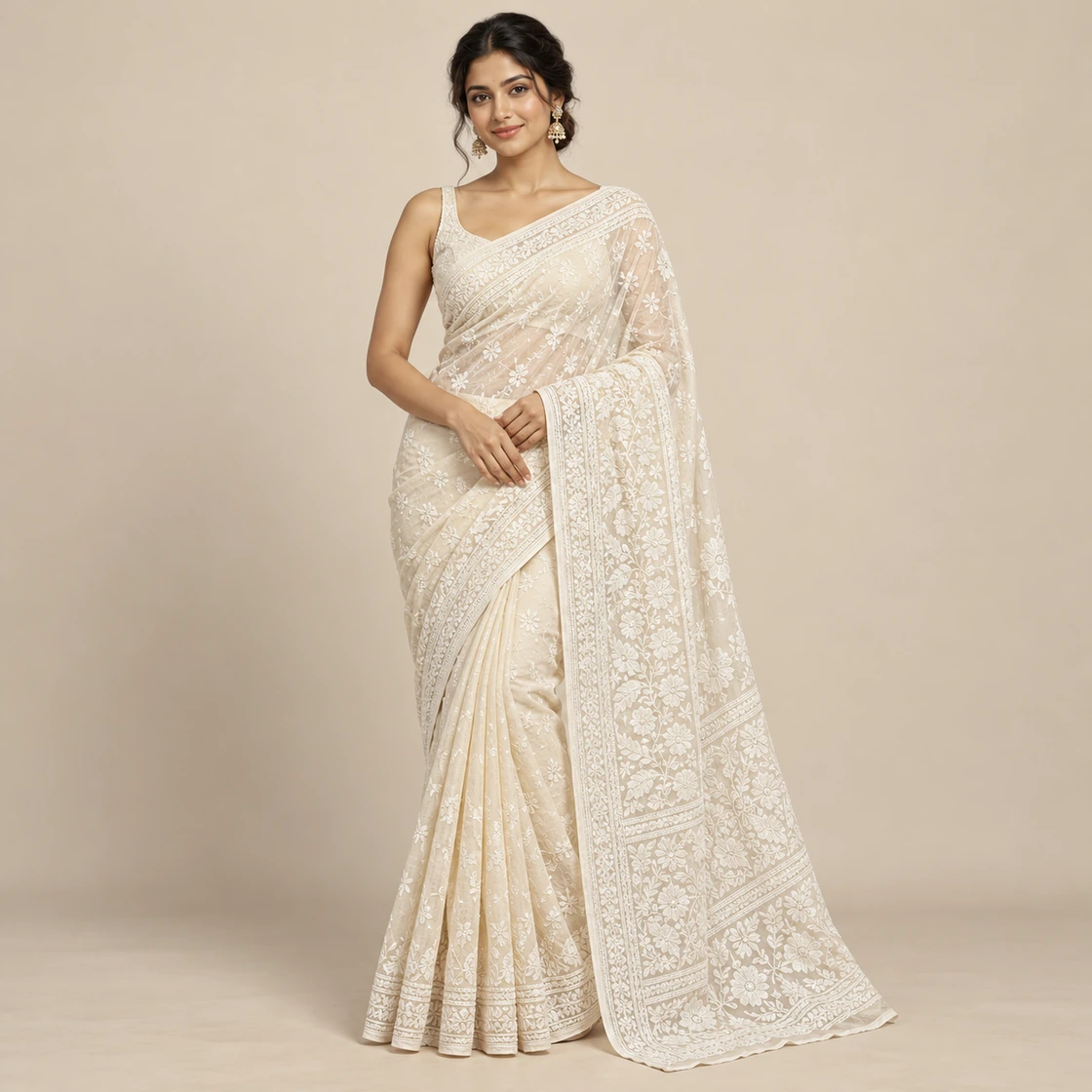 Chikankari saree — Uttar Pradesh (Lucknow)A Chikankari saree is associated with fine embroidery , not one specific saree fabric. Traditionally white stitches on pale fabric are iconic, but col…
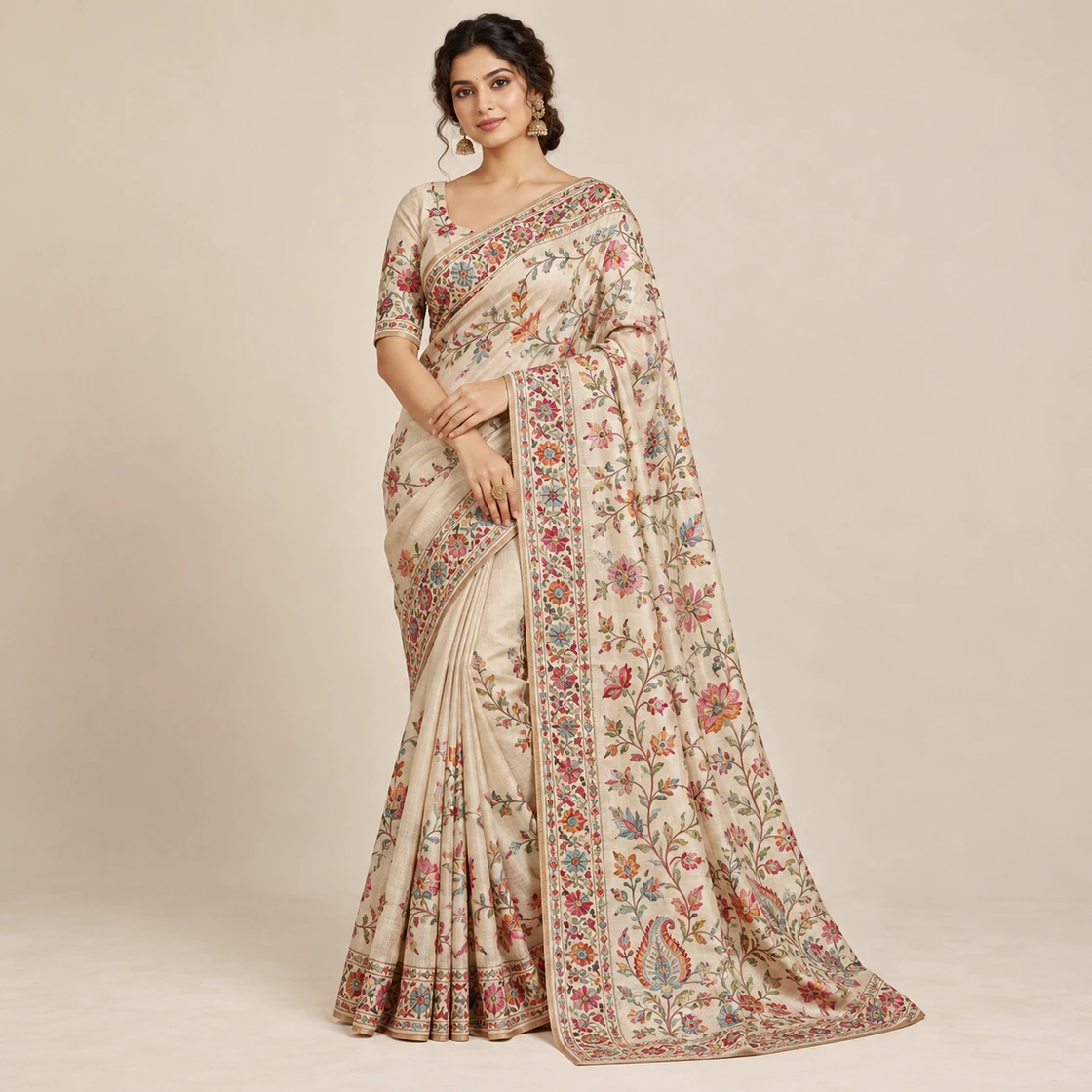 Kashmiri embroidered sarees — Jammu & KashmirKashmiri-inspired sarees are usually discussed for their embroidery and richly drawn botanical designs rather than a single regional base cloth. Paisl…
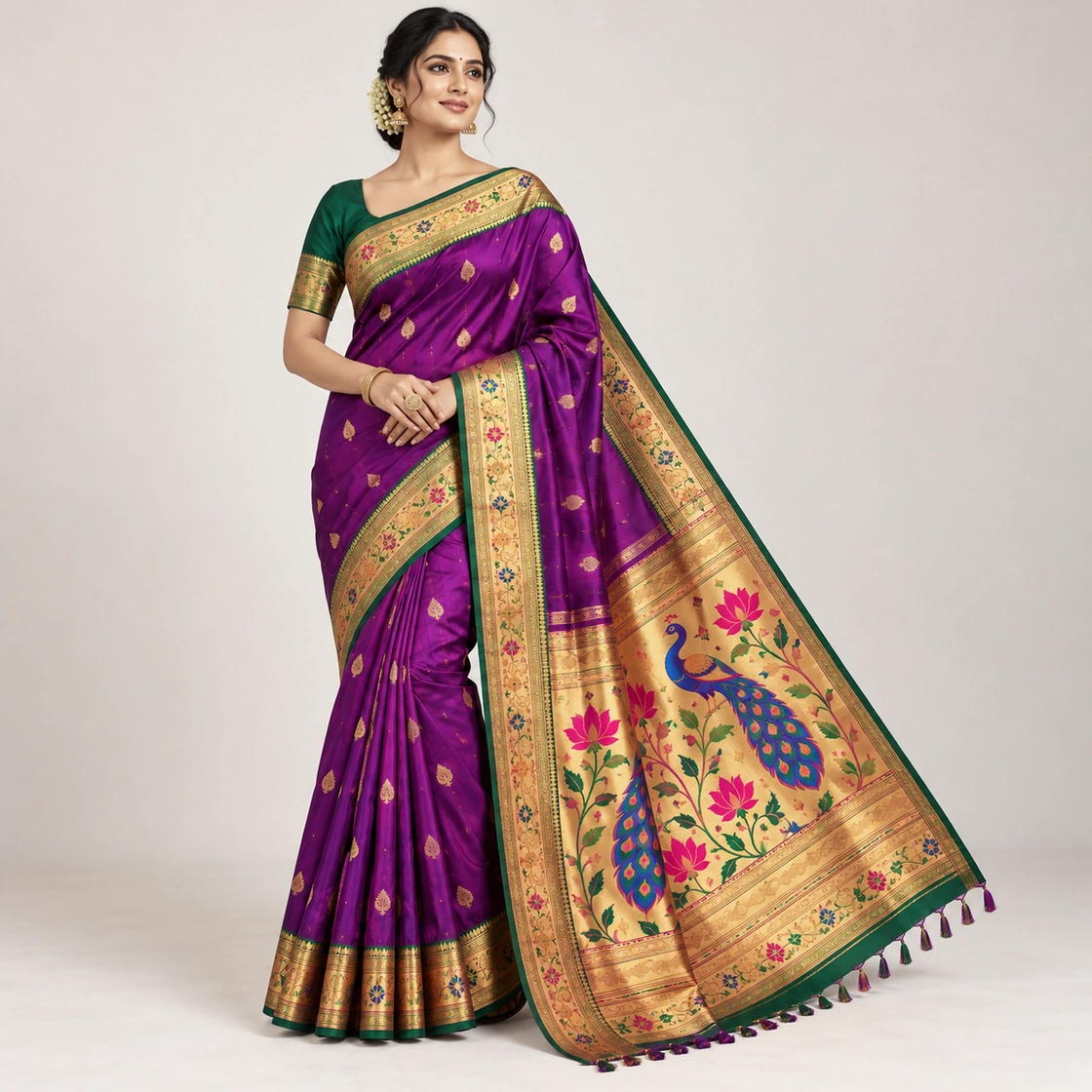 Paithani — MaharashtraA Paithani immediately draws attention to its pallu and border , often richly coloured and decorated with recognisable motifs such as peacocks, parrot…
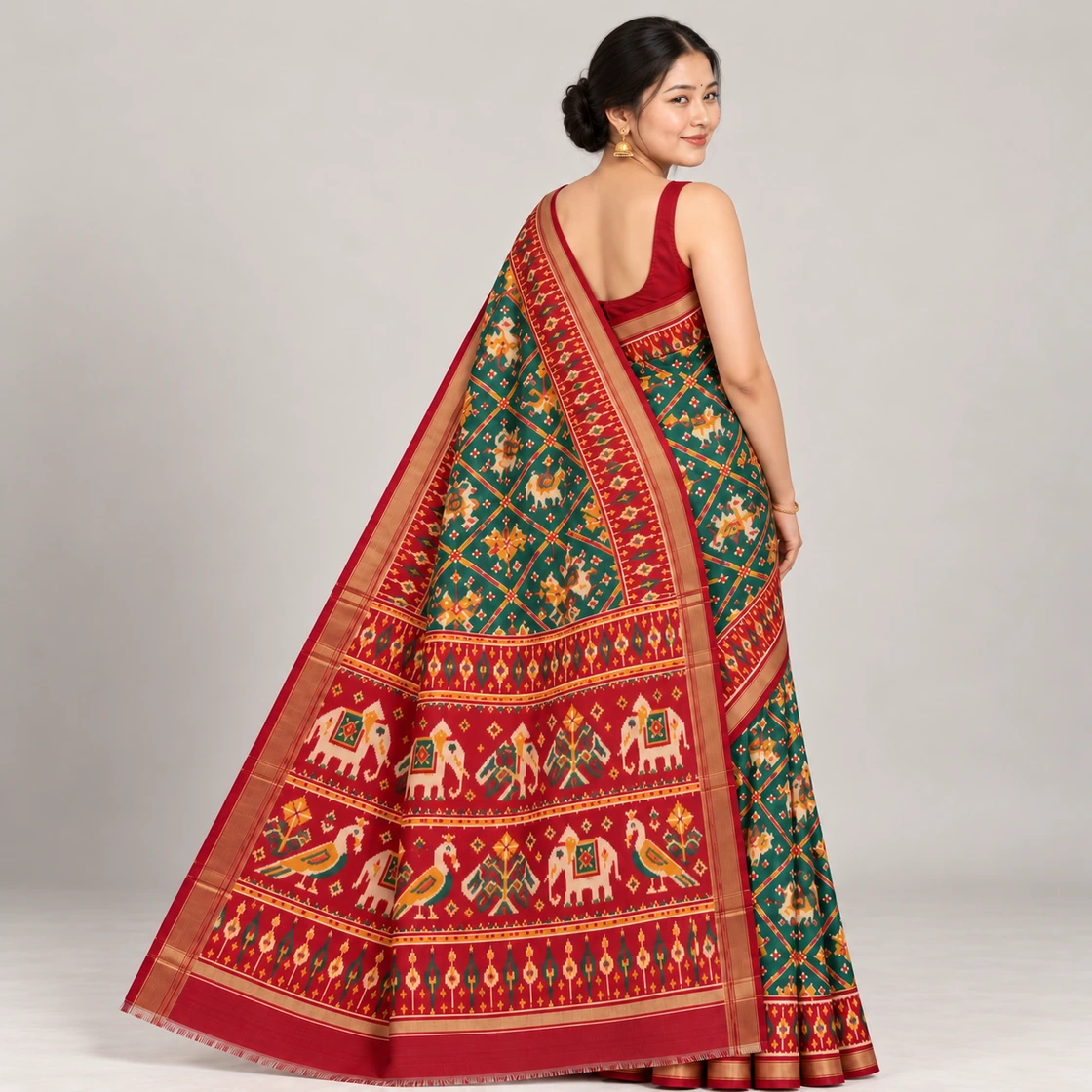 Patan Patola — GujaratPatan Patola is celebrated for double Ikat, where the lengthwise and crosswise yarns are dyed in advance so their patterns meet when woven. This make…
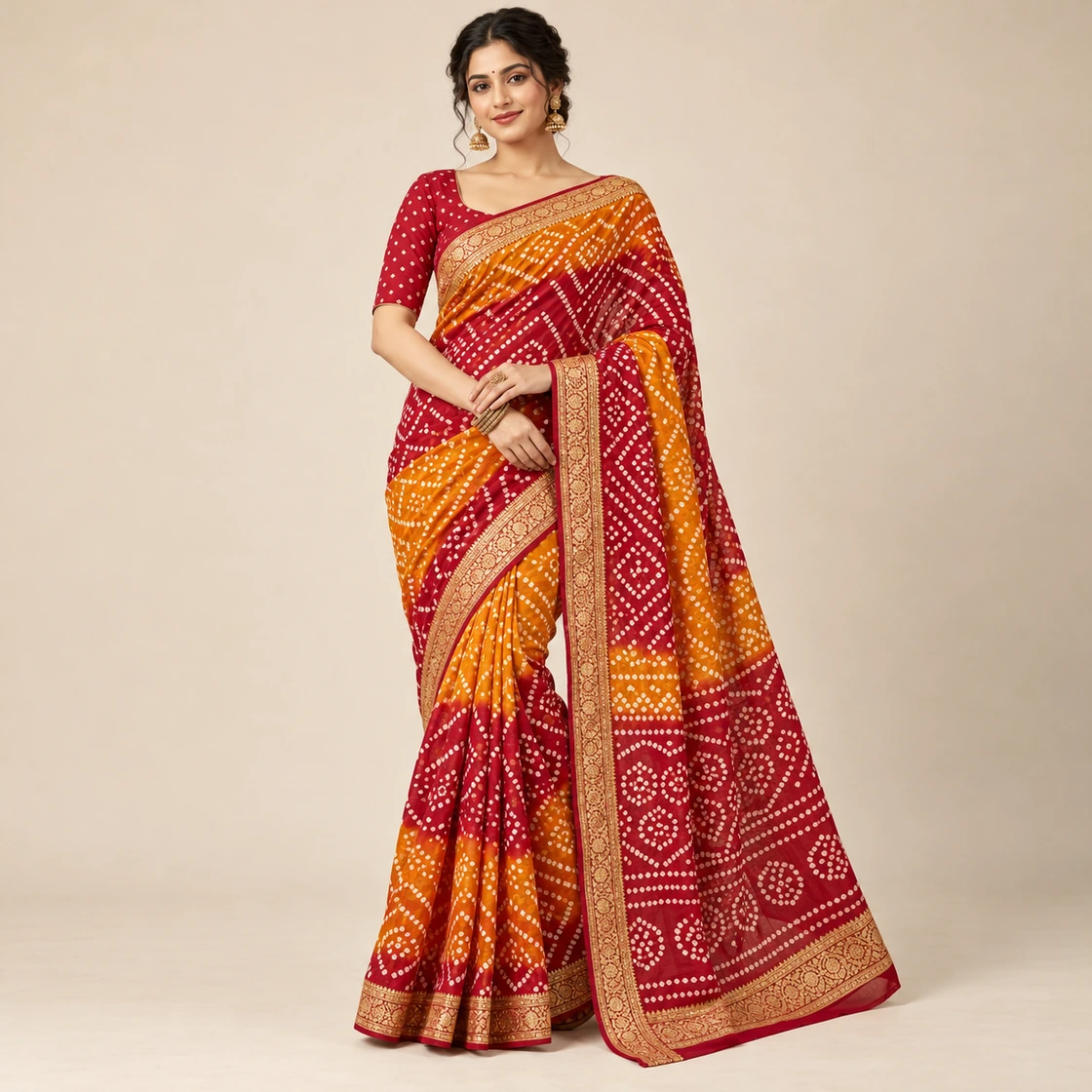 Bandhani / Bandhej — Gujarat and RajasthanBandhani is one of the easiest styles to recognise once you know how to look for it. The cloth is dotted with many tiny resist-dyed spots. Those littl…
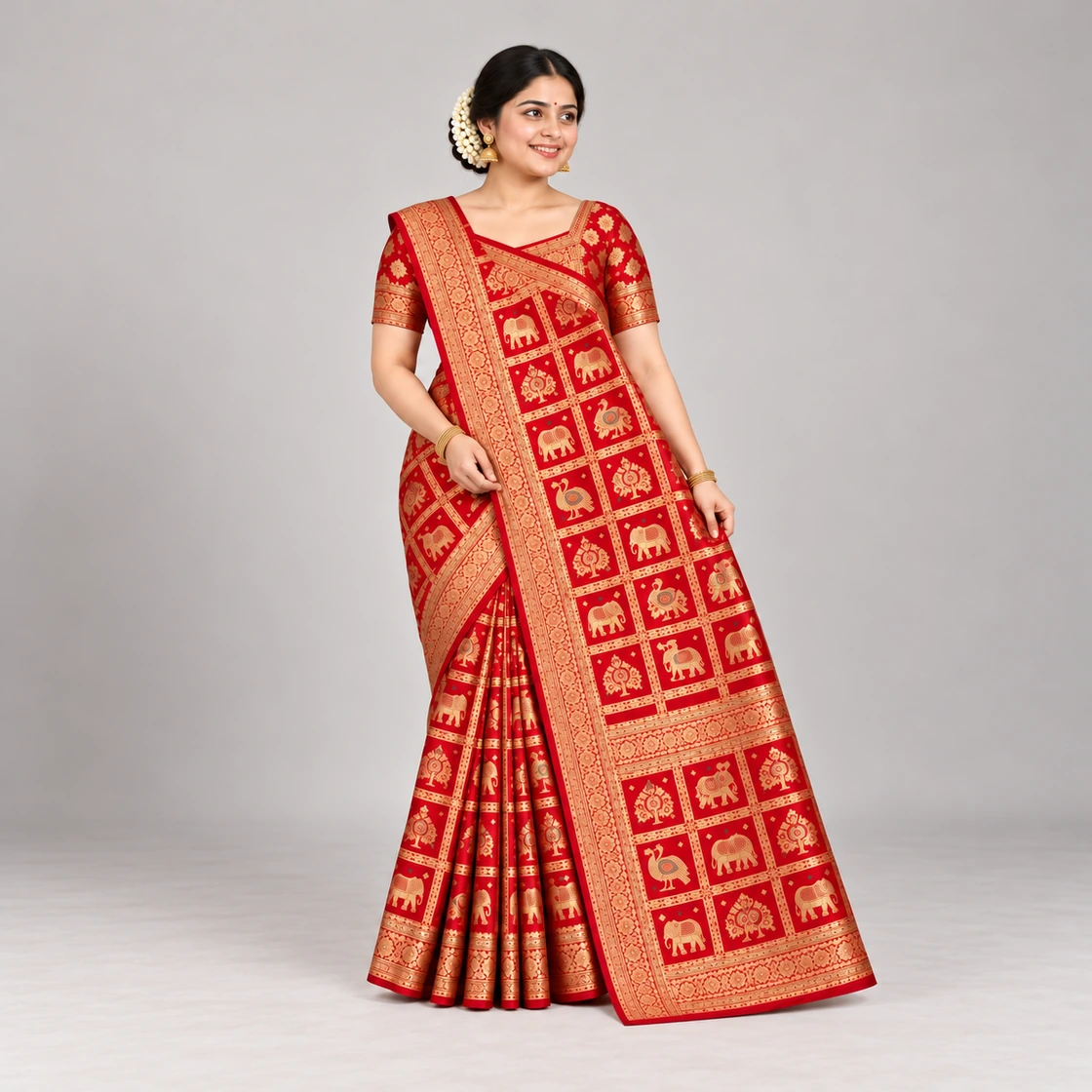 Gharchola — GujaratGharchola is especially associated with bridal and auspicious occasions in Gujarat. The most familiar examples combine a checked grid with Bandhani do…
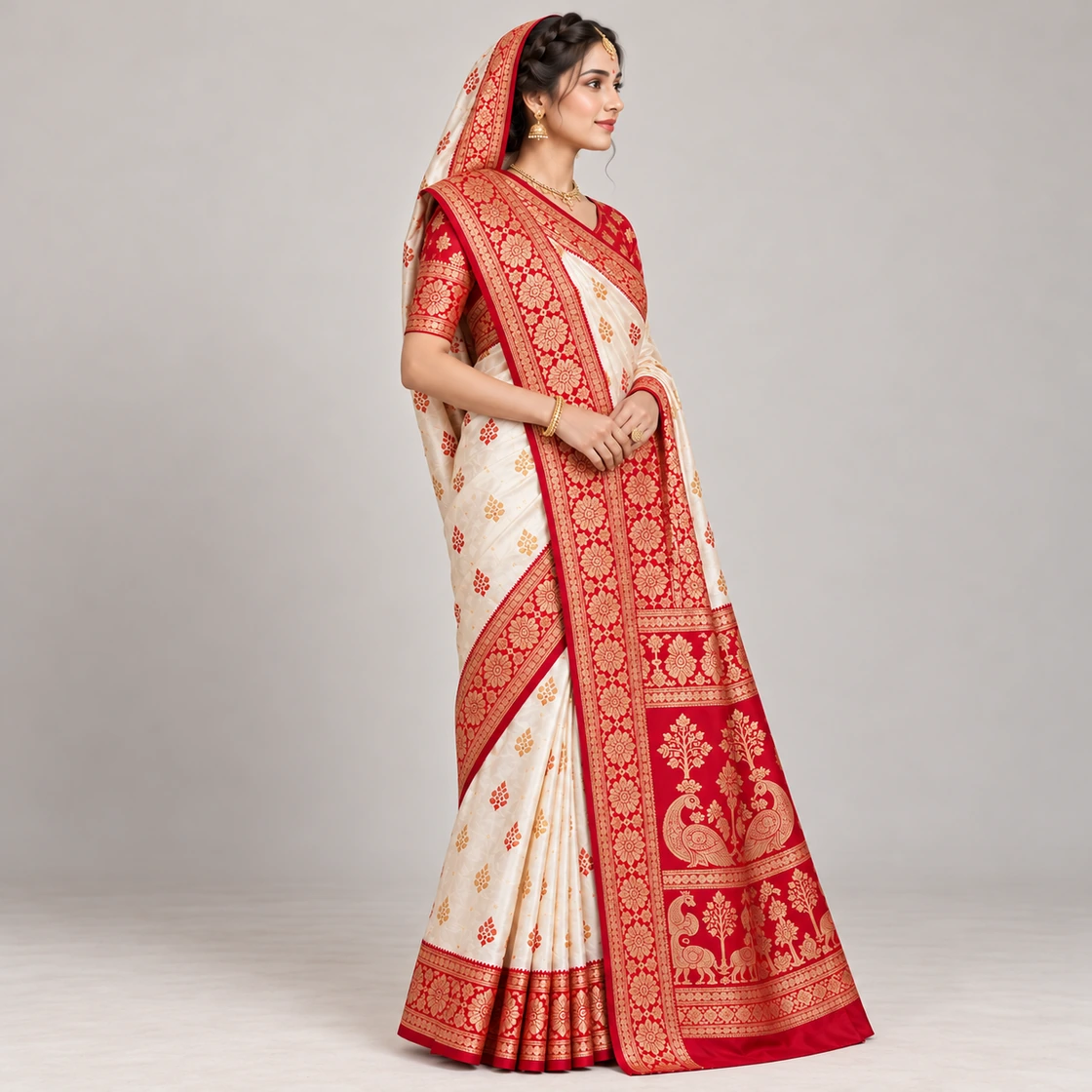 Panetar — GujaratPanetar is traditionally linked with Gujarati bridal dress. Its most recognisable palette is white or ivory with red , often accompanied by decorative…
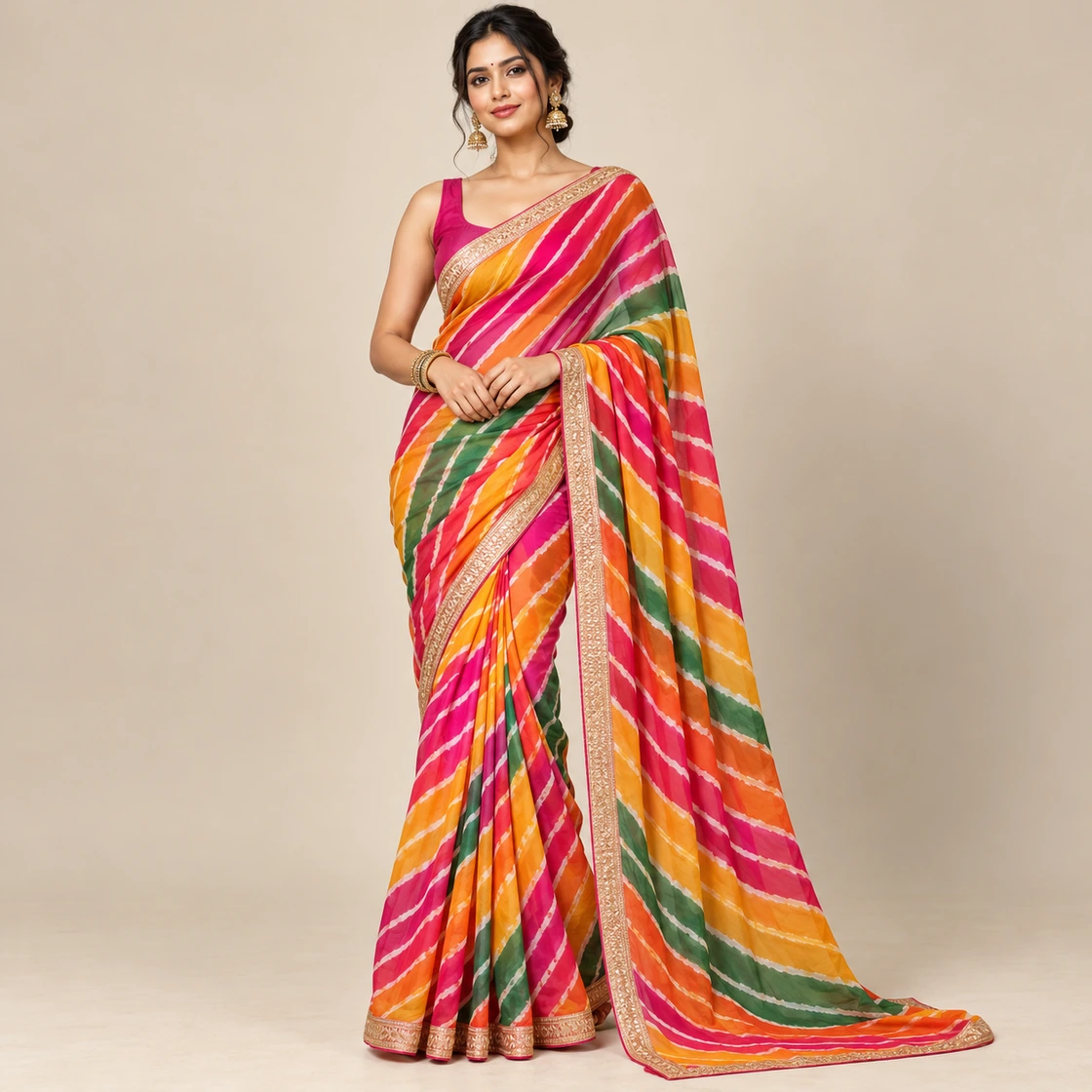 Leheriya — RajasthanLeheriya sarees are dominated by diagonal, wave-like bands of colour . Some look playful and bright, with yellow, green, pink and orange; others use m…
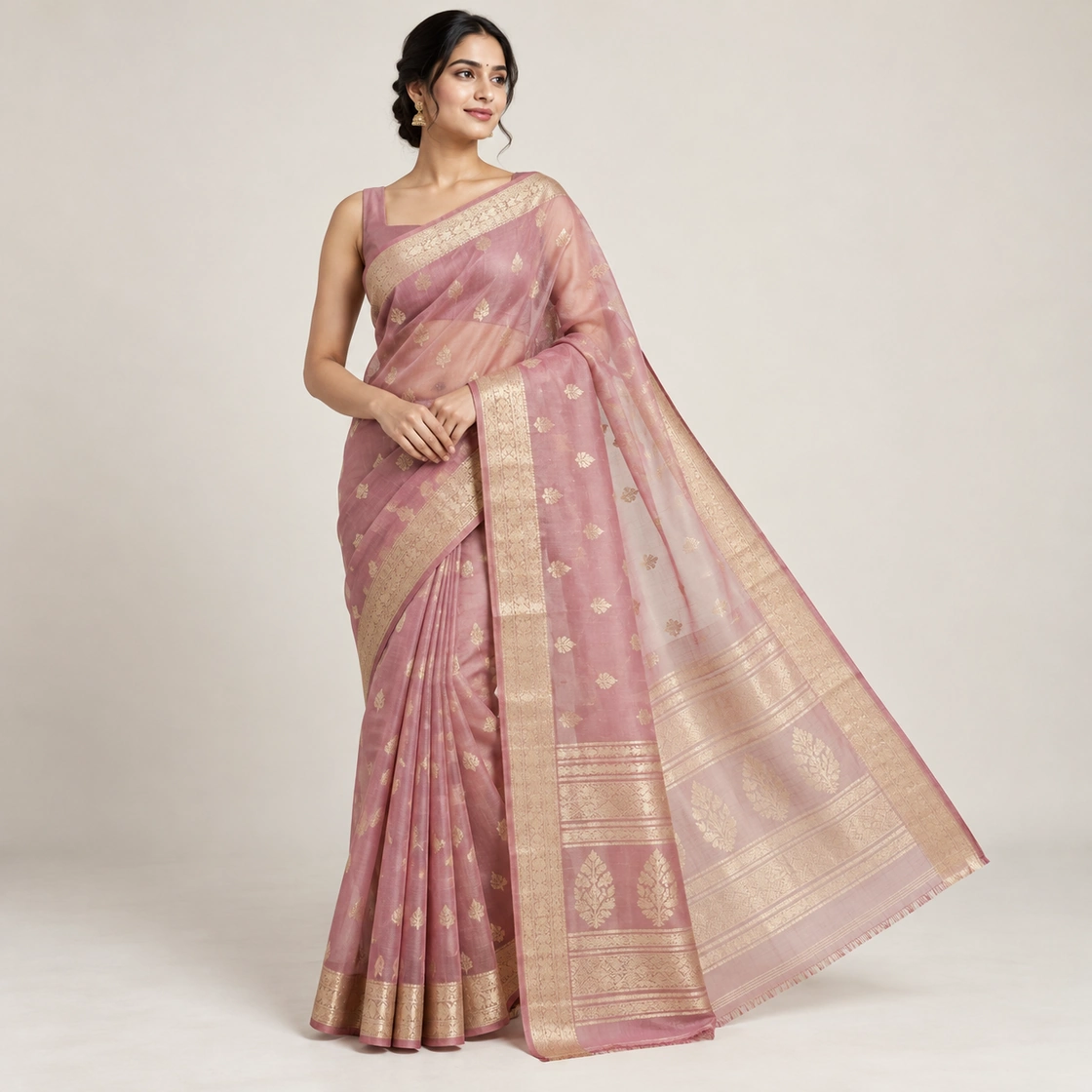 Chanderi — Madhya PradeshChanderi is associated with very fine, light, often slightly sheer fabric , frequently decorated with small, delicate butis and borders that do not ov…Maheshwari — Madhya PradeshMaheshwari sarees are known for a cleaner, more geometric appearance than many richly floral silk brocades. Stripes, checks and neatly designed border…Baluchari — West BengalBaluchari is memorable because its pallu can look like a series of illustrated story panels . The designs often depict figures, social scenes or mytho…
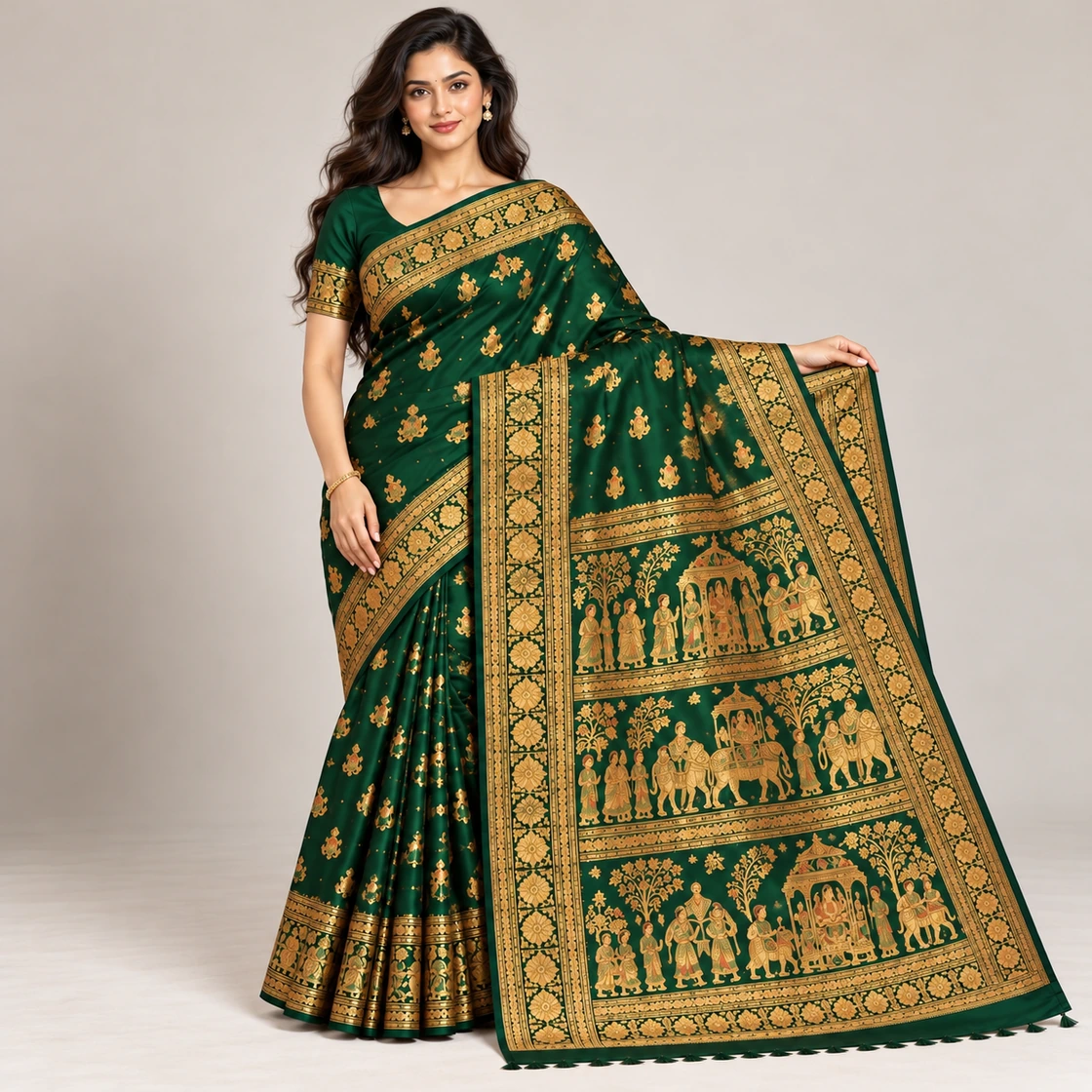 Swarnachari — West BengalSwarnachari is related to the Baluchari visual tradition but is especially associated with gold- or silver-coloured figure work in its designs. The st…
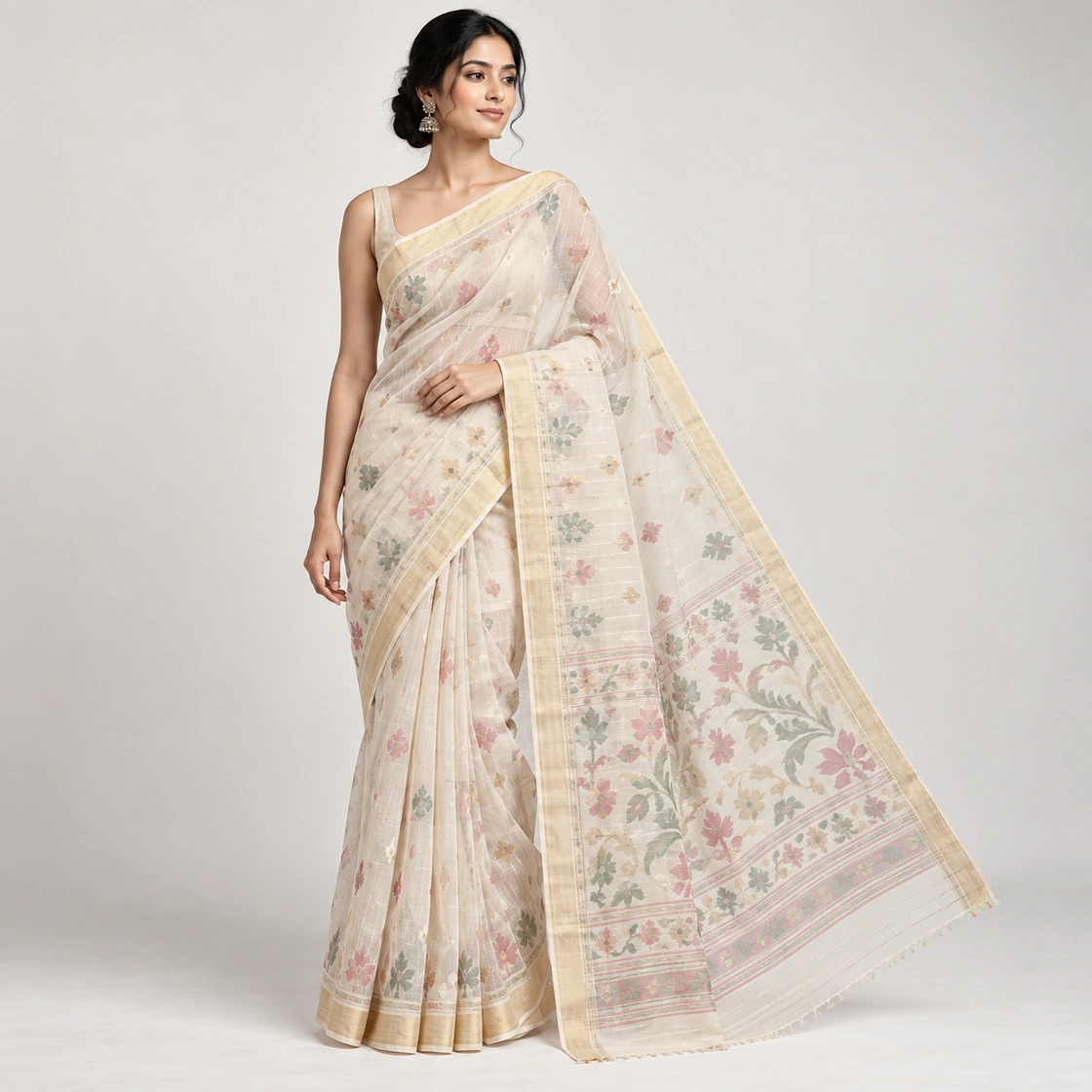 Bengal Jamdani — West Bengal; related traditions in BangladeshJamdani is admired for light cloth carrying delicate, almost floating motifs . Traditional fine cotton versions can look particularly airy. The patter…
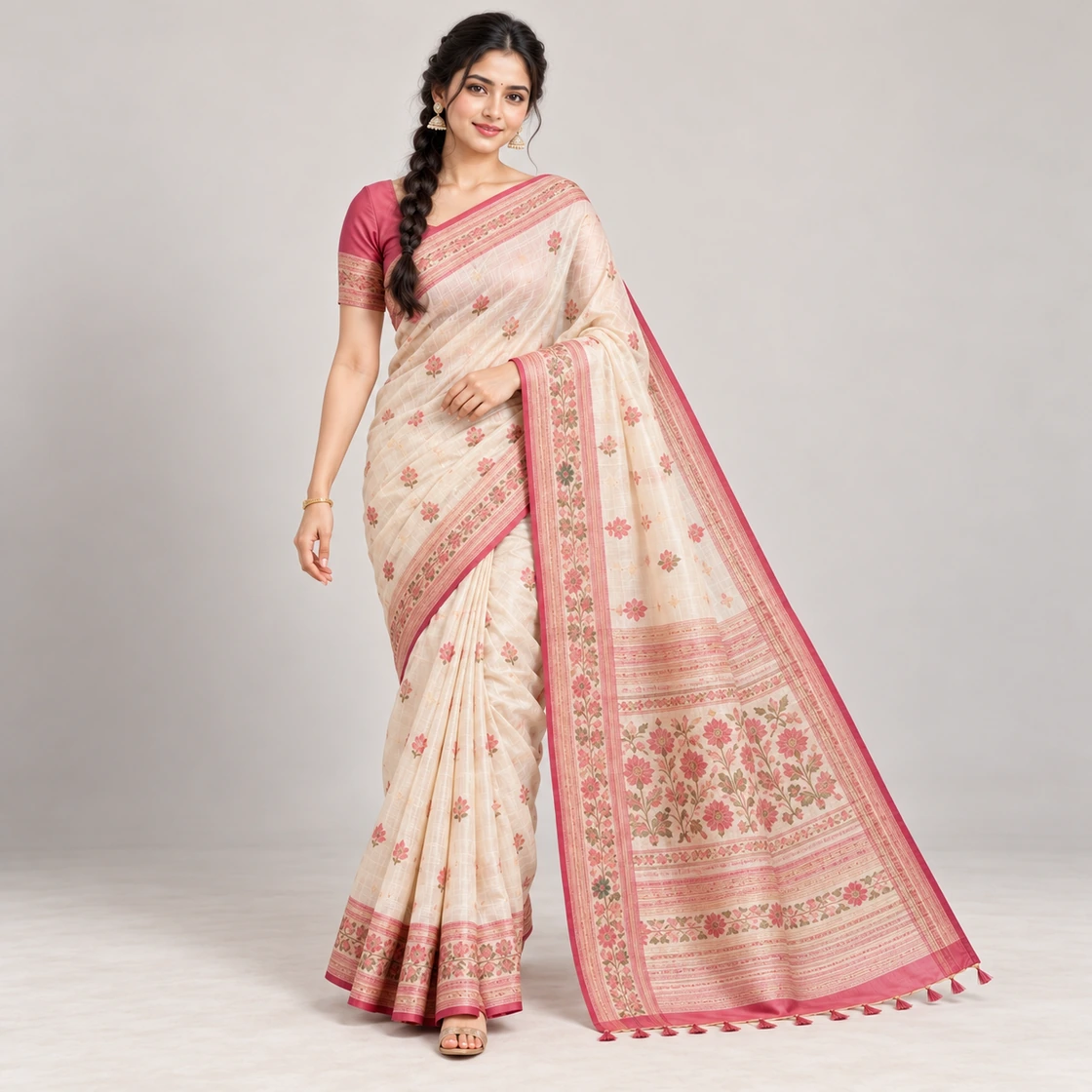 Tangail — West Bengal and BangladeshTangail sarees are associated with fine, comfortable cloth, often cotton or silk–cotton, and decorative borders with small repeating motifs. There are…
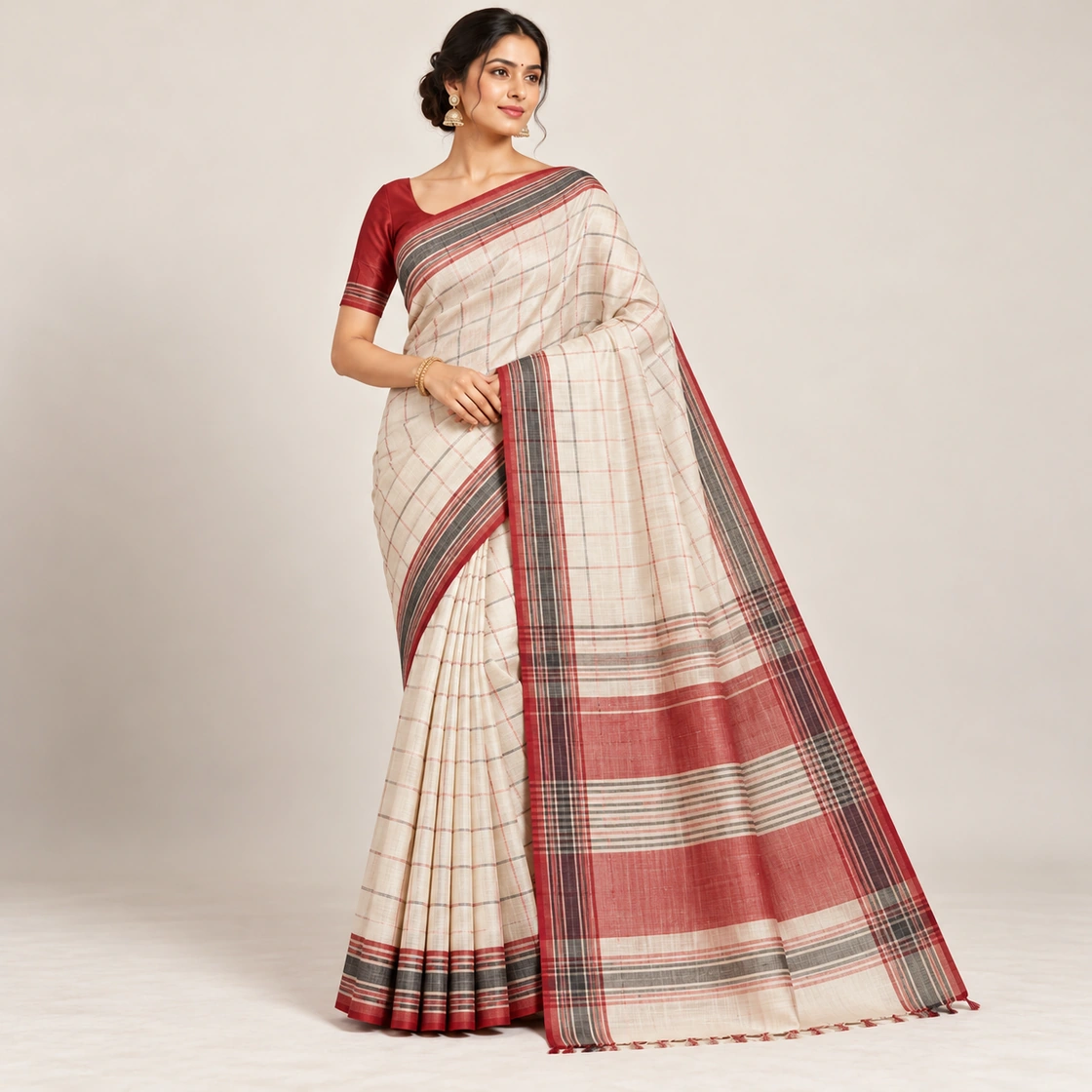 Dhaniakhali — West BengalDhaniakhali is best known as a practical cotton saree tradition . Many examples are comfortable and relatively straightforward in appearance, with a p…
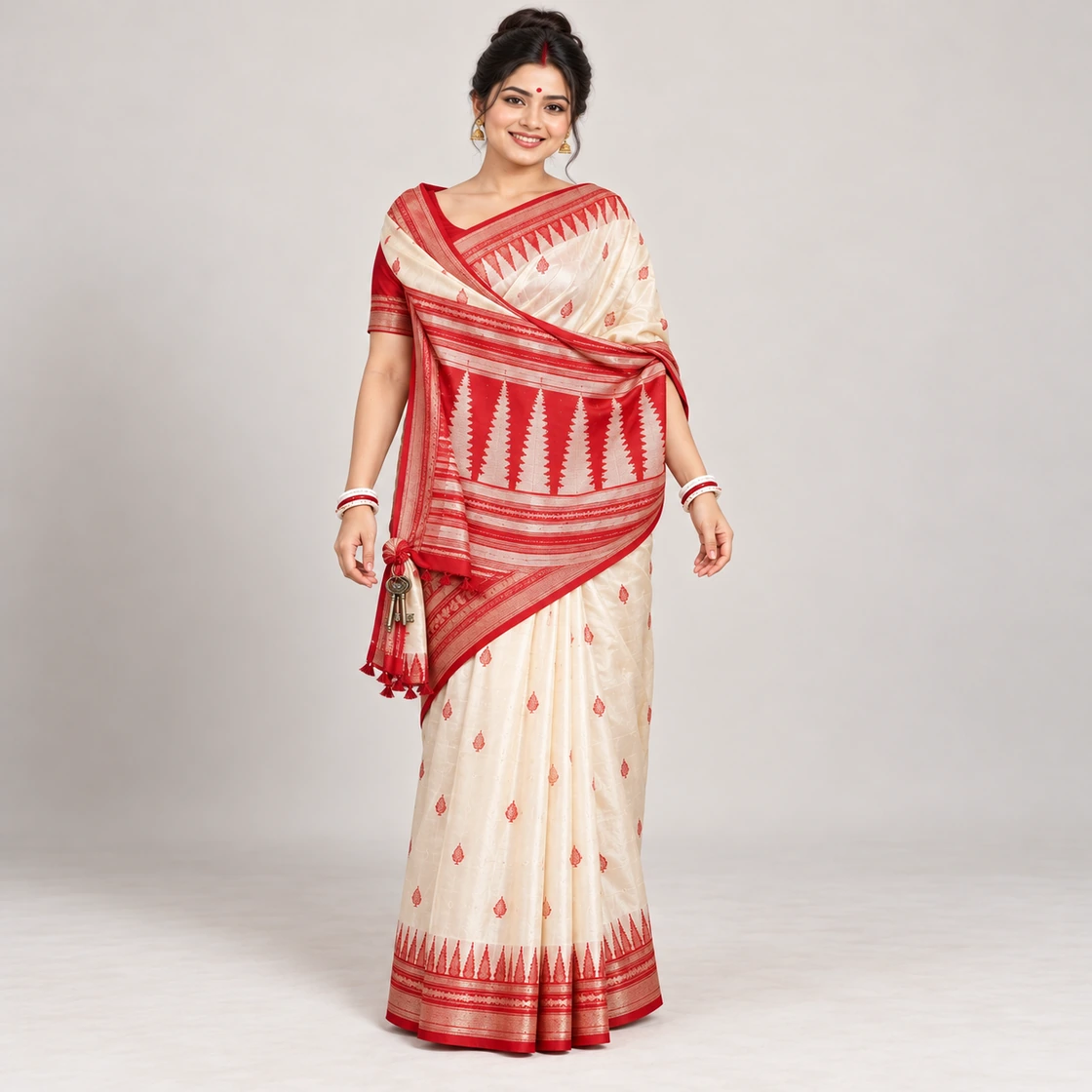 Garad and Korial — West BengalGarad is commonly associated with a pale, often off-white silk body , sometimes with red or another strong border. The pale silk has an understated ce…
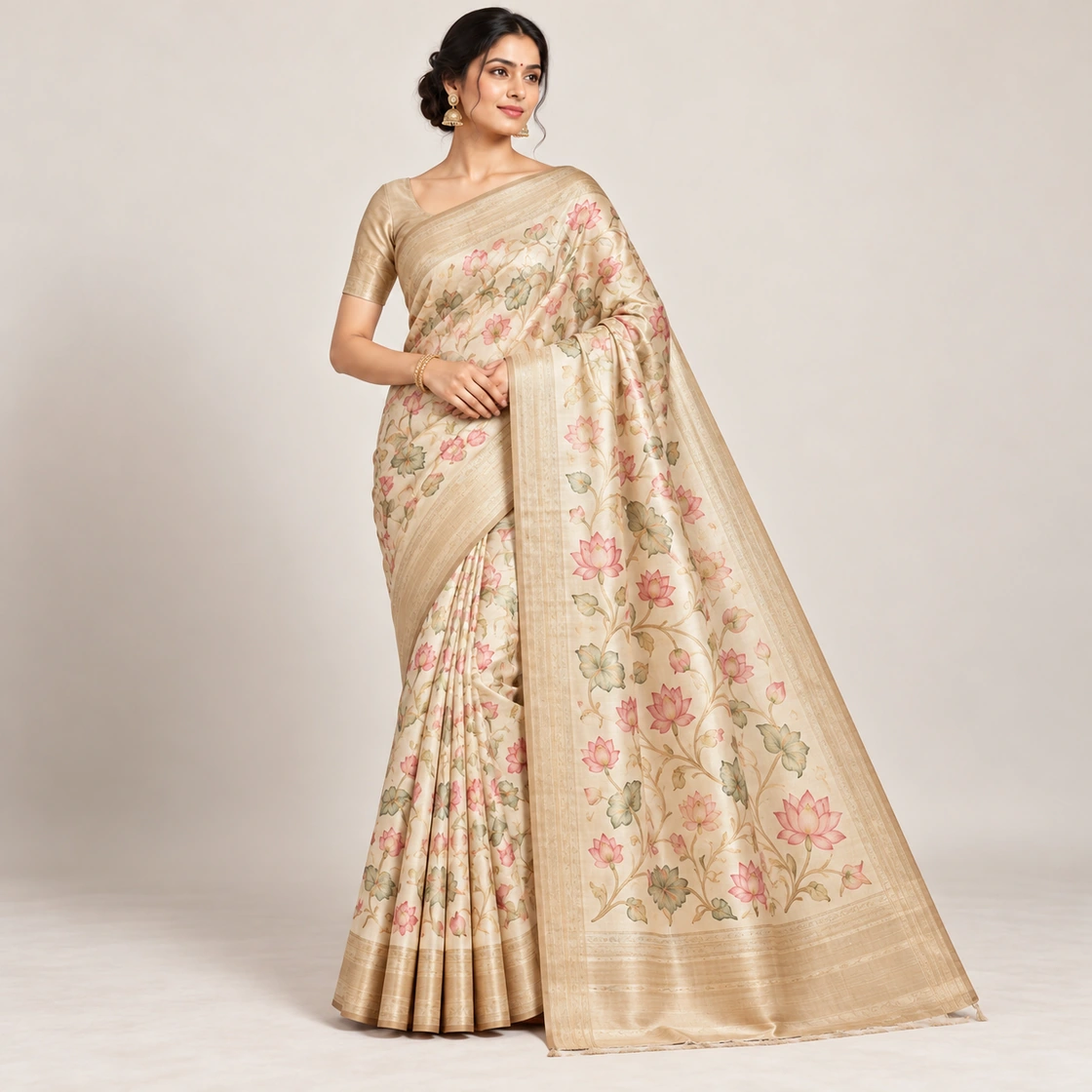 Murshidabad silk — West BengalMurshidabad has a long silk heritage, and in modern saree shops the name often points to light, smooth silk sarees , many of which are printed or hand…
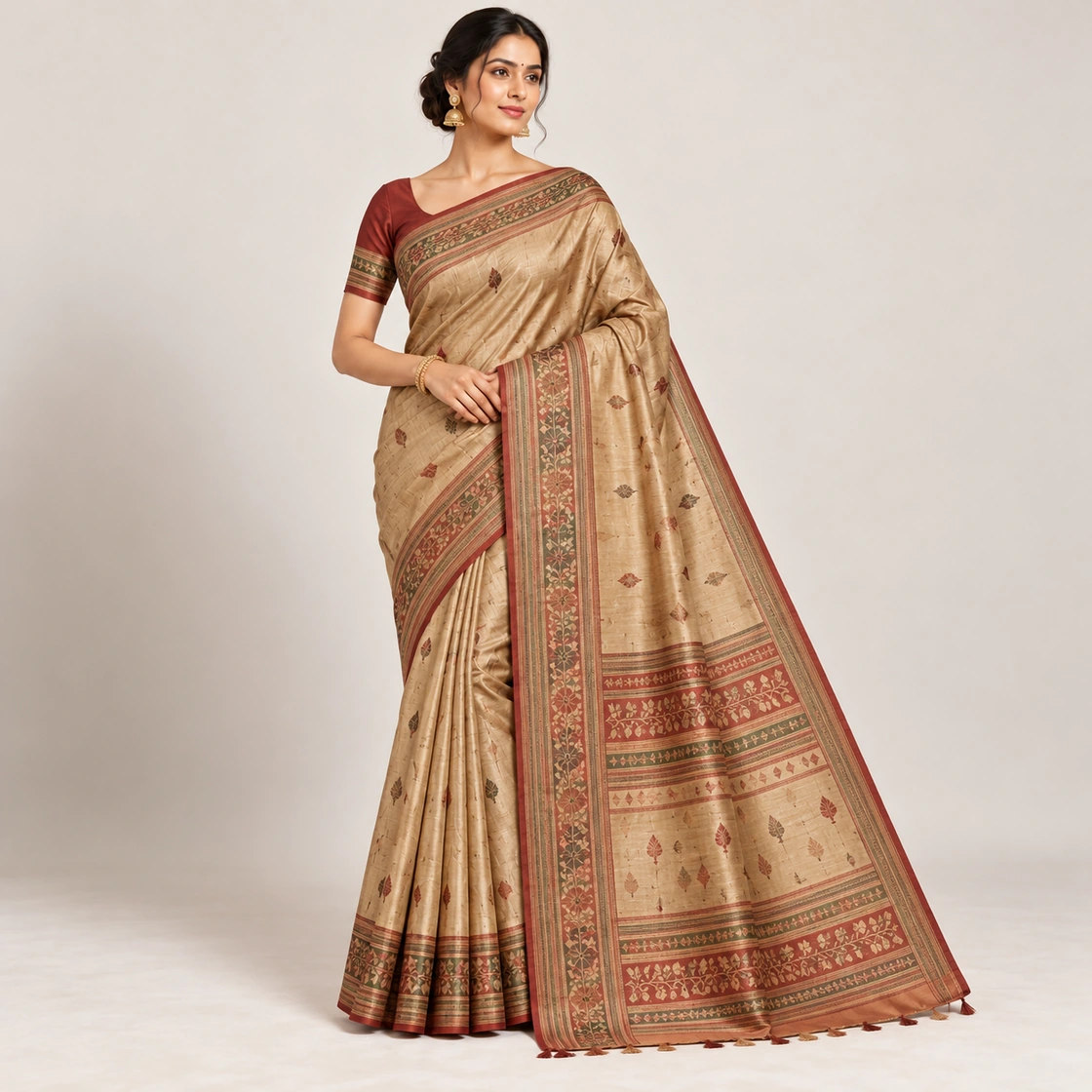 Bhagalpuri Tussar — BiharBhagalpur is widely associated with silk processing and weaving, especially Tussar-linked sarees. Many such sarees celebrate the naturally textured lo…
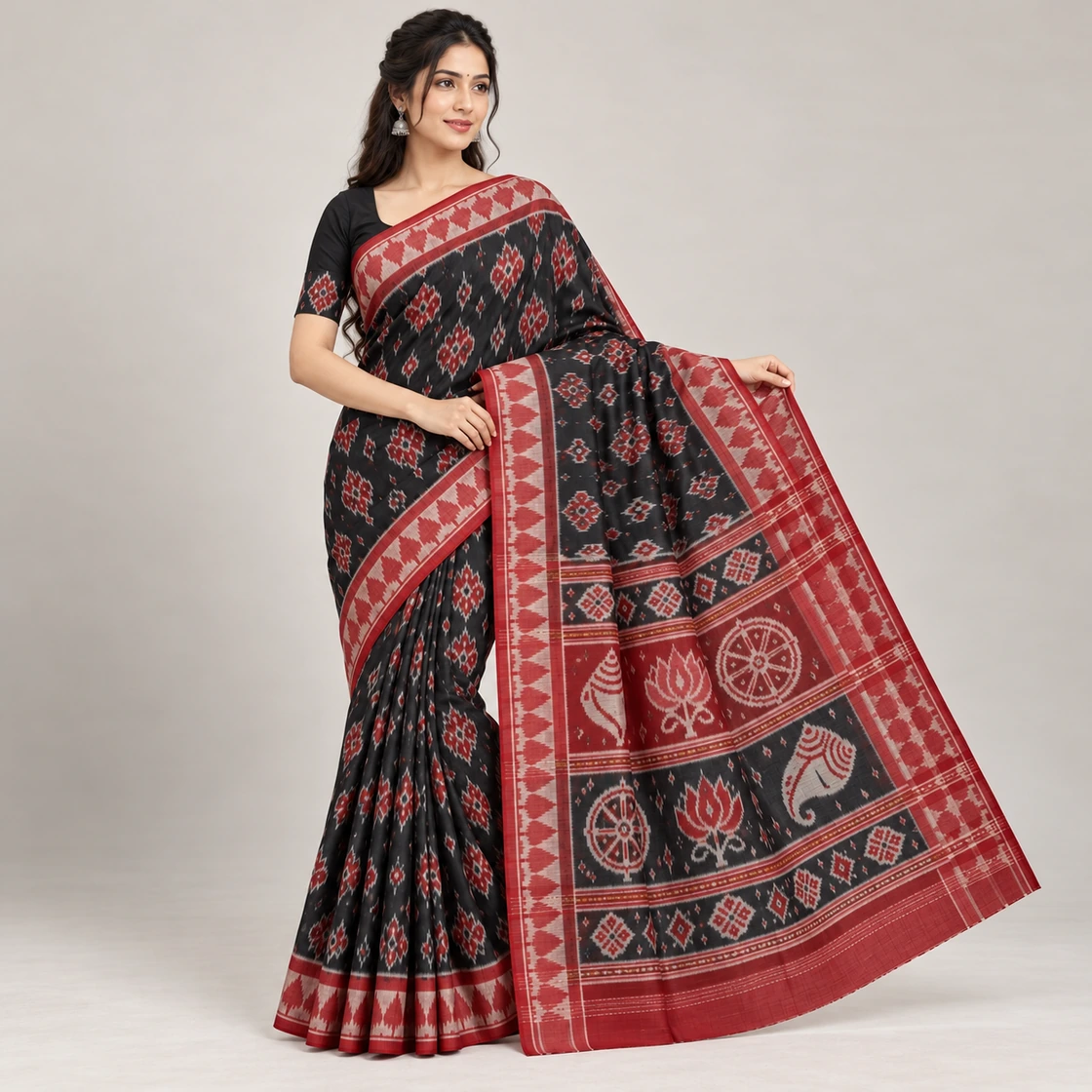 Sambalpuri — OdishaSambalpuri sarees are strongly associated with Odisha's Bandha/Ikat dyeing tradition , in which patterns are prepared on yarn before weaving. Many des…
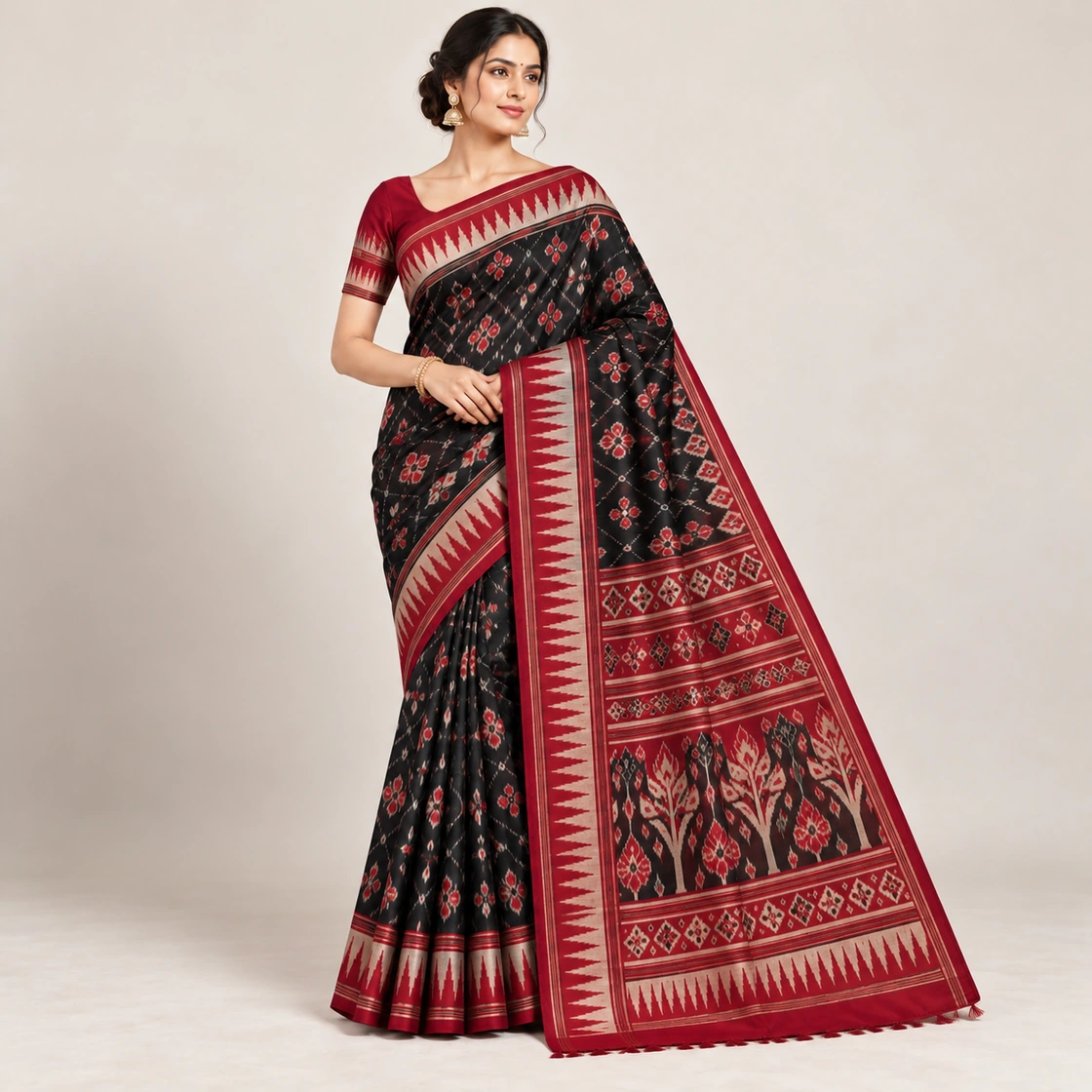 Bomkai / Sonepuri — OdishaBomkai sarees are known for richly worked borders and pallus , often featuring small geometric elements and traditional motifs. They may be cotton, si…
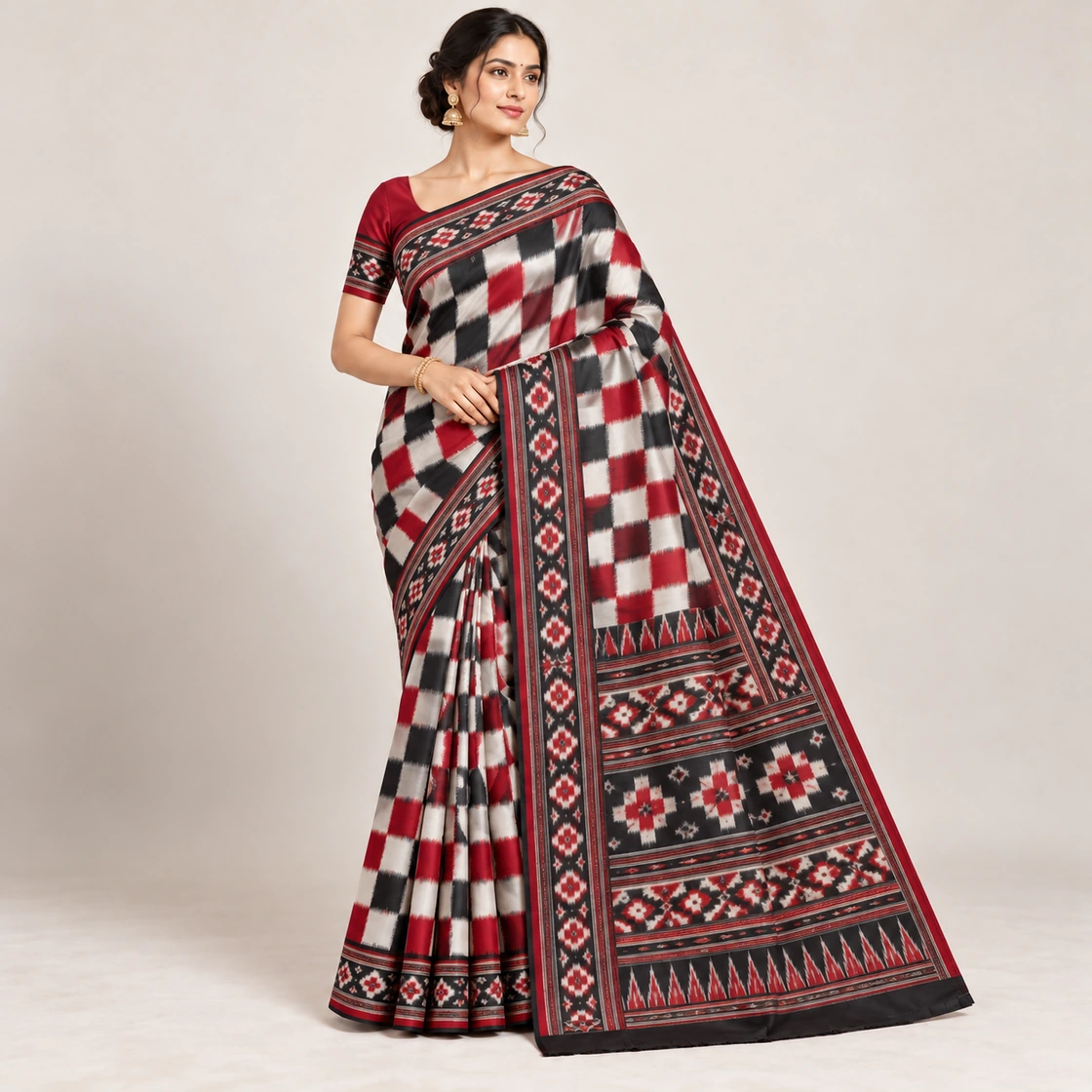 Pasapalli — OdishaPasapalli sarees are known for their board-game-like checks . The word is associated with the traditional game of pasa , and the repeated squares or r…
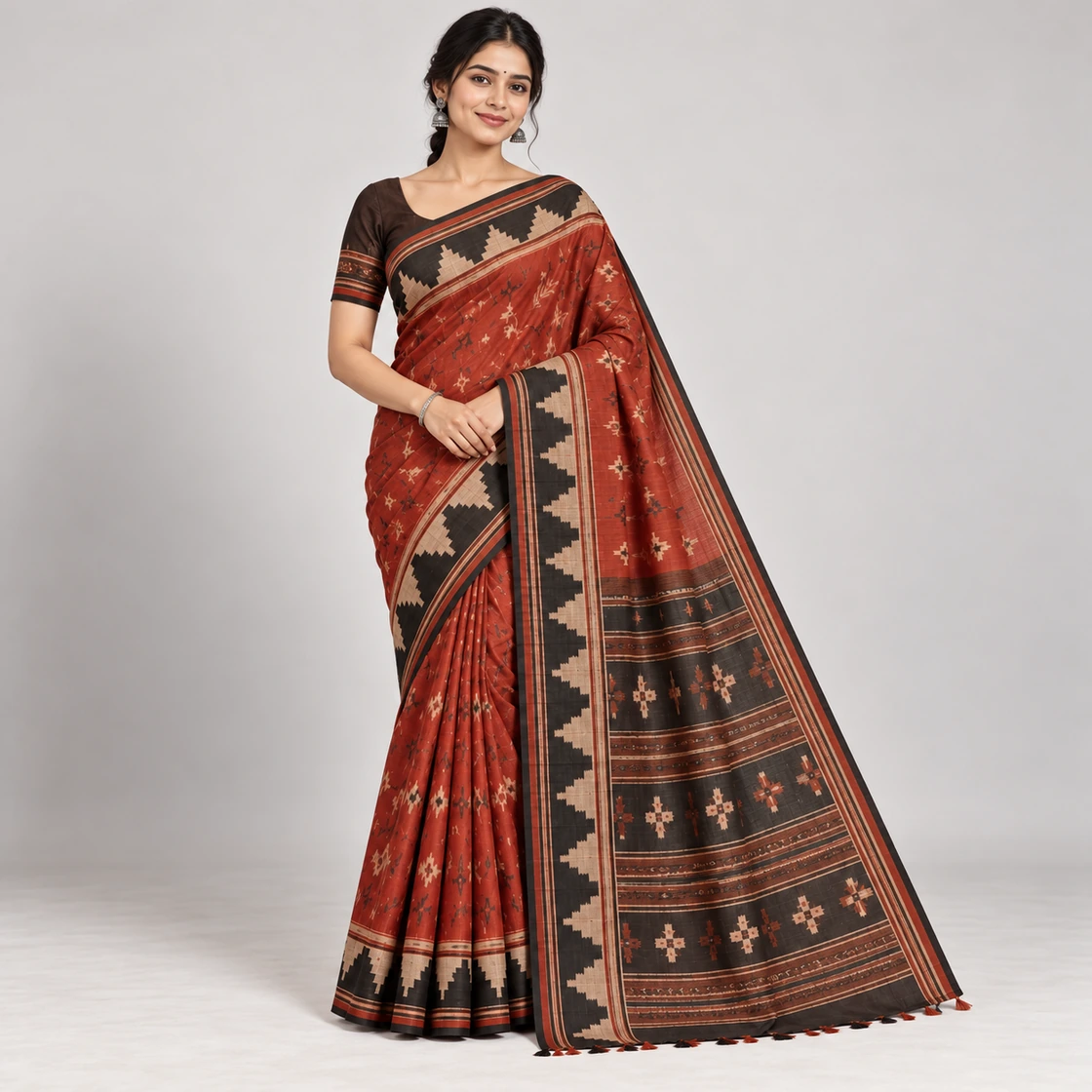 Kotpad — OdishaKotpad is associated with earthy natural-dye traditions and handwoven textiles from southern Odisha, particularly linked with tribal weaving communiti…Kanjivaram — Tamil NaduKanjivaram is one of India's best-known silk saree traditions. Many classic examples have a substantial silk body, a clearly defined border and a stri…
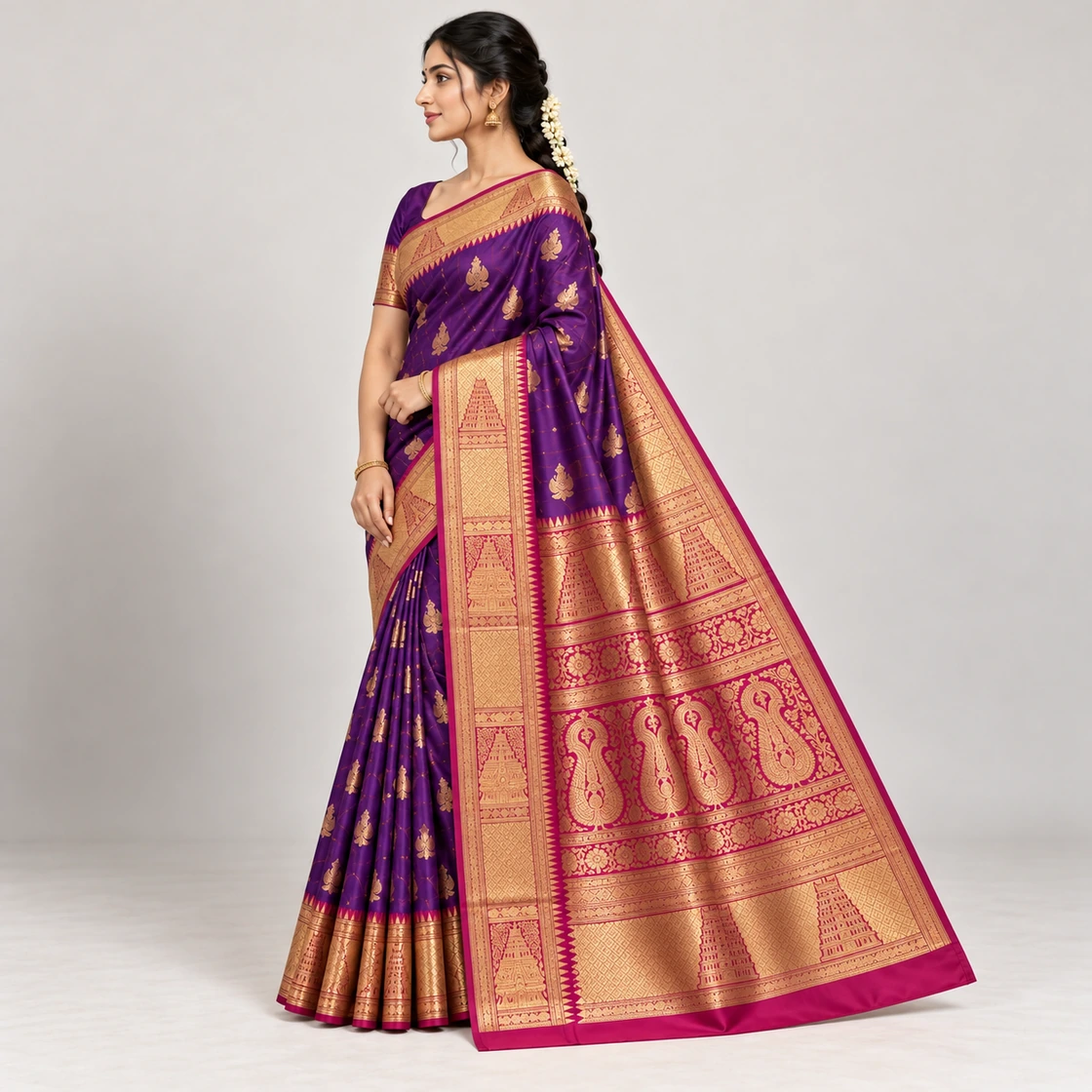 Arani silk — Tamil NaduArani is another important Tamil Nadu silk-weaving centre. Arani silk sarees often resemble familiar South Indian ceremonial silks, with lustrous bodi…
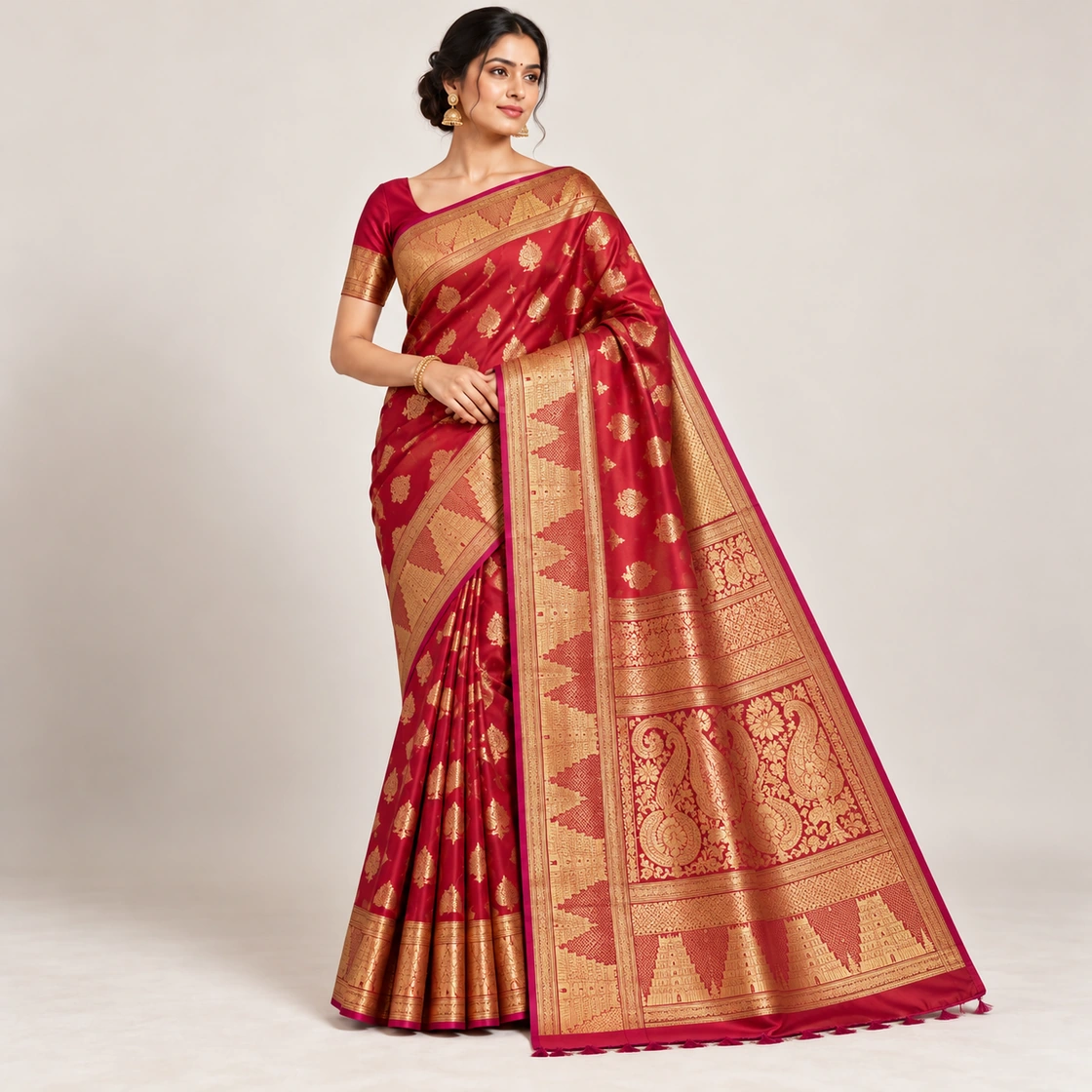 Dharmavaram — Andhra PradeshDharmavaram silk sarees are well known for rich colours, comparatively broad borders and ceremonial designs . Some have contrasting pallus and decorat…Pochampally Ikat — TelanganaPochampally is strongly associated with bold, often geometric Ikat patterns . Diamonds, angular shapes and repeated colour blocks are common. Because …
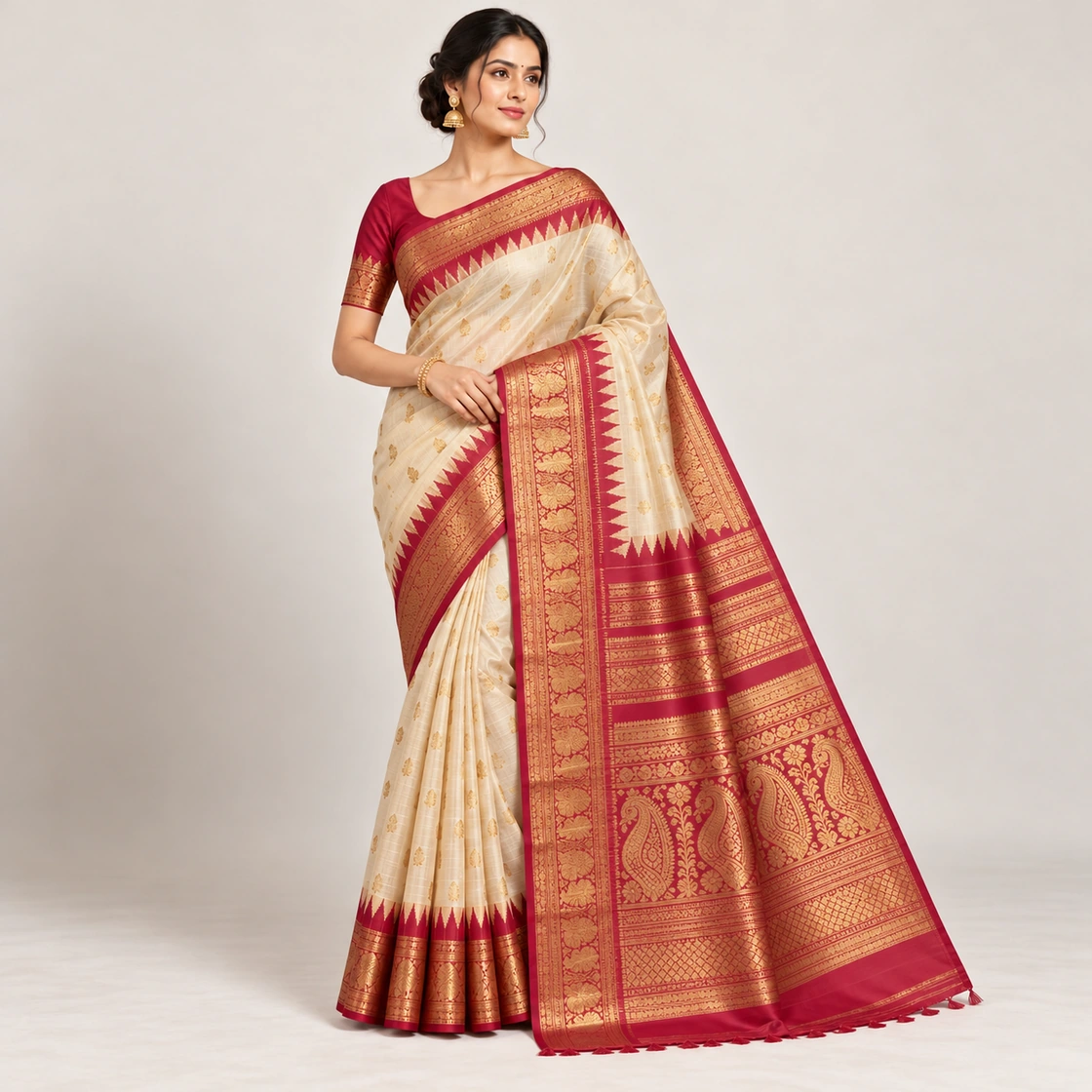 Gadwal — TelanganaGadwal sarees are famous for combinations such as a cotton body with silk borders and pallu. The meeting of different materials can create an elegant…
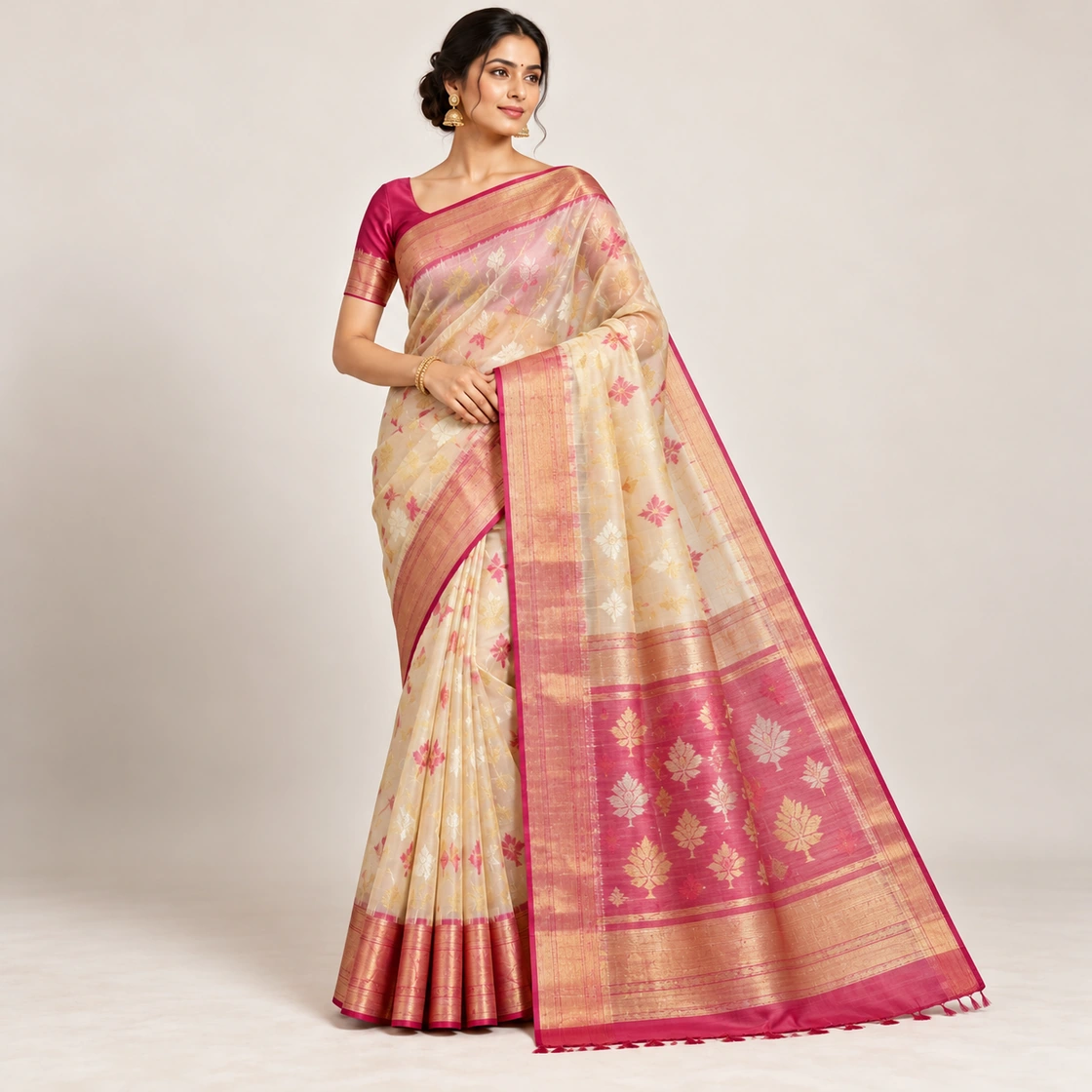 Uppada — Andhra PradeshUppada is especially associated with fine, lightweight silk sarees and delicate Jamdani-style decorative work. Many examples place colourful flowers, …
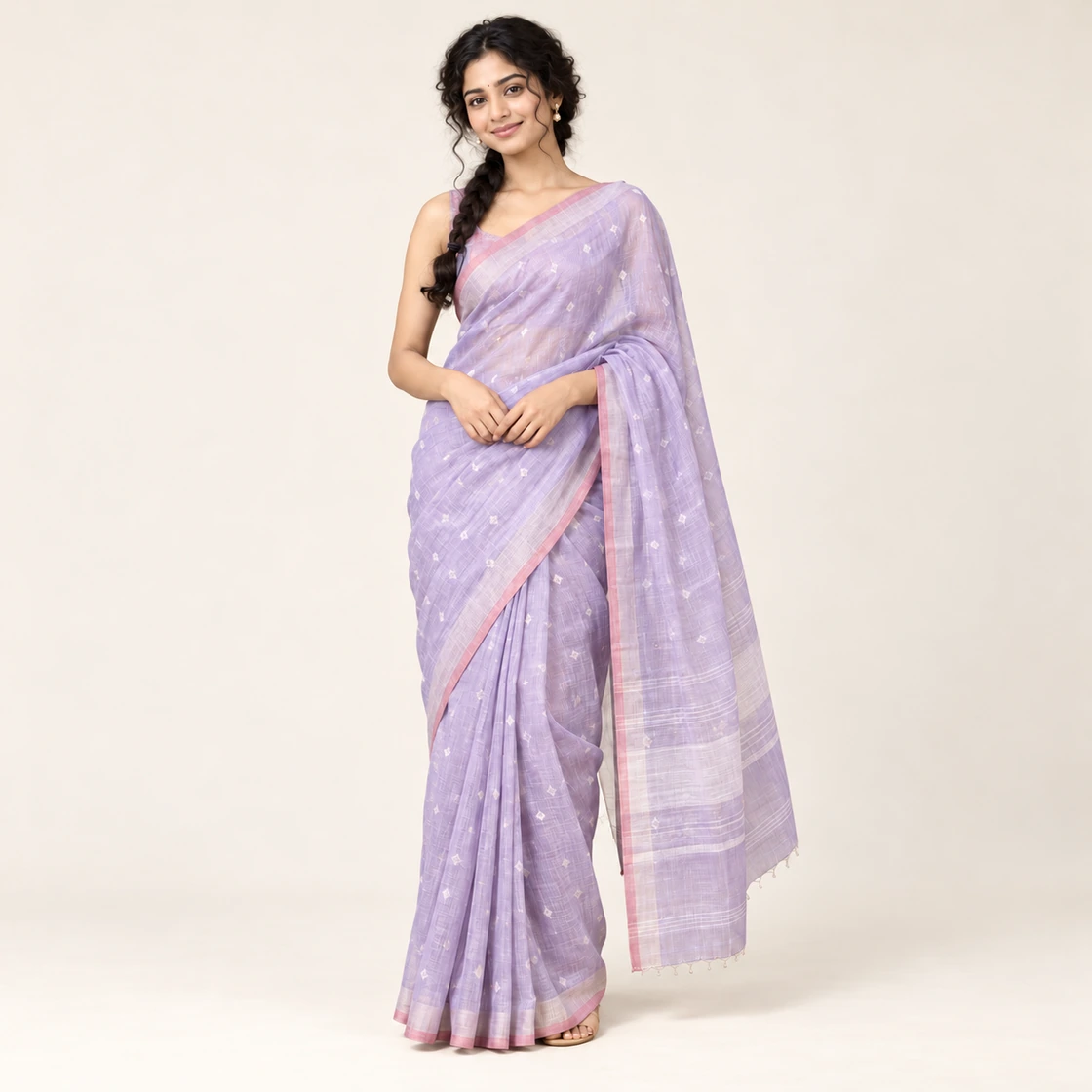 Venkatagiri — Andhra PradeshVenkatagiri sarees are associated with fine, often lightweight fabrics in cotton or silk, frequently with delicate decorative elements and pleasing bo…
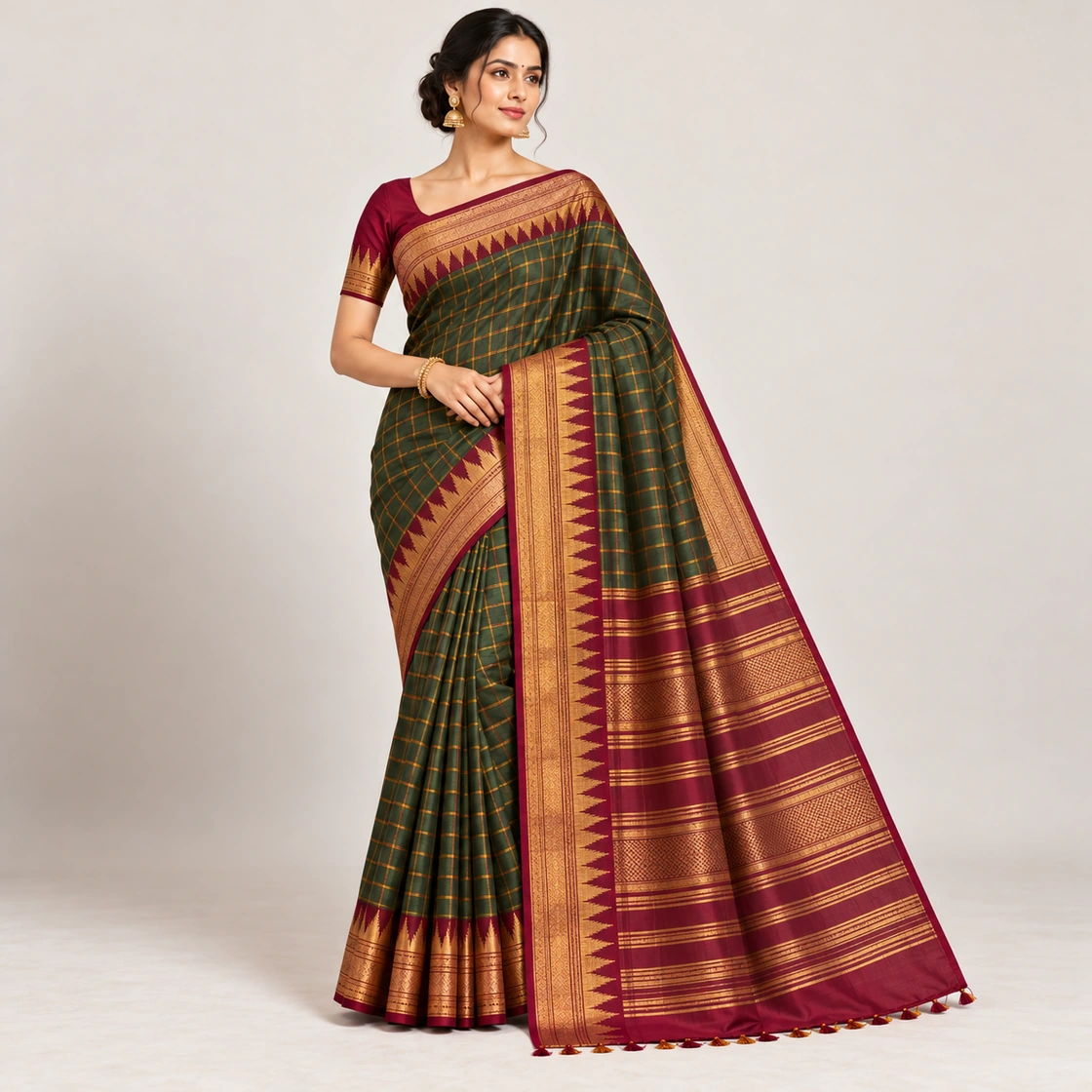 Narayanpet — TelanganaNarayanpet sarees are often recognizable by striped or checked bodies and clearly patterned borders , with traditional colour combinations that can be…
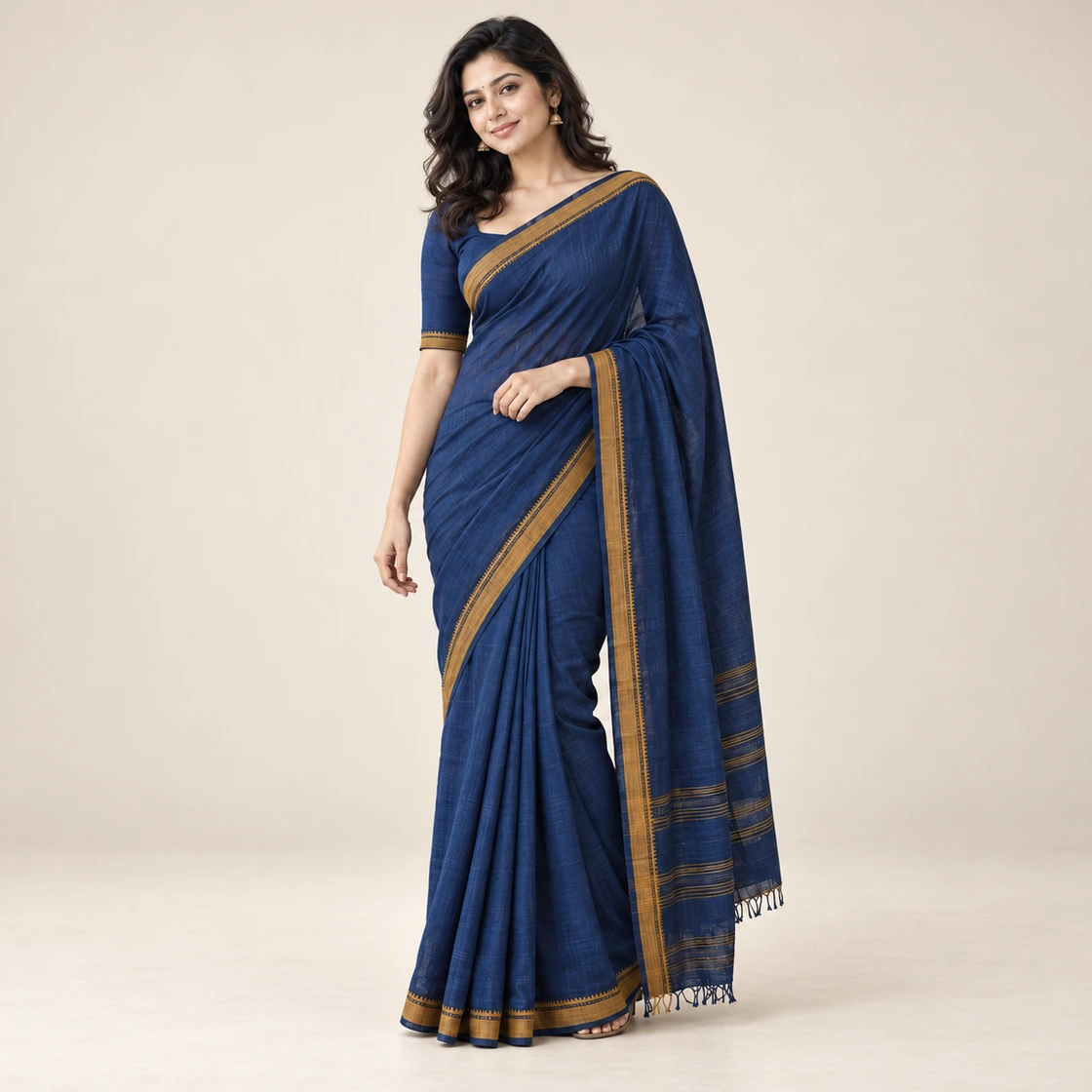 Mangalagiri — Andhra PradeshMangalagiri sarees are often admired for clean, simple bodies with well-defined borders , sometimes with little or no decoration in the main field. Ma…
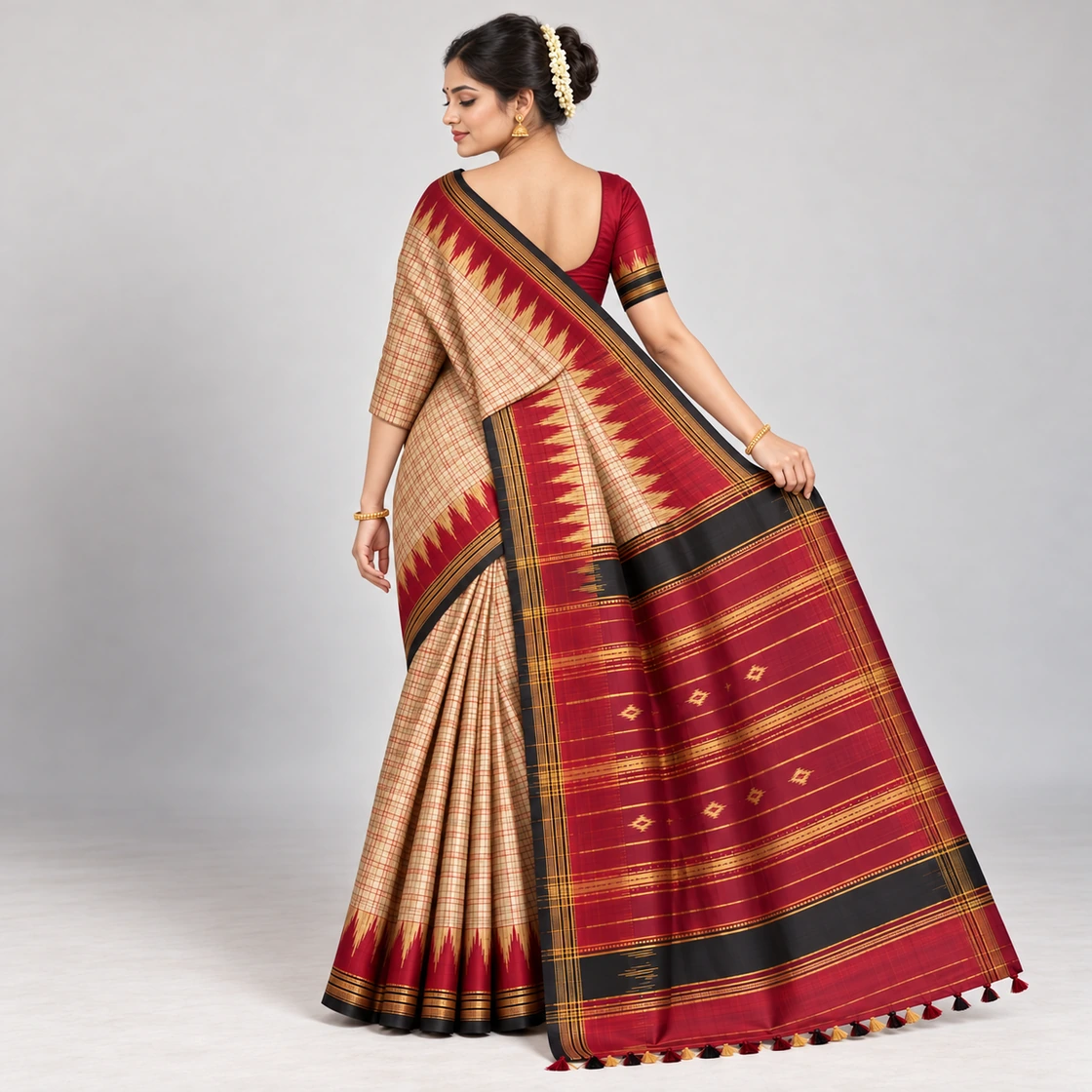 Ilkal — KarnatakaIlkal sarees are especially known for the relationship between the body, a contrasting border and a distinctive pallu. Traditional pallus often have …
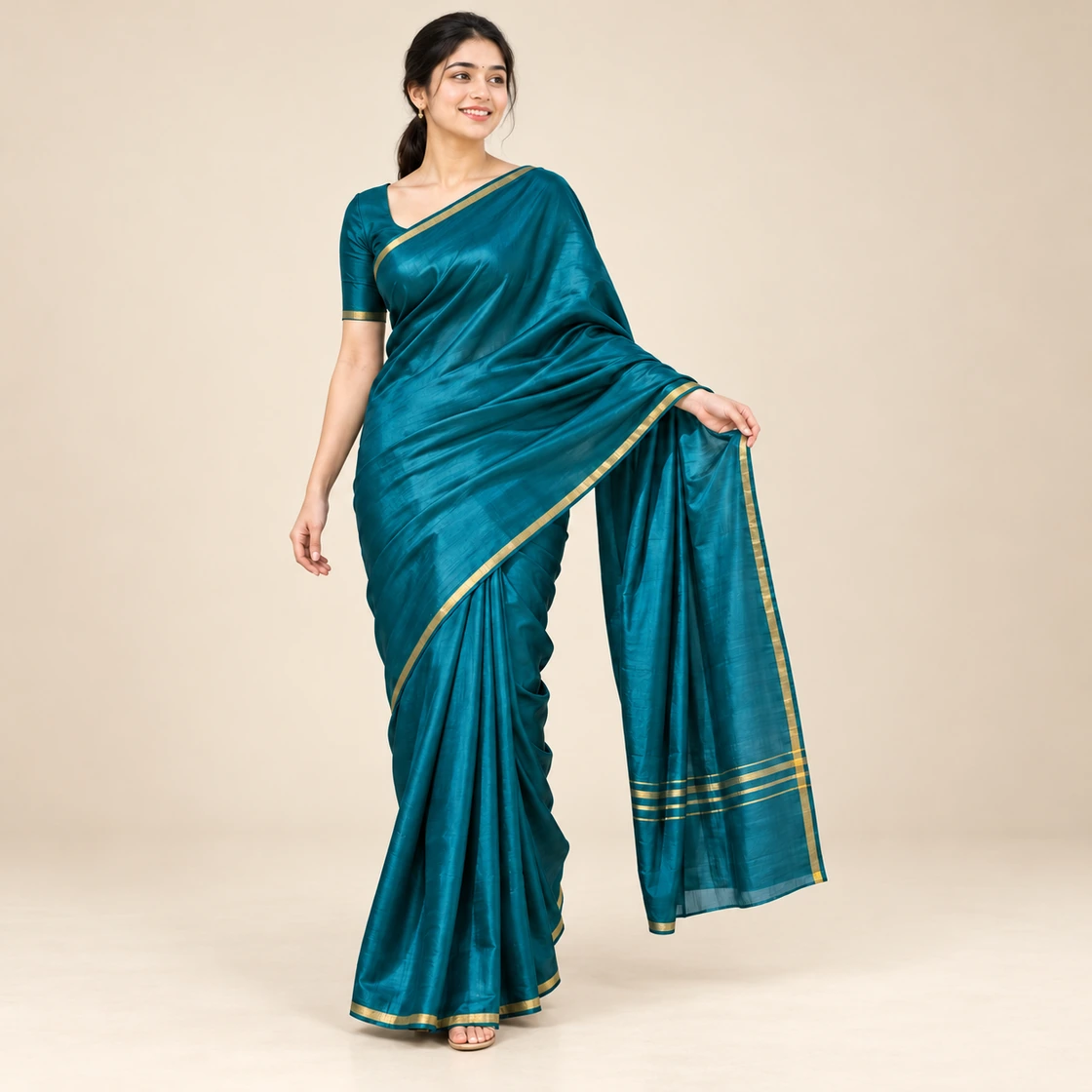 Mysore silk — KarnatakaMysore silk is strongly associated with smooth, polished silk and relatively restrained decoration . Many familiar sarees have a plain, glossy body co…
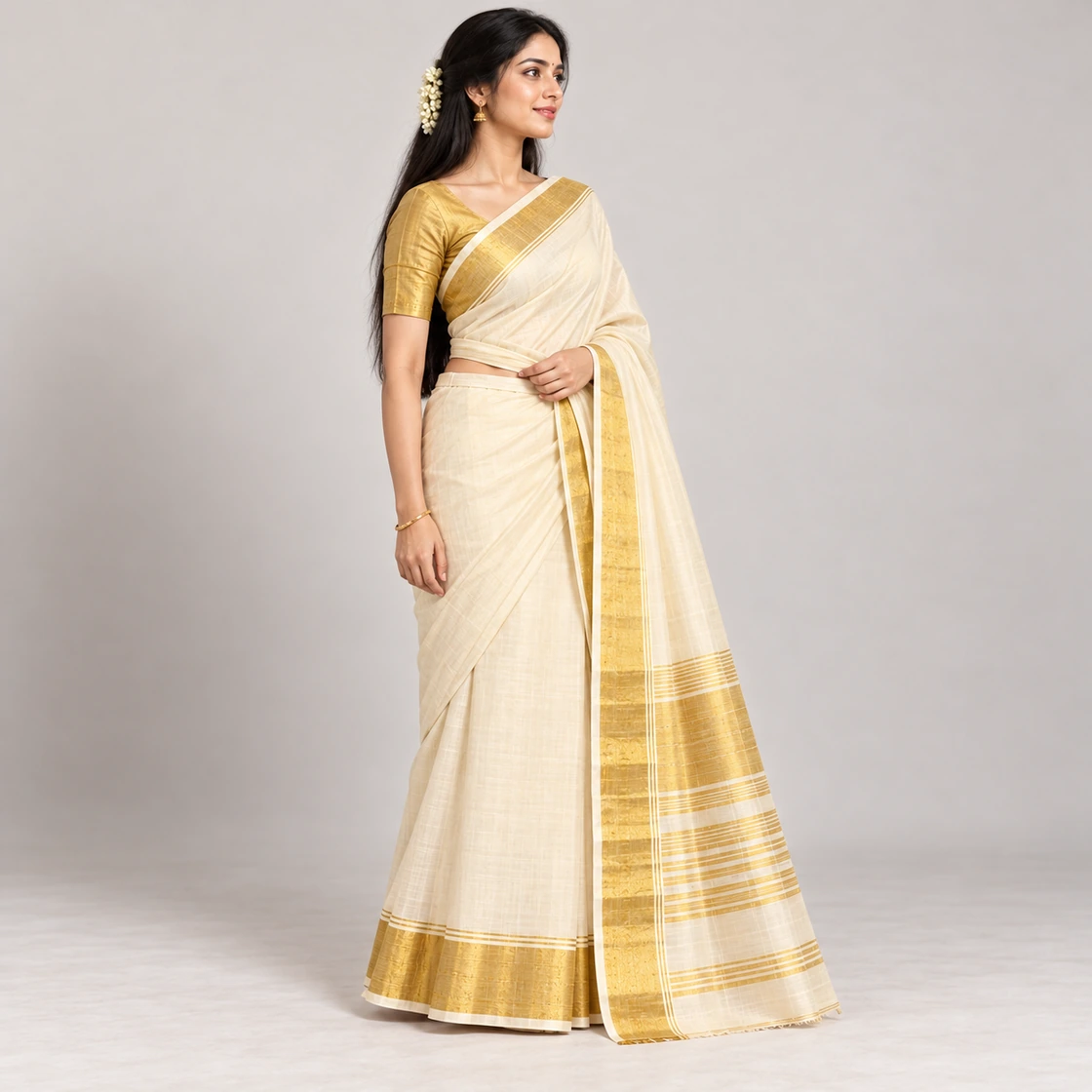 Kerala Kasavu — KeralaThe familiar Kerala ceremonial saree often has an off-white or ivory body with a gold-coloured border . This palette makes it instantly recognizable. …
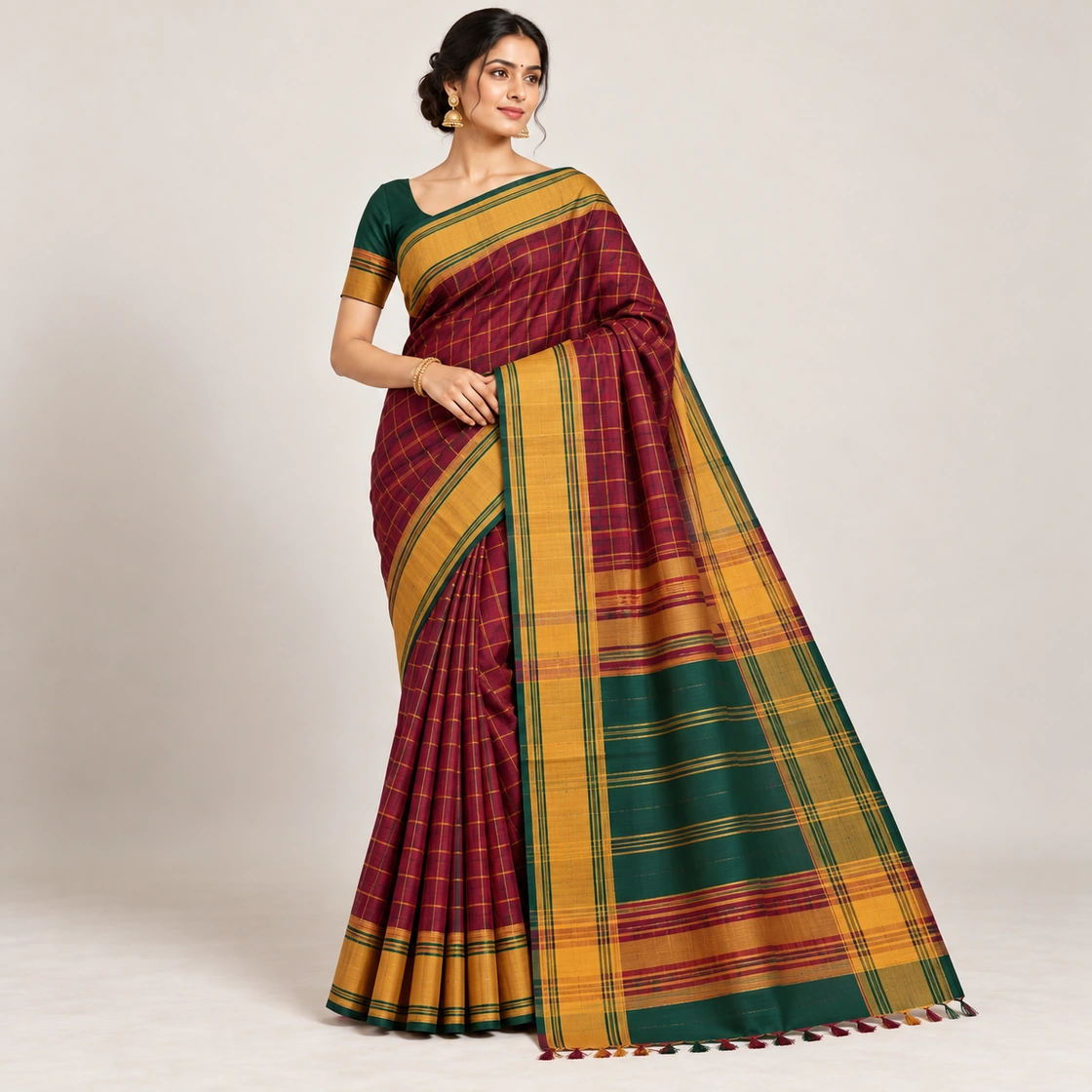 Chettinad cotton — Tamil NaduChettinad cotton sarees are valued for bold checks, stripes and lively contrasting colours , often with a relatively substantial everyday-cotton feel.…
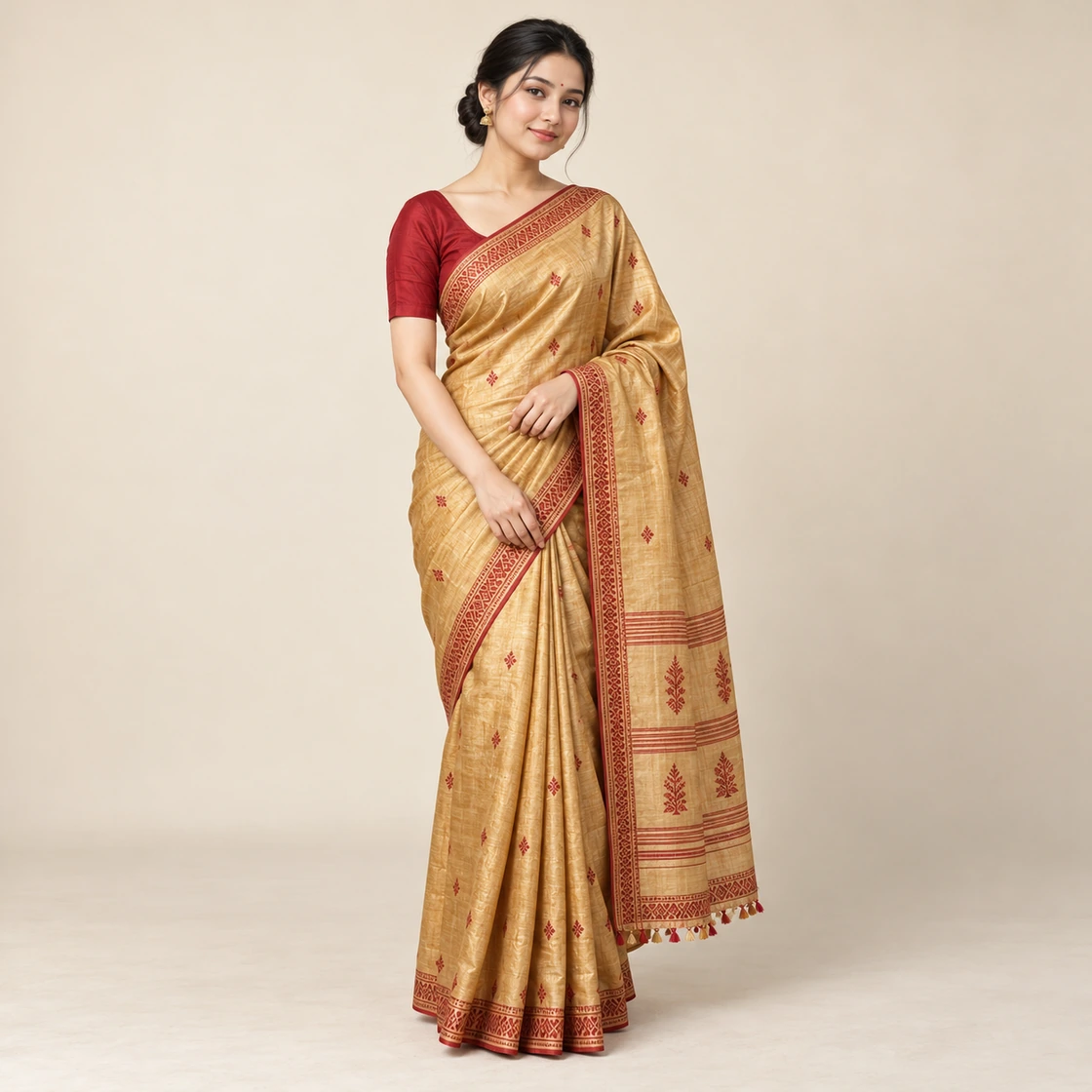 Assam Muga silk — AssamAssamese Muga silk sarees are best known for the natural golden tone of the silk , which can make even relatively restrained designs look special. Tra…
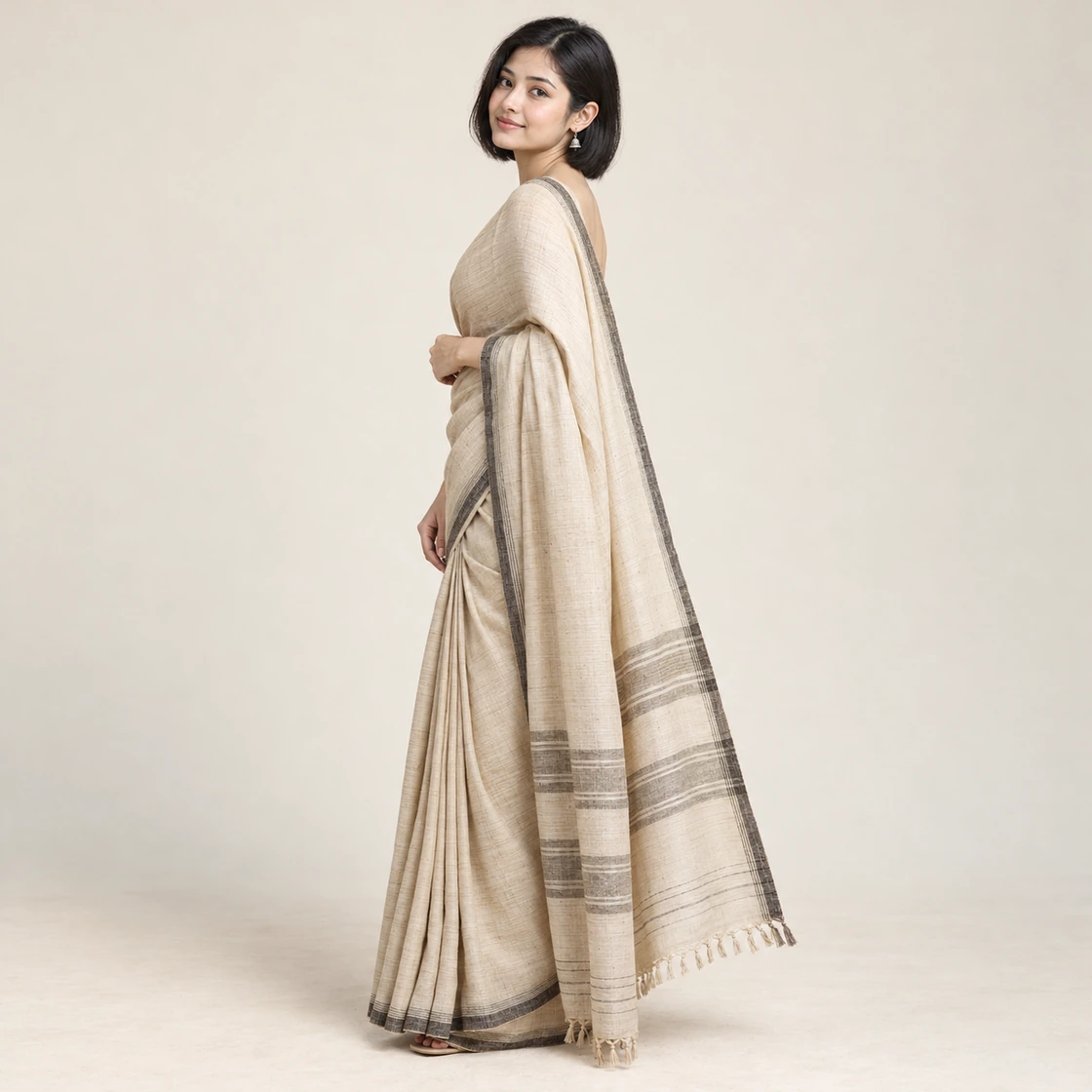 Eri silk sarees — Assam and the NortheastEri sarees are valued for a softer, warmer, often more matte character . They can look more relaxed and tactile than highly glossy ceremonial silks. F…
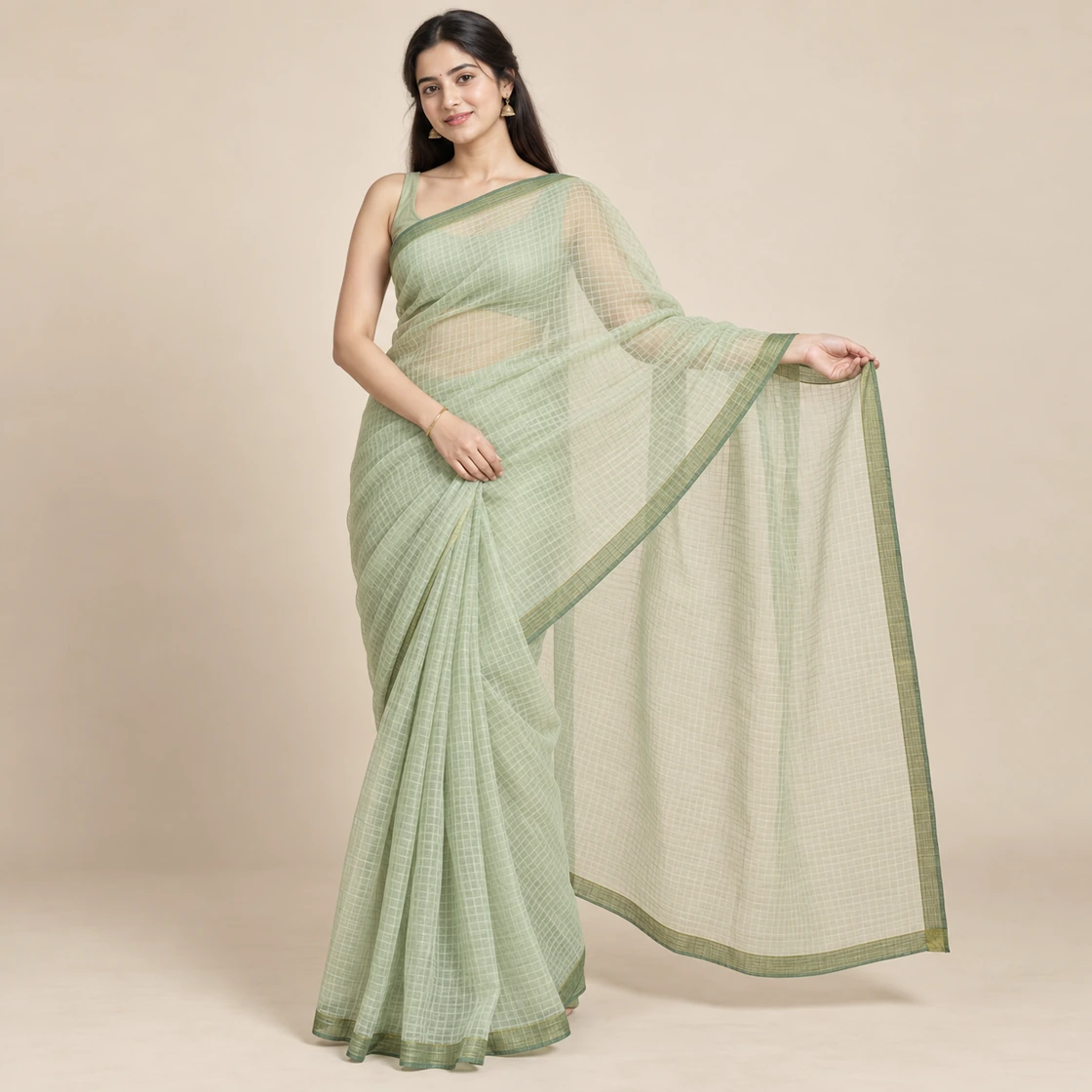 Kota DoriaKaithoon, Kota/Bundi/Baran, Rajasthan · Fine square khat checks formed in weave
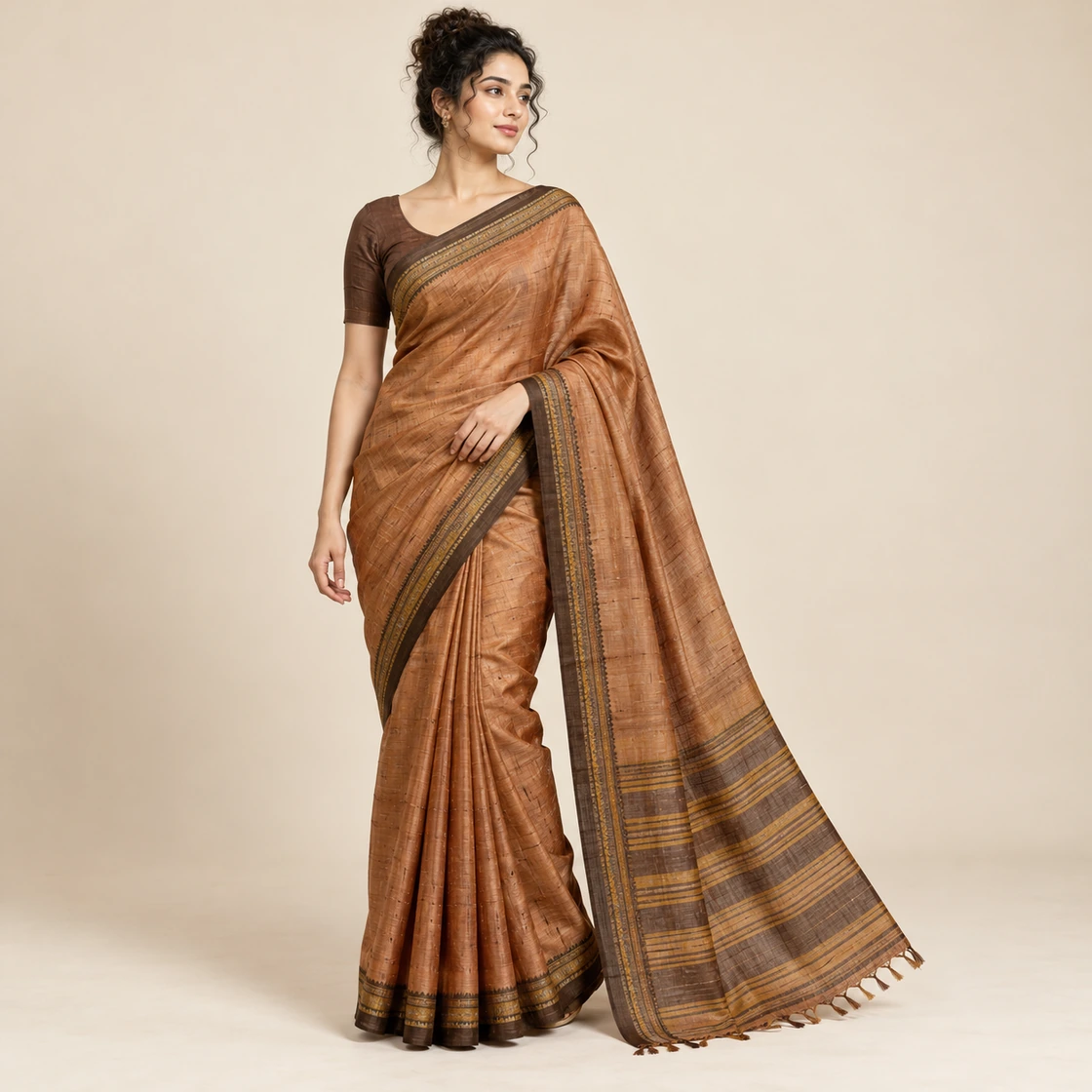 Champa Silk / KosaChampa, Janjgir-Champa, Chhattisgarh · Natural honey/copper tussar, irregular slubbed surface; decorative traditional borders
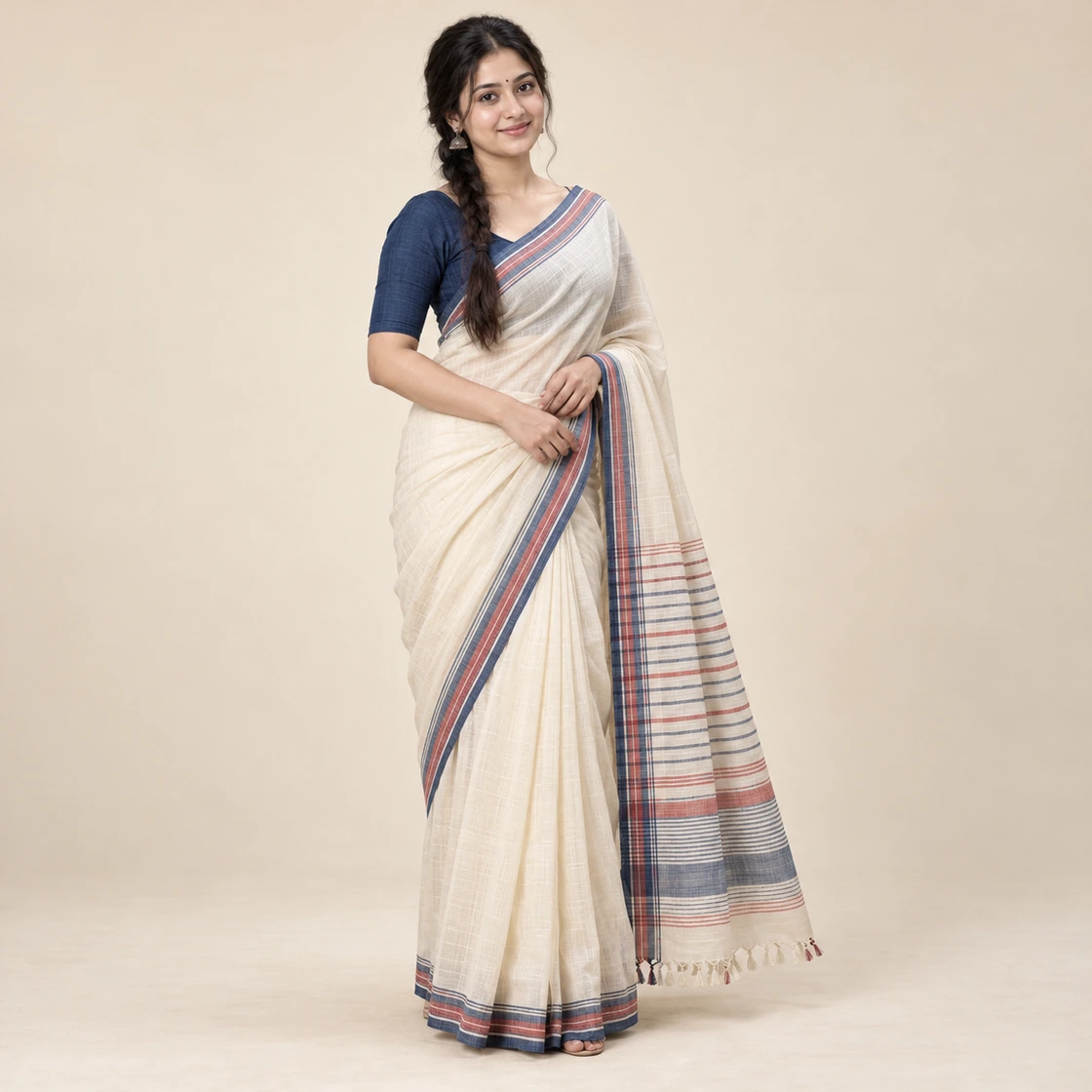 Santipur (Santipore)Santipur, Nadia, West Bengal · Fine even handloom cotton; restrained checks/stripes and borders
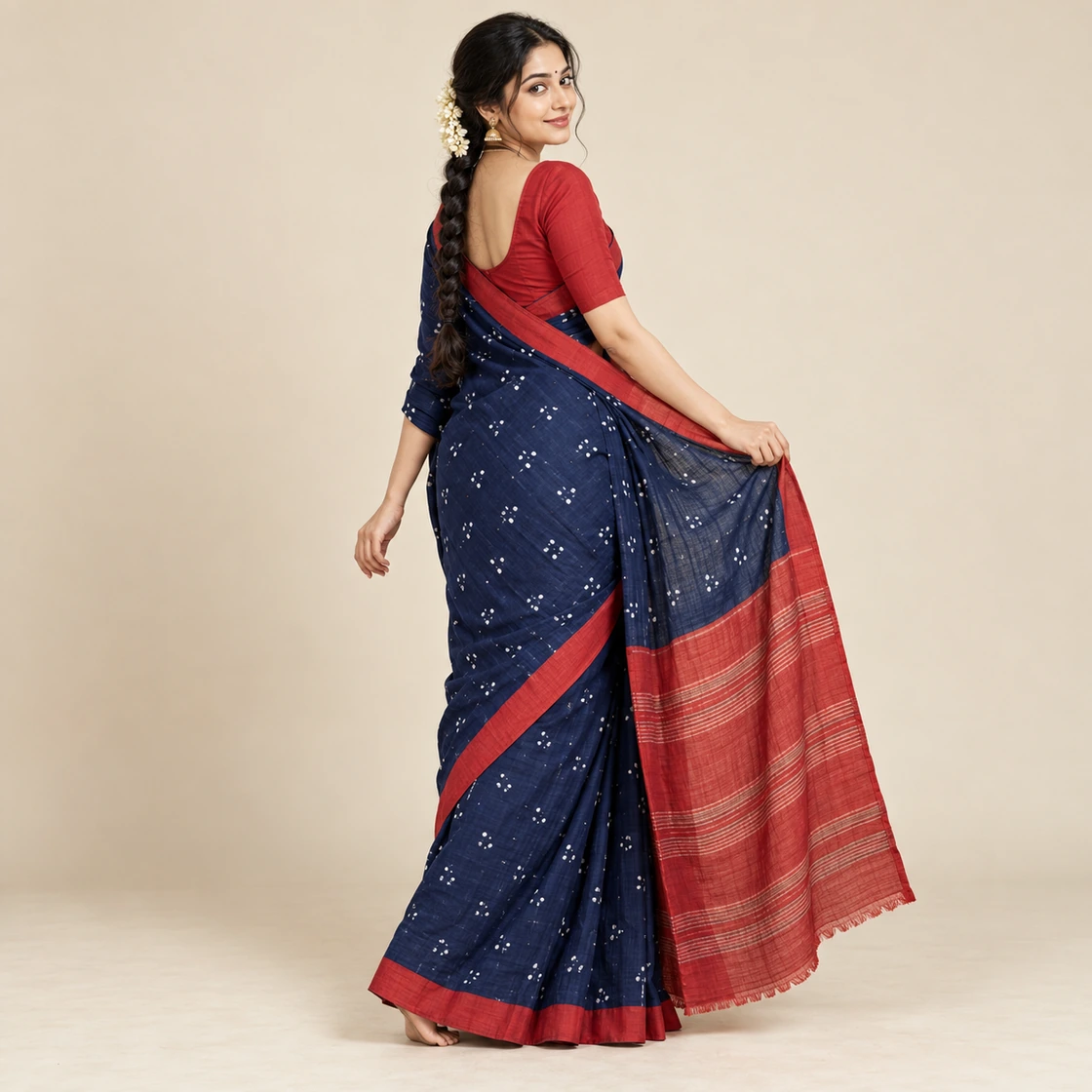 Madurai SungudiMadurai, Tamil Nadu · Tiny tie-resist dots on cotton with contrasting borders
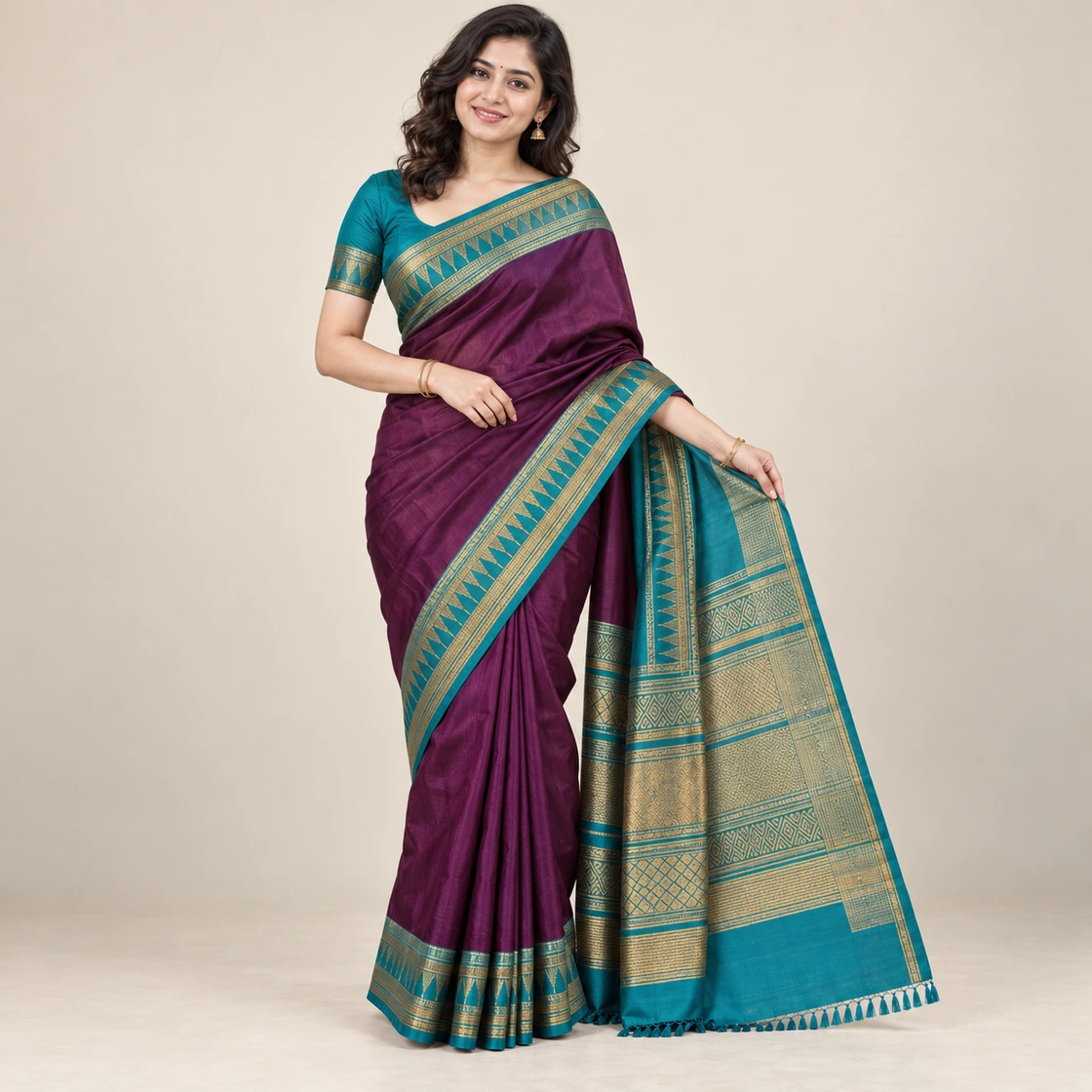 MolakalmuruMolakalmuru, Chitradurga, Karnataka · Rich brocade motifs and contrast borders
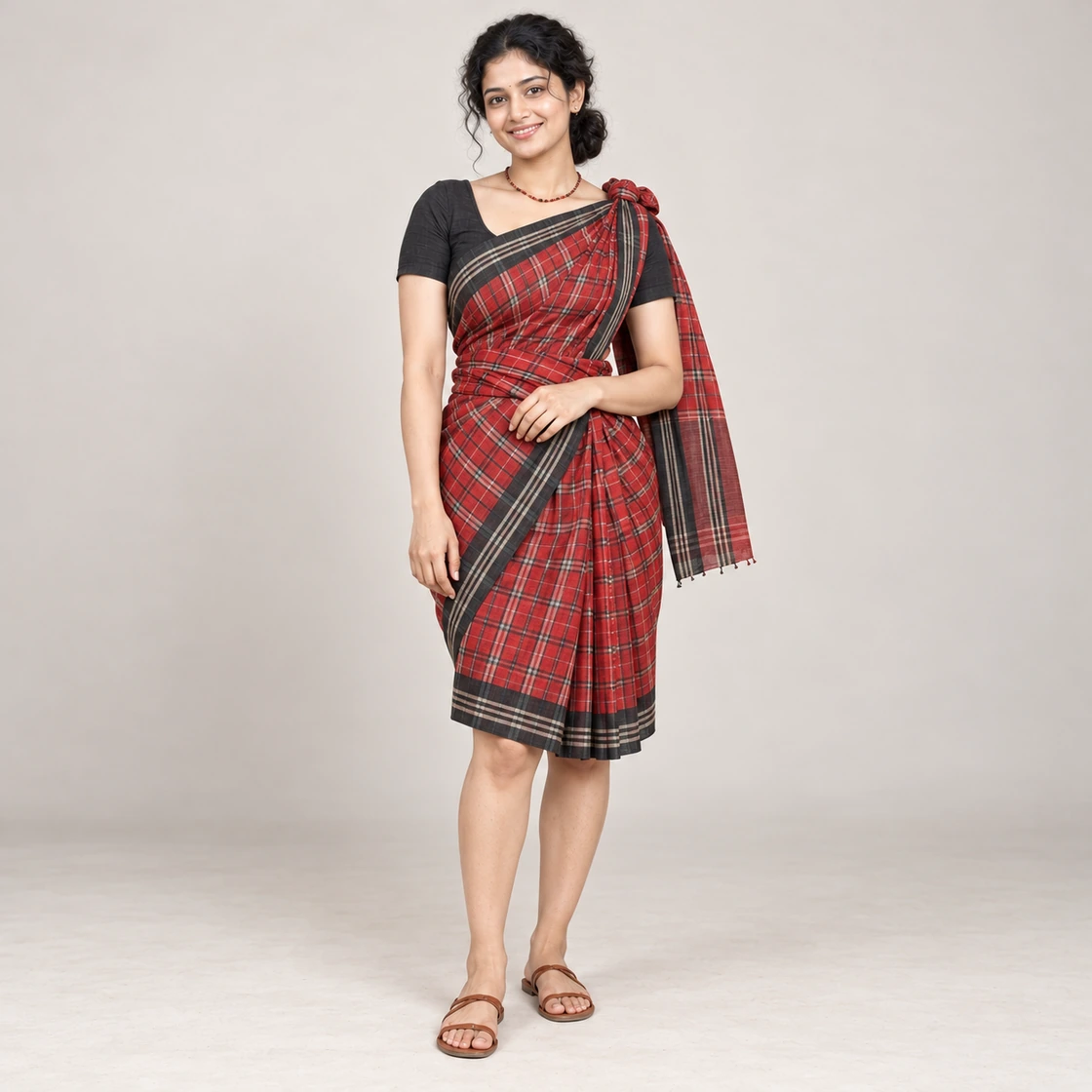 Goa KunbiGoa · Check/stripe weave in traditional sturdy drape
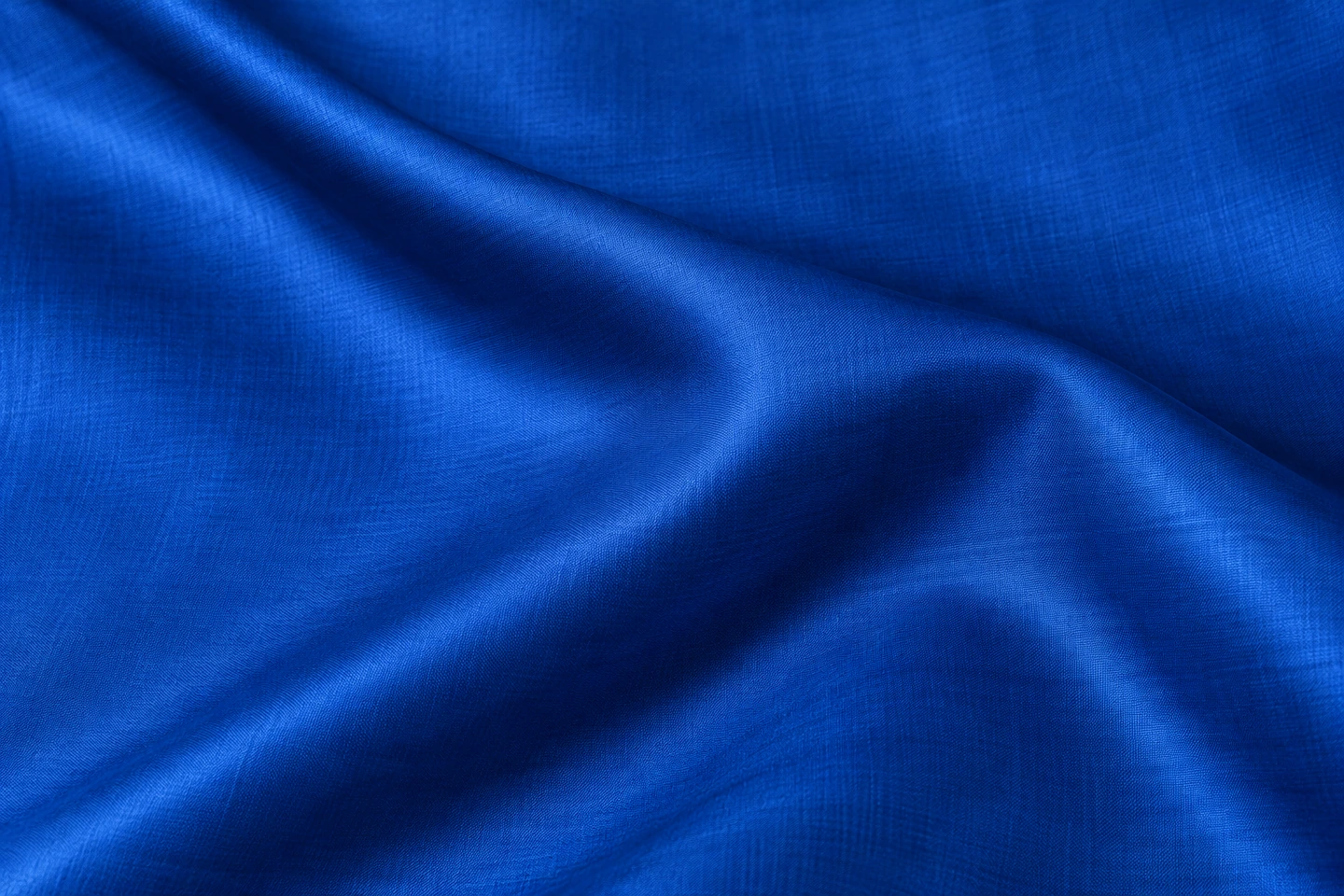 Mulberry silk — the familiar smooth silkThis is the most common silk used in many well-known Indian silk sarees. It comes from silkworms that usually feed on mulberry leaves. When the silk i…
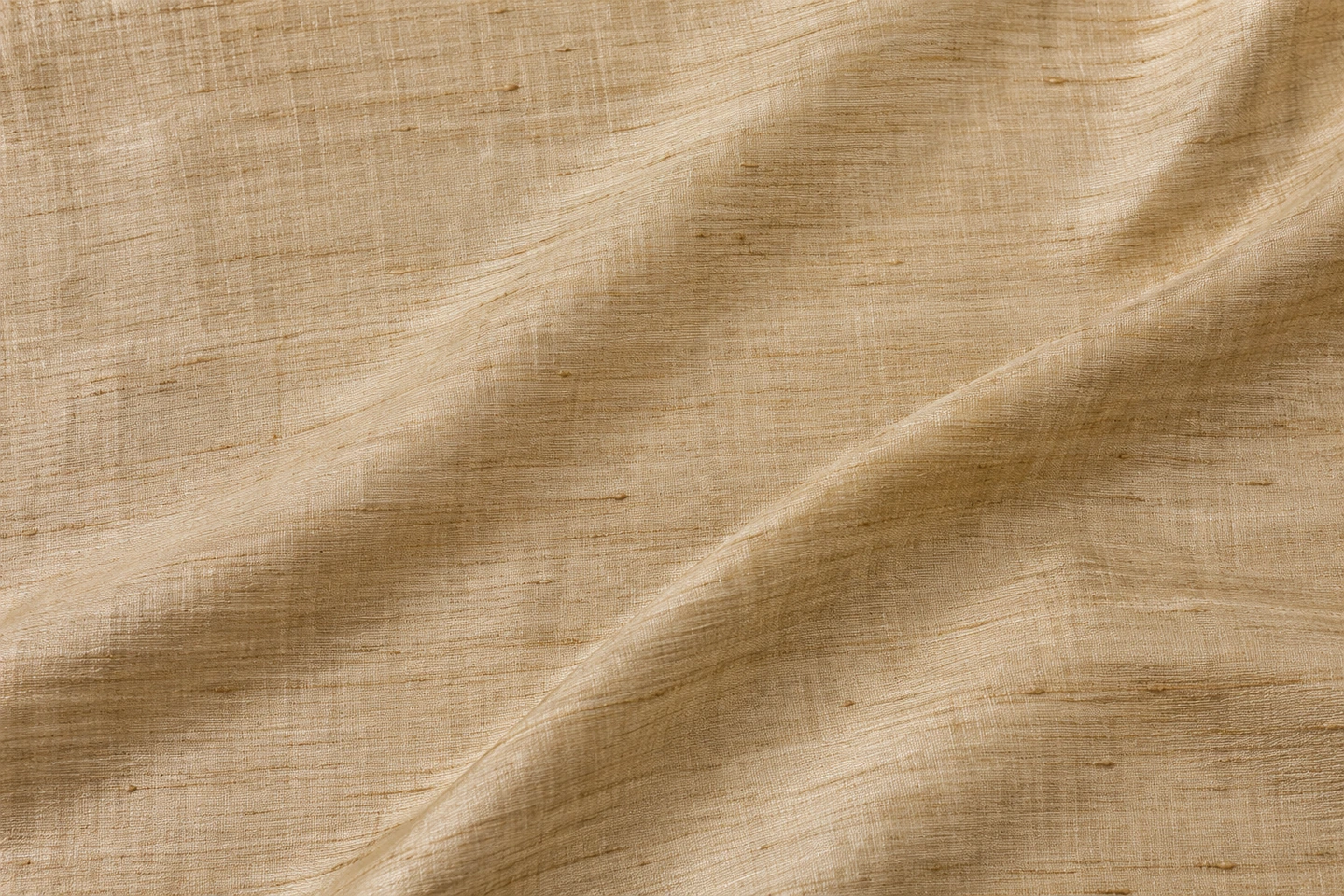 Tussar / Tasar — silk with a quieter, earthy characterTussar is a family of silks produced by certain non-mulberry silkworms. Many Tussar fabrics have a slightly uneven surface and a softer, less mirror-l…
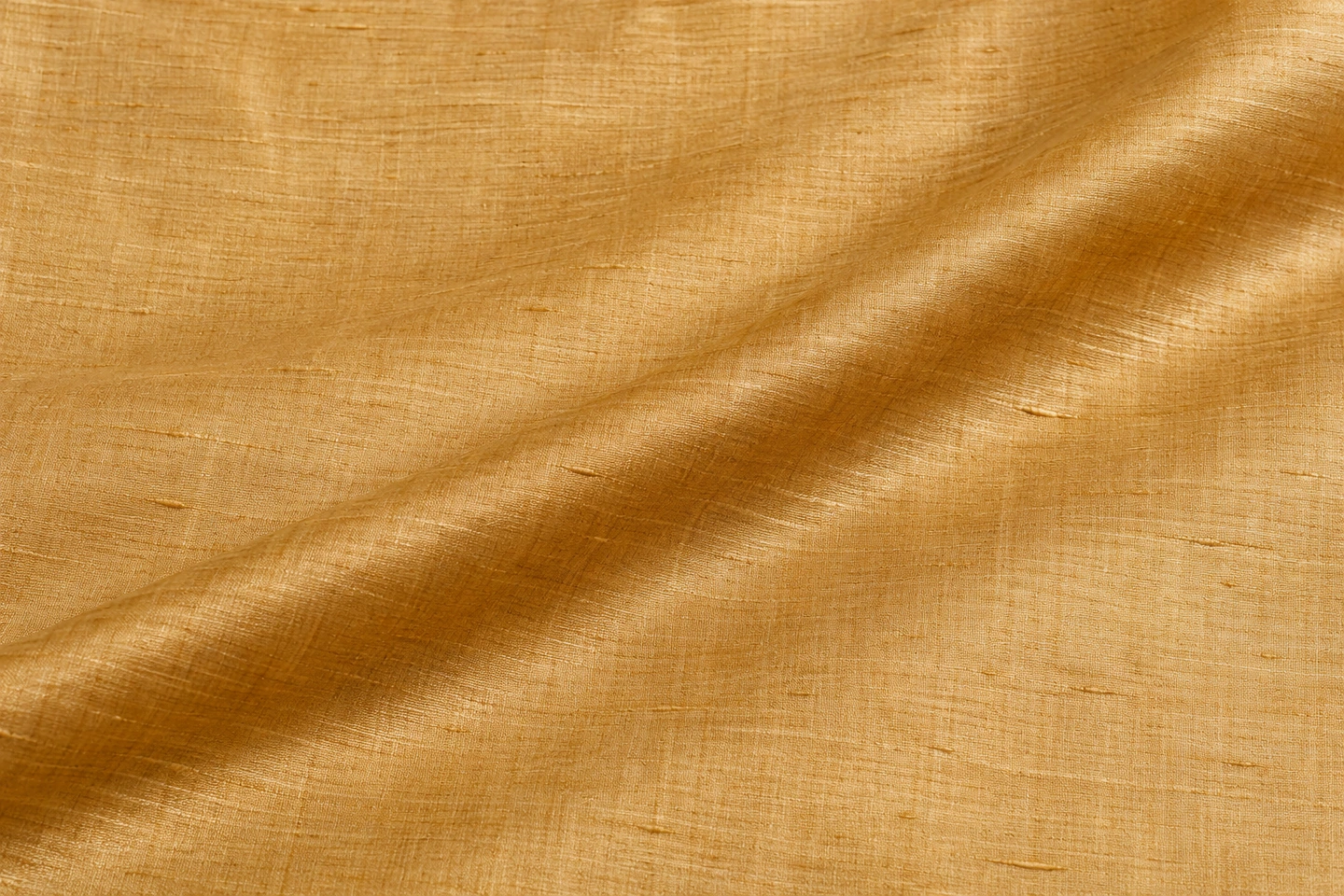 Muga — silk known for its natural golden toneMuga is strongly associated with Assam. Its natural warm golden colour is one of its best-known features. The colour is within the silk itself; it is …
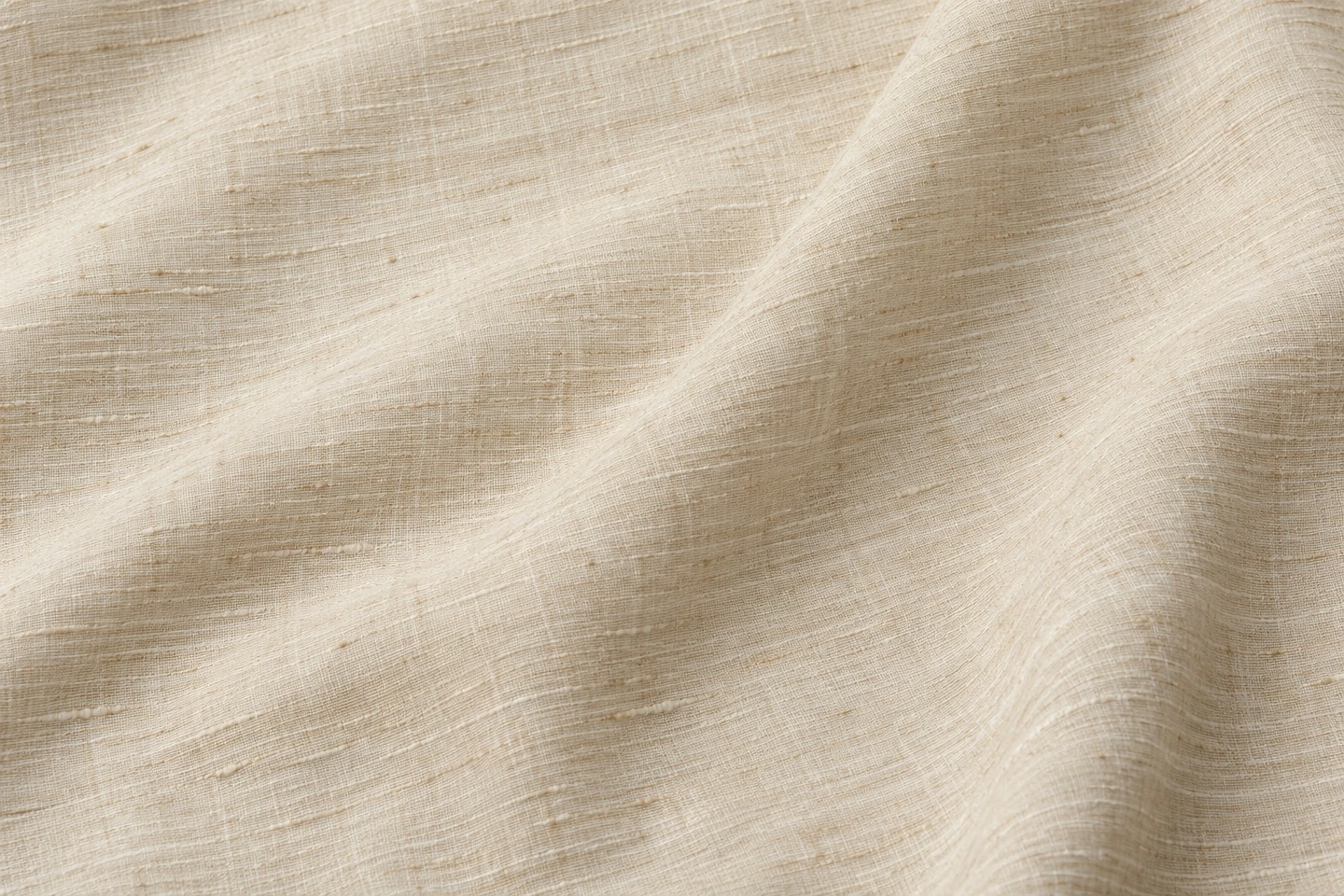 Eri — the gentler, often more matte silkEri is another non-mulberry silk strongly associated with northeastern India. It is often spun into yarn rather than used as one very long, smooth fil…
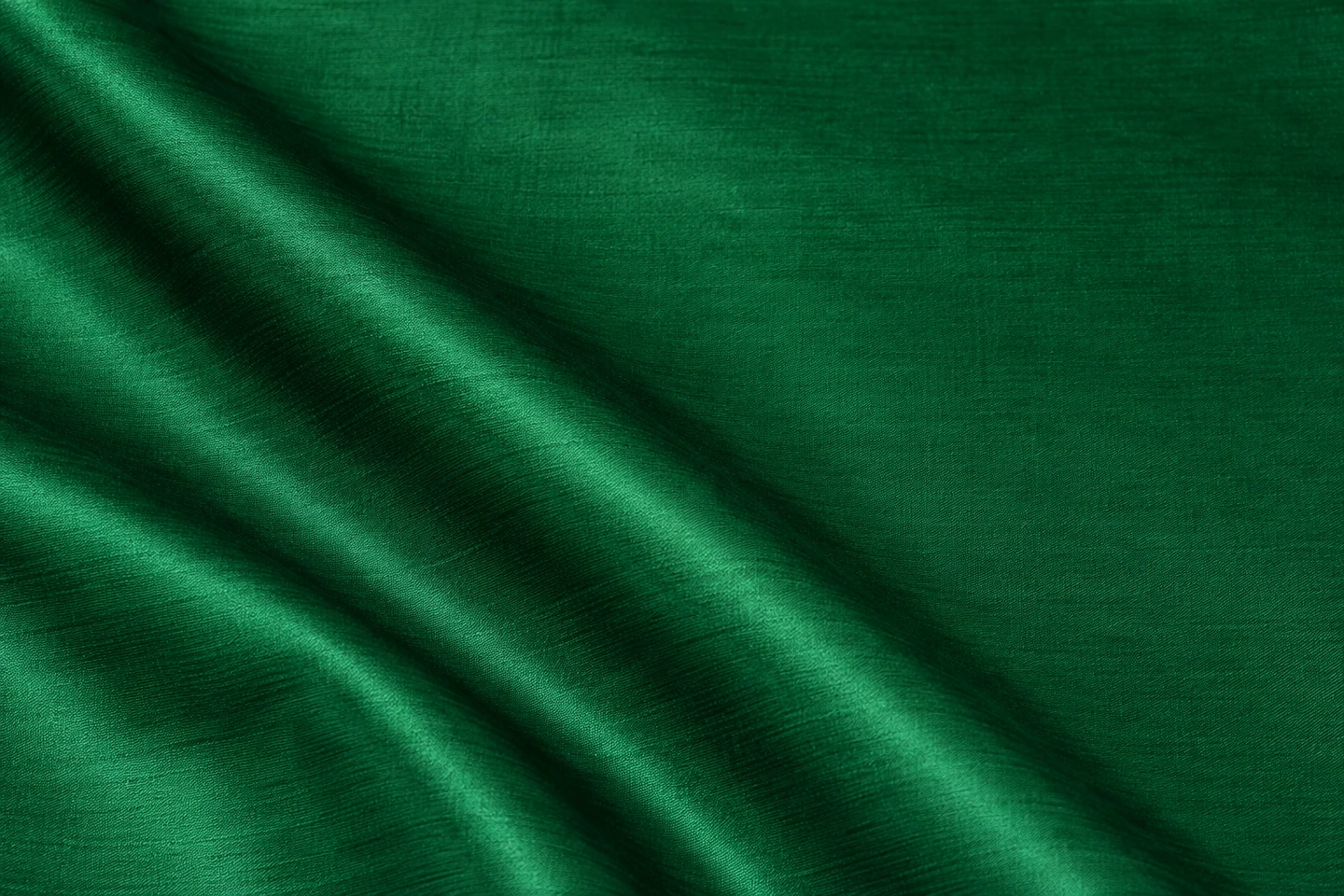 Katan — a silk-yarn name, not a new species of silkImagine the raw material is mulberry silk. Silk filaments can be combined and twisted into stronger yarn. Katan is a traditional name associated with …
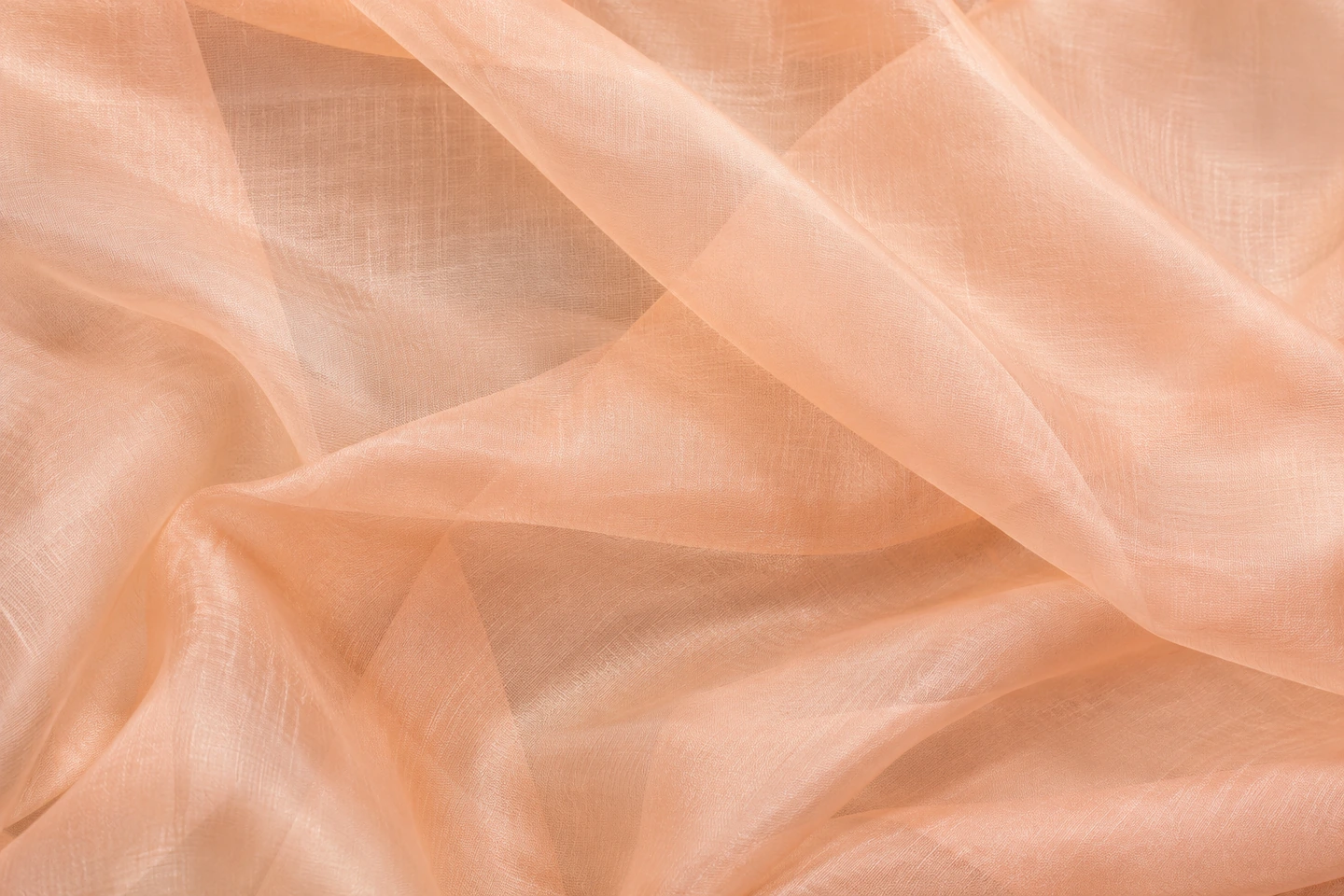 Kora — a name often used for airy, sheer silk clothIn the Banarasi market, Kora is frequently linked with organza-like silk: thin, open-looking, somewhat transparent and relatively crisp. Sellers elsew…
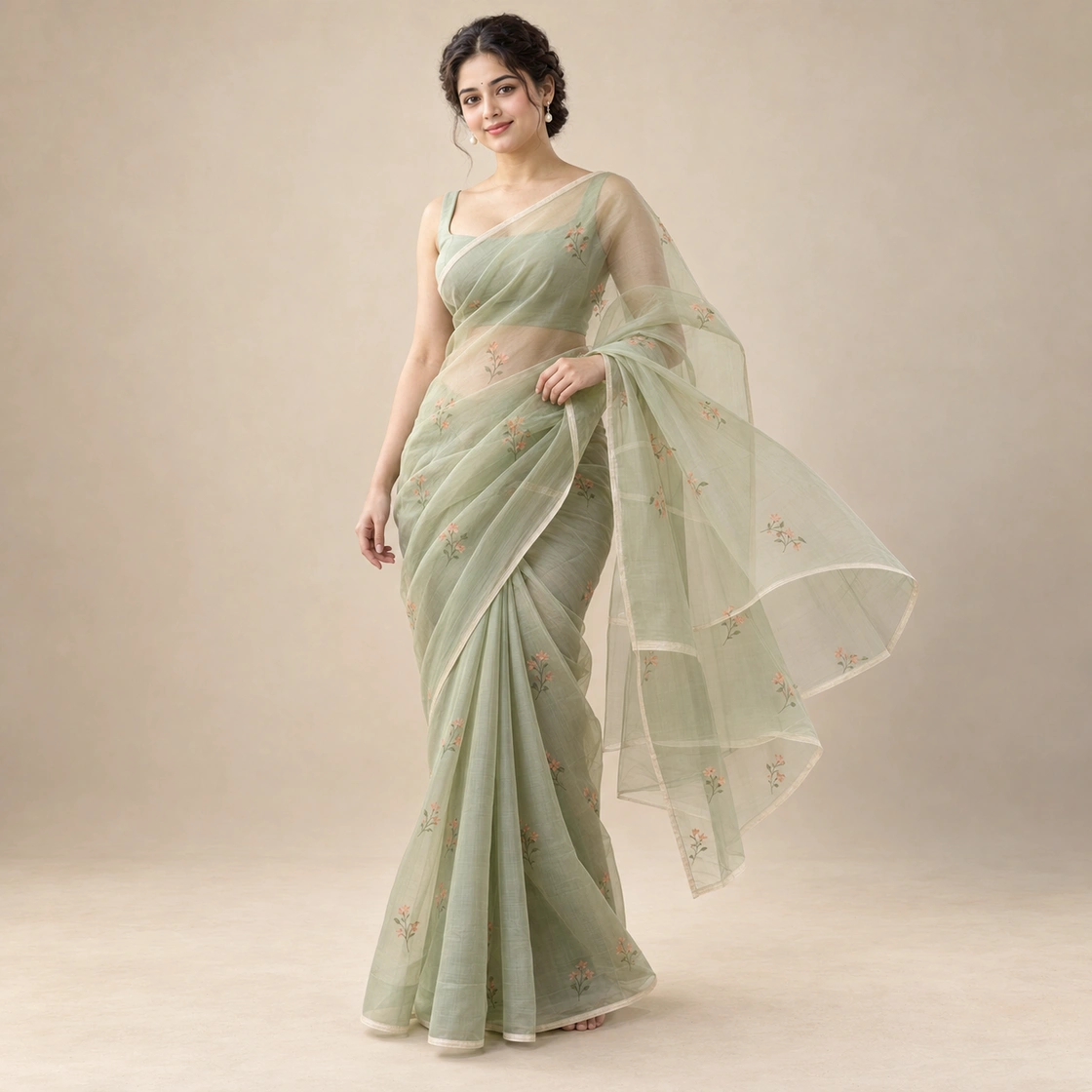 Organza — transparent and shape-holdingOrganza is the fabric you notice when a saree makes a slightly puffed, architectural shape instead of collapsing into soft folds. It is thin, sheer an…
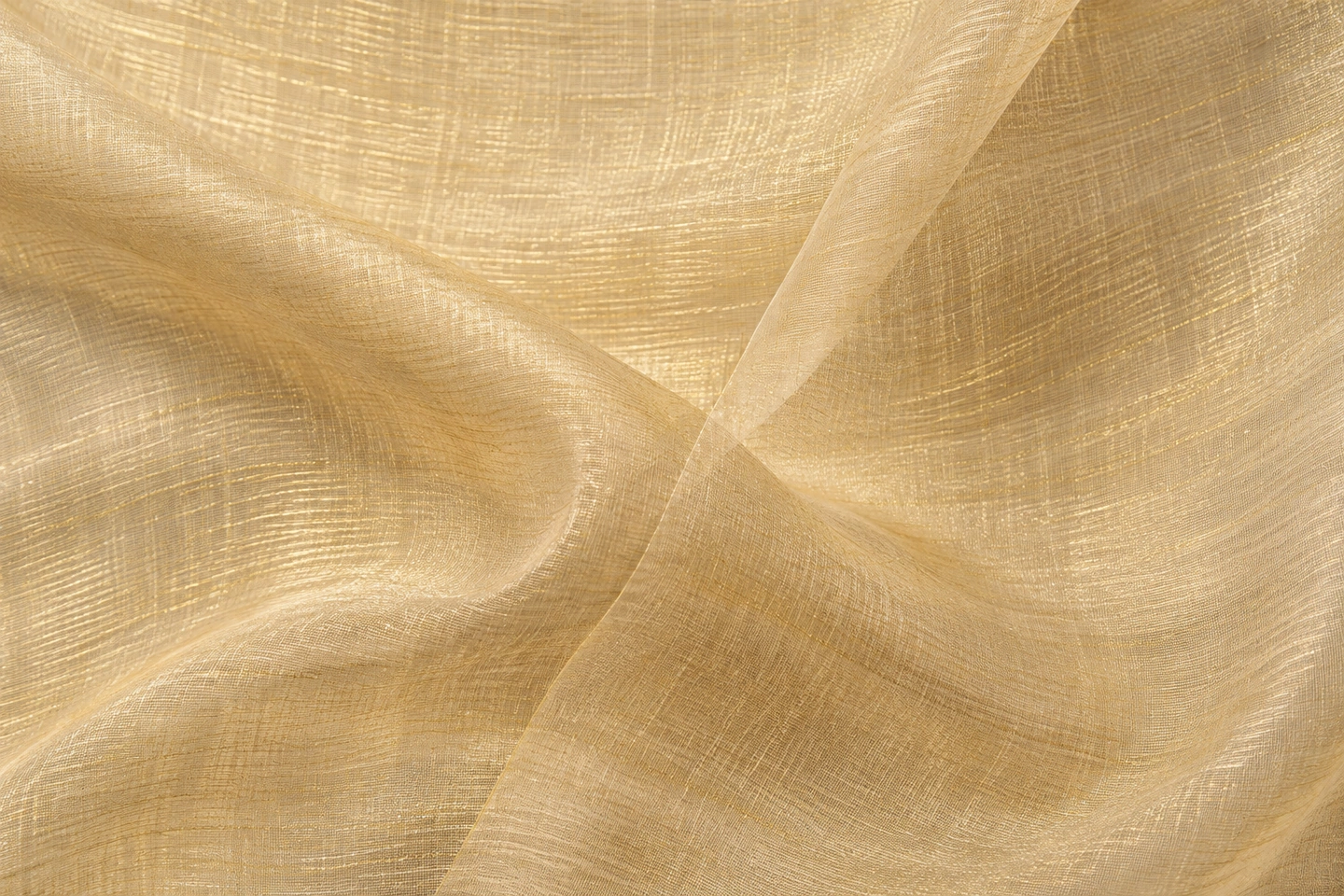 Tissue — cloth that shimmers across its surfaceIn Indian saree shops, tissue usually describes a fabric with a noticeable metallic-like glow. It may involve zari or other shiny threads woven throug…
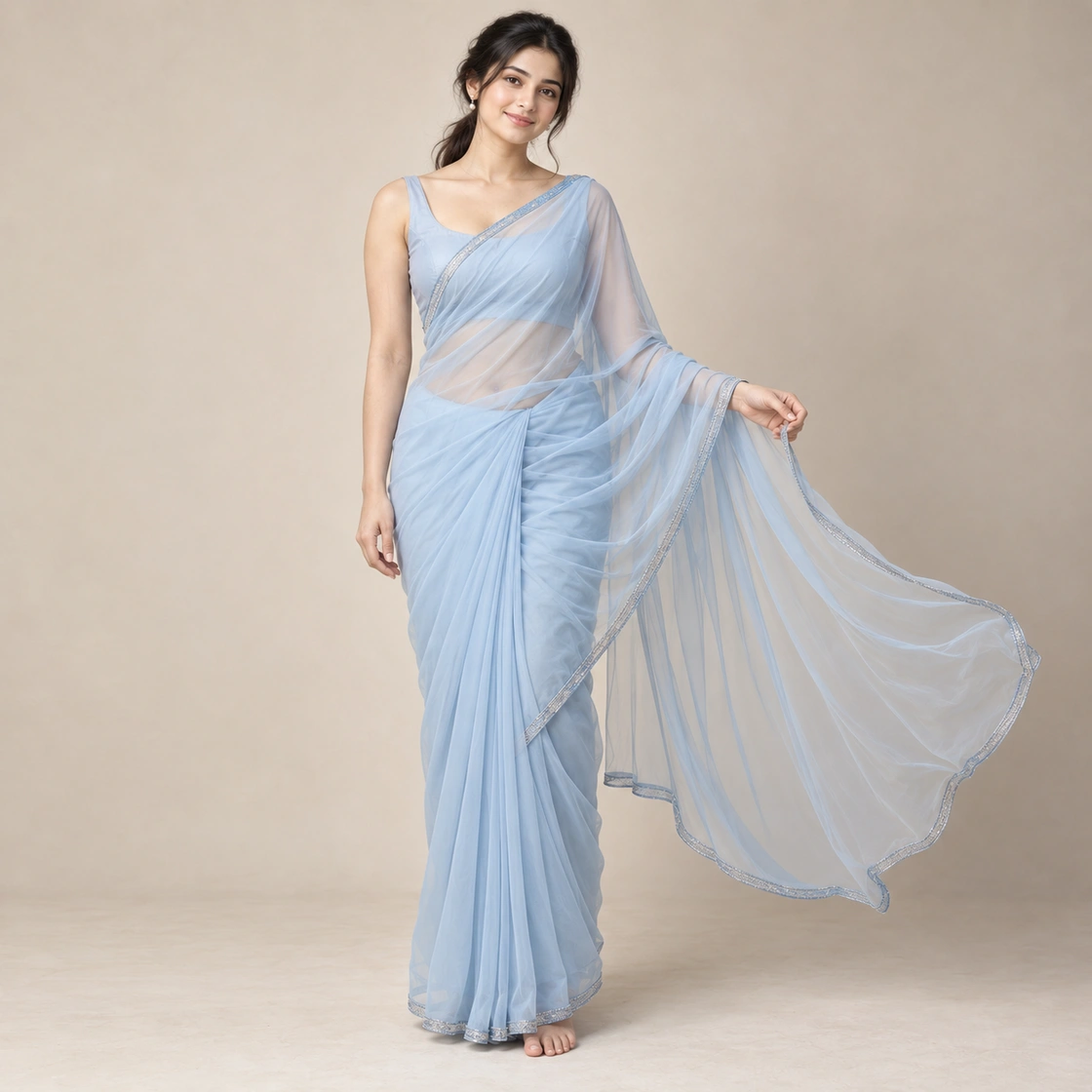 Chiffon — airy, soft and falling in small foldsChiffon is very light and sheer, but unlike organza it usually drapes in loose, flowing folds. It can be made from silk or manufactured fibres. In a g…
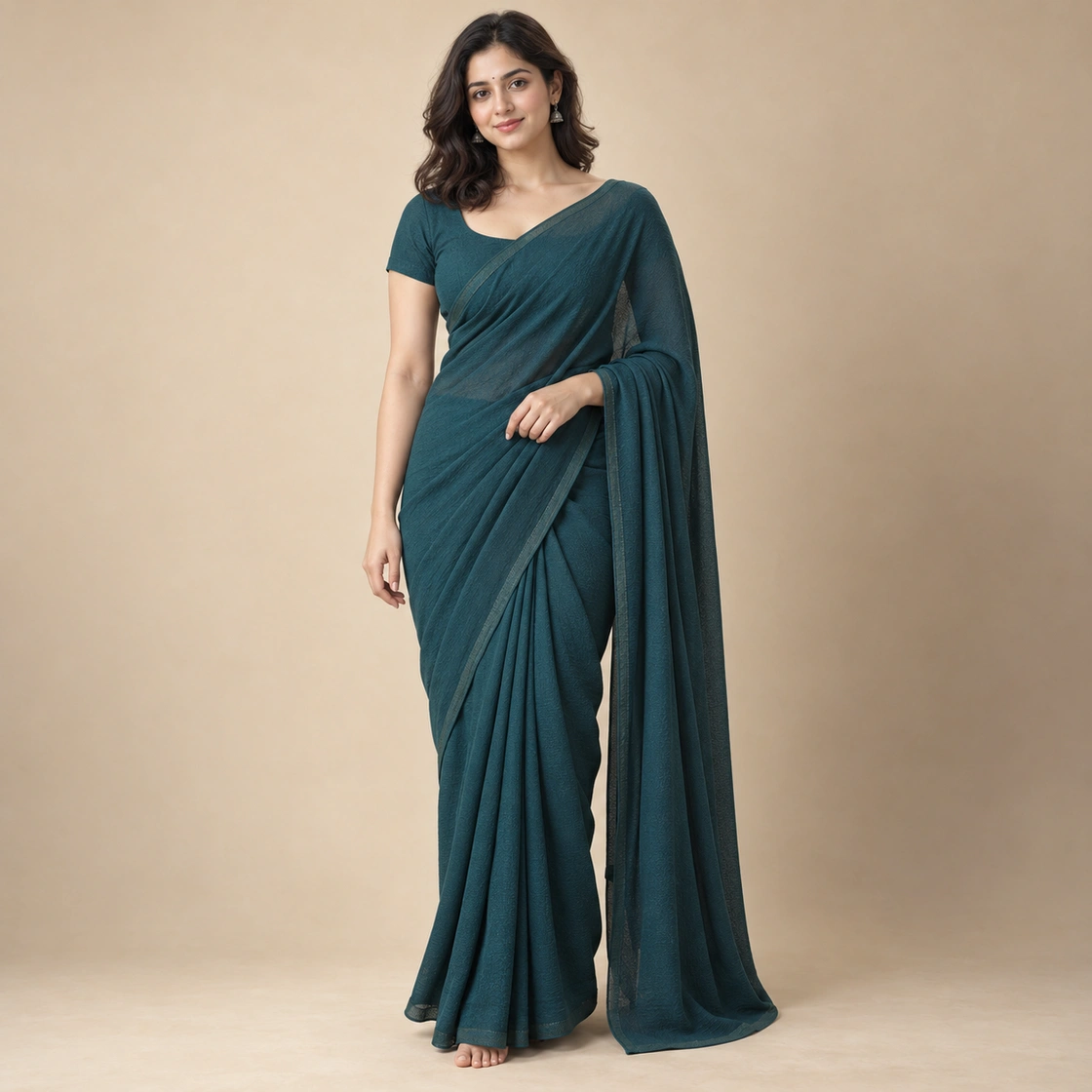 Georgette — flowing, with a lightly grainy surfaceGeorgette looks fluid like chiffon but usually has a slightly pebbled texture that you can see or feel when looking closely. Its twisted yarns help pr…
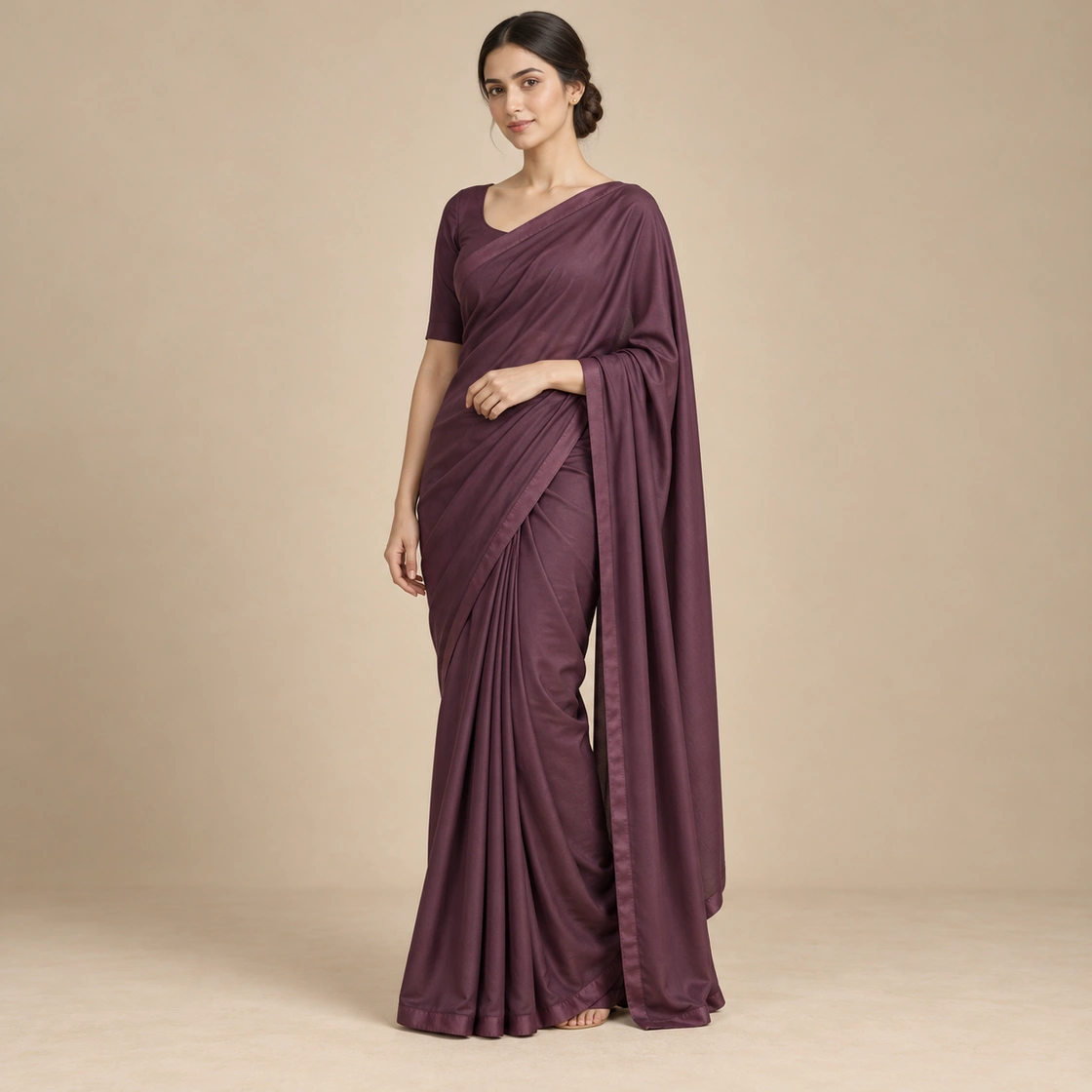 Crepe — the family of crinkled and pebbly fabricsCrepe is a broad family name rather than one exact fabric. What links many crepes is a crinkled, rippled or finely pebbled surface, produced through y…
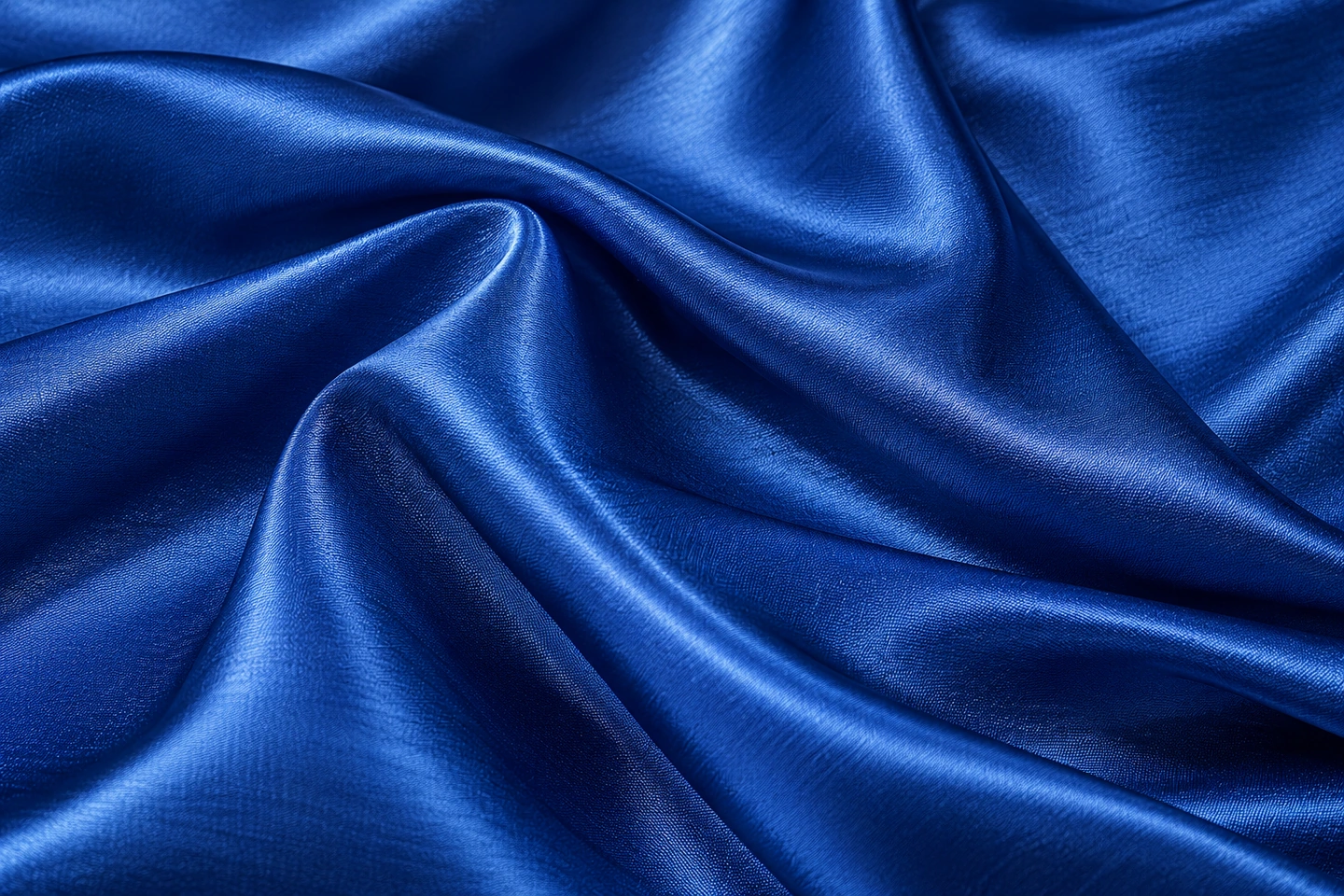 Satin — a glossy surface, not a guarantee of silkSatin describes a way of making cloth that leaves long lengths of thread visible on the surface. This makes one side unusually smooth and shiny. Silk …
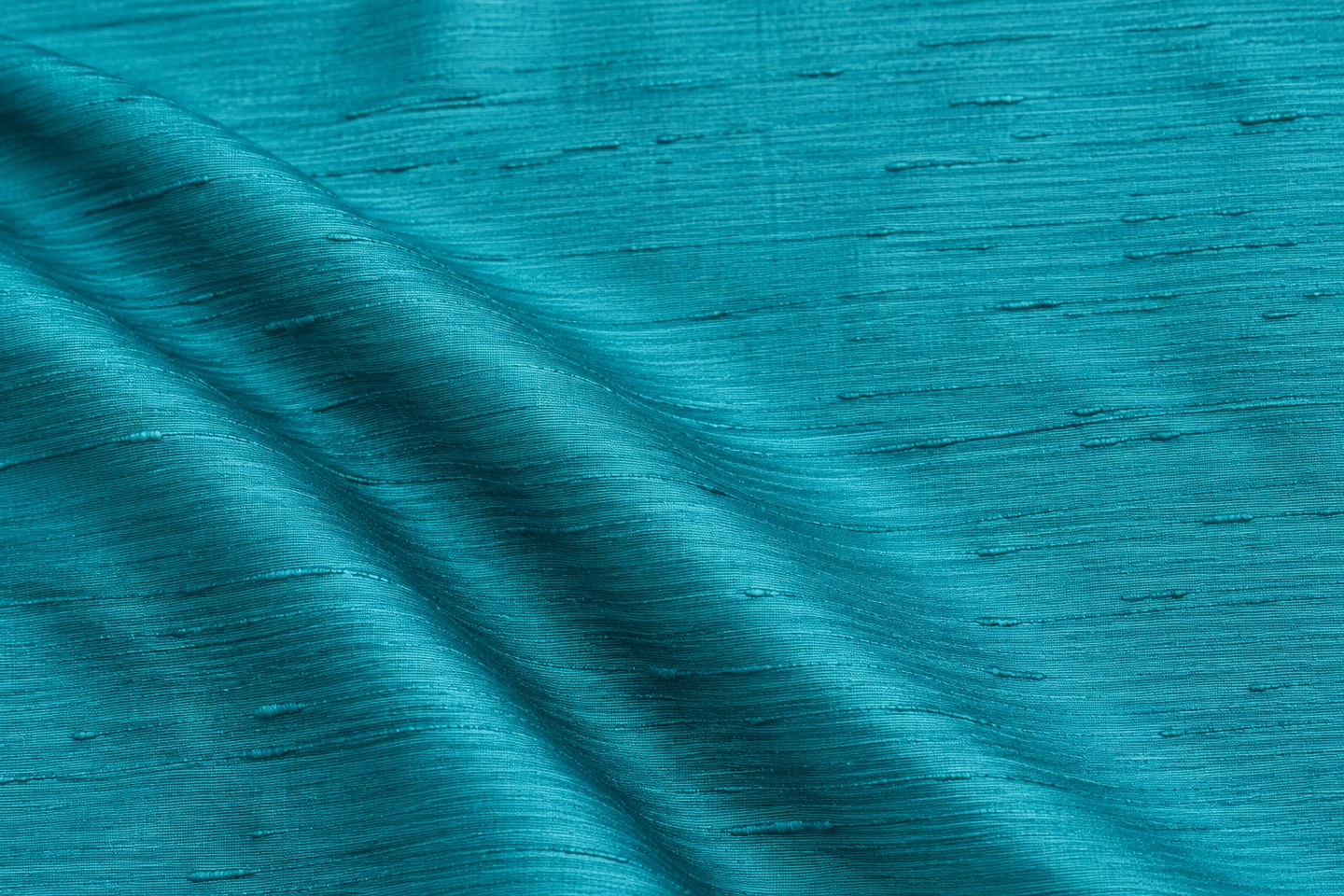 Dupion / Dupioni — silk with visible uneven linesDupion silk often has little thick-and-thin variations in its threads. In a finished saree these create faint horizontal or vertical lines that catch …
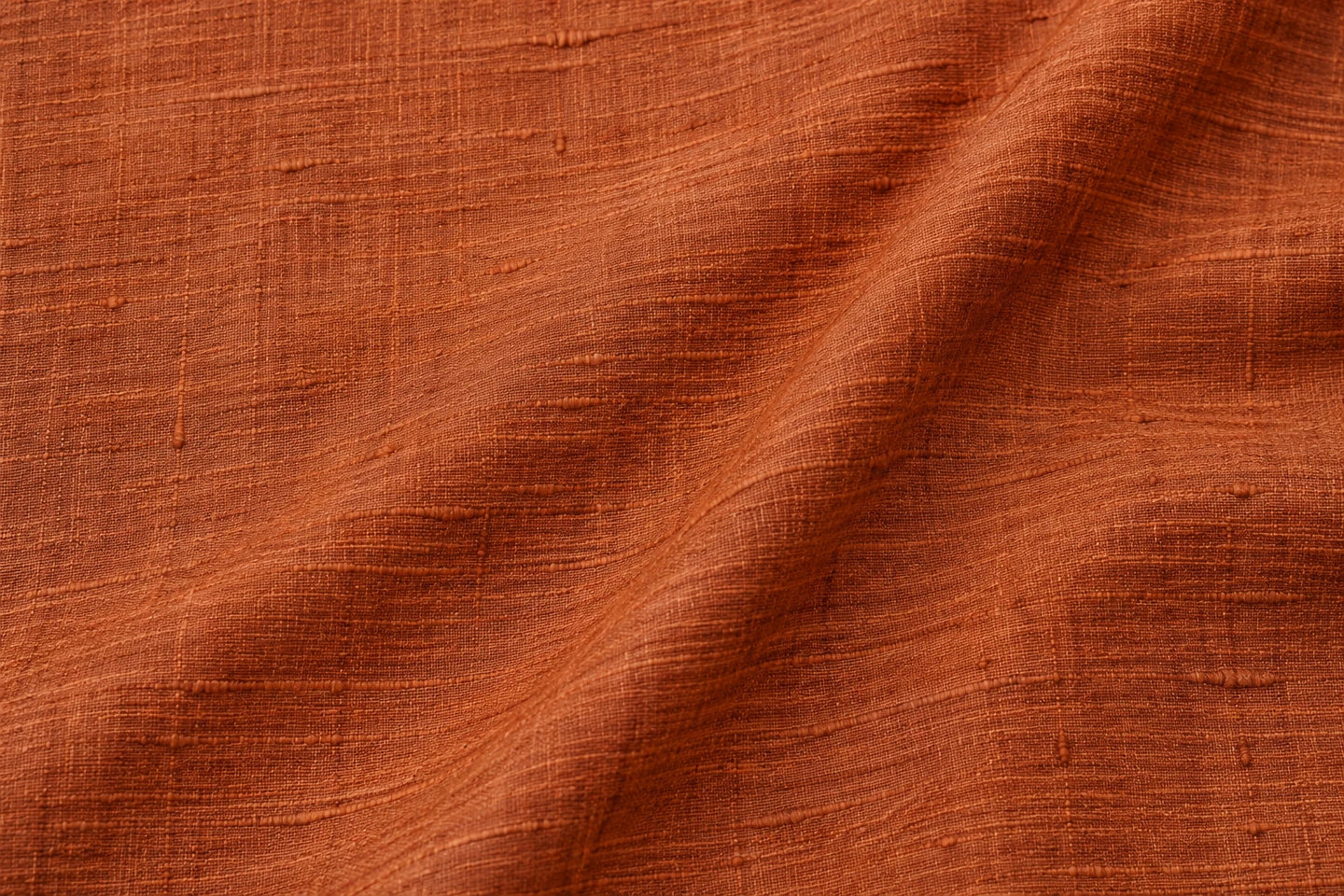 Matka silk — textured silk from spun fibresMatka is usually a textured silk fabric made with spun silk yarn, commonly from shorter silk fibres or processing leftovers. The thread is not always …
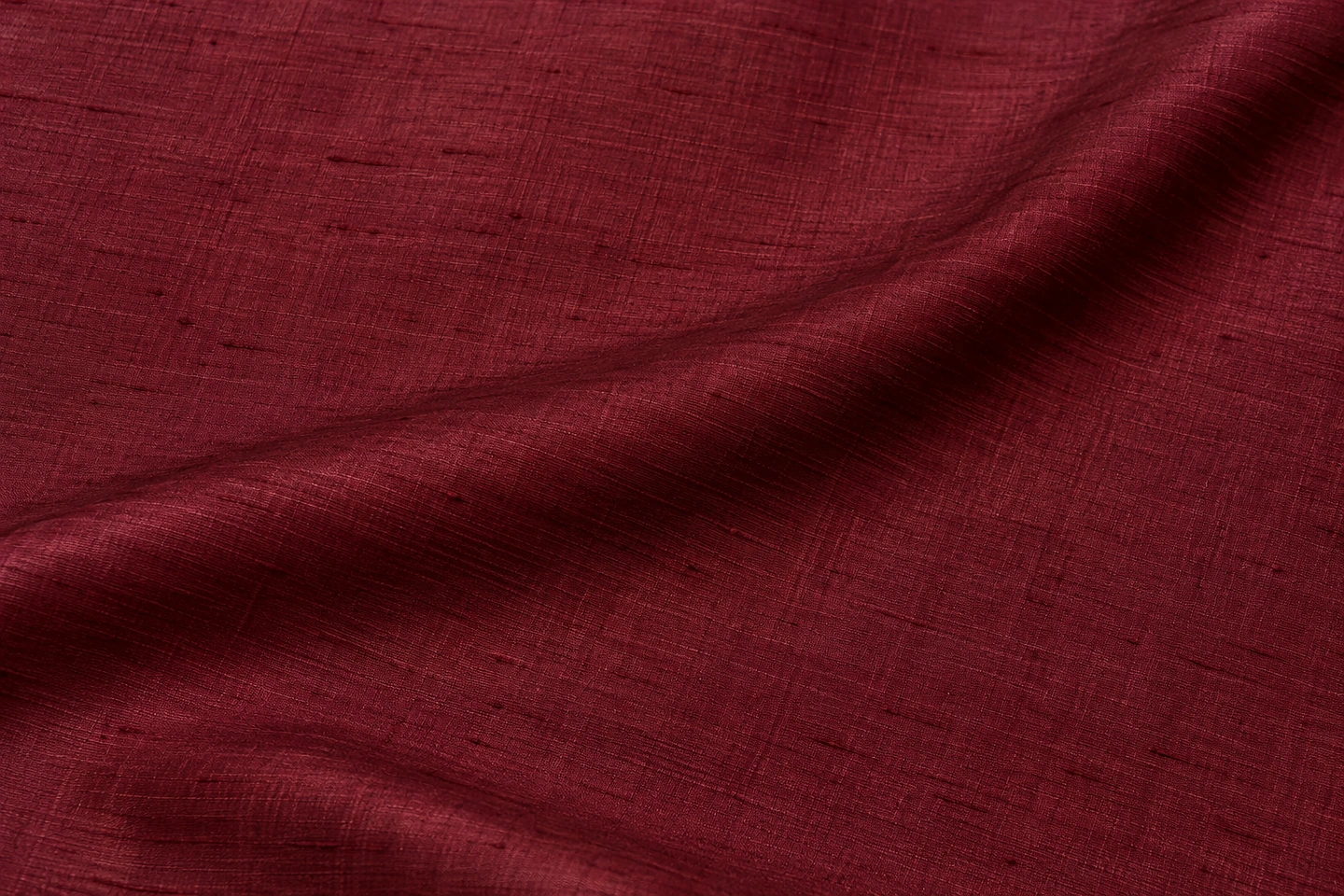 Raw silk — a useful description, but a loose shop labelIn strict silk processing, raw silk can mean reeled silk that still contains its natural gum. In retail saree language, however, “raw silk” is often u…
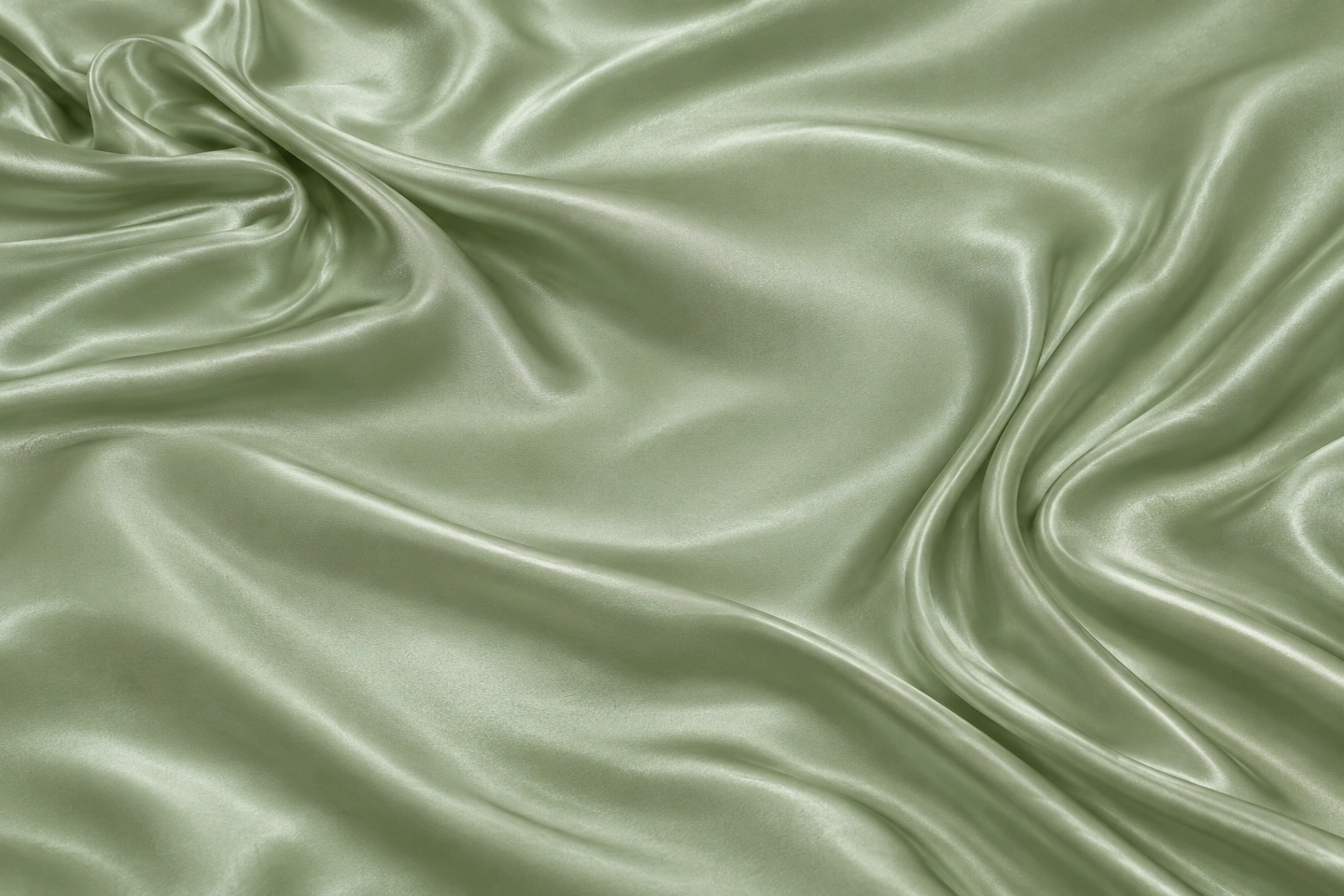 Charmeuse: why it is not simply another name for satinCharmeuse is a lightweight satin-weave fabric with a highly reflective face and a noticeably duller back. When made with fine silk it falls in long, l…
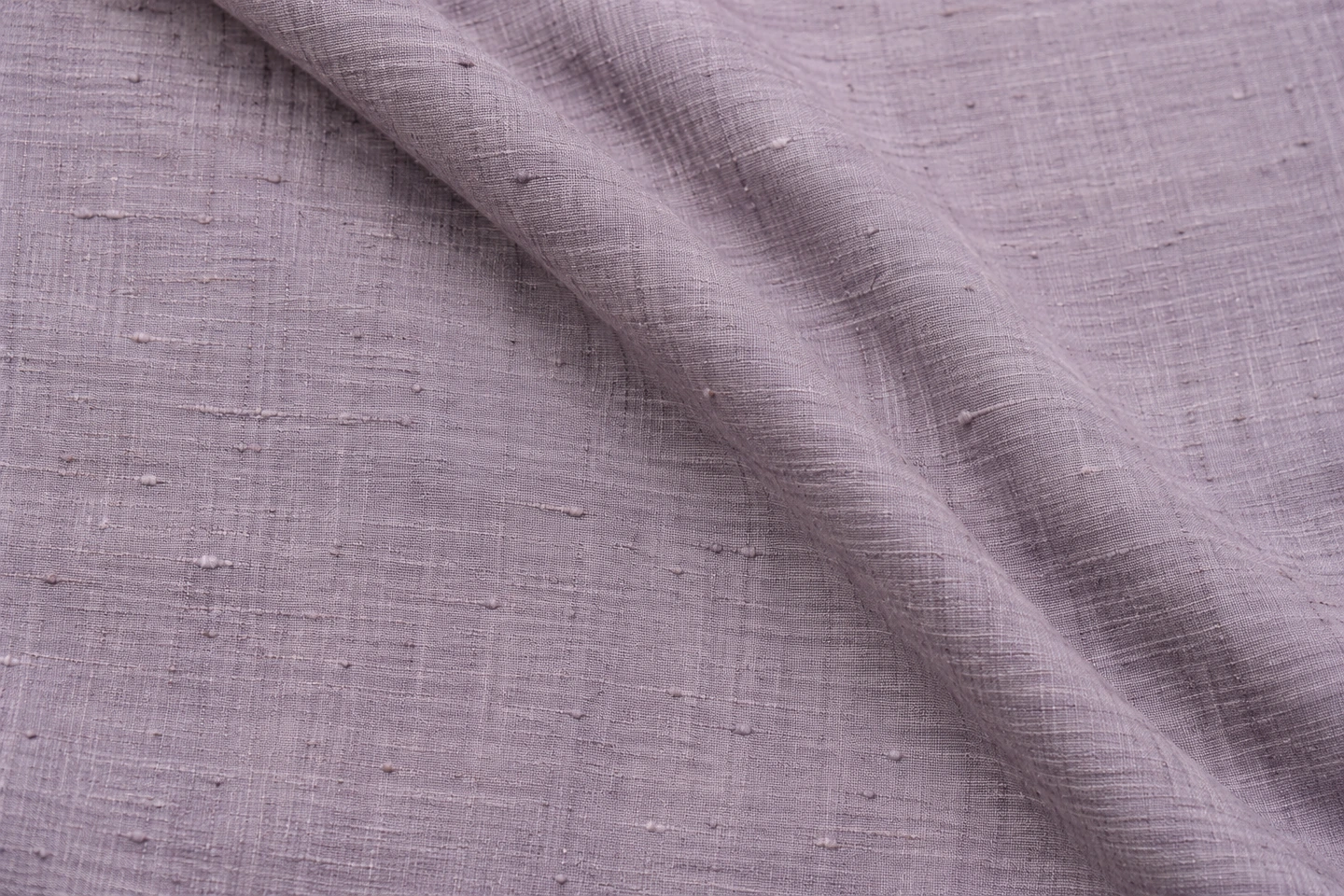 Noil silk: the soft, speckled alternativeWhen silk is processed, some fibres are too short to be reeled as long, continuous filament yarn. They can be spun into noil yarn. Noil silk fabric of…Matka silk versus Dupion versus GhichaAll three can look textured, but in different ways. Dupion often shows individual horizontal slub lines interrupting an otherwise smoother surface. Ma…
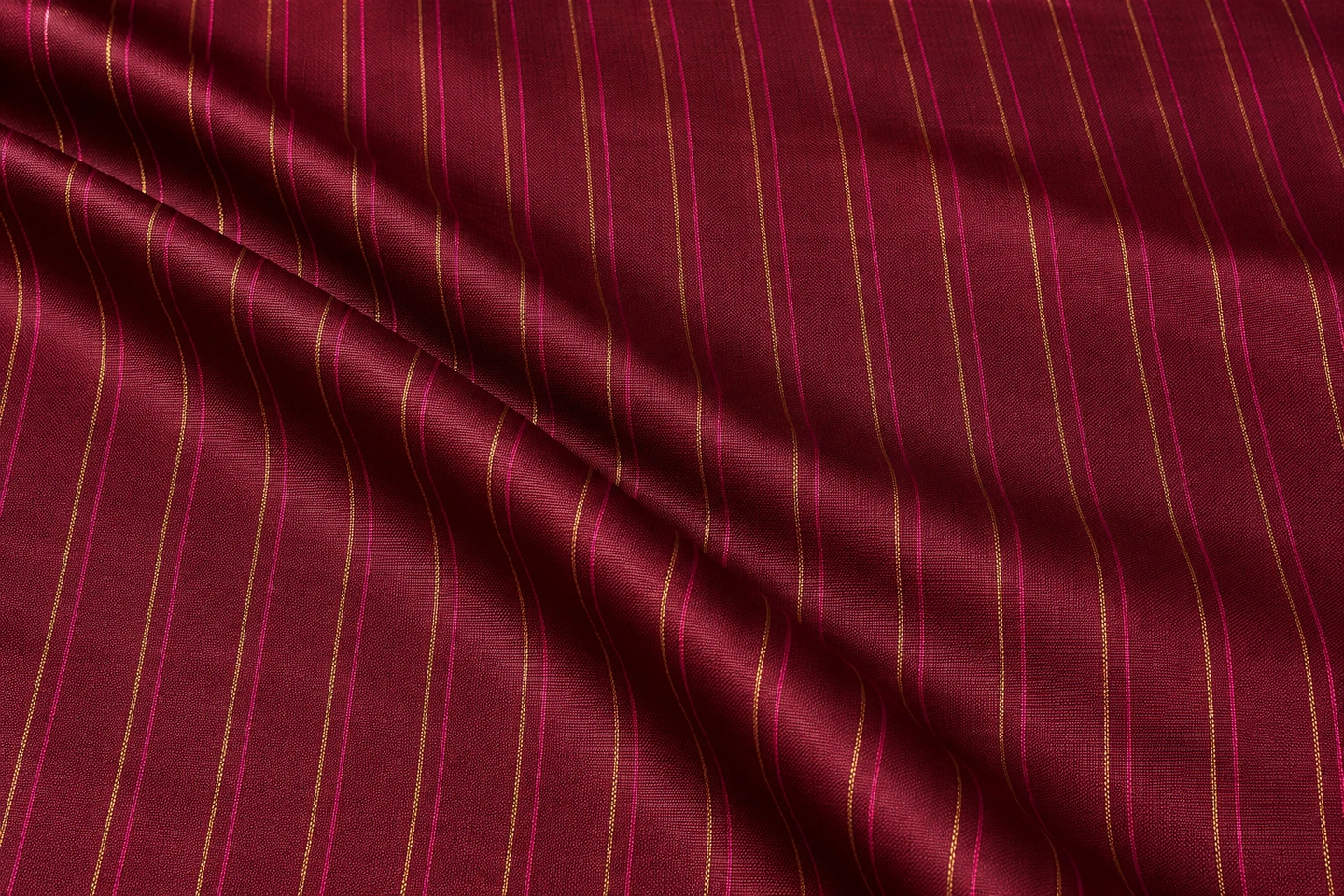 Mashru: silk appearance with a different constructionTraditional Mashru fabrics are often distinguished by a glossy silk-rich face and a cotton side, made by combining different yarns in a particular fab…
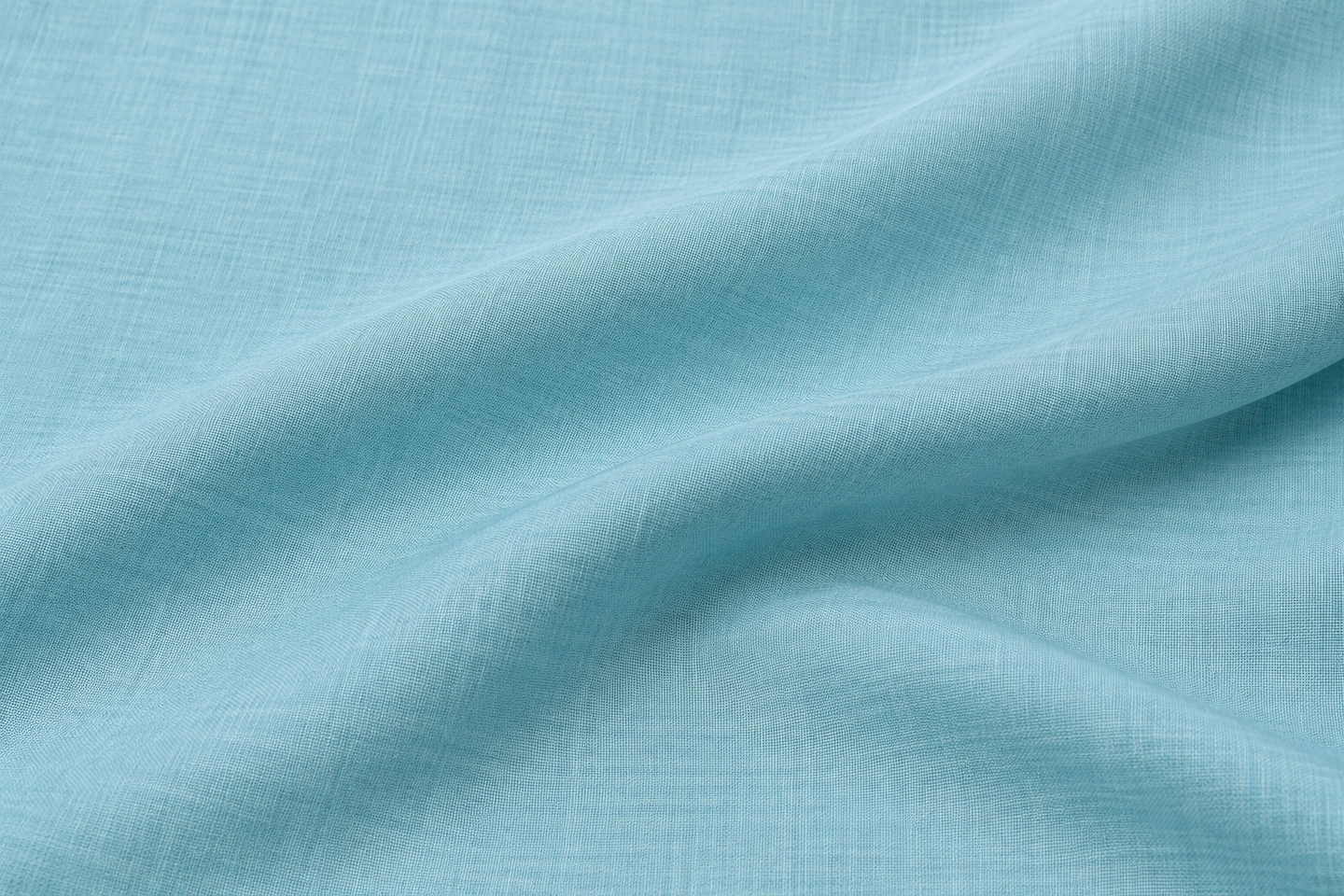 Sico: two fibres, not a species of silkSico is a trade shorthand for silk–cotton . Some sarees use silk lengthwise and cotton crosswise; others blend the materials differently. Depending on…
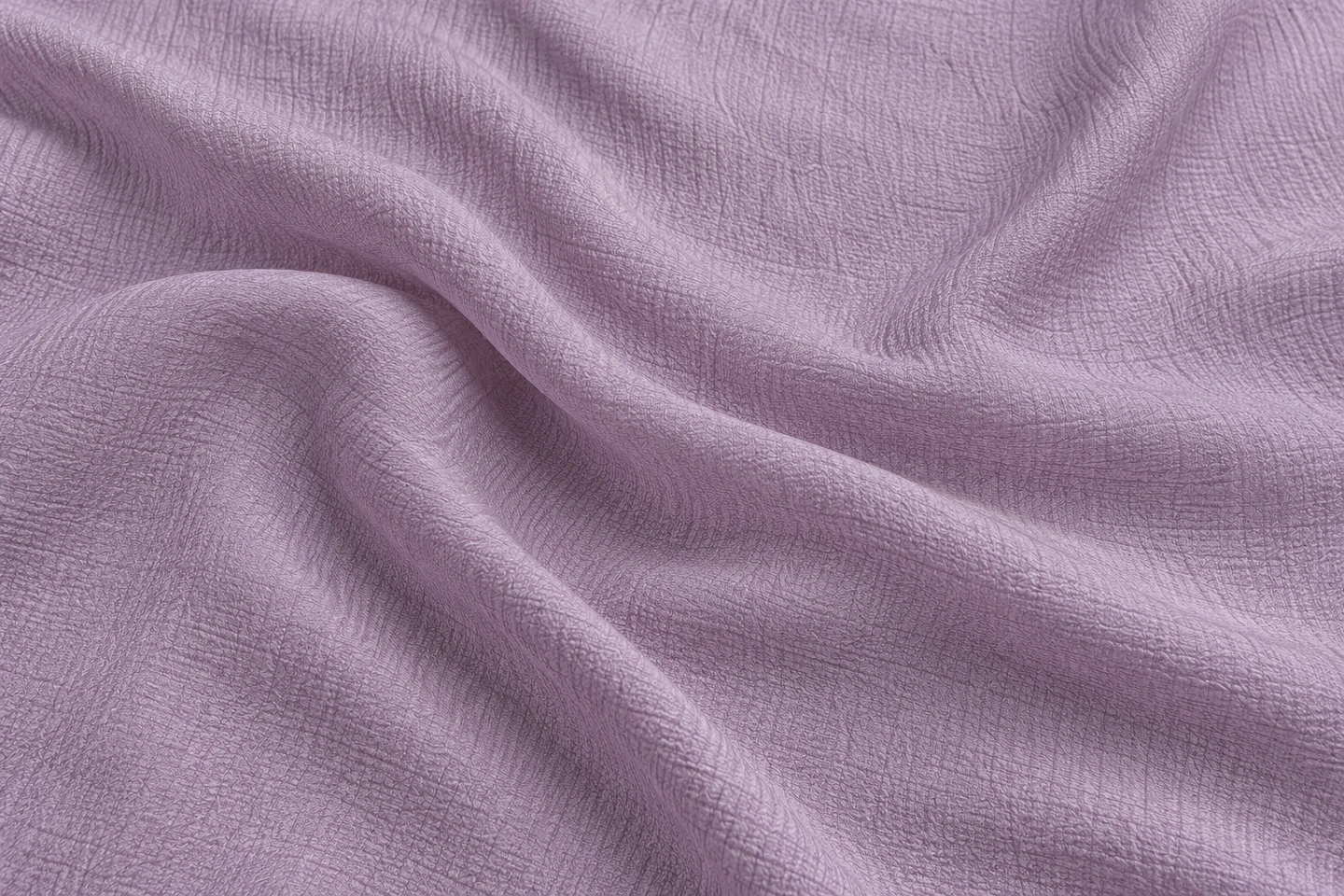 Khaddi crepe: what the extra word is doingCrepe describes a finely crinkled or pebbled fabric effect produced through its yarn and construction. Khaddi or Khadi in saree retail may point to a …
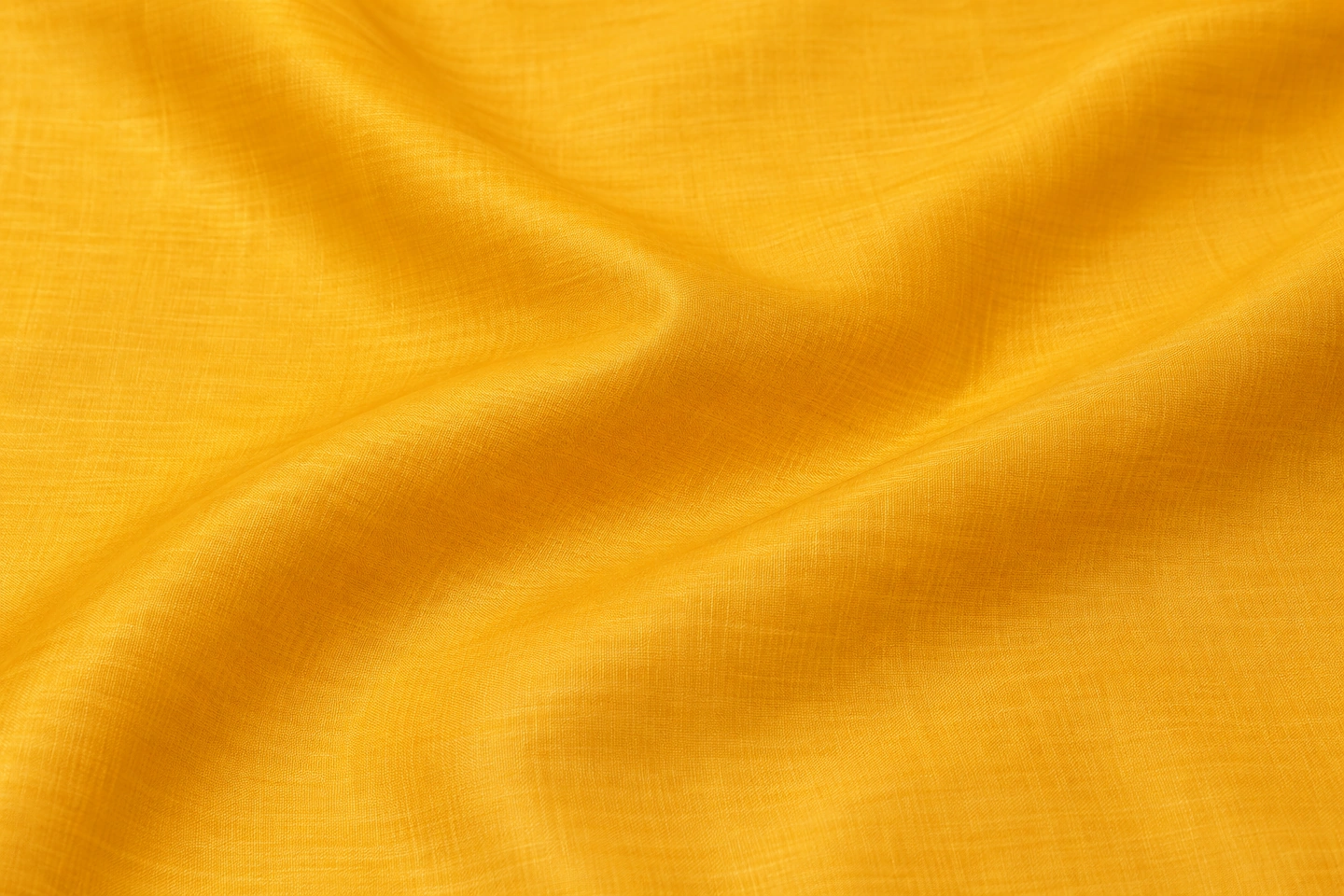 Mango silk: do not confuse a product name with a fibreThe phrase Mango silk occurs on some Indian retail websites, but it is not an established fifth major silkworm silk alongside mulberry, Tussar, Muga a…Why 'raw silk' needs clarificationIn silk processing, raw silk has a technical meaning relating to silk before degumming. In shops, however, raw-silk look often means a textured surfac…
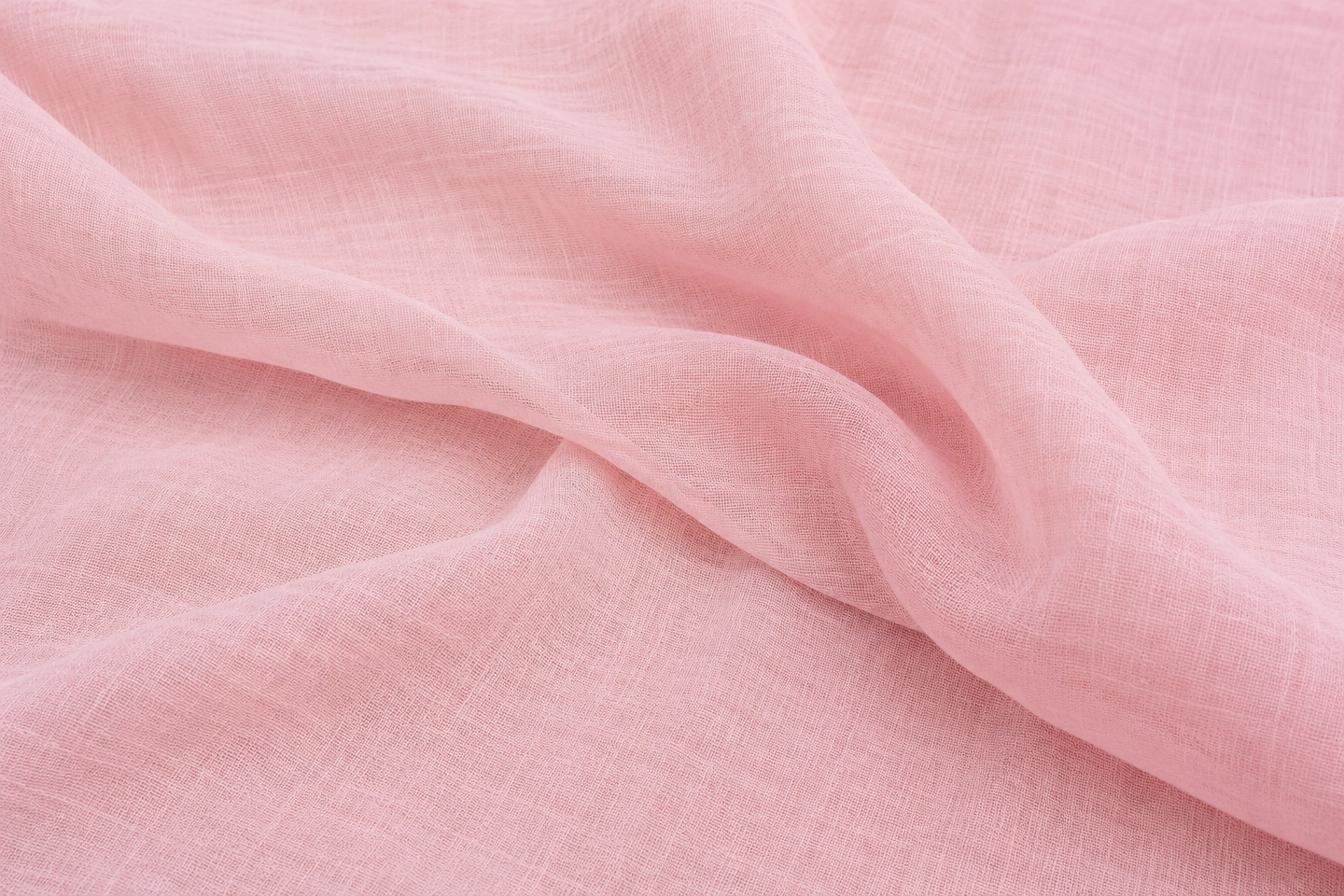 Mulmul — the soft, airy everyday favouriteMulmul usually refers to a very light, soft cotton cloth. When you gather it in your hand, it compresses easily and does not feel rigid. It is especia…
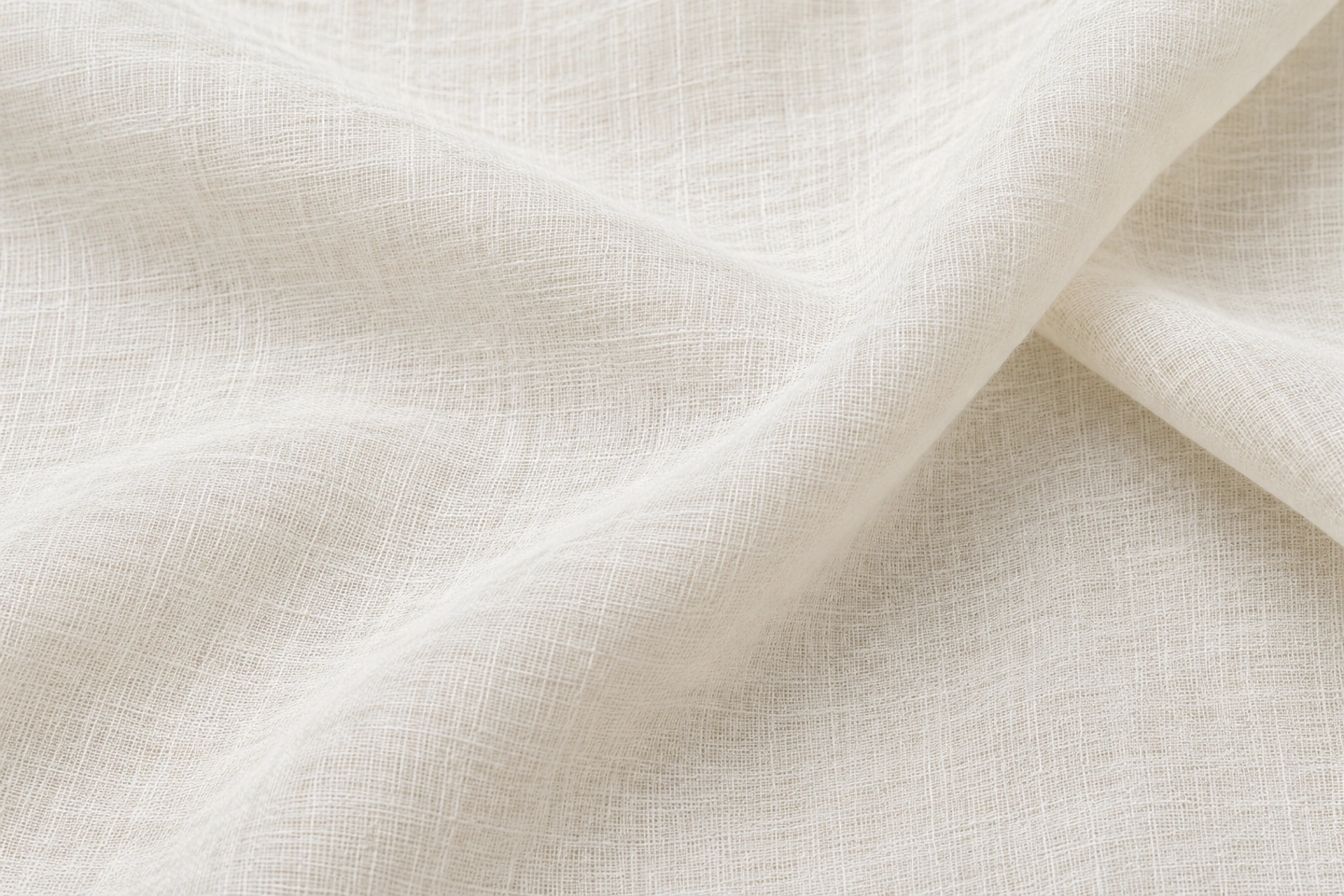 Muslin — a historic name for very fine cotton clothHistorically, fine muslins were celebrated for extraordinarily delicate cotton yarn and a barely-there feel. Modern sellers use the word muslin for a …
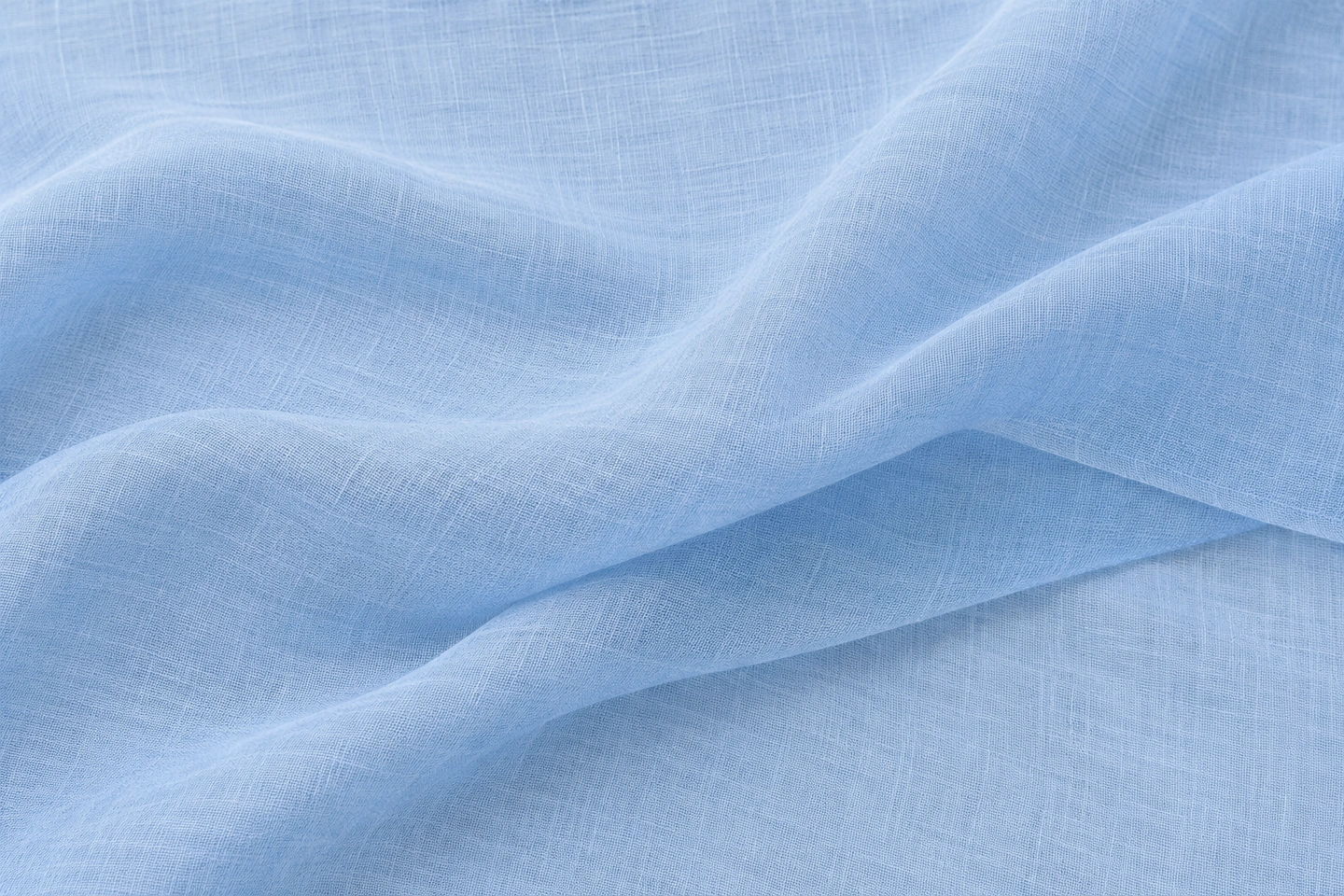 Voile — fine, light cloth with a tidy surfaceVoile is a lightweight, usually plain-woven cloth commonly made with fine cotton yarn or blends. It can look smooth and slightly crisp while remaining…
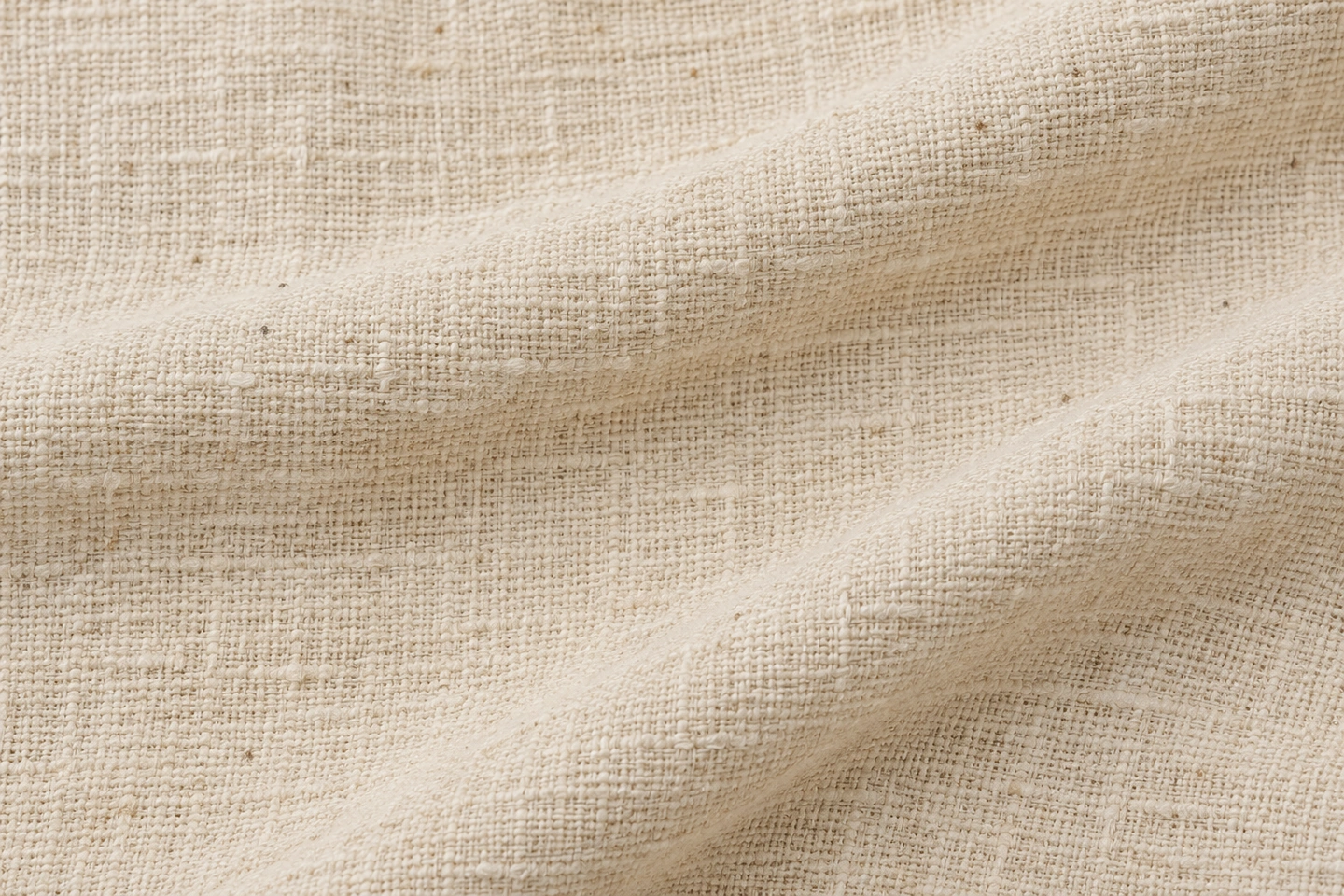 Khadi — how the cloth is made, not which plant it comes fromKhadi is cloth made from hand-spun yarn and woven by hand; it can be cotton, silk, wool or combinations. Many people think “khadi” necessarily means t…
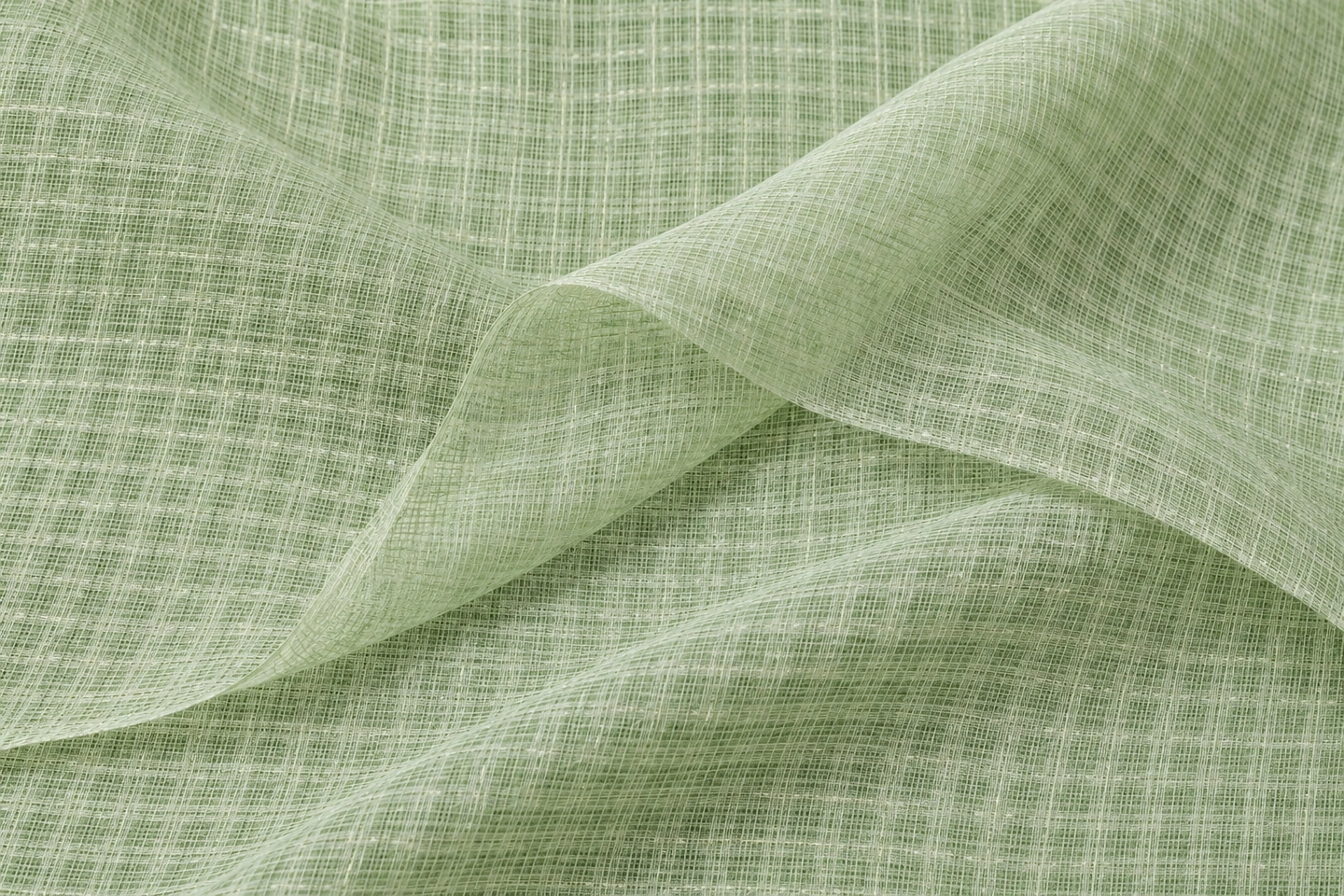 Kota Doria — airy cloth with tiny squaresKota Doria is associated with Kota and nearby weaving centres in Rajasthan. Its most recognisable feature is a very fine, regularly checked structure …
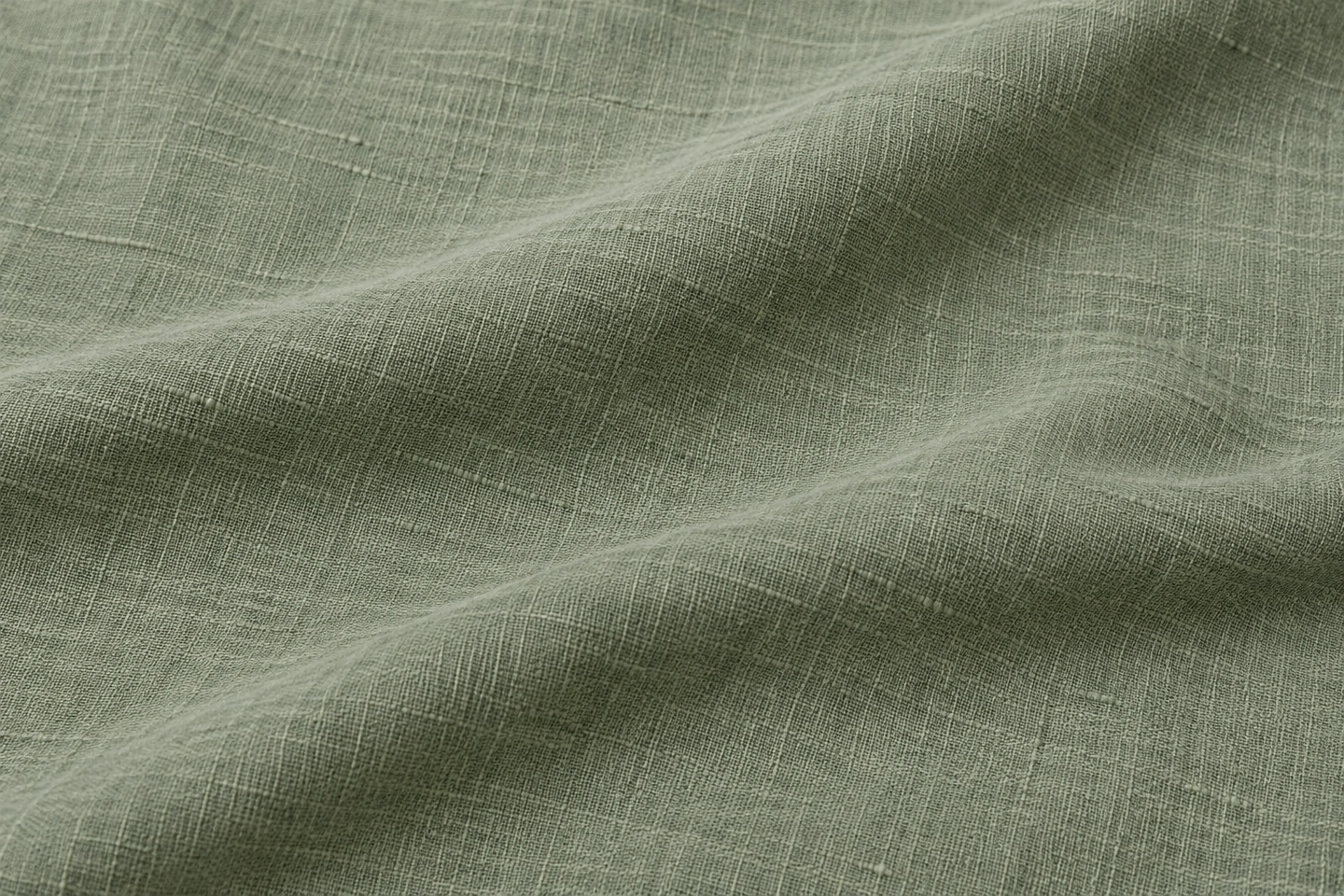 Linen — the cool-looking, naturally creasing clothLinen comes from the flax plant. It tends to have a dry, fresh feel and a more visible texture than highly polished silk. It also develops recognizabl…
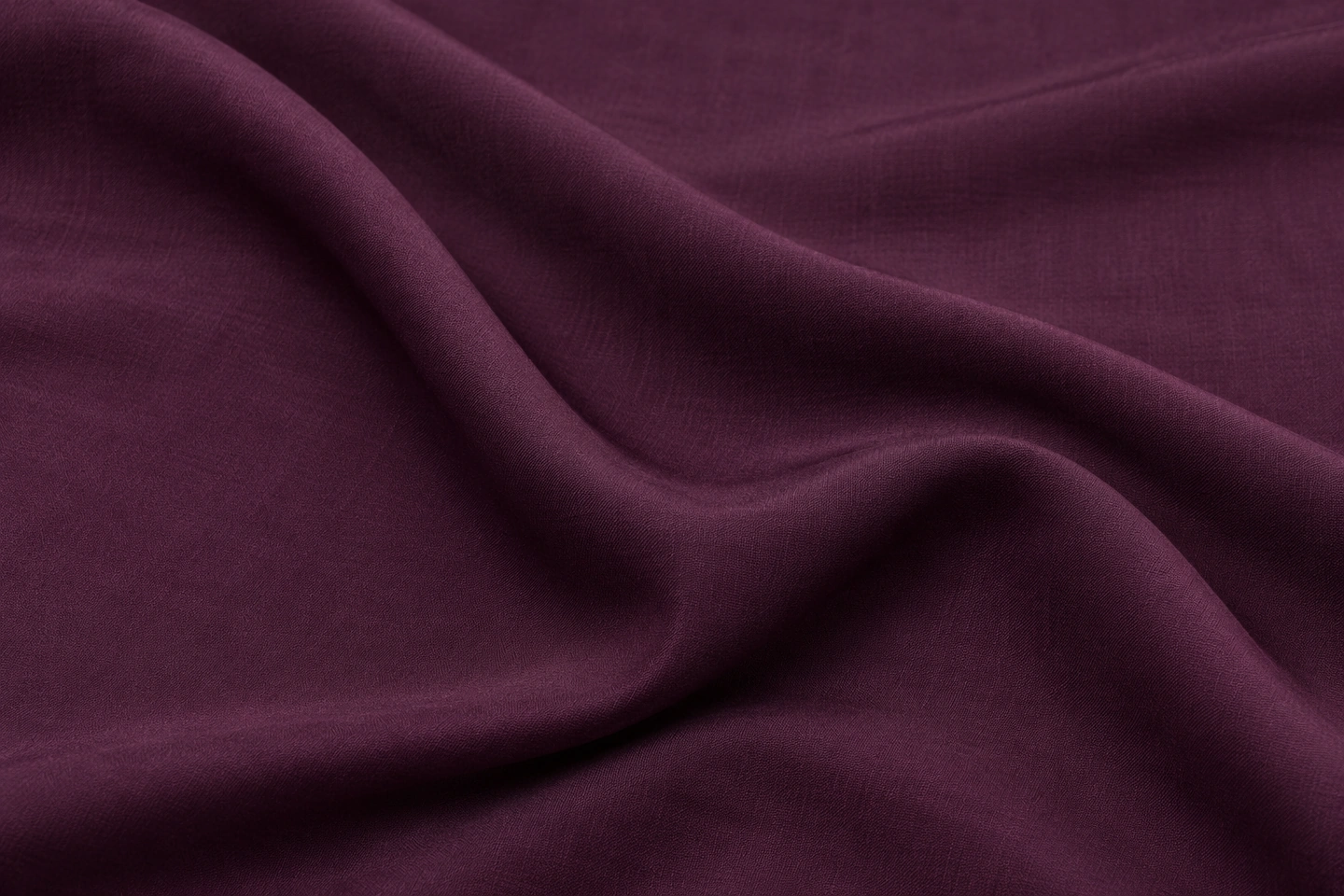 Viscose / rayon — made from cellulose, not natural silkViscose is made by processing cellulose—usually from wood pulp—into new fibres. It is sometimes called rayon, although rayon is a broader family of te…
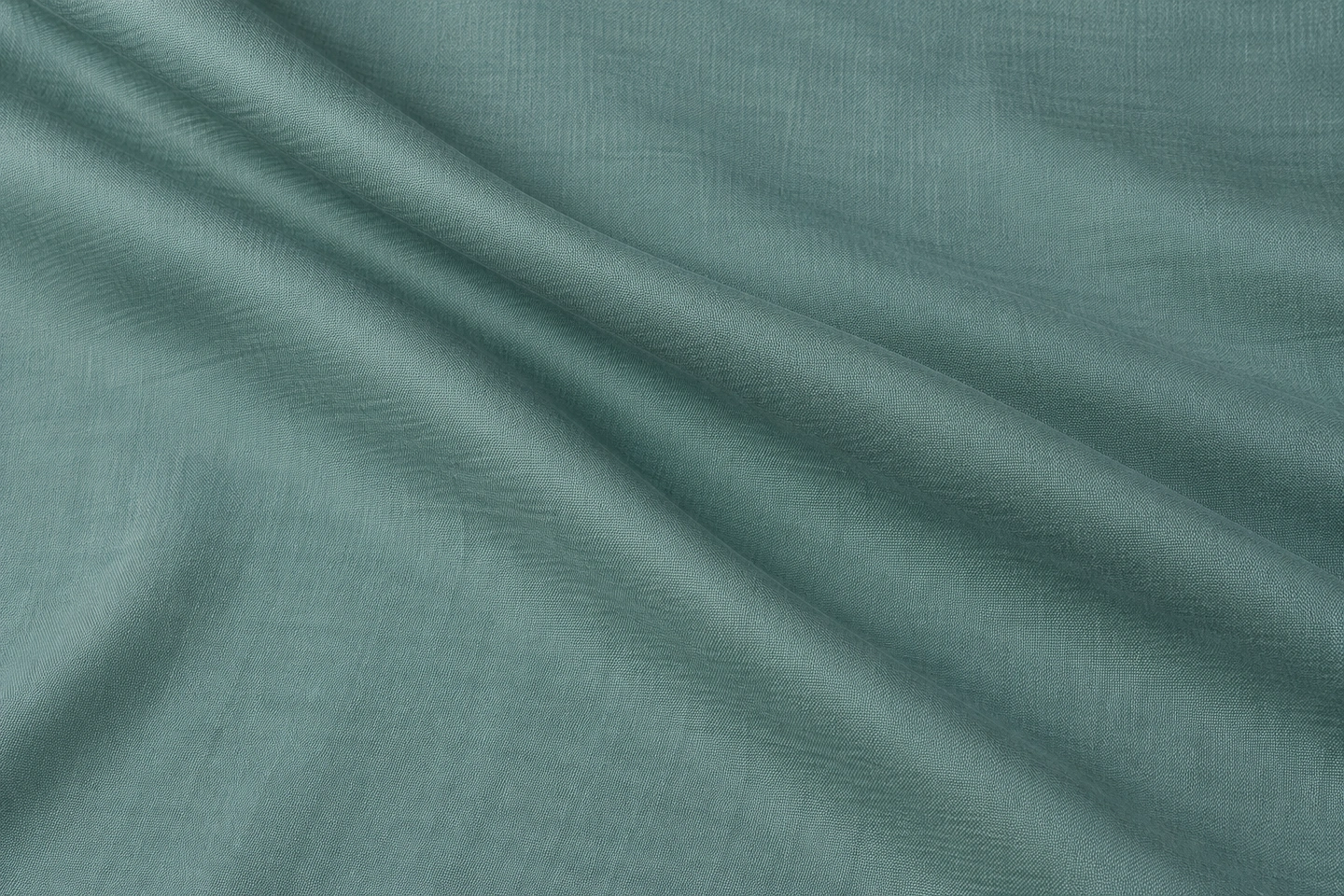 Modal and lyocell — other cellulose-based manufactured fibresBoth start with cellulose but use different manufacturing processes from ordinary viscose. They are widely associated with smooth, soft, drapable fabr…
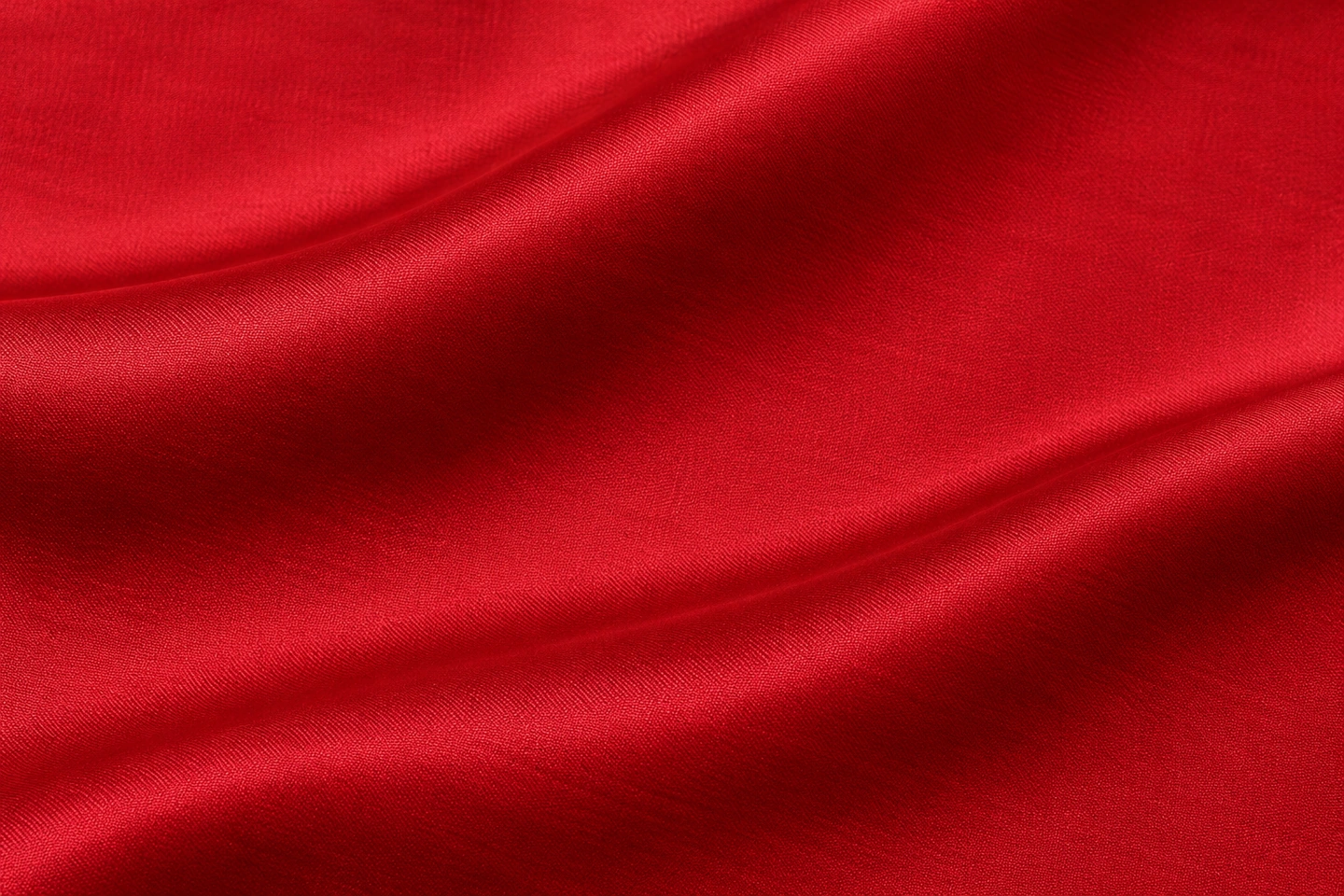 Art silk — a misleadingly simple shop expressionArt silk means artificial silk : a commercial name for silk-like material made from manufactured fibres. It is often viscose or polyester, sometimes b…
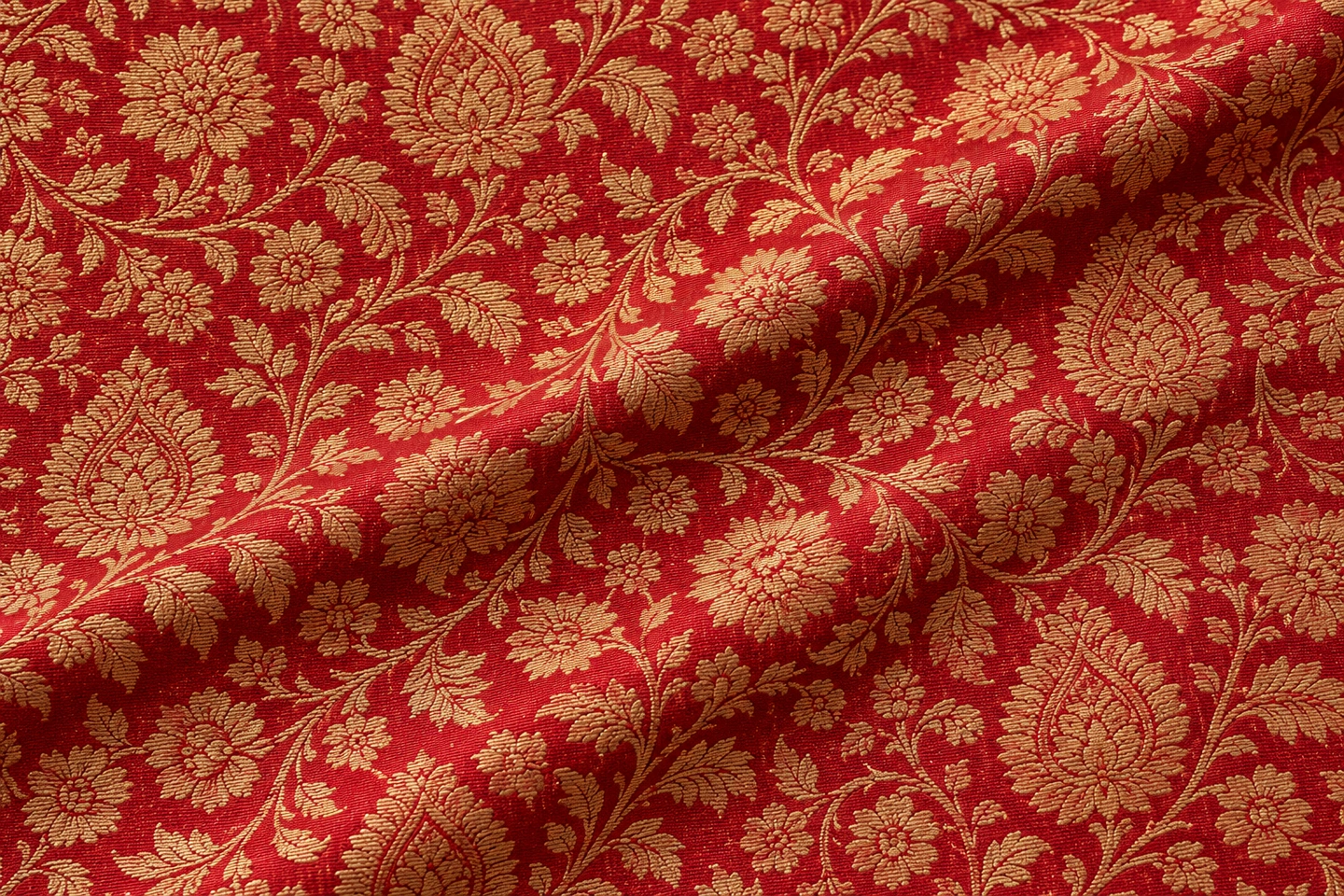 Brocade — patterns woven into the cloth itselfIllustrated fabric reference: Brocade — patterns woven into the cloth itself
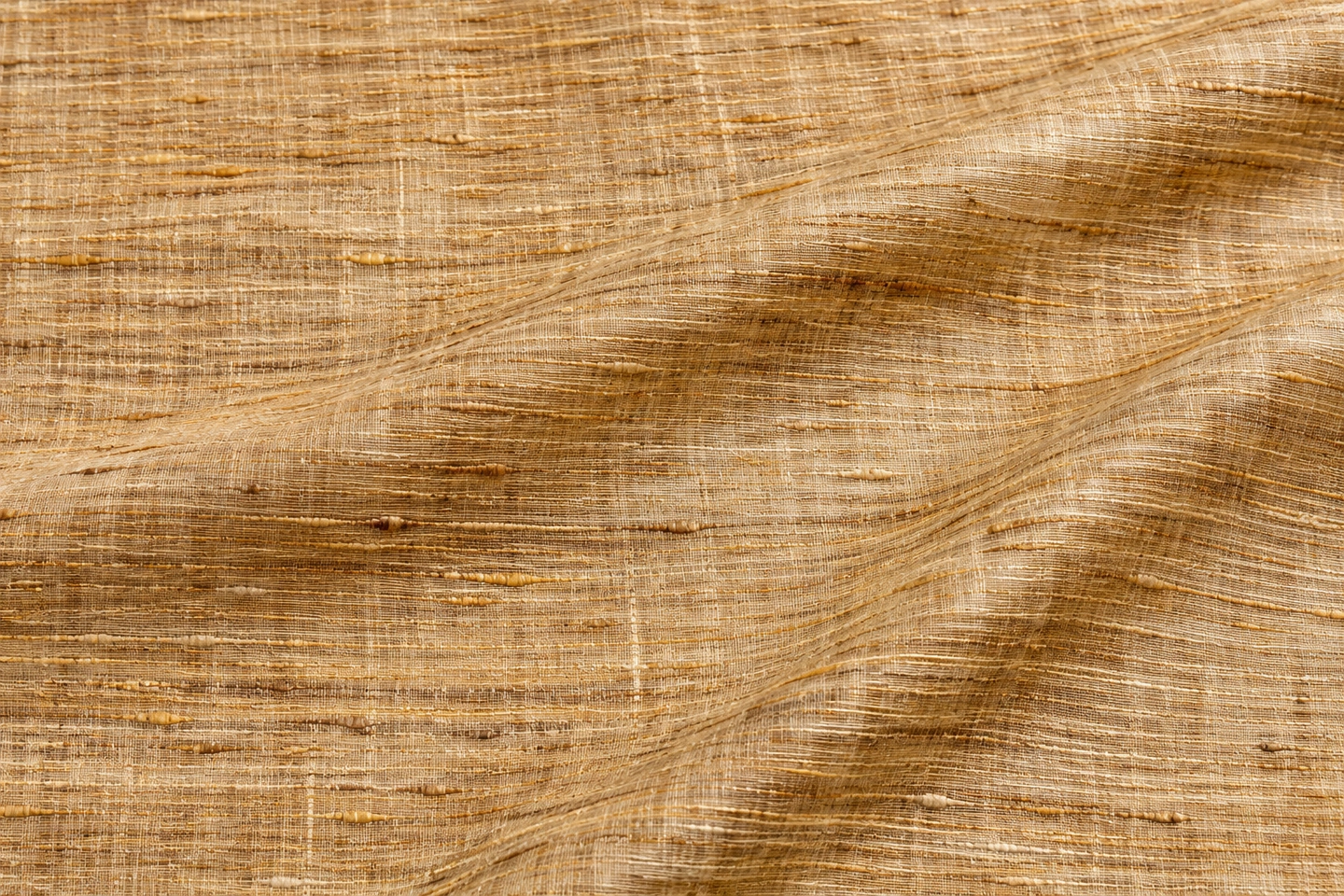 Ghicha silk: deliberately irregular threadsIllustrated fabric reference: Ghicha silk: deliberately irregular threads
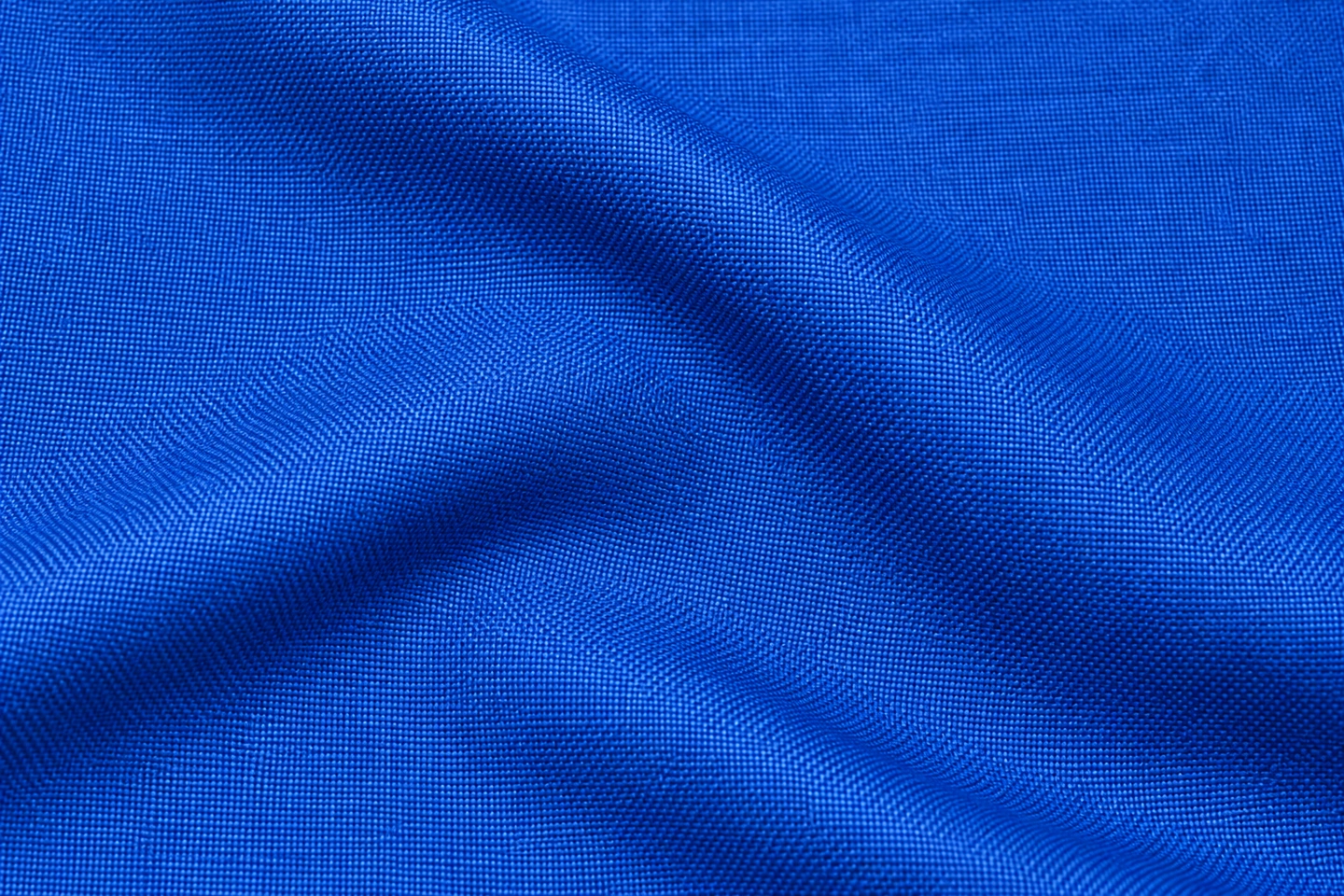 Polyester — a synthetic fibre, not a fabric styleIllustrated fabric reference: Polyester — a synthetic fibre, not a fabric style
Illustrations clarify visual features but do not authenticate a particular saree or its origin.