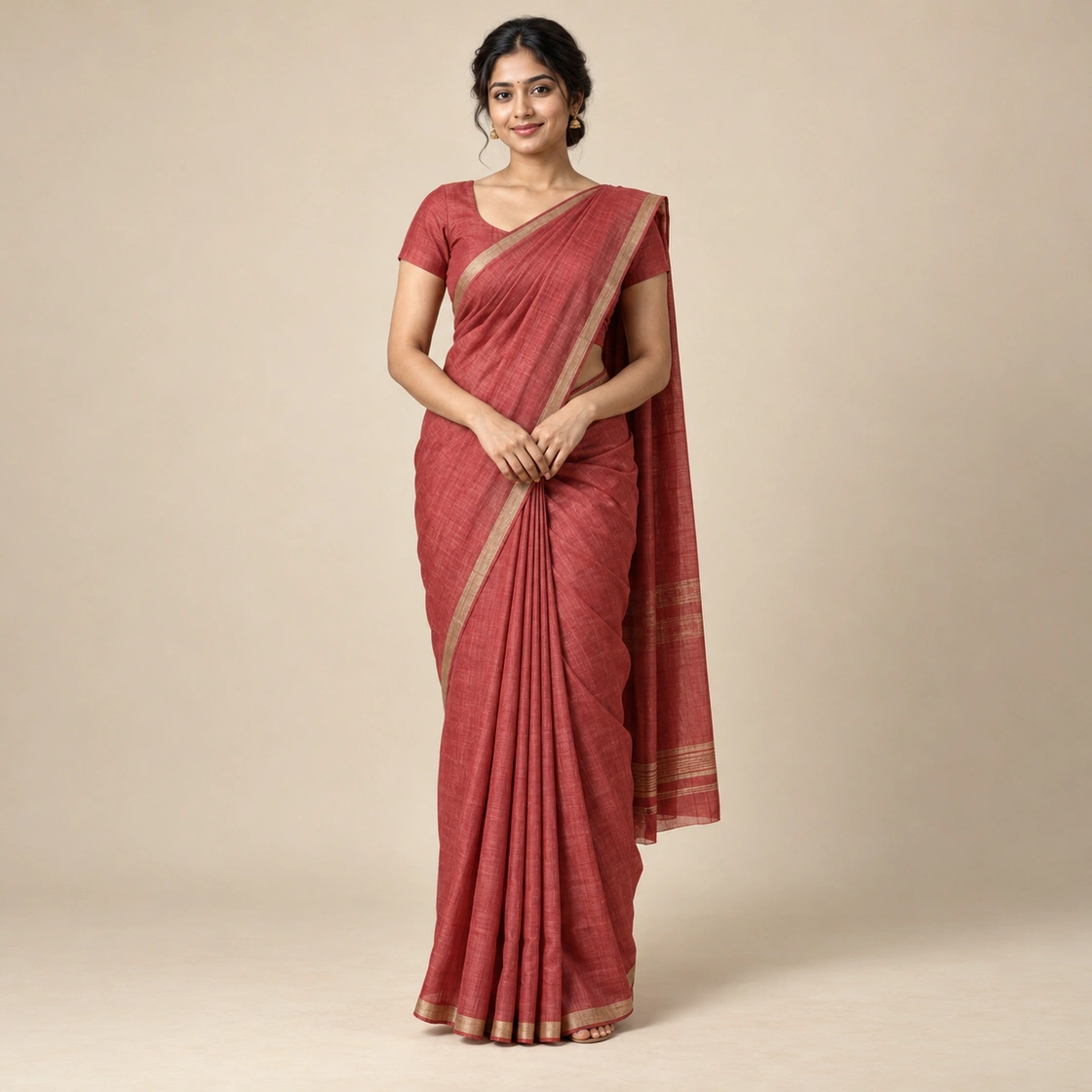
DRAPE 01
Nivi
Pan-Indian today; historically linked with the Deccan
Spot it: Look for the central pleat fan and pallu over the wearer’s left shoulder.
Know it: It is the familiar modern silhouette, adaptable across fabrics and occasions.
Same idea, remarkably different results. Follow the pleats and the pallu to spot eight ways of wearing a saree across India.
A drape is how the saree is worn; a weave or textile tradition is what the cloth is. A Banarasi saree is not restricted to one drape.
Pan-Indian today; historically linked with the Deccan
Spot it: Look for the central pleat fan and pallu over the wearer’s left shoulder.
Know it: It is the familiar modern silhouette, adaptable across fabrics and occasions.
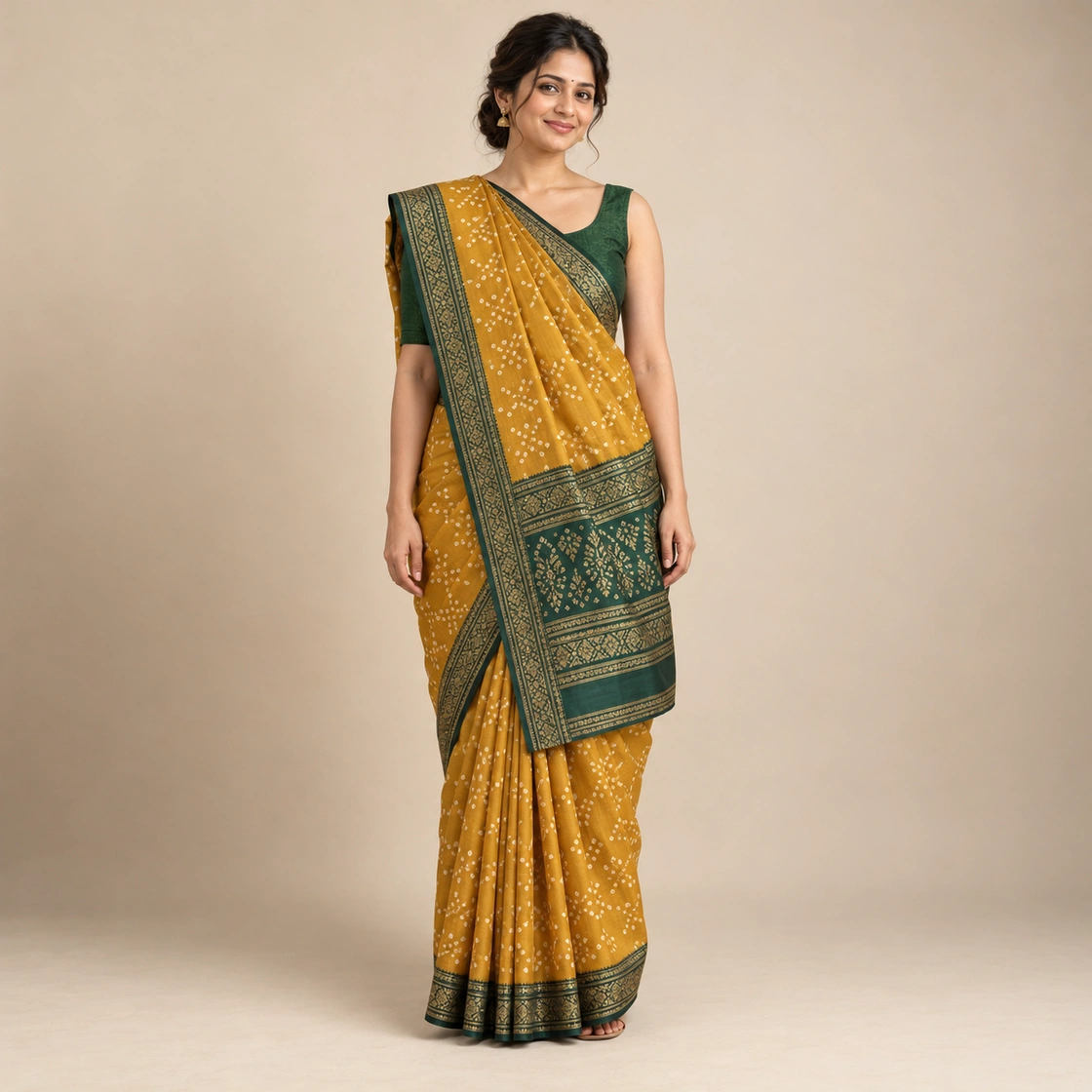
Gujarat and wider western/northern use
Spot it: The pallu comes over the right shoulder and opens across the front.
Know it: A richly patterned pallu gets to tell its story face-first.
Meet a related textile tradition in the Regional Saree Atlas ↗
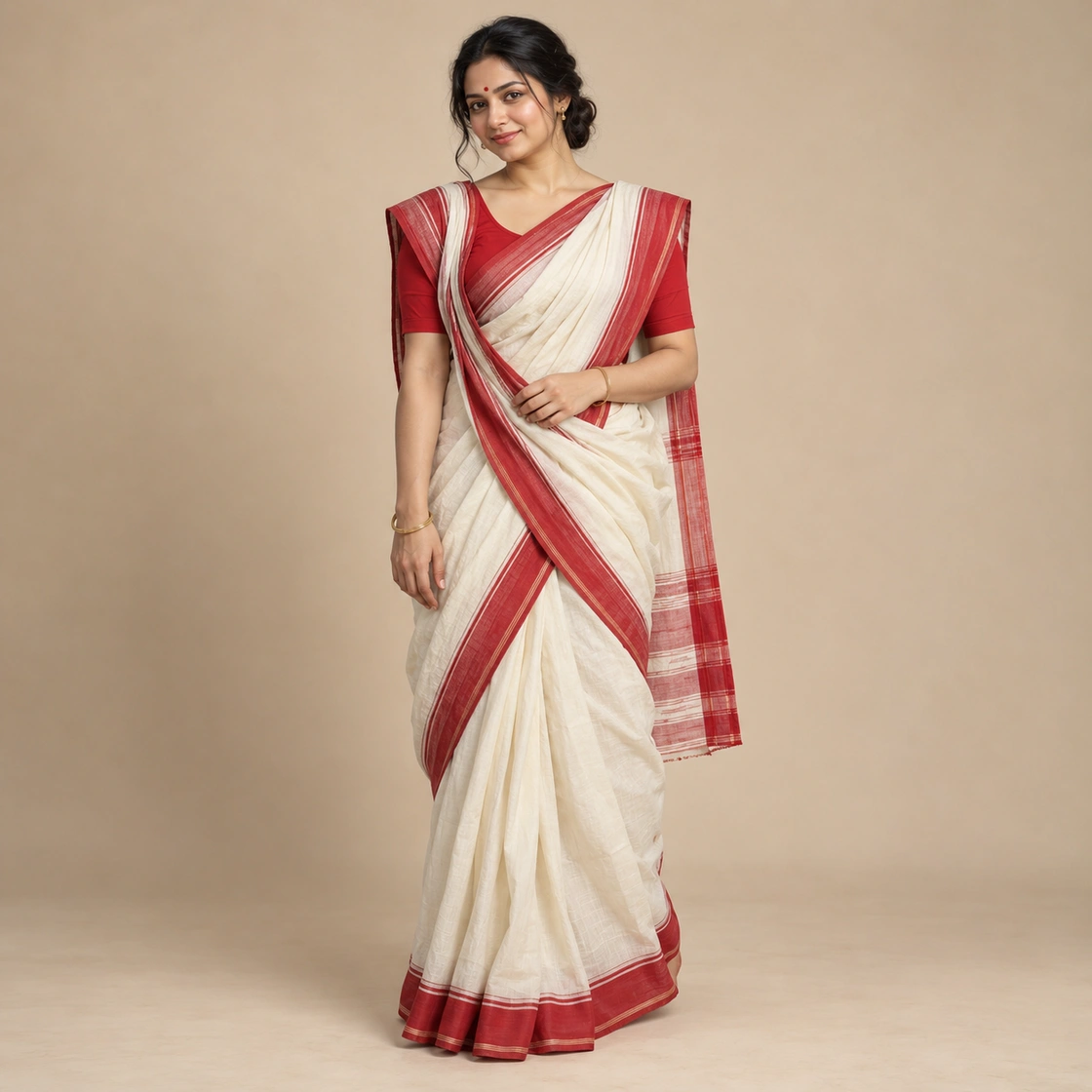
West Bengal; one among several Bengali drapes
Spot it: Broad, soft folds and a generous wrap around the upper body, rather than a sharp Nivi front fan.
Know it: Often pictured in ivory and red, but a regional style cannot be reduced to two colours.
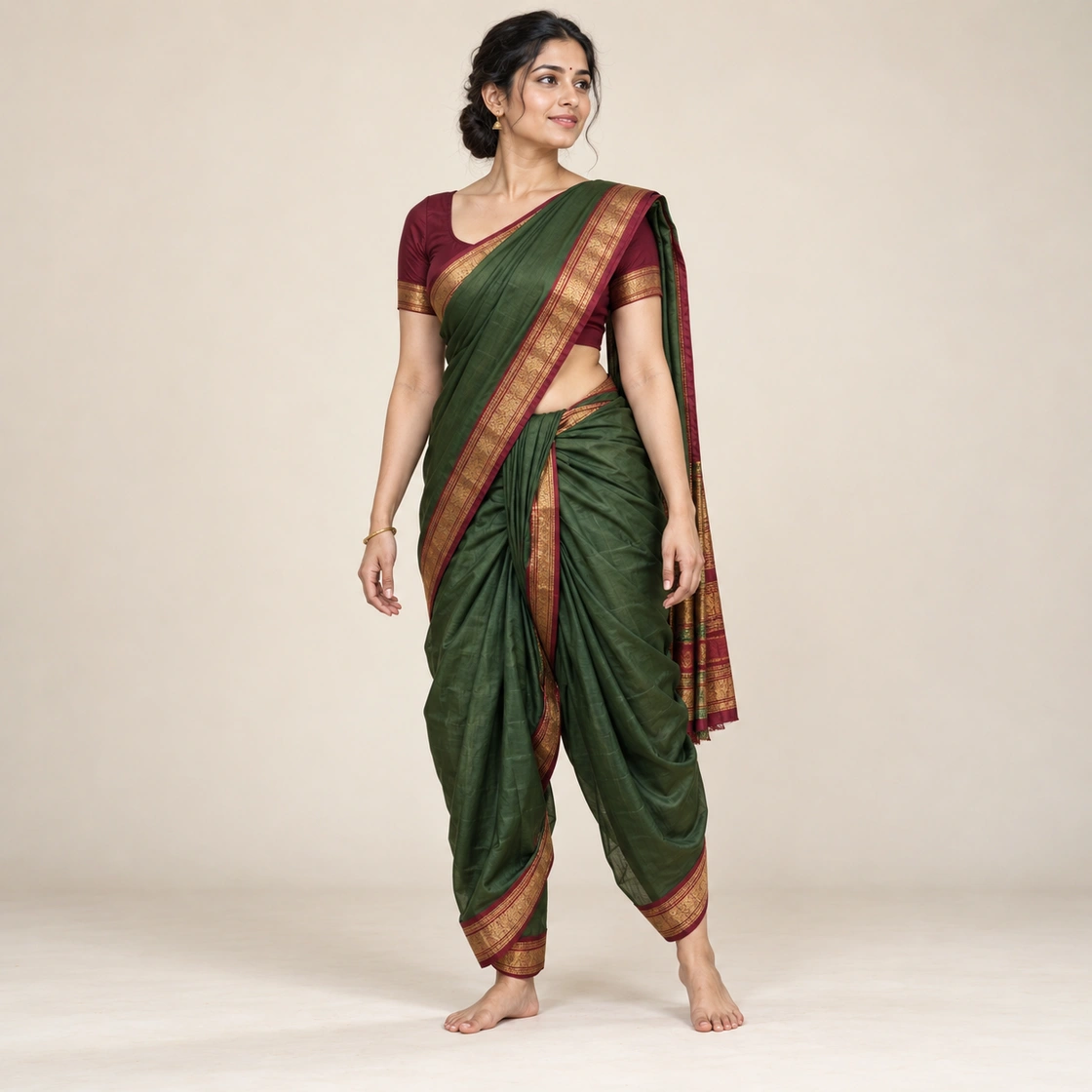
Maharashtra
Spot it: The lower saree is taken between the legs to form a dhoti-like silhouette.
Know it: This is one nine-yard kashta-family arrangement, not the only Maharashtrian drape.
Meet a related textile tradition in the Regional Saree Atlas ↗
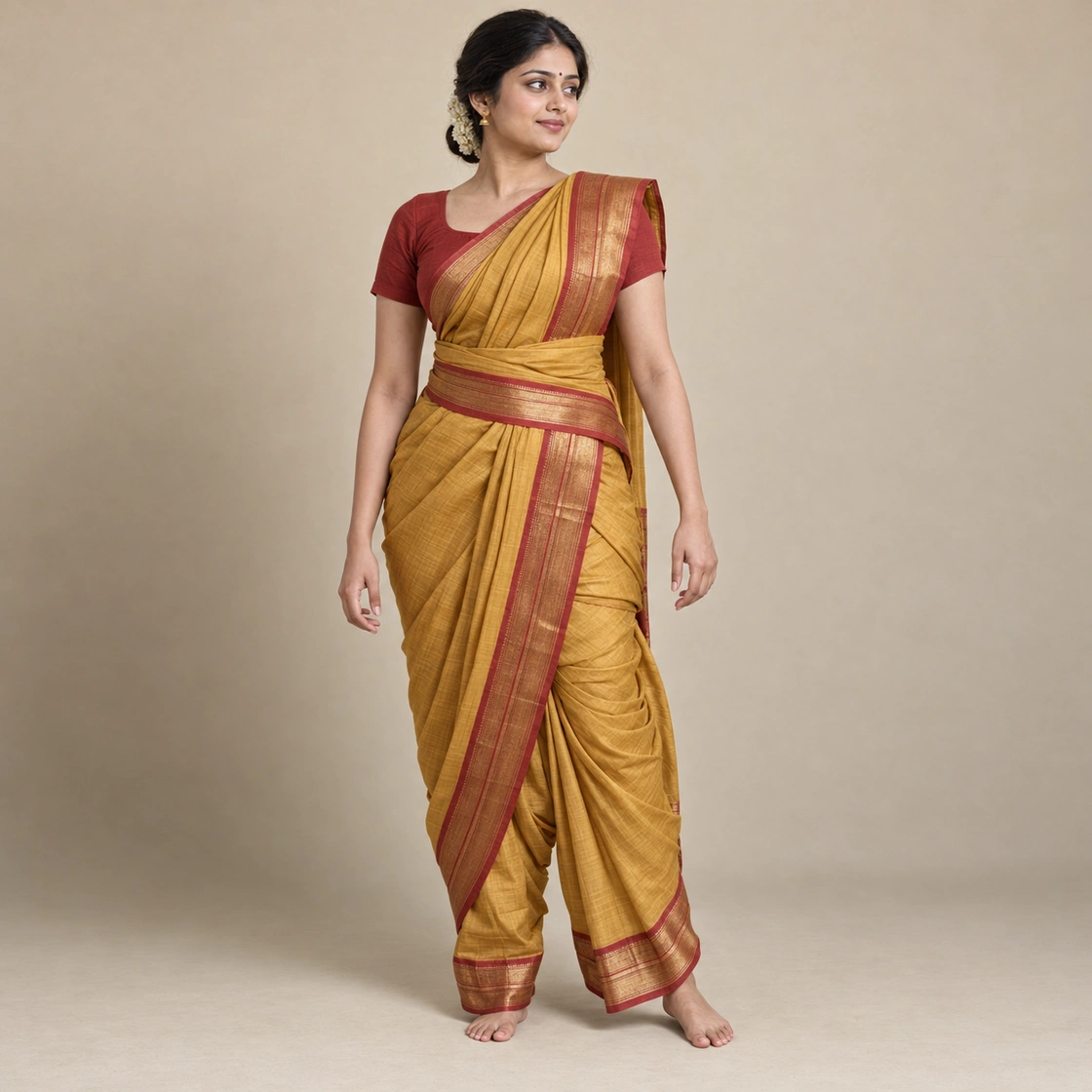
Tamil Iyengar ceremonial tradition
Spot it: A complex layered nine-yard wrap with a kacham-style lower tuck and directed pallu.
Know it: Its ceremonial structure is distinct from Nauvari; the Iyer variant is different too.
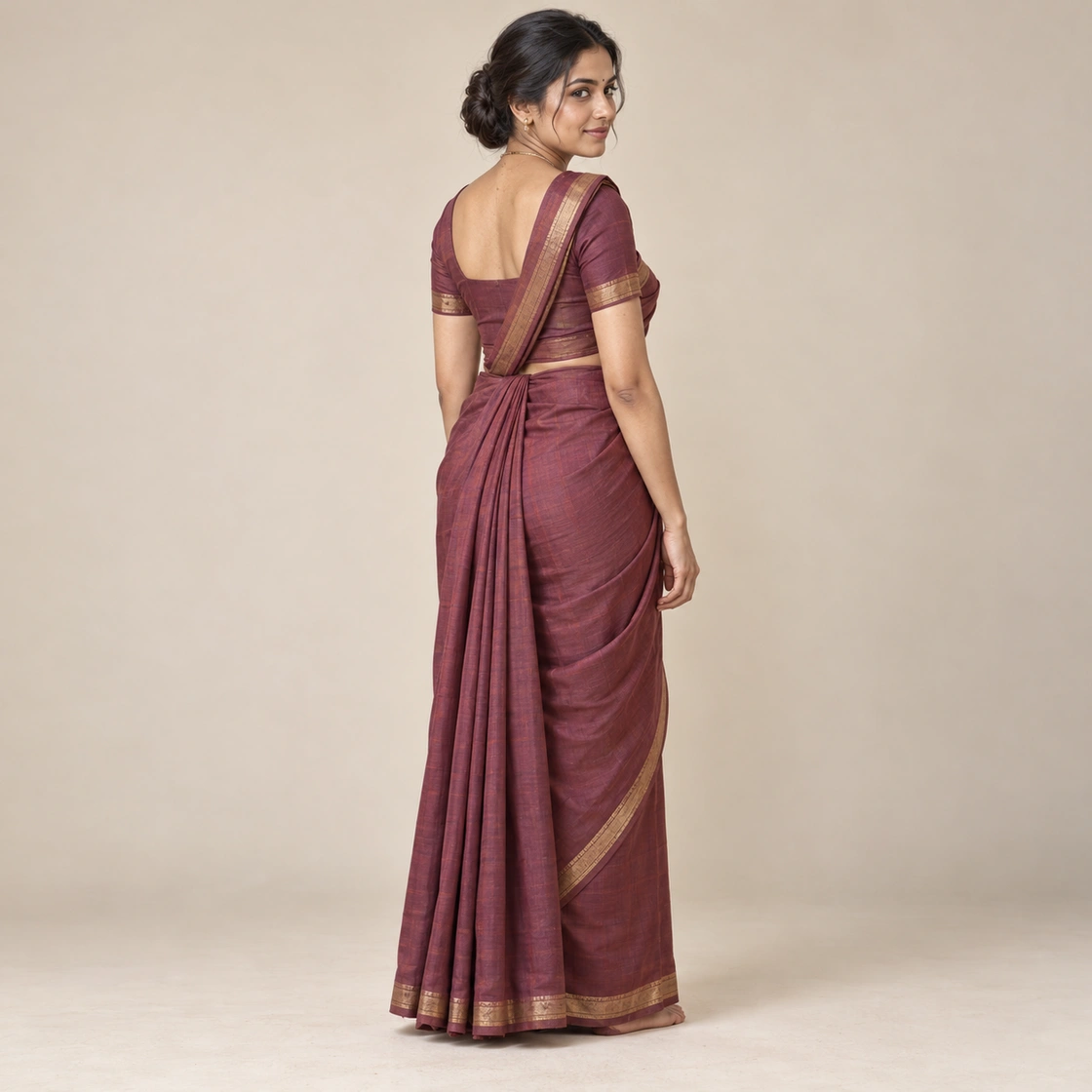
Kodagu, Karnataka
Spot it: Pleats are gathered at the back; the pallu crosses the upper body and returns over the right shoulder.
Know it: The silhouette makes more sense once you view the back.
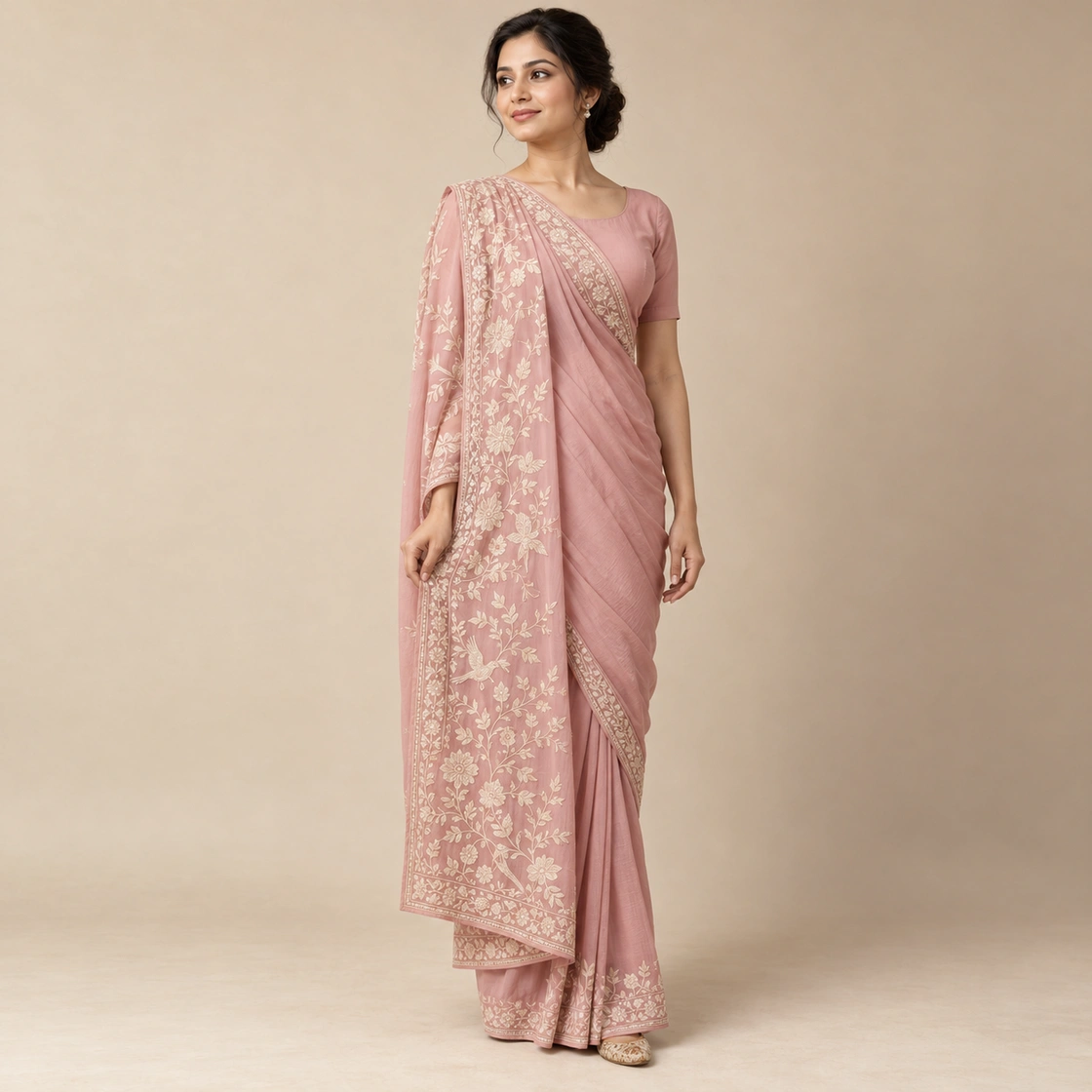
Parsi communities in western India
Spot it: A long, low front-falling pallu comes over the right shoulder.
Know it: The fall is the clue; embroidered Gara fabric is not itself a draping technique.
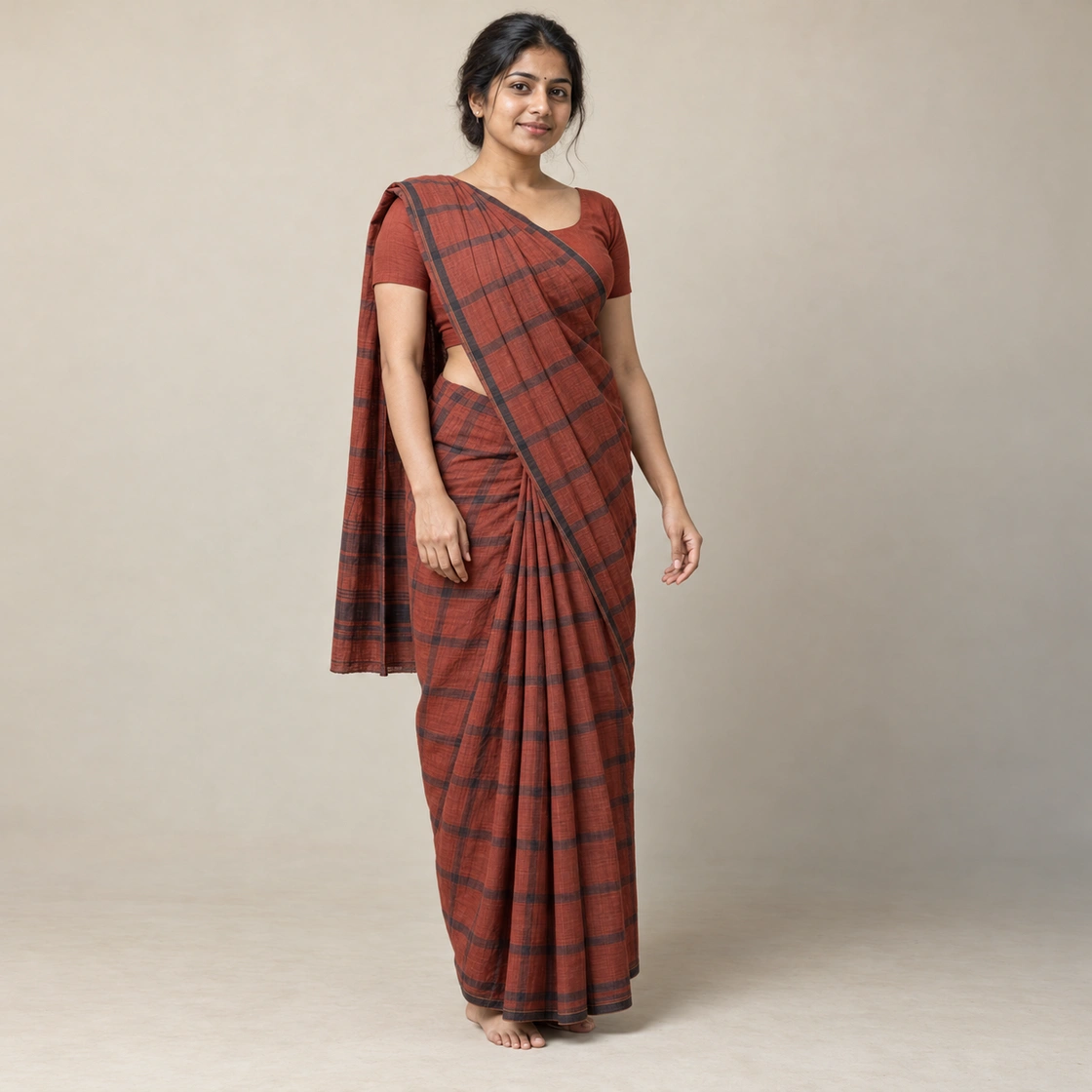
Goa
Spot it: A practical checked-cotton arrangement with a right-shoulder pallu secured toward the front.
Know it: The documented Hindu and Christian Kunbi variations differ; this illustrates one of them.
Meet a related textile tradition in the Regional Saree Atlas ↗
These are recognisable examples, not the only correct ways to wear a saree. Communities and families often use important variations. For film demonstrations and many more traditions, explore The Sari Series ↗, a non-profit initiative by Border&Fall. The Saree Atlas is independent and not affiliated with them.
Original Atlas illustrations are explanatory, not authenticated documentary photographs or step-by-step instructions. Style & Occasion → · Regional Saree Atlas →