The SareeAtlas
Six yards of confusion, unravelled.
Silks, weaves, motifs and regional masterpieces — explained for everyone who has ever stood in a saree shop and fallen a little in love.

- Patan PatolaDouble ikat: both warp and weft resist-dyed before weaving.
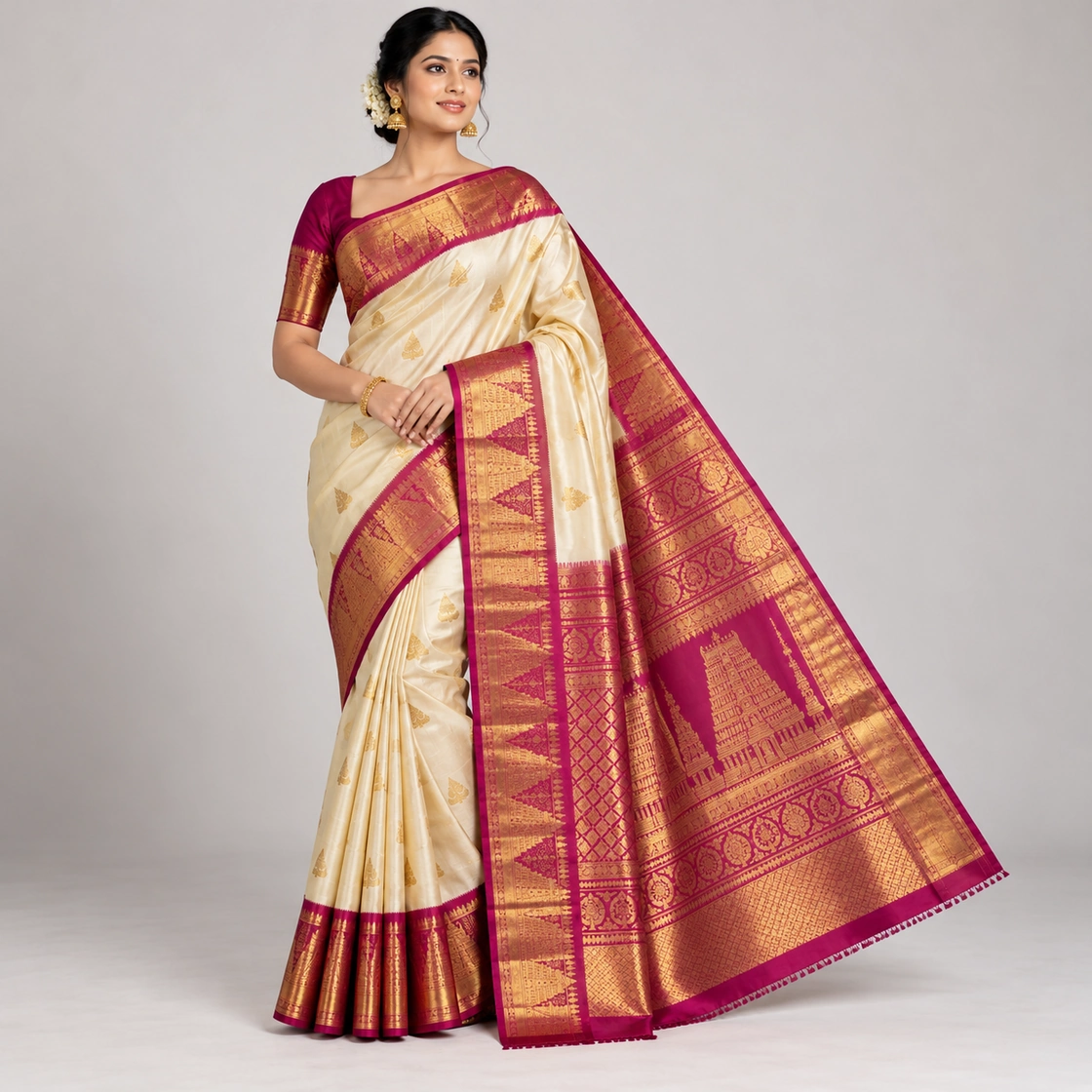
- KanjivaramHeavy mulberry silk with a bold zari border.
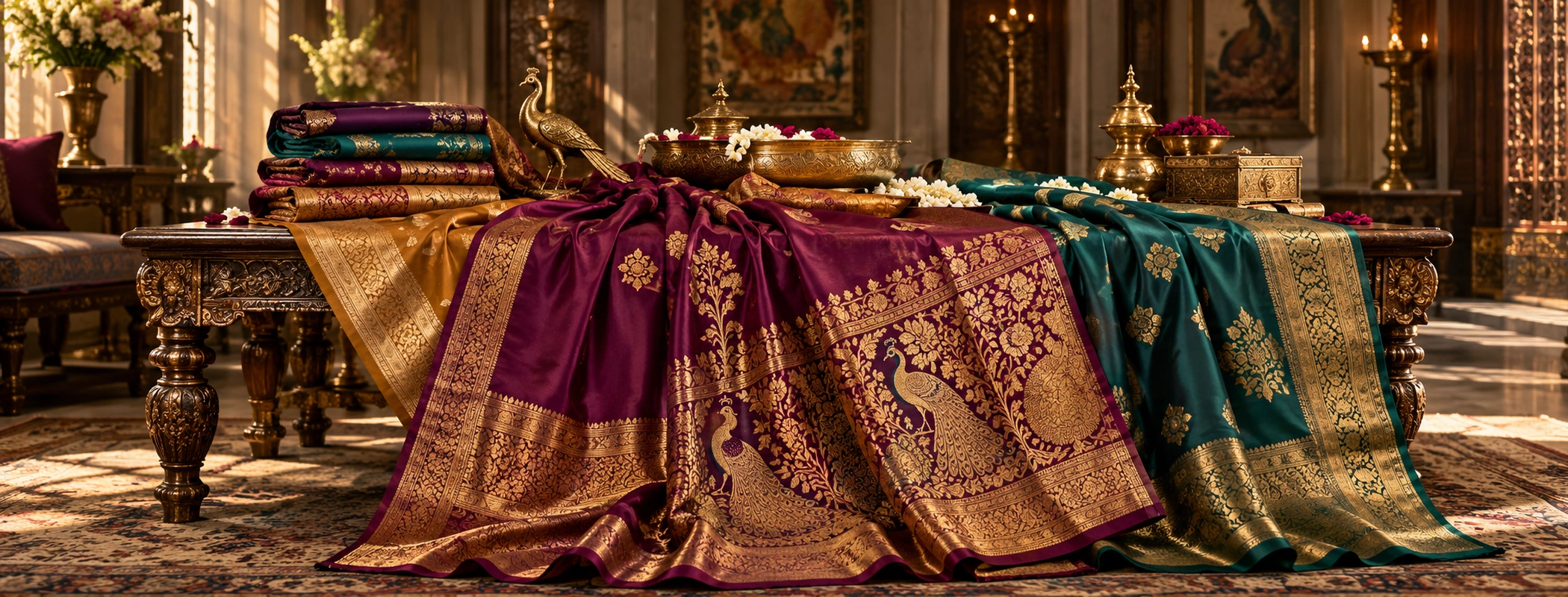
- Banarasi KatanFloral brocade woven into the cloth, not printed on it.
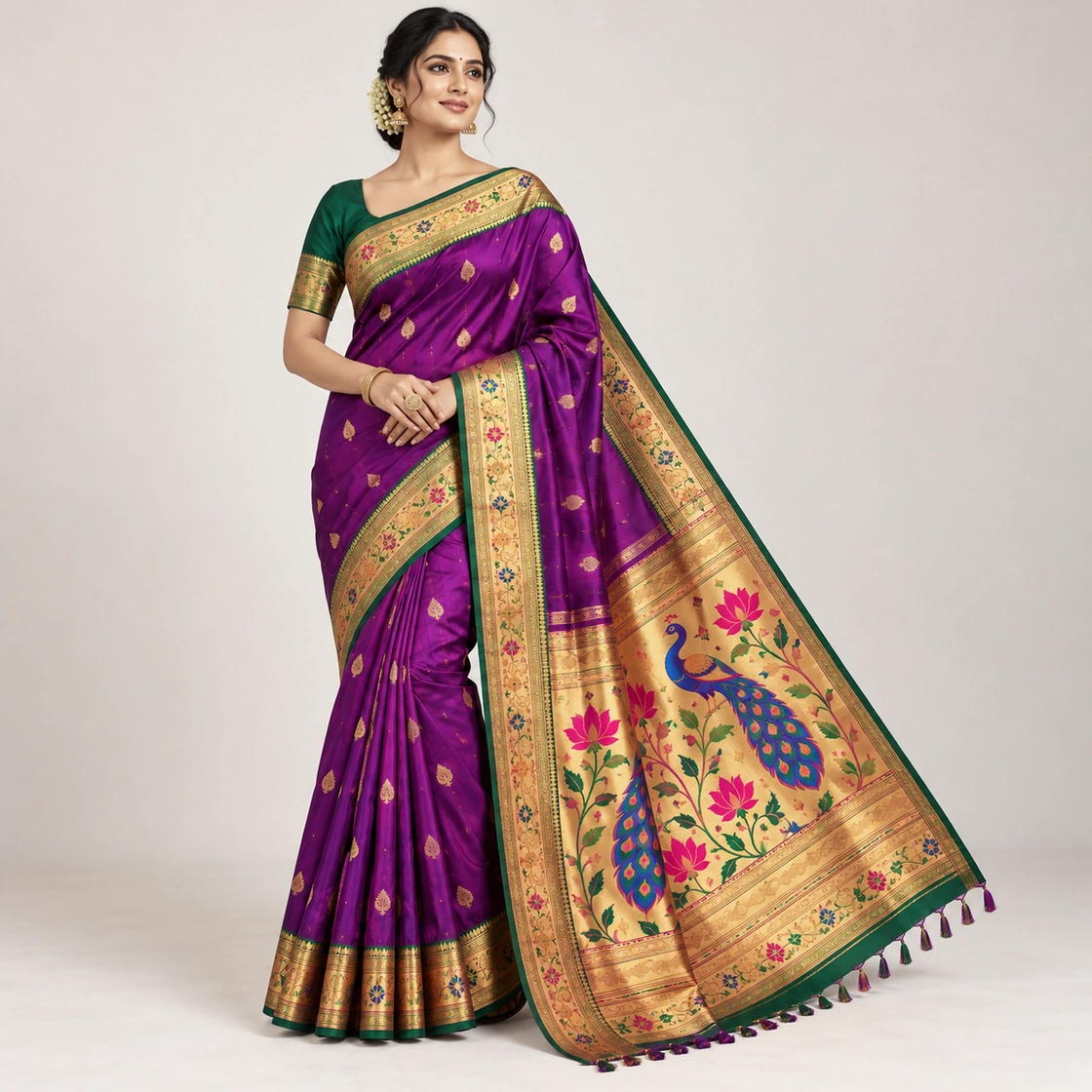
- PaithaniPeacocks and florals in a tapestry-woven pallu.
- SwarnachariNarrative figures woven in gold-toned thread.
- Bengal JamdaniMotifs inlaid by hand on an airy cotton ground.
A note before you unfurl
It’s a trap. A beautiful, expensive, six-yard trap.

Every saree showroom has a small stool for the bewildered. From there, I watched silk cascade across the counter like a waterfall with an invoice attached, until the fatal question arrived: “Which one do you like?”
There are no safe answers. My wife was speaking fluent textile, the salesman was nodding like a fellow cardiac surgeon, and two red silks that looked identical to me had somehow been priced as “a light indulgence” and “your entire retirement fund.”
So I made the rookie mistake of asking questions. Somewhere between the third Kanjivaram and the fifth cup of showroom chai, bewilderment turned into fascination.
The Saree Atlas is what happened next. For devoted collectors, curious beginners, and the long-suffering chaperones who only came along to hold the water bottle.
Read our storyLearn the language
Three ways into the weave
Begin with the cloth, discover the craft, or travel through India’s great saree traditions.
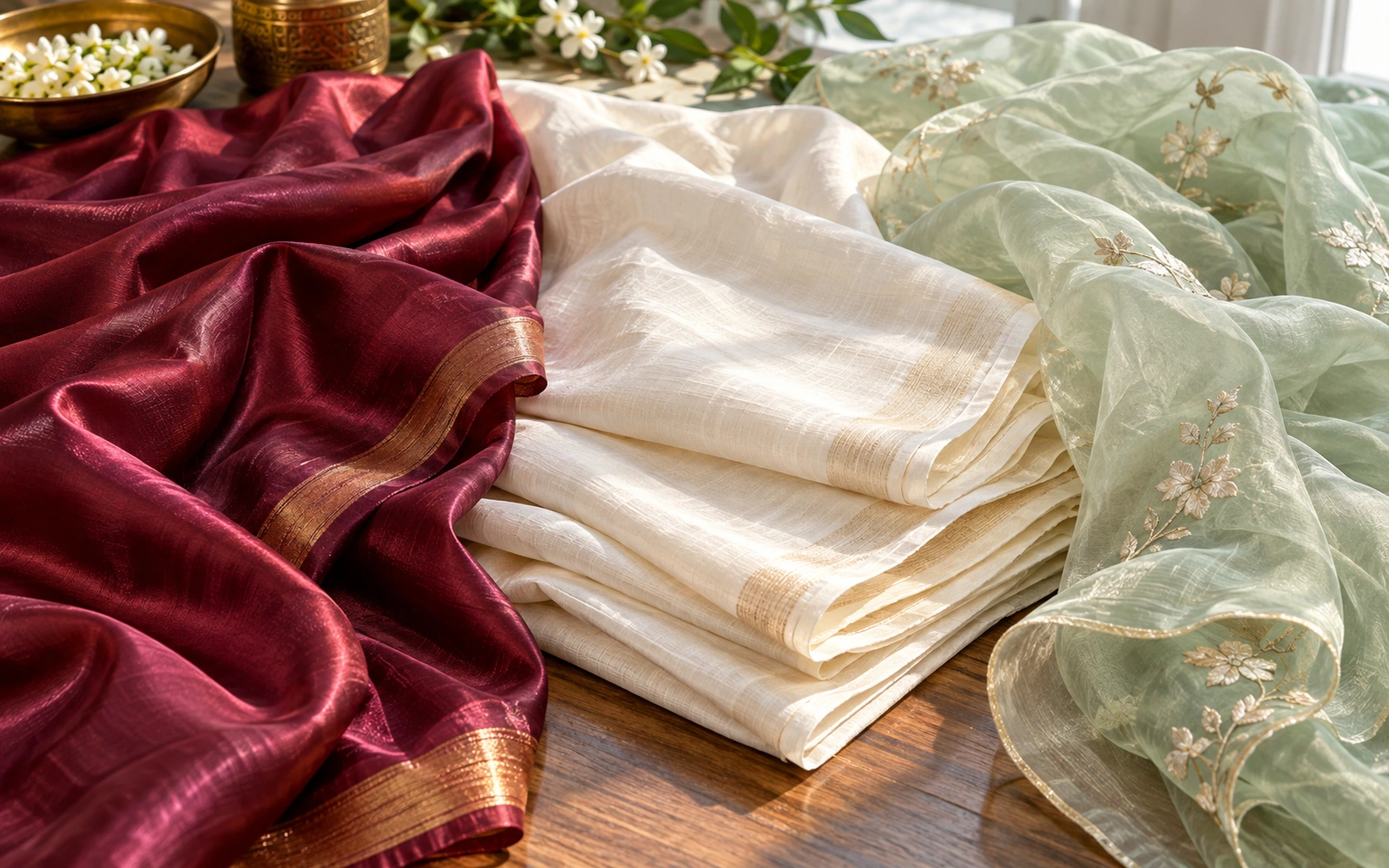
Fabrics & Silks
Katan, Kora, Tussar, Tissue and Muga — what the names actually mean, and why they matter.
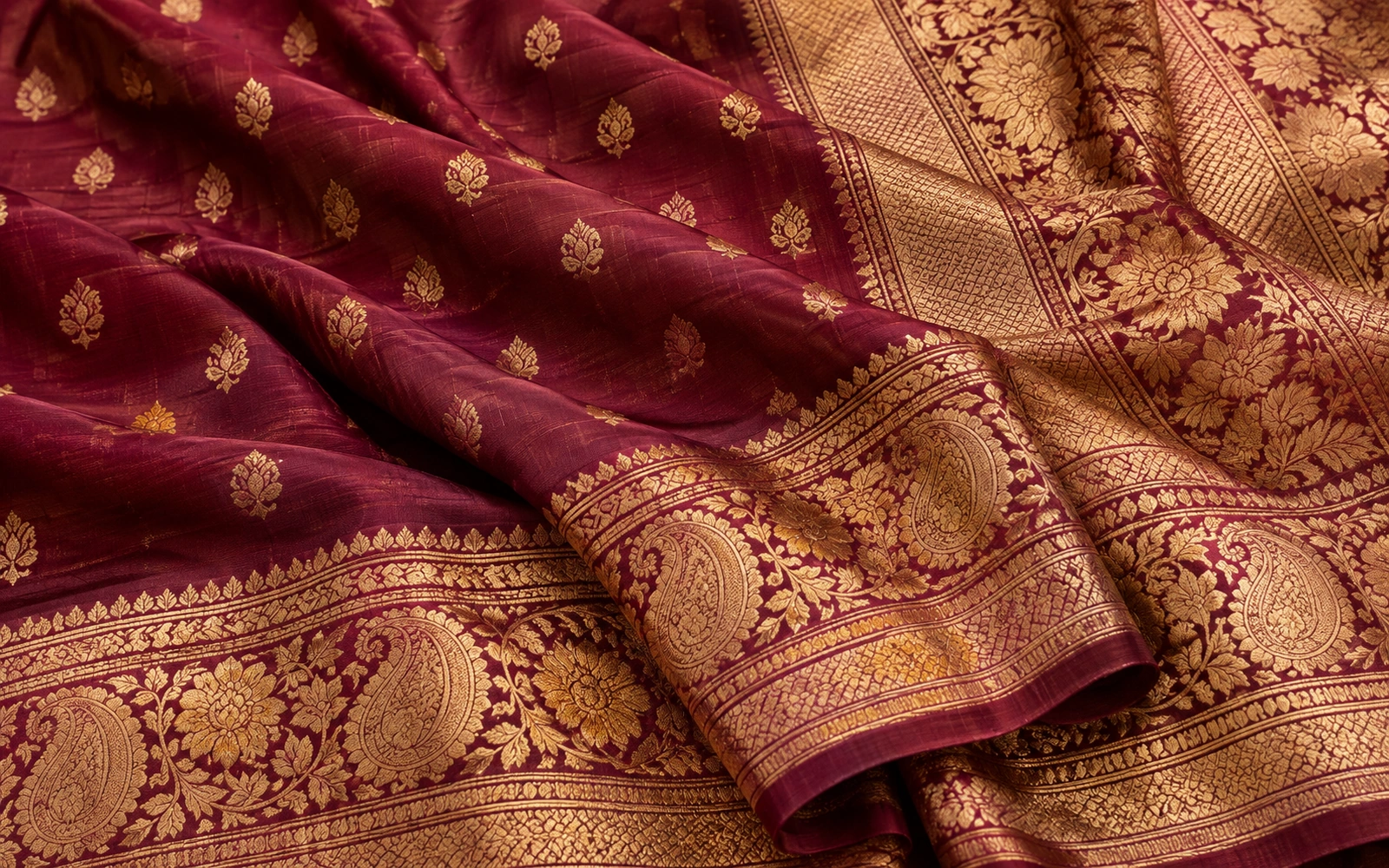
Motifs & Techniques
Butis and butas, brocade and ikat, jamdani inlay and the many kinds of zari.
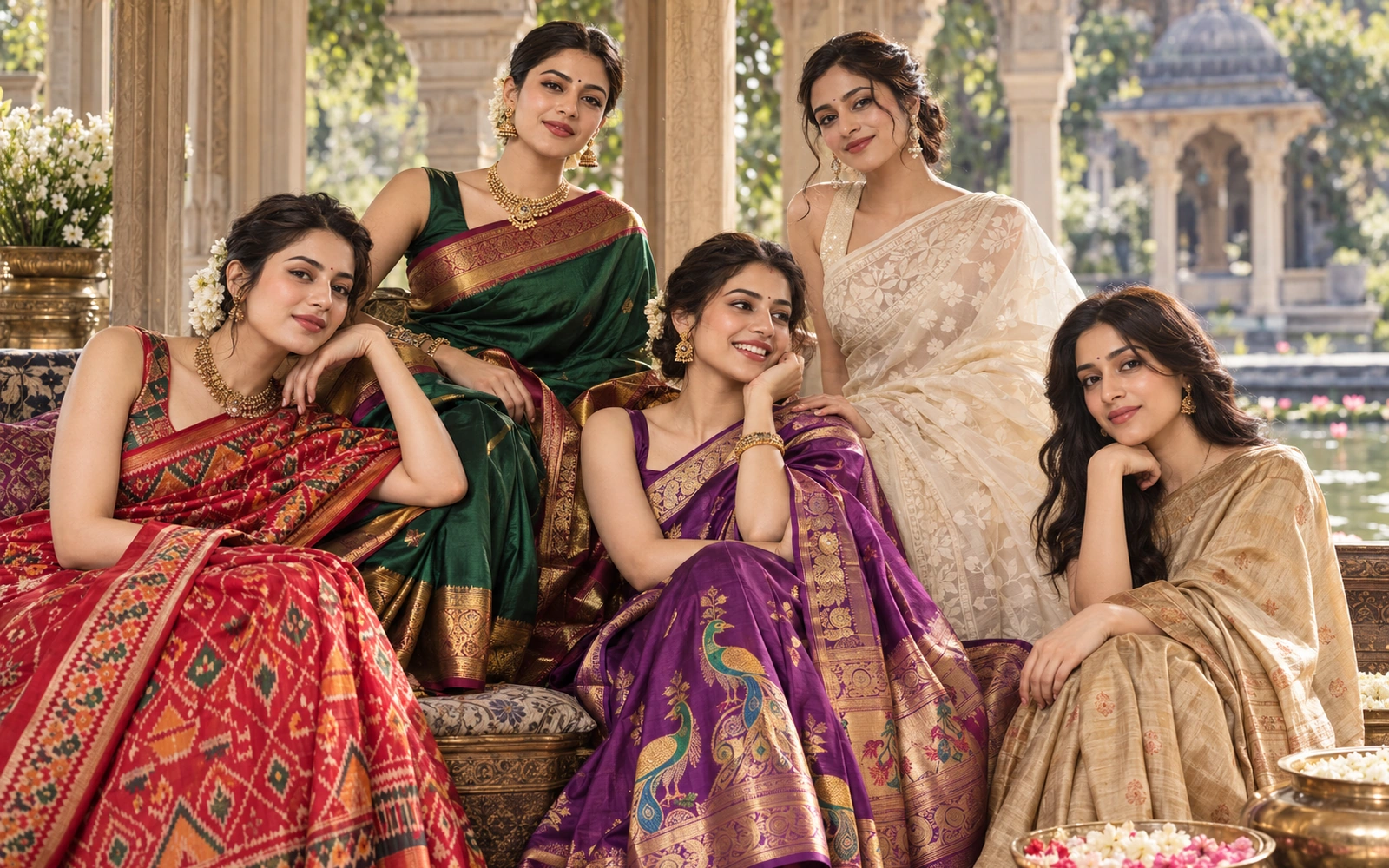
Regional Traditions
Regional sarees from across India, from Banaras brocade to Kota’s gossamer checks.
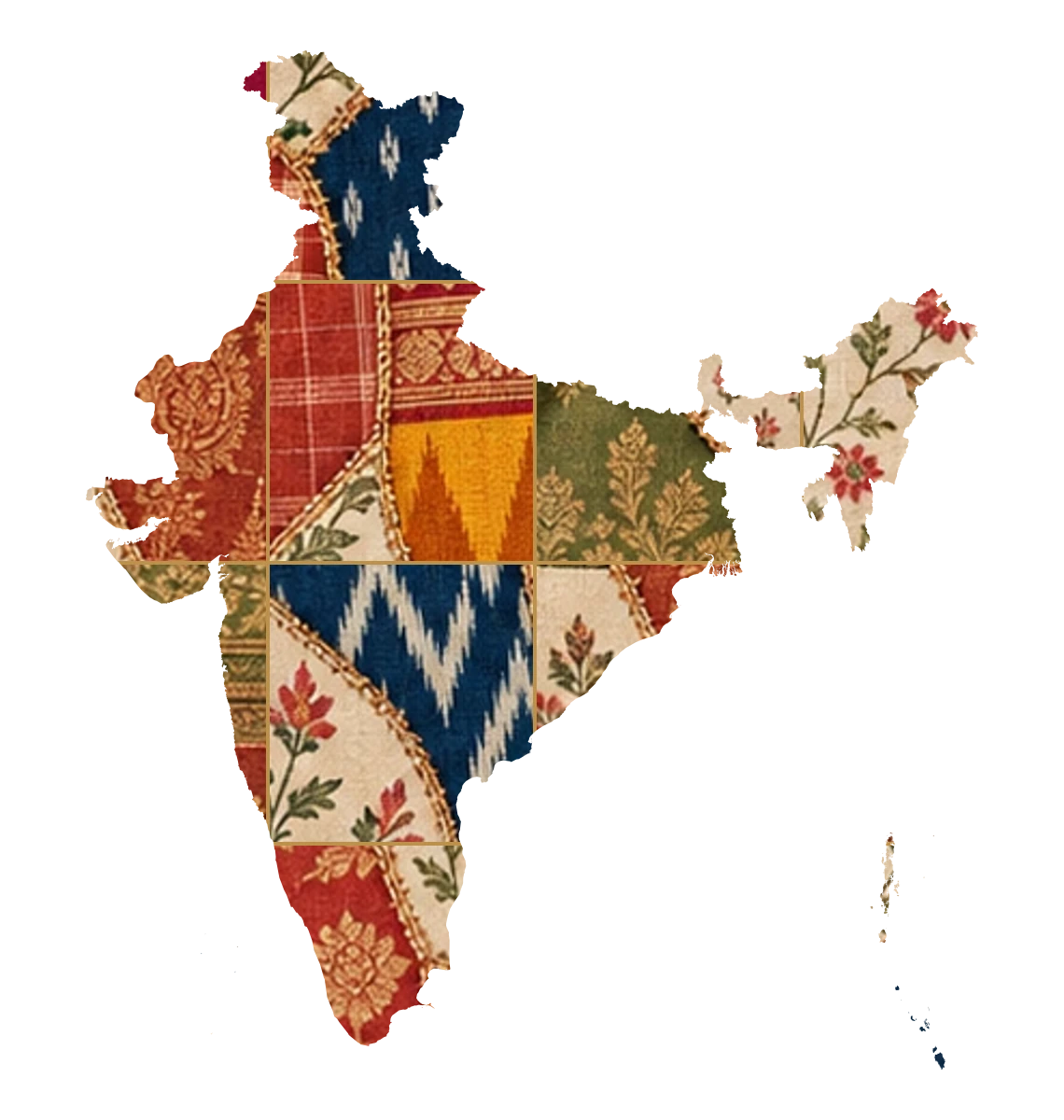
Regional traditions · across India
A country woven in countless traditions
Follow the cloth across India — from the brocades of Banaras and the double-ikat precision of Patan to the airy cottons of Bengal and the natural gold of Assam’s Muga silk. Each profile explains its history, its signatures and how to recognise a fine example.
Open the Regional Saree AtlasWhat is a GI tag?
A Geographical Indication is a legal registration recognising that a product’s qualities or reputation are linked to a particular place — the registered Kancheepuram Silk (the Kanjivaram) and Banaras Brocades and Sarees are examples. It protects a name; it does not certify an individual saree, and many beautiful traditions shown here are not GI-registered. More on GI
For the collector
Sarees worth dreaming about
Twenty exceptional sarees, ten masterworks that collectors covet, and a private place to keep your own wishes and treasures. You need not intend to buy a ₹50,000 Shikargah to enjoy knowing what makes one extraordinary.
Enter the Collector’s Edit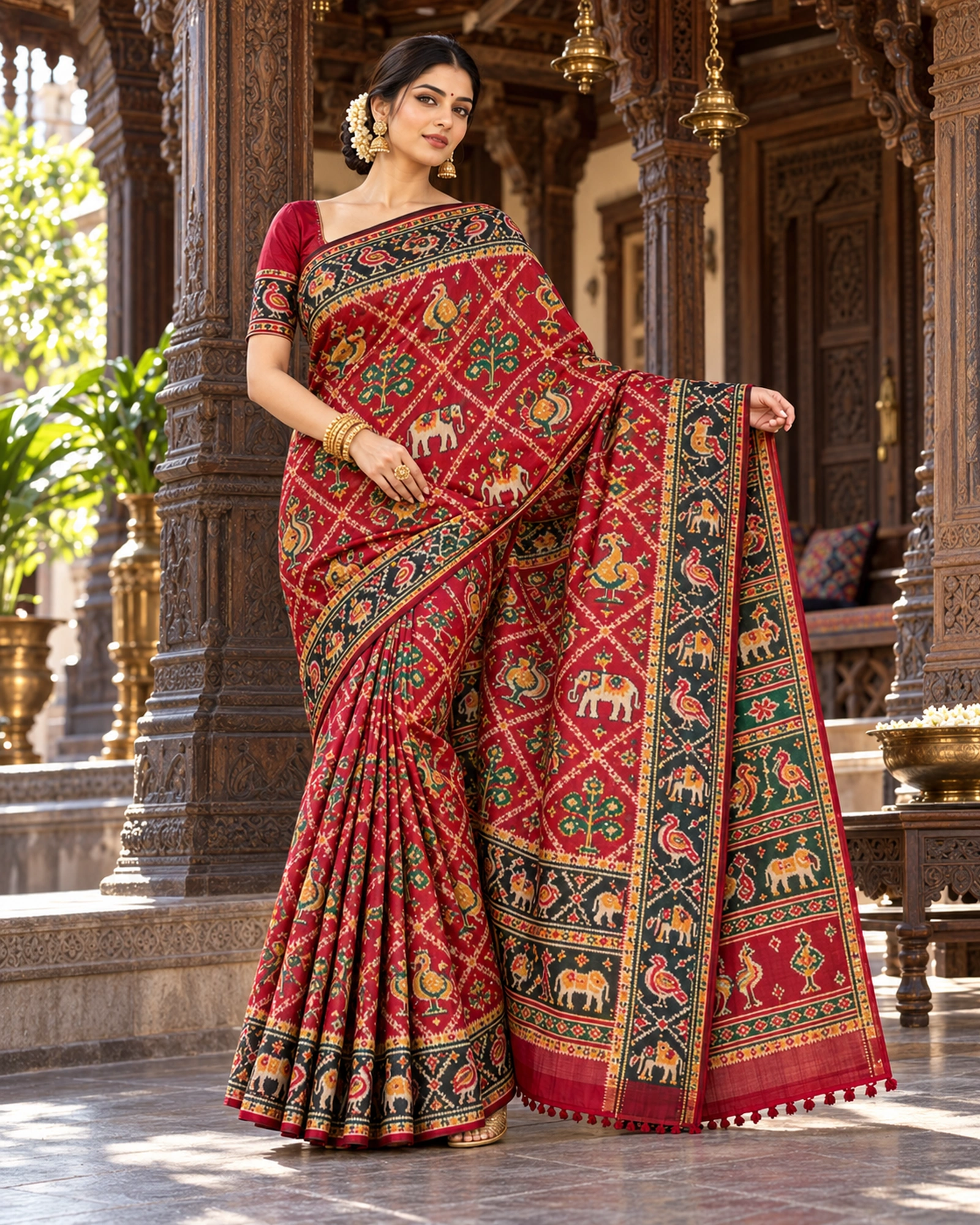
Six helpful tools
A little help, no appointment needed
Private, browser-only companions. Nothing is uploaded and there is nothing to sign up for.
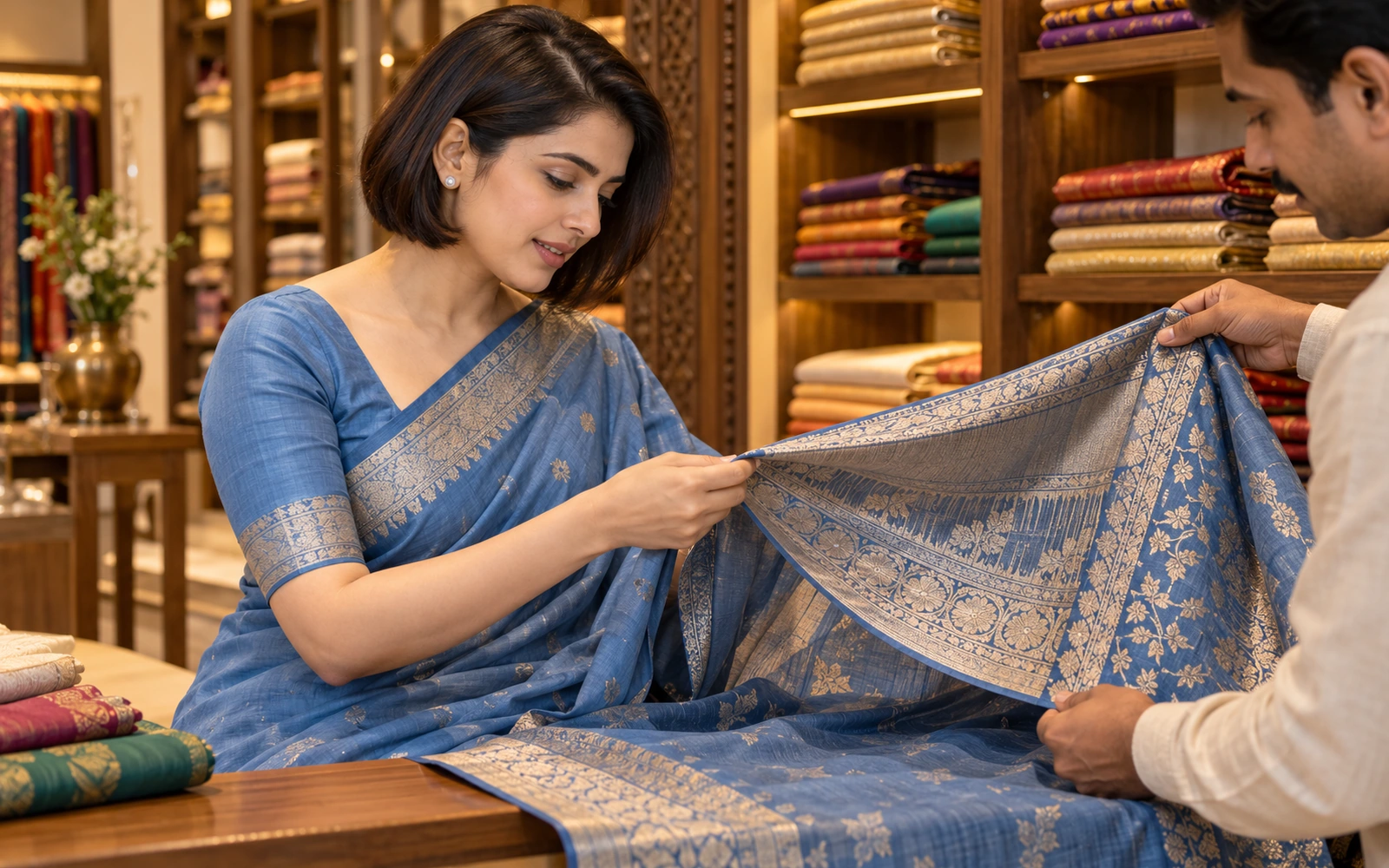
Showroom Companion
What to inspect, what to ask and what the price should buy — for 44 traditions, on your phone, in the shop.
Take it shopping →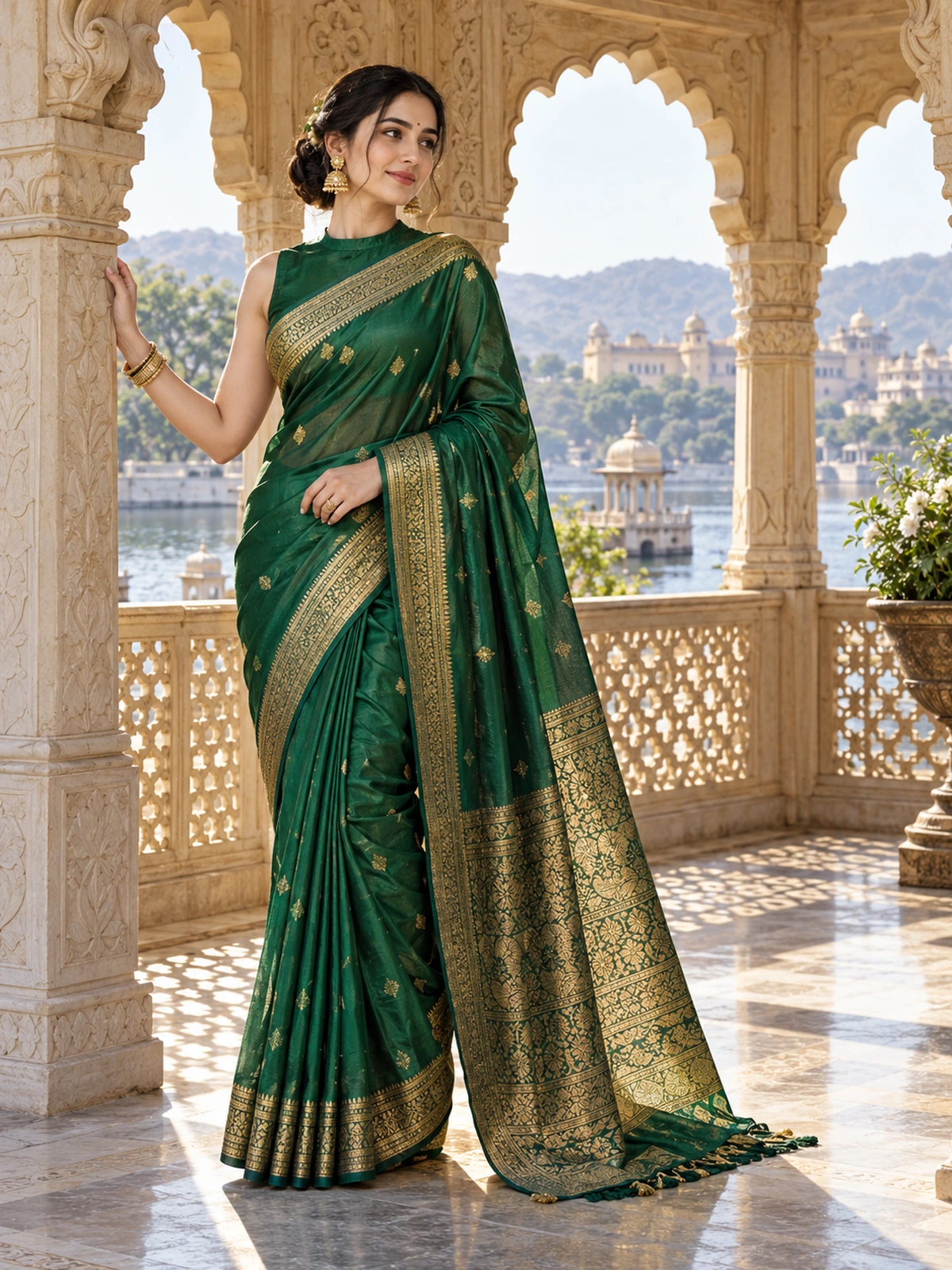
The Saree Posebook
Forty-eight poses — solo, close portraits, friends and family — with practical direction for hands, pleats and pallu.
Strike a pose →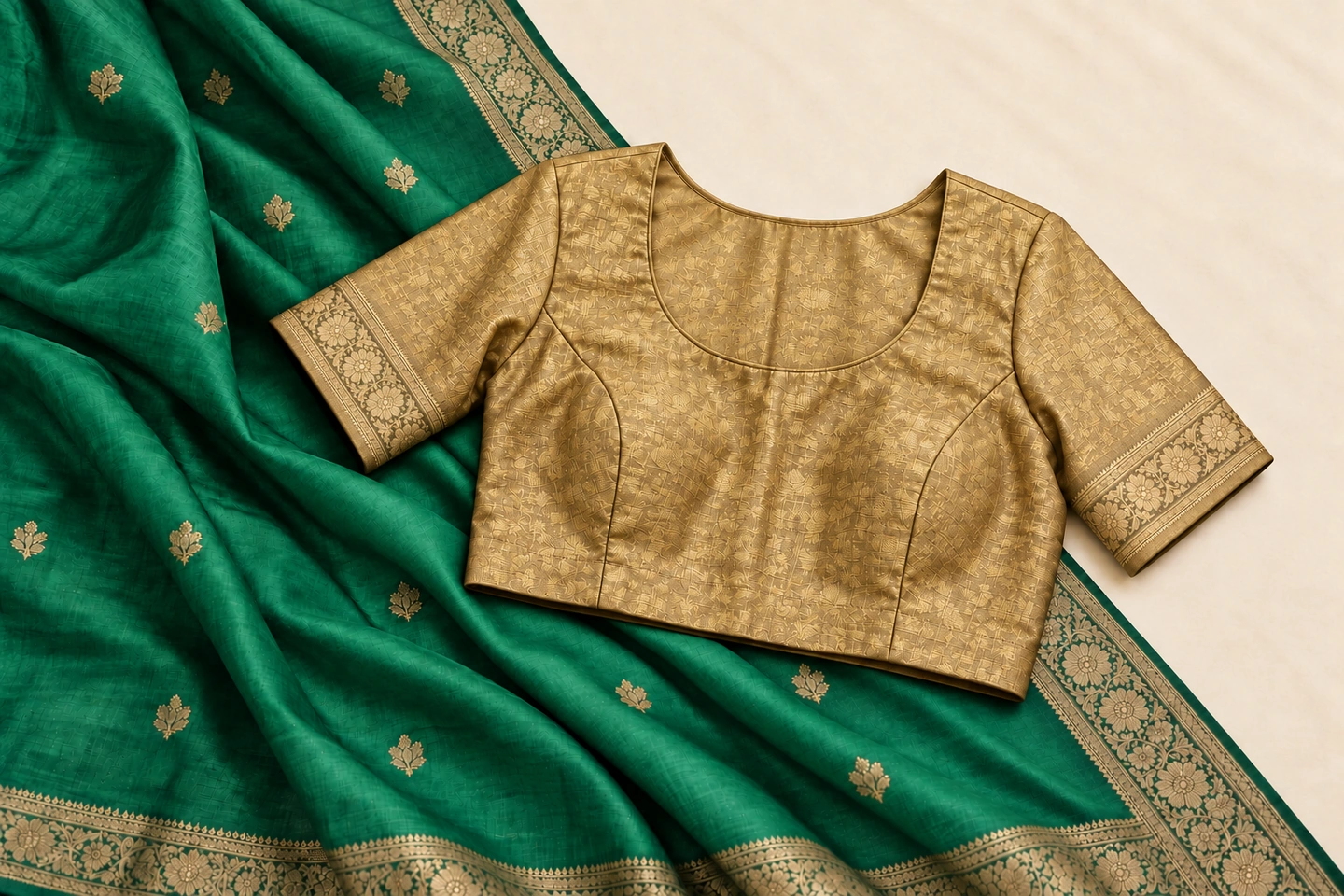
Blouse Matchmaker
Five thoughtful blouse colours for any saree, from quietly tonal to gloriously bold.
Find a blouse colour →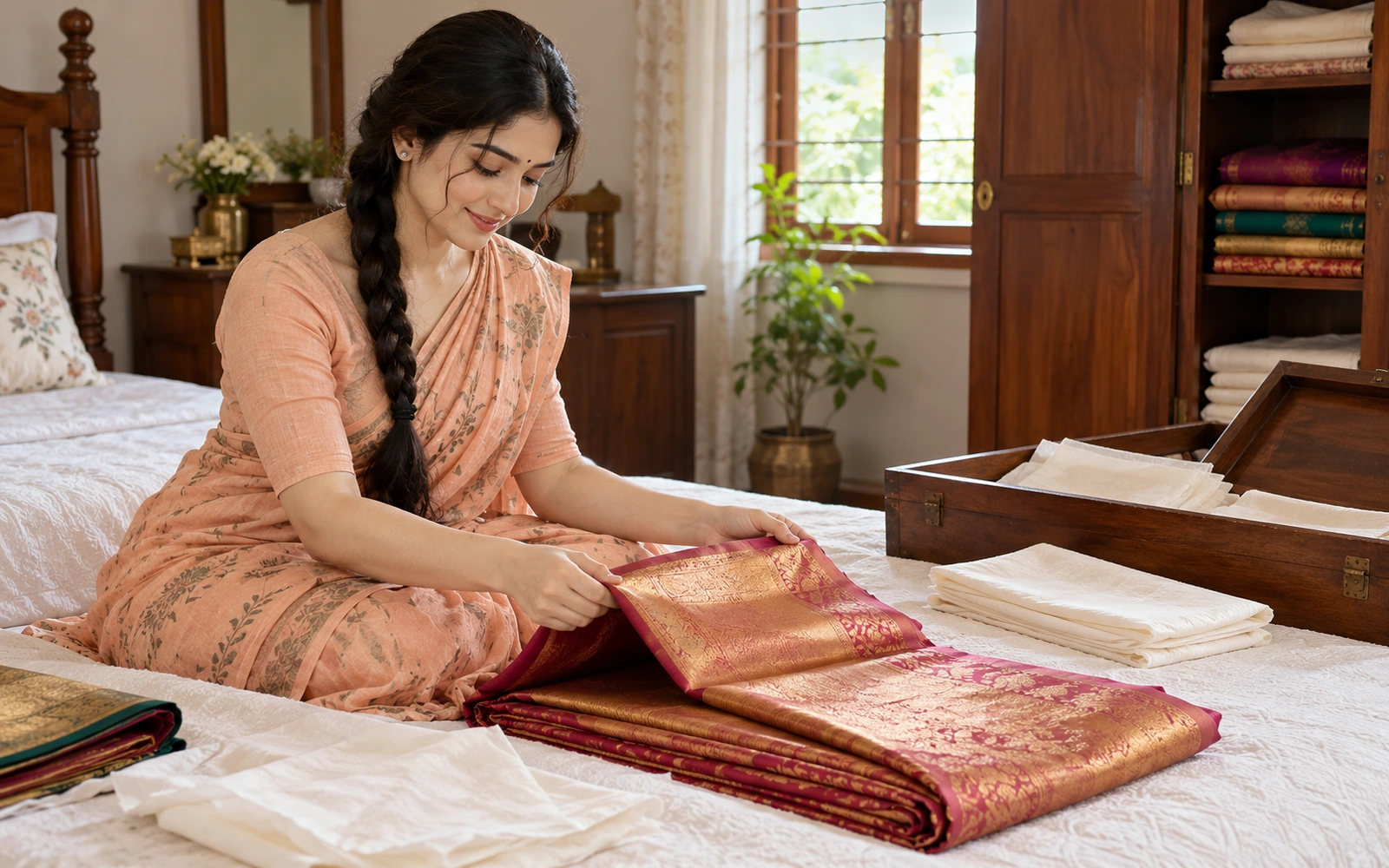
The Almirah
See what you own, find the gaps, and give your next saree a purpose.
Open your Almirah →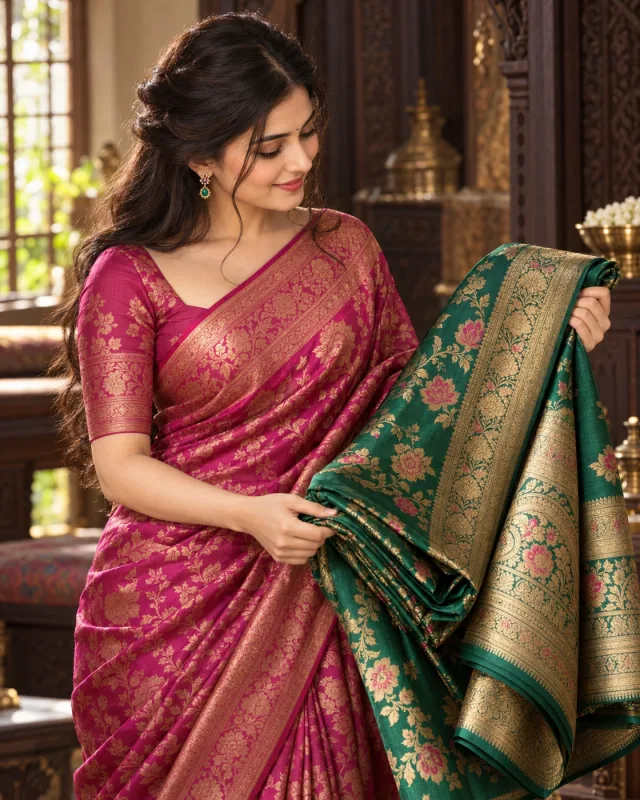
The Husband’s Rescue Kit
She has been hinting at blue since Diwali. Three thoughtful saree ideas, one shameless indulgence and five questions that make you sound as if you have done this before.
Rescue me →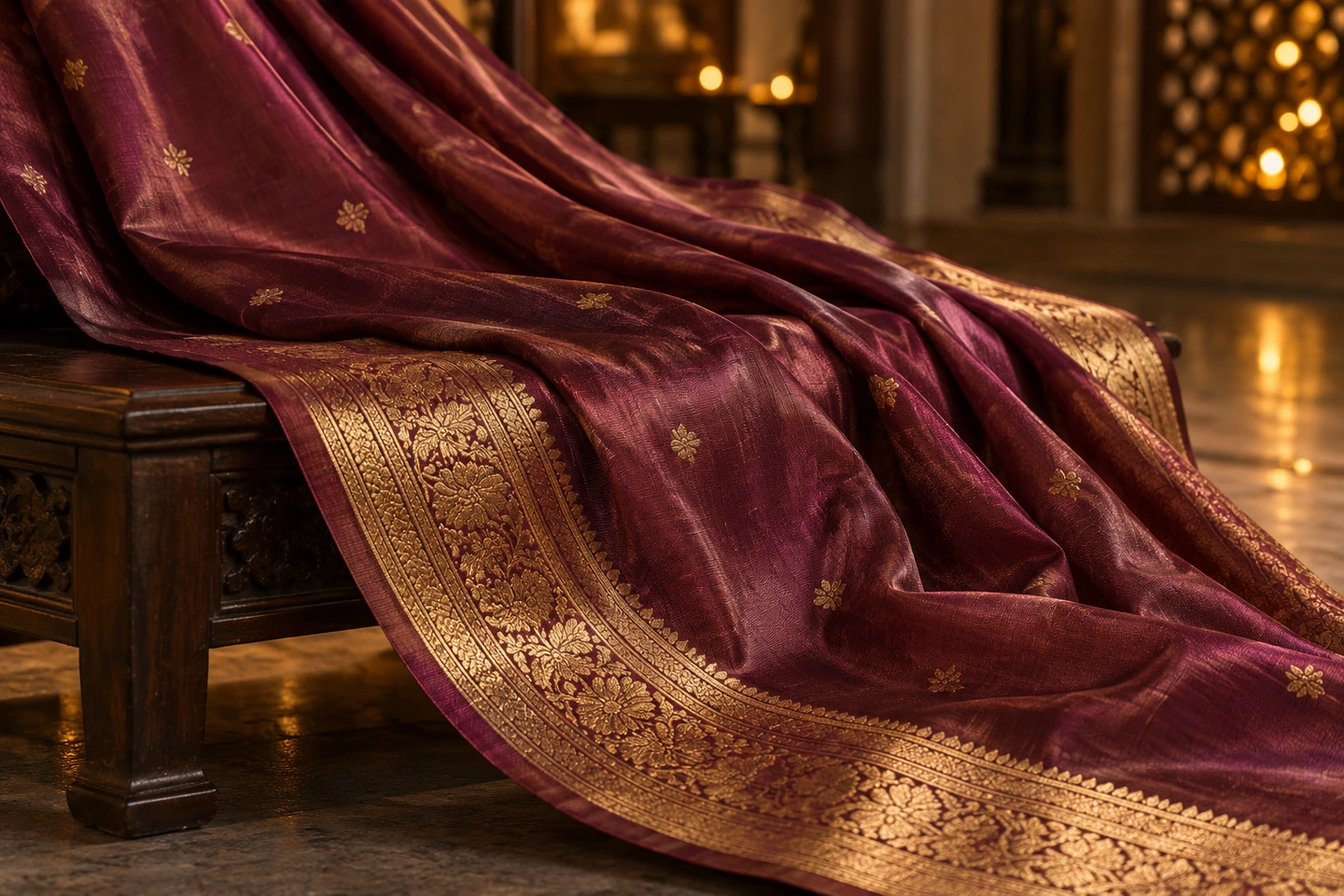
The Saree Circle
Forty-five gathering themes, lovely invitations and a 150-question saree quiz.
Plan a gathering →Styling inspiration
Wear it beautifully
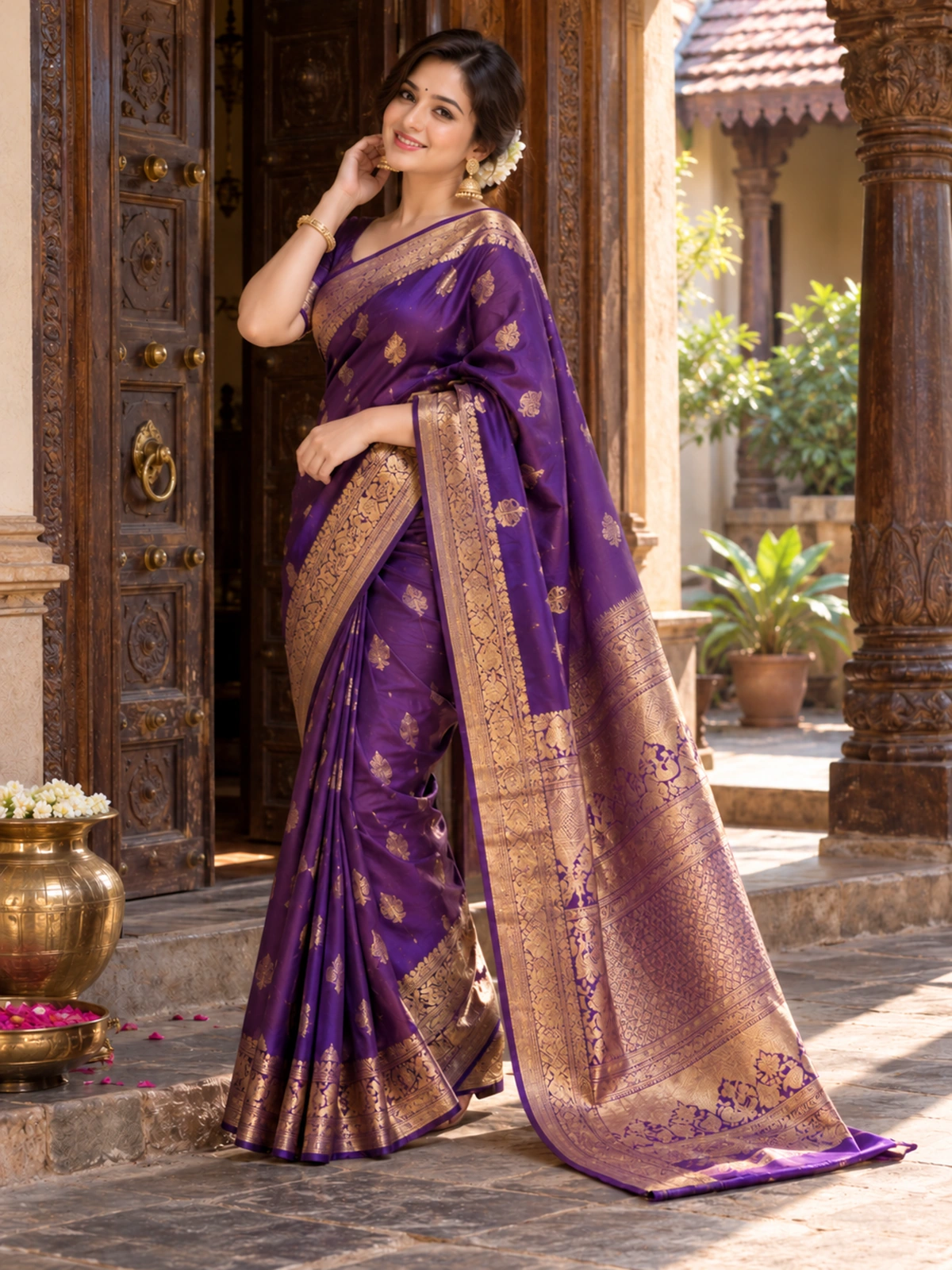
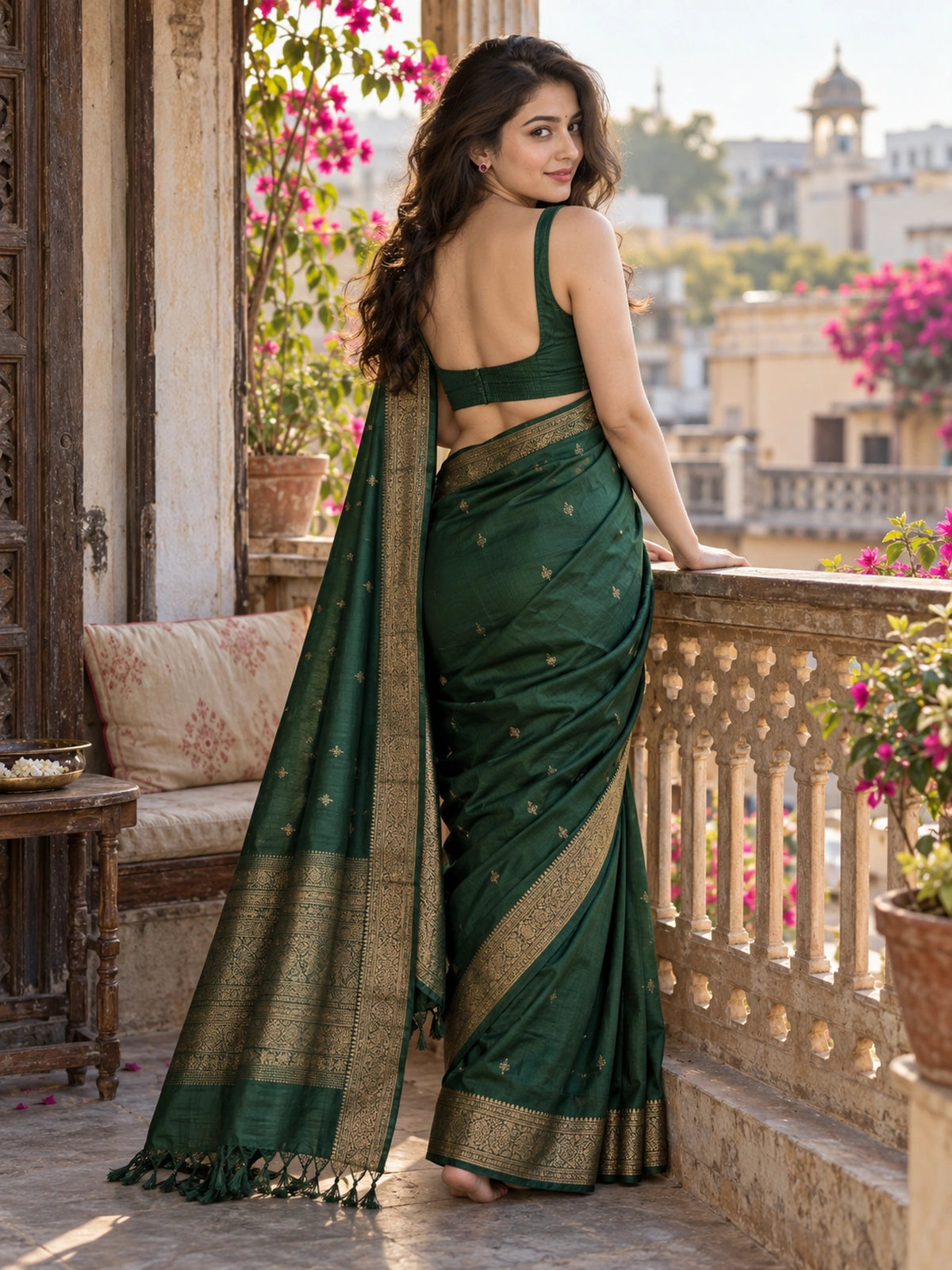
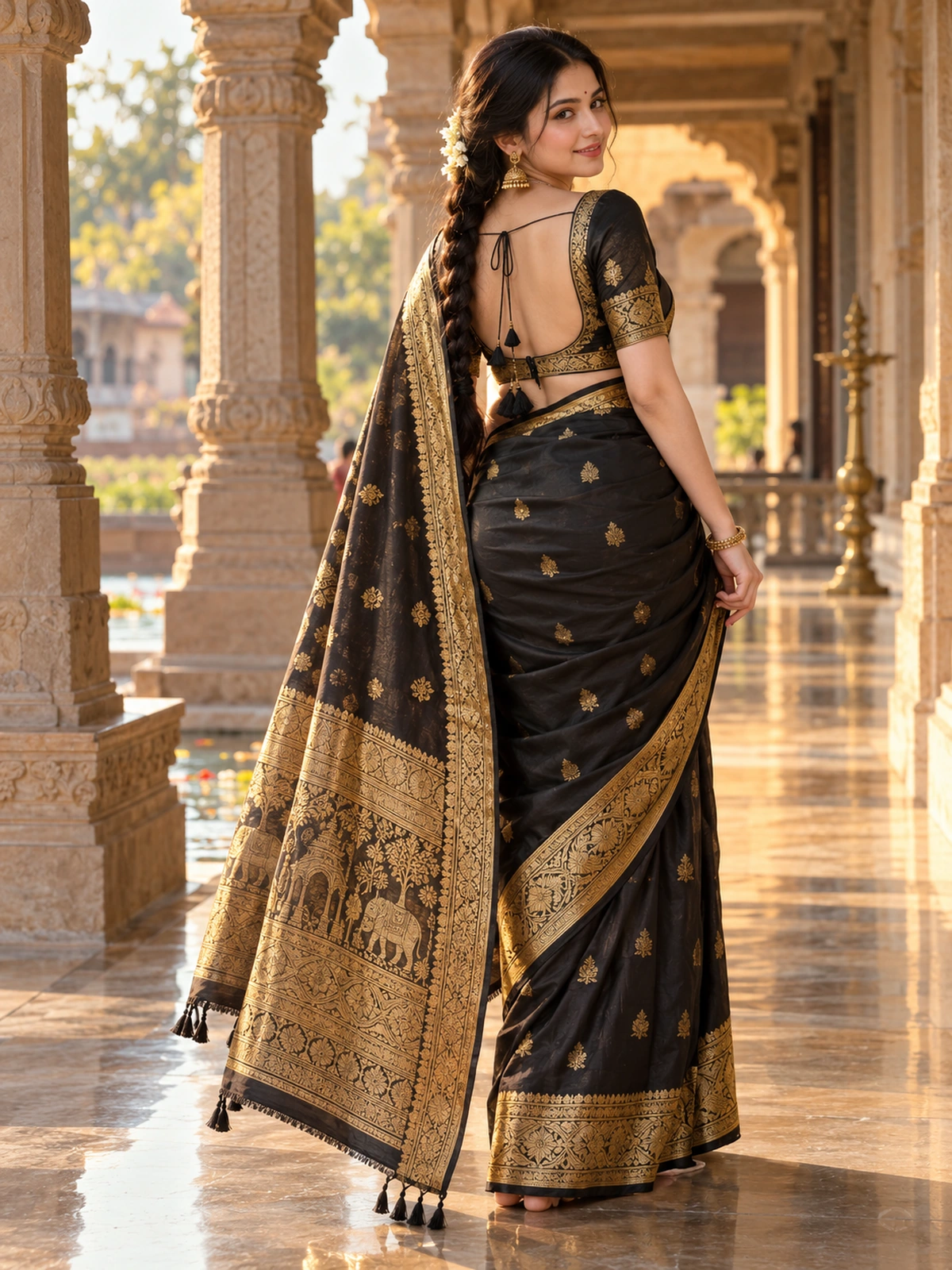
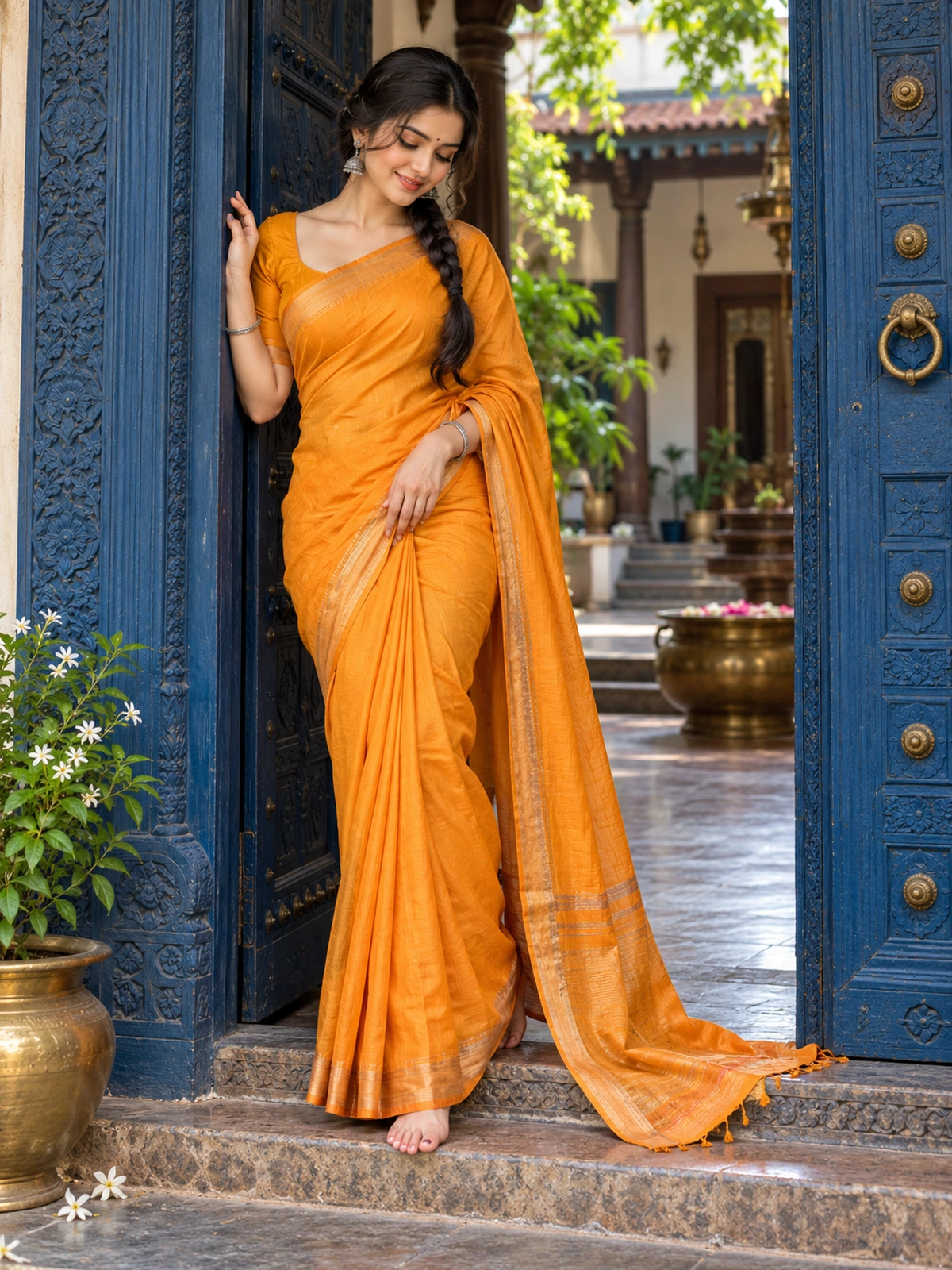
How to choose for the occasion, drape with intent and stand so the pallu tells its story. The Posebook turns a saree photograph from a snapshot into a portrait.
Buy with confidence
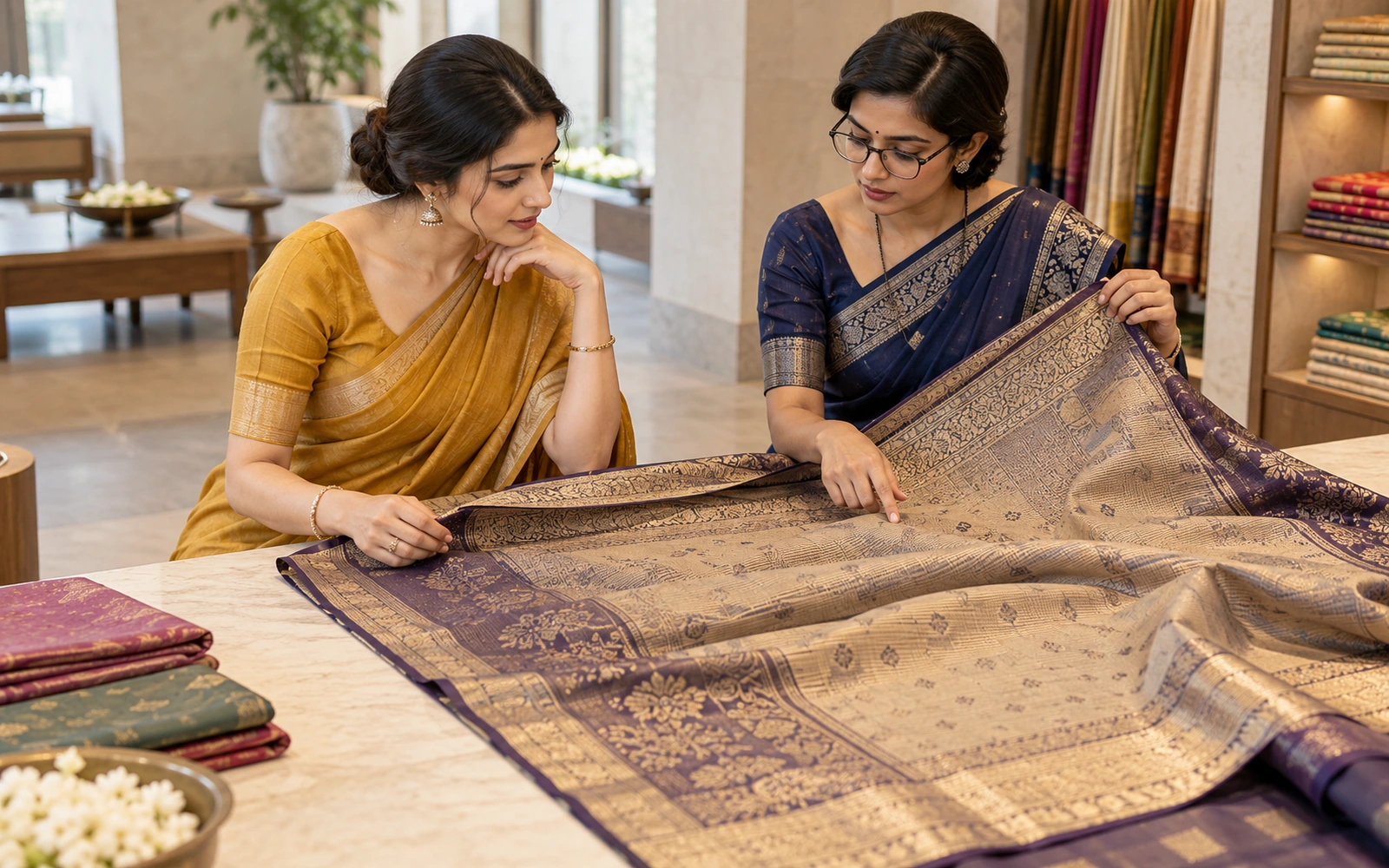
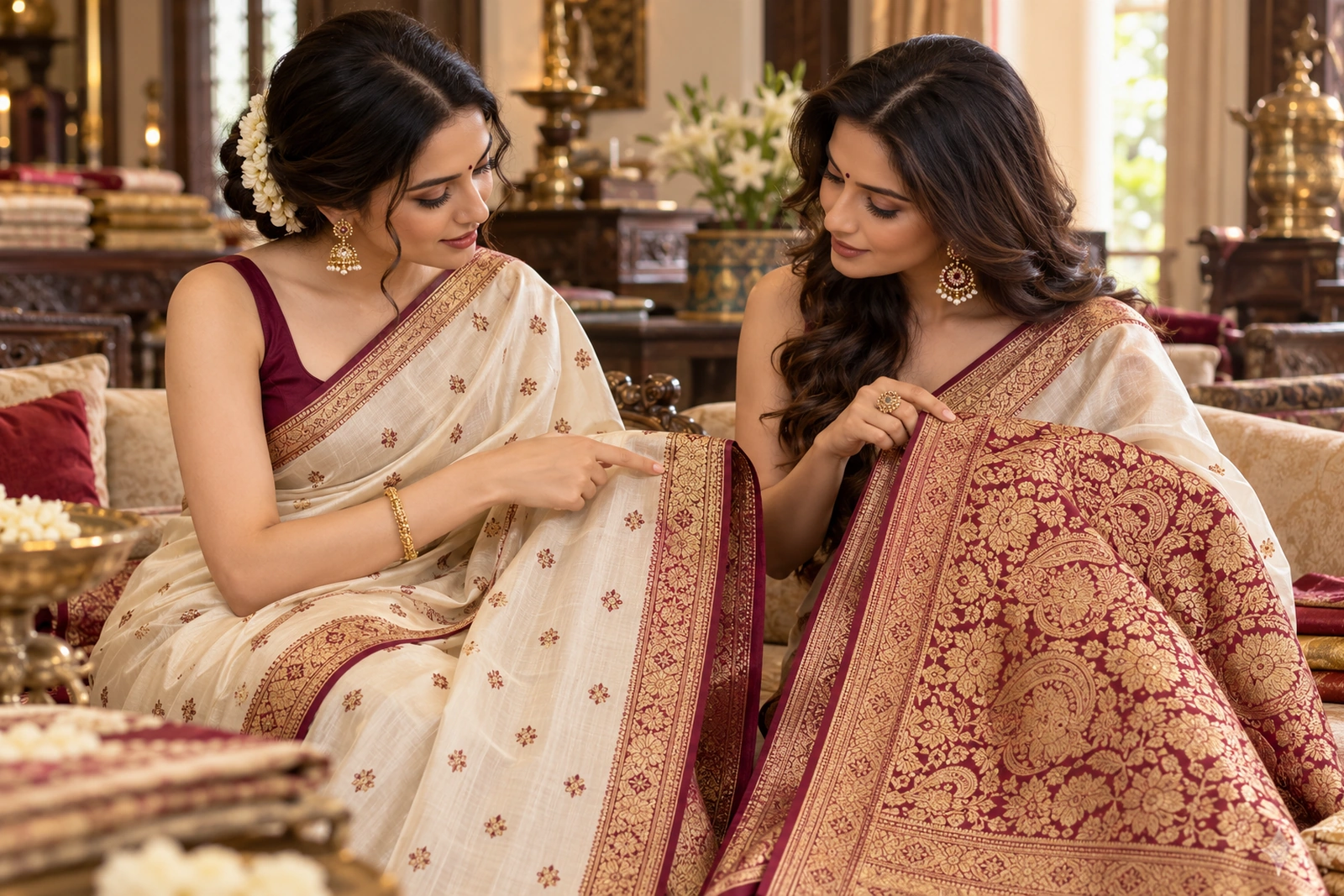
Know it before you buy it
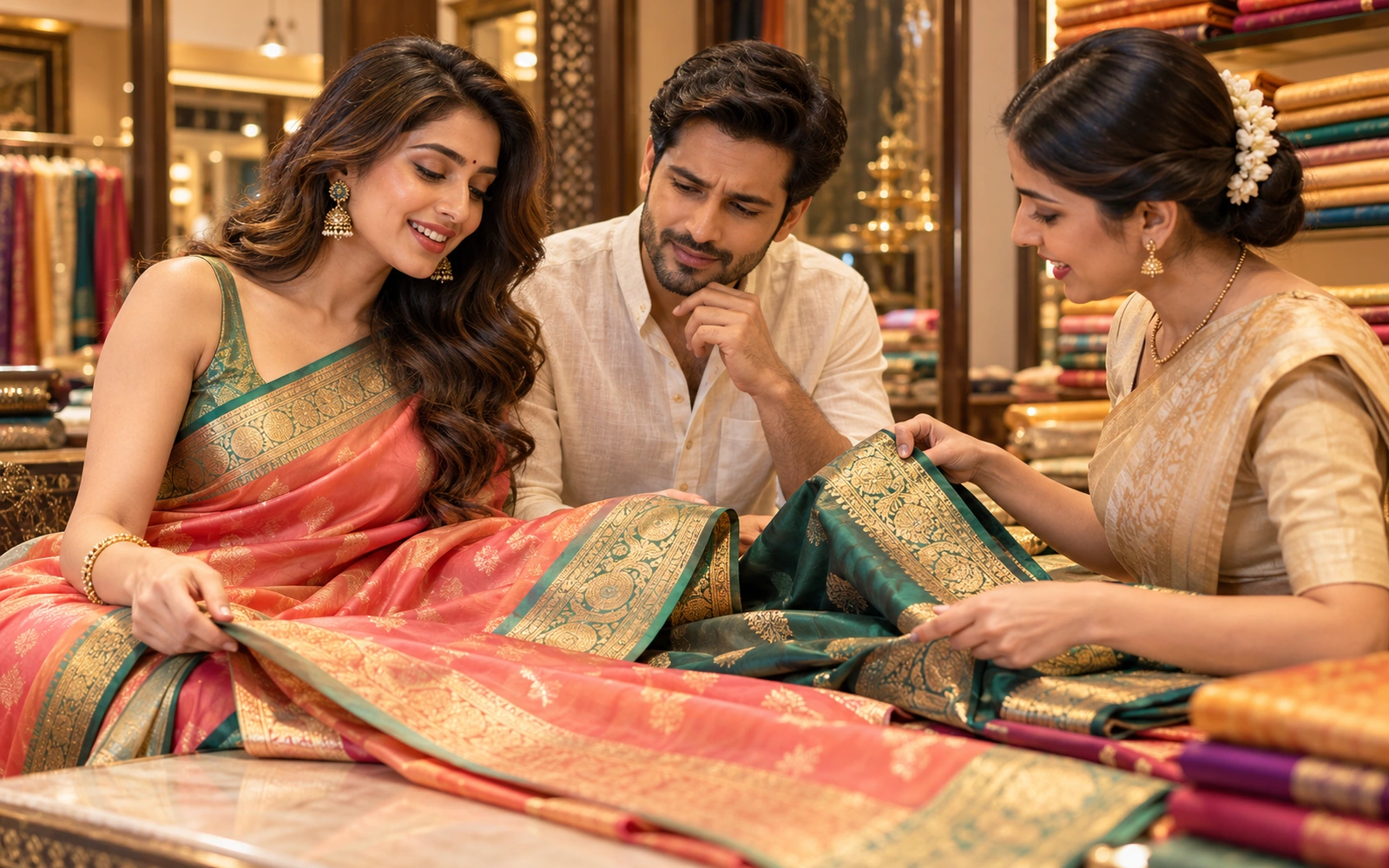
Our story
How a bewildered husband came to love sarees
A chair by the counter, a wife fluent in a language he never learnt, and one question that turned into a whole Atlas.
The full story — with apologies to every salesman who ever asked him to choose.
Read our story