Sarees and terms that are easily confused, compared: what the eye can learn, and what only inspection or documentation can settle. For a comparison of your own choosing, use the Comparison Tool.
THE SAREE ATLAS · ILLUSTRATED REFERENCE
The comparison desk
Feature · three southern silks
Kanjivaram, Arani and Dharmavaram
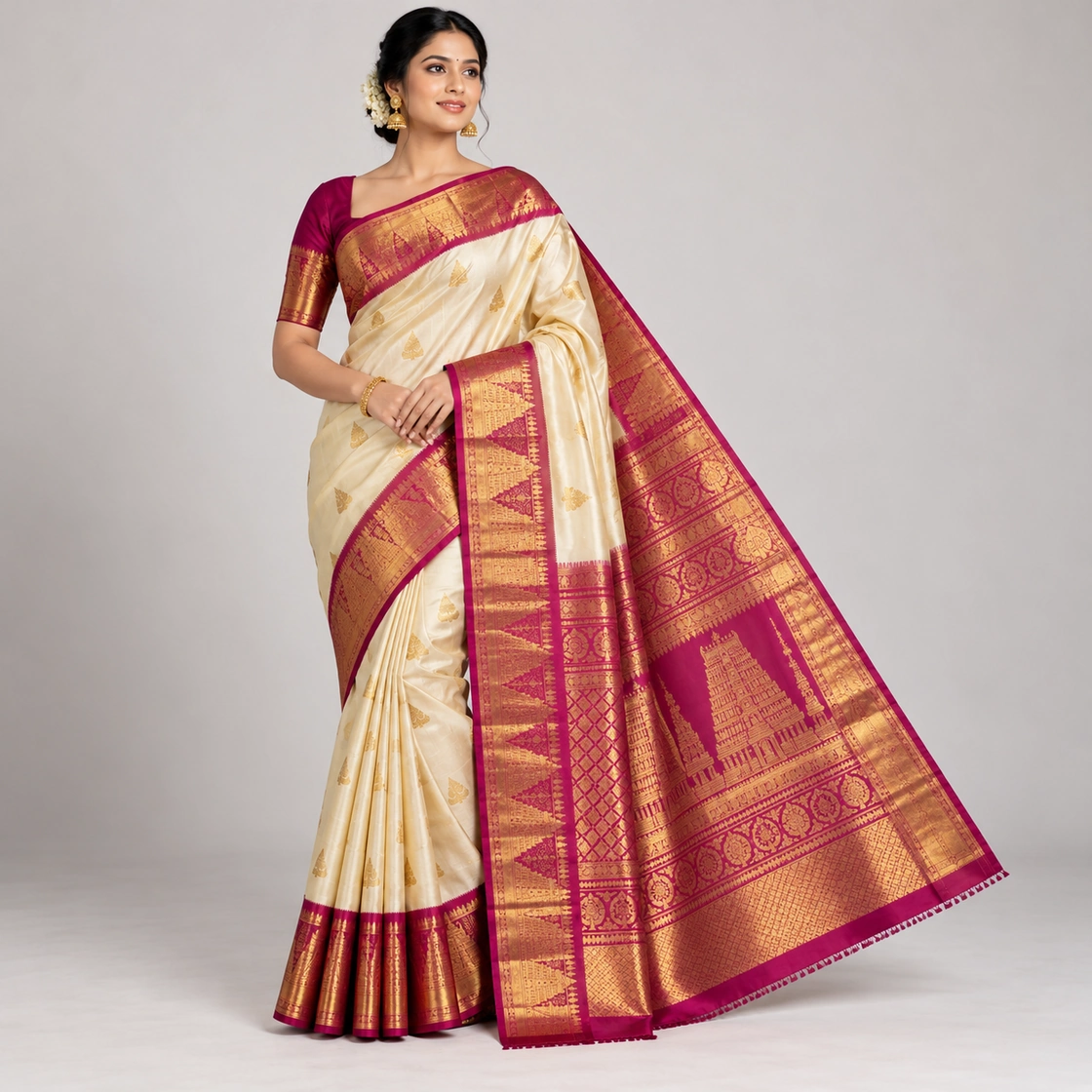
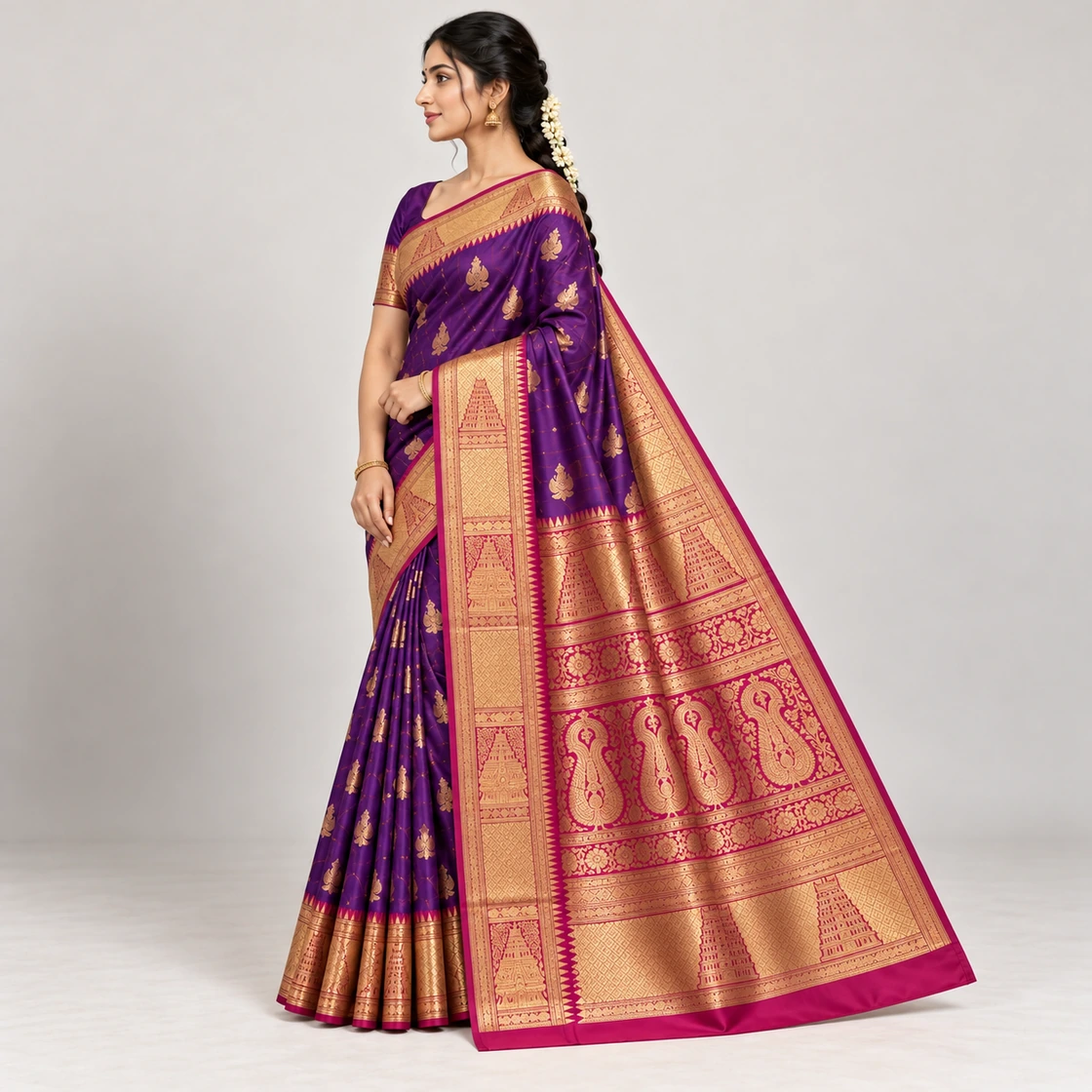
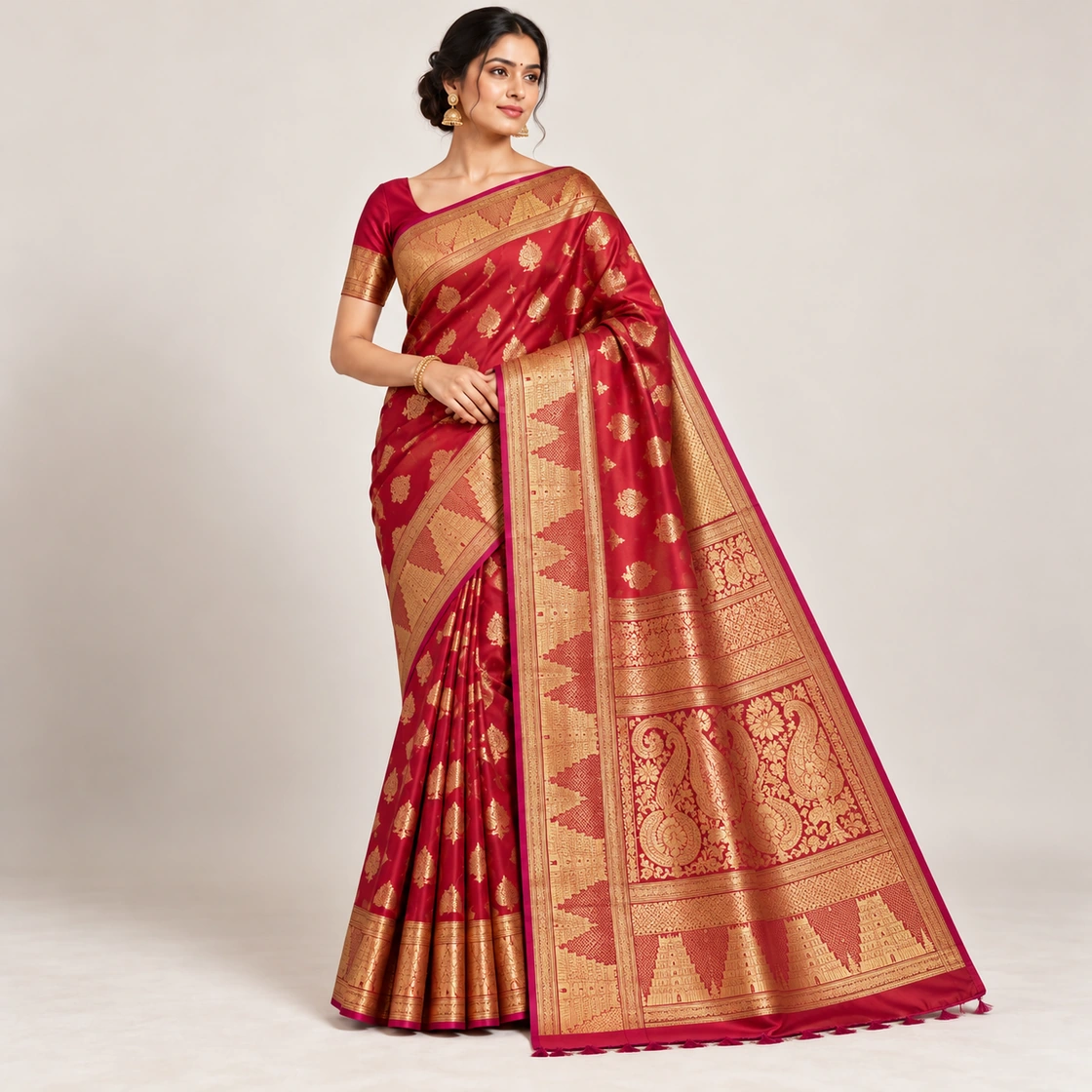
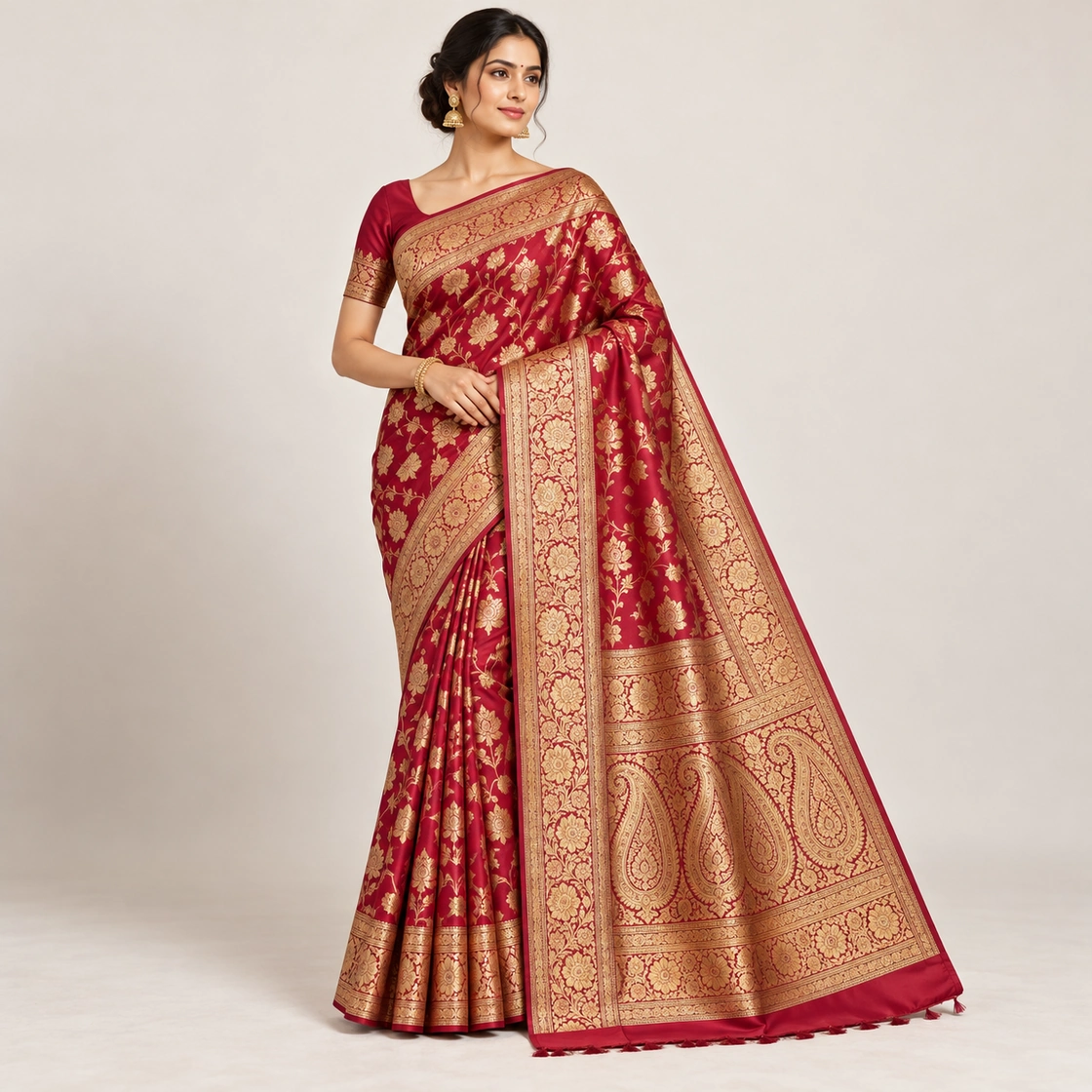
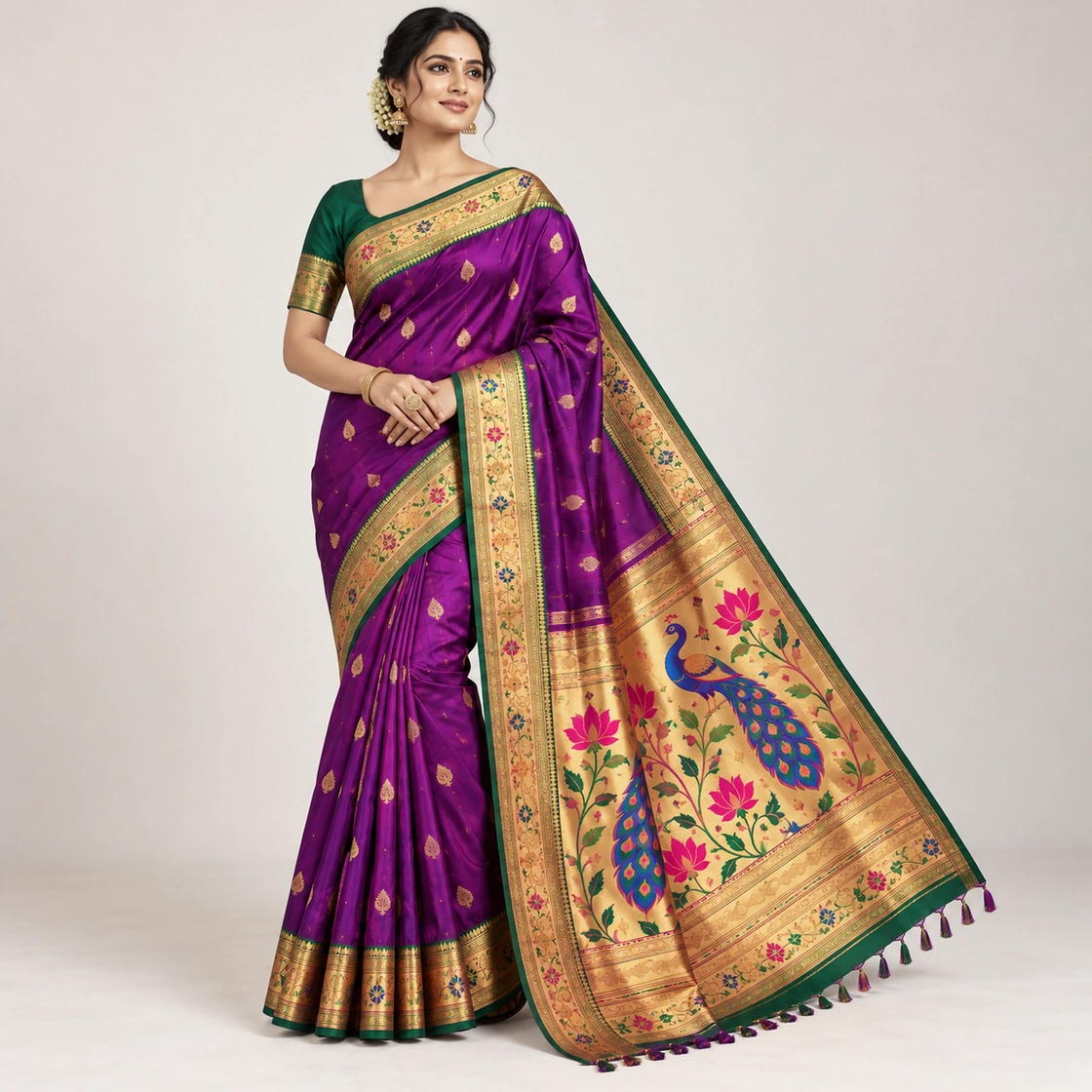
Three great silk centres, a few hundred kilometres apart, sharing a vocabulary of contrast borders, temple motifs and zari. In a showroom they can look like members of one family — and sometimes they are made in each other’s styles. Here is what tends to set them apart, and what no photograph can settle.
Rich mulberry silk with heavy zari; often a two-tone, colour-changing body.
Border & pallu
Notably broad zari borders and grand, densely worked pallus; contrast colour is common.
Motifs
Temple borders, elephants, peacocks, parrots, mango and floral forms, often large in scale.
Tends to feel
Festive and opulent — the border is frequently the star.
Look for
Exceptionally wide zari borders relative to the body; ask about the weaver or cooperative.
What one photograph cannot tell you
Weavers in each centre can and do produce the others’ styles; motifs travel freely.
Powerloom and mixed-fibre versions copy all three looks closely.
Korvai, petni and pure zari are construction and material claims — they need inspection and documentation, not a glance.
Kancheepuram Silk, Arani Silk and Dharmavaram Handloom Pattu Sarees and Paavadas are registered Geographical Indications; a GI attaches to origin and authorised producers, not to an individual photograph.
For a valuable purchase, the decisive evidence is provenance: where it was woven, by whom, and what the invoice says. How to verify a claim →
The comparisons
Each one sets out the visual clues first, then what a photograph cannot establish. A visual clue never authenticates fibre, provenance or production method.
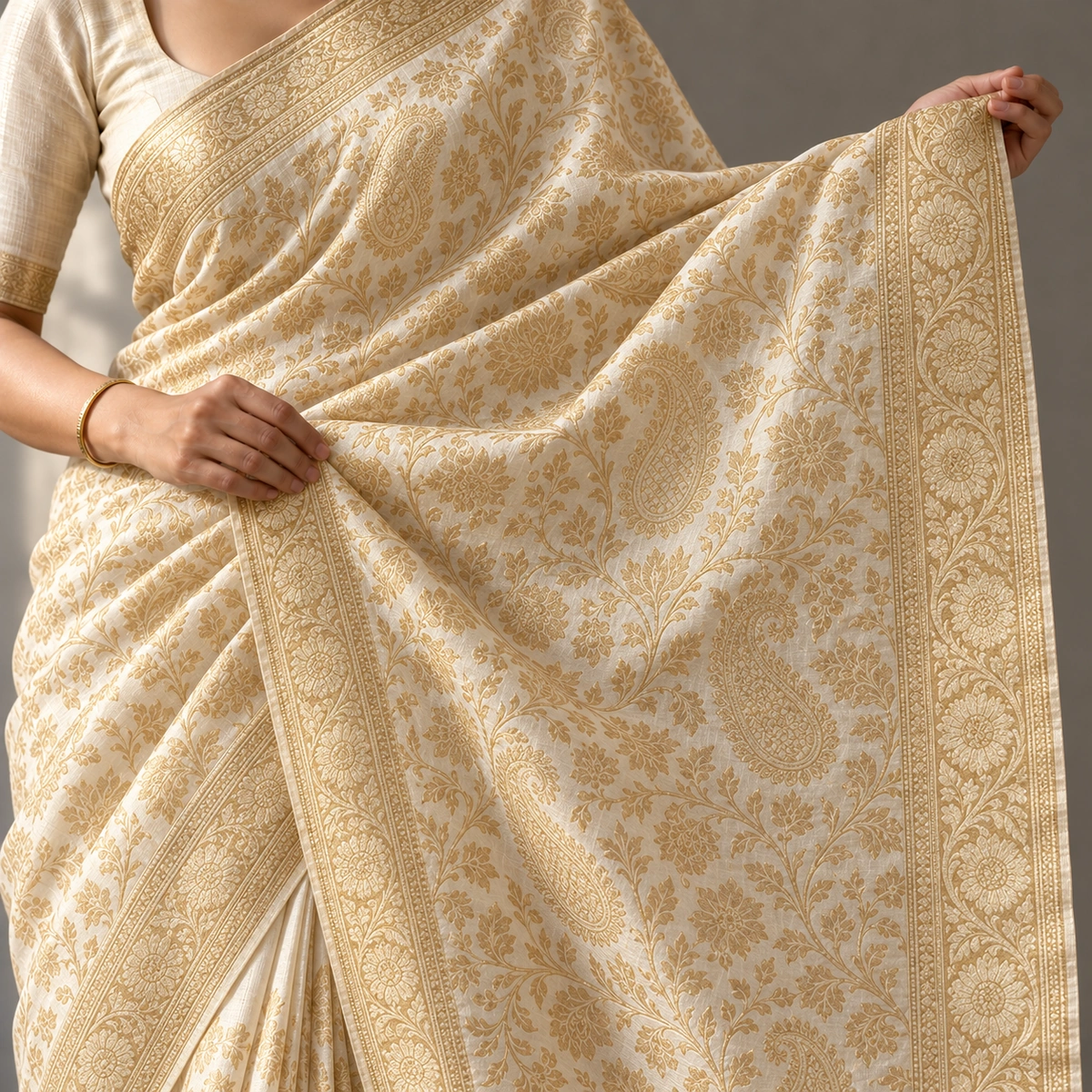
Think of a richly patterned Banarasi with flowers and leaves climbing across the body, and a traditional Kanjivaram with a plain purple body, broad mustard-gold border and contrasting pallu. In the first, the appeal often comes from the pattern spread across the fabric; in the second, it can come from the strong division between body, border and pallu. But there are plain-bodied Banarasis and densely decorated Kanjivarams. A floral Banarasi may use fine, curved Mughal-influenced vines or paisleys; a traditional Kanjivaram often uses temple geometry, checks, peacocks or motifs associated with South Indian silk. These are stylistic tendencies, not infallible visual tests.
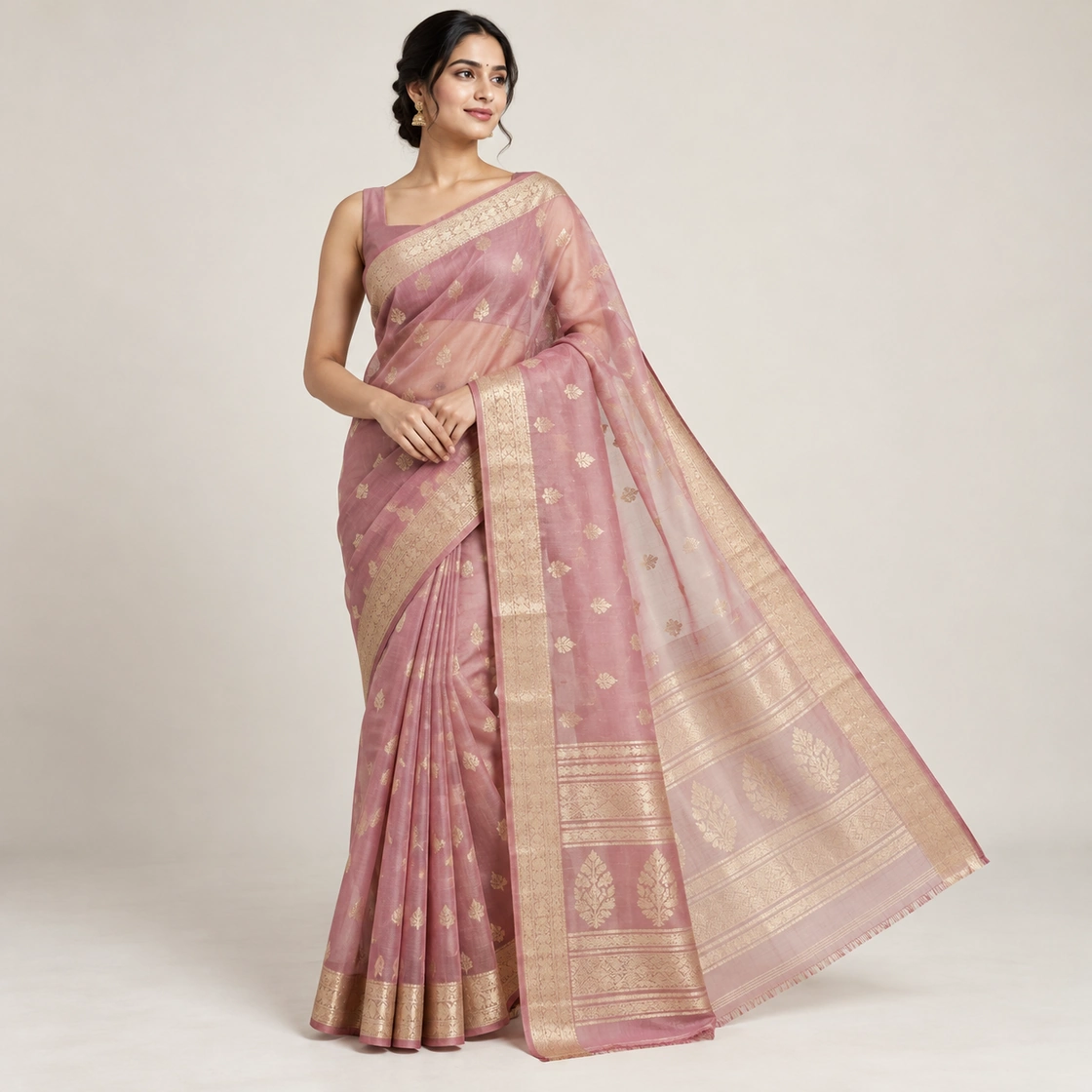
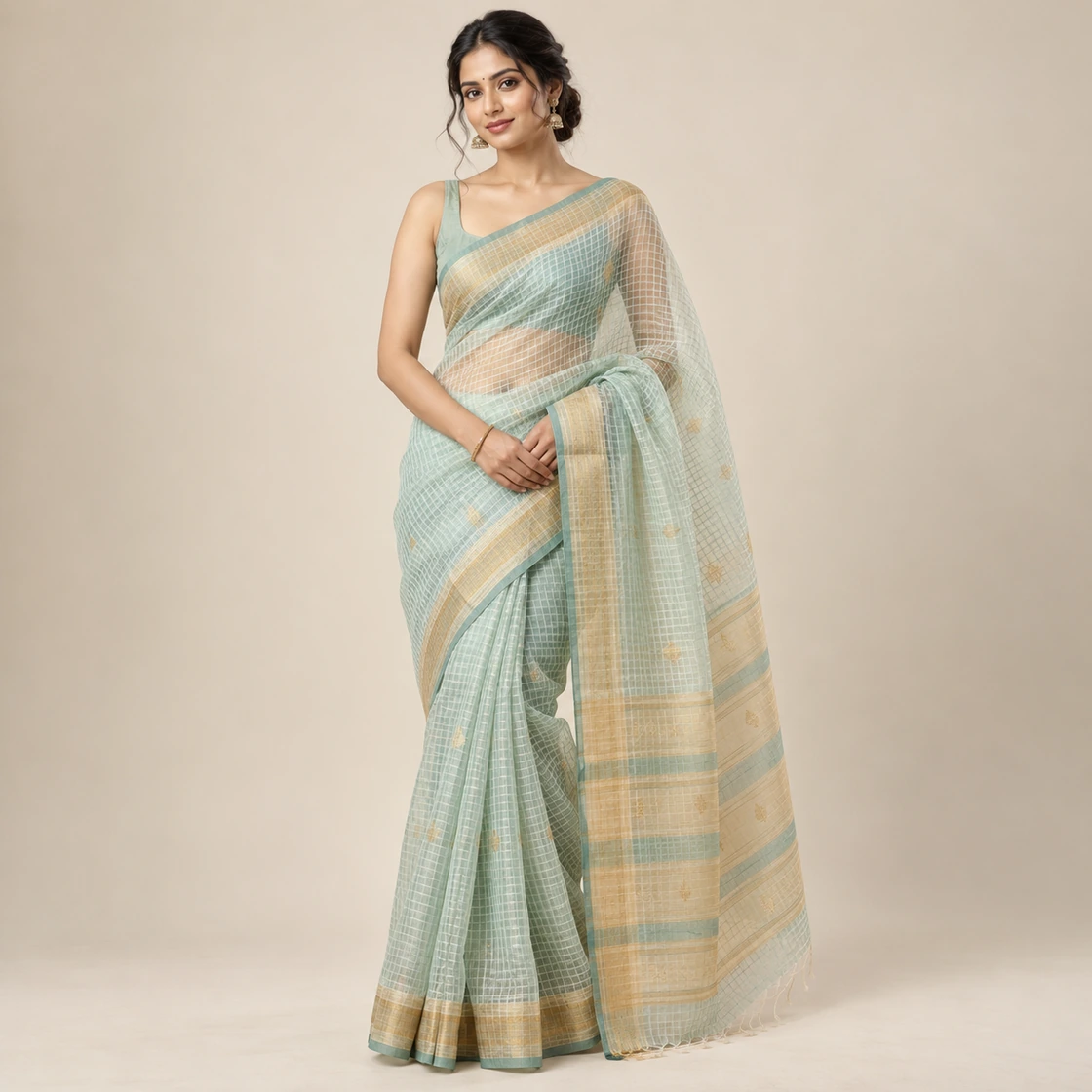
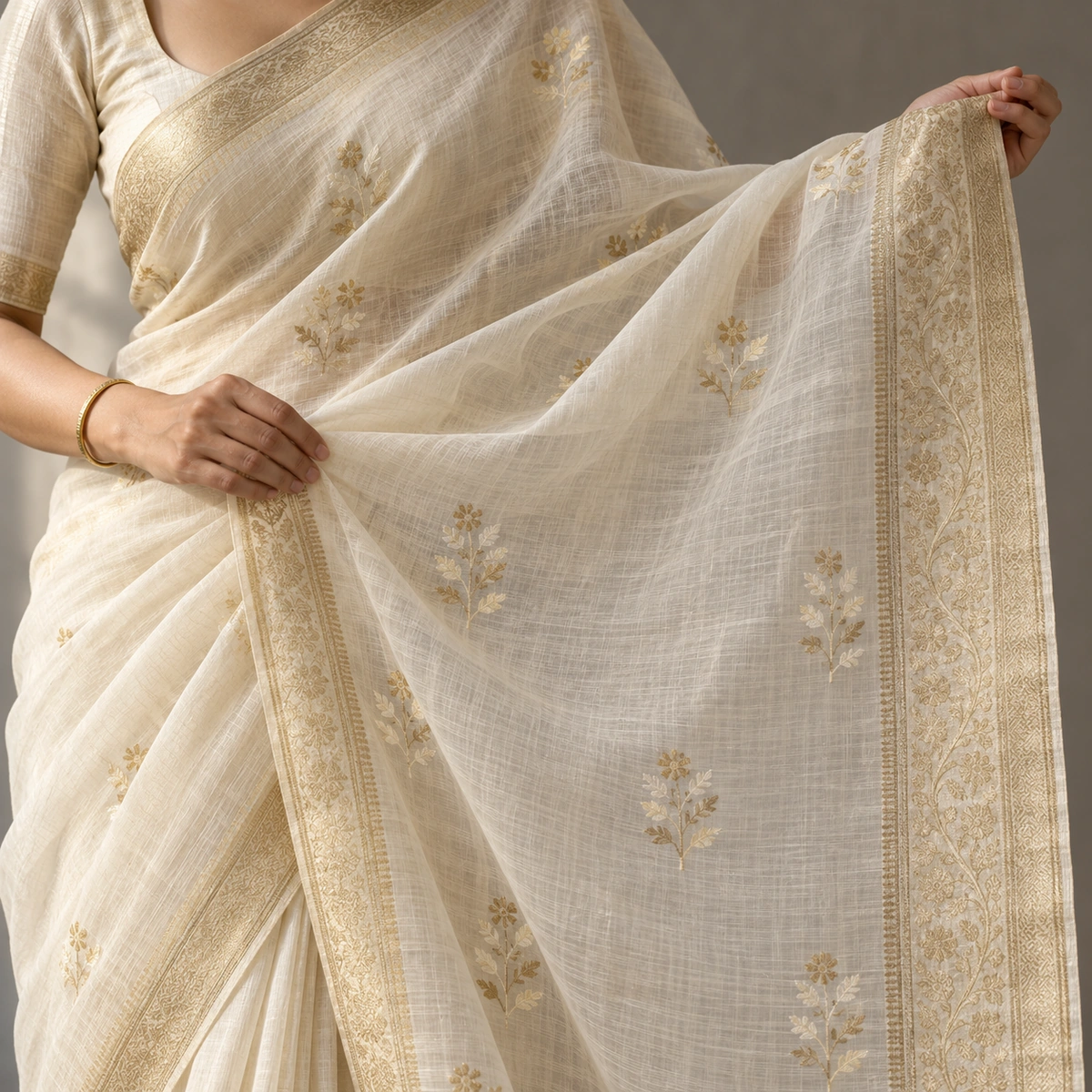
Chanderi often has delicate translucency and refined scattered butis, with a subtle shine that makes it attractive for dress occasions. Maheshwari is often more compact and structured in feel, and its clean geometric border and stripes have a stronger role in the design. Kota Doria is usually extraordinarily airy; its small all-over square khat structure is the best known clue. These are practical impressions, not strict rules: very light Maheshwari and ornate Chanderi both exist.
All three can produce light, elegant sarees, but their best-known visual signatures differ.
What to compare
Chanderi
Maheshwari
Kota Doria
Often noticed first
Fine, airy cloth and delicate butis
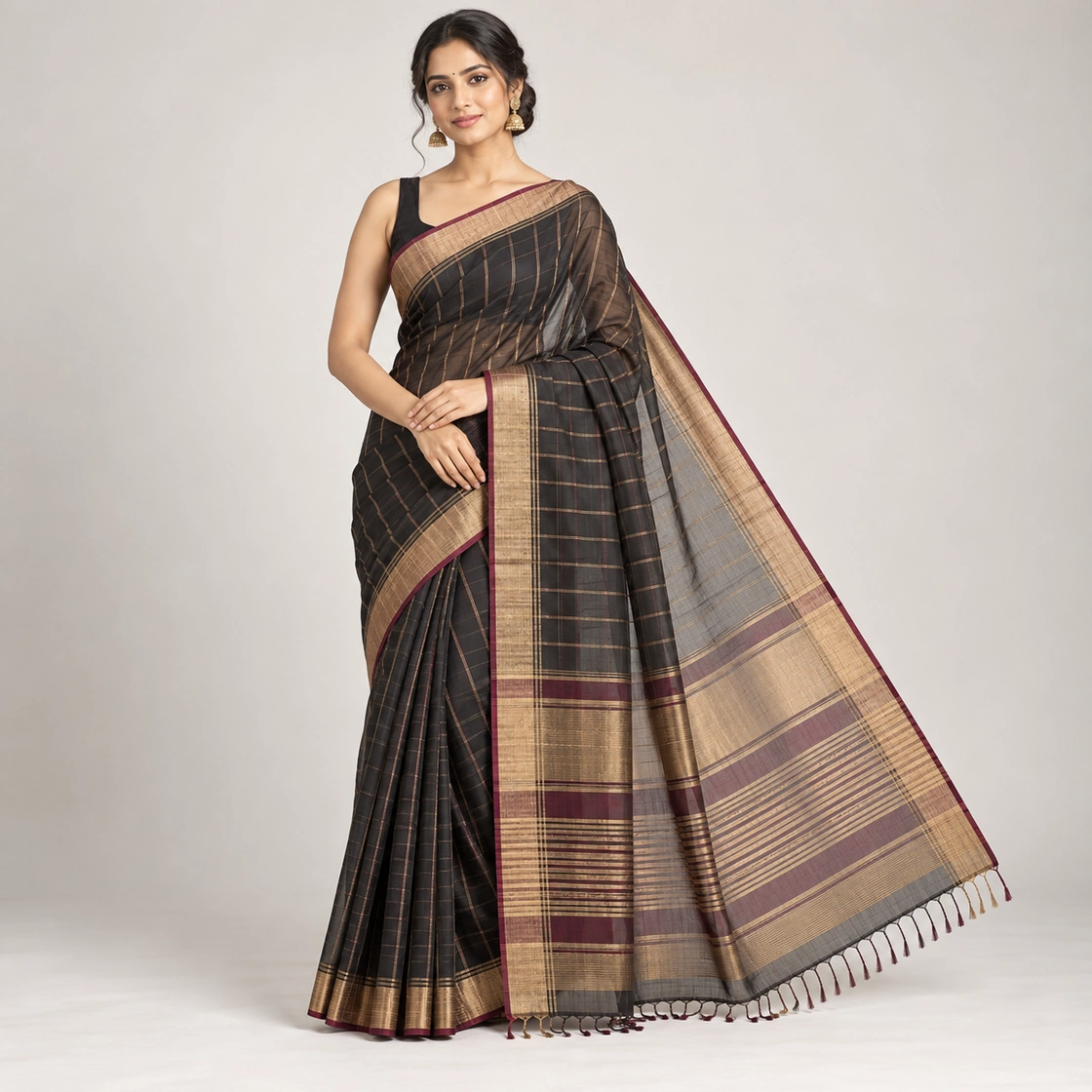
Borders, stripes and clean geometry
A very fine grid of tiny squares
Usual feel
Light, sometimes slightly crisp
Often more compact and structured
Exceptionally airy and light
Common materials
Silk–cotton, cotton, silk and variants
Silk–cotton, cotton, silk
Cotton and cotton–silk, plus variants
Remember it as
Delicacy
Border design
Tiny checks
Picture them laid out on a table. With Chanderi, you may first notice the fine transparent ground and little separated motifs. With Maheshwari, your eye may go to the neat border or pallu stripes. With Kota Doria, move in close and look for the tiny regular squares in the cloth itself. None of these visual clues is an absolute origin test.
Paithani and Baluchari: both draw attention to the pallu↗
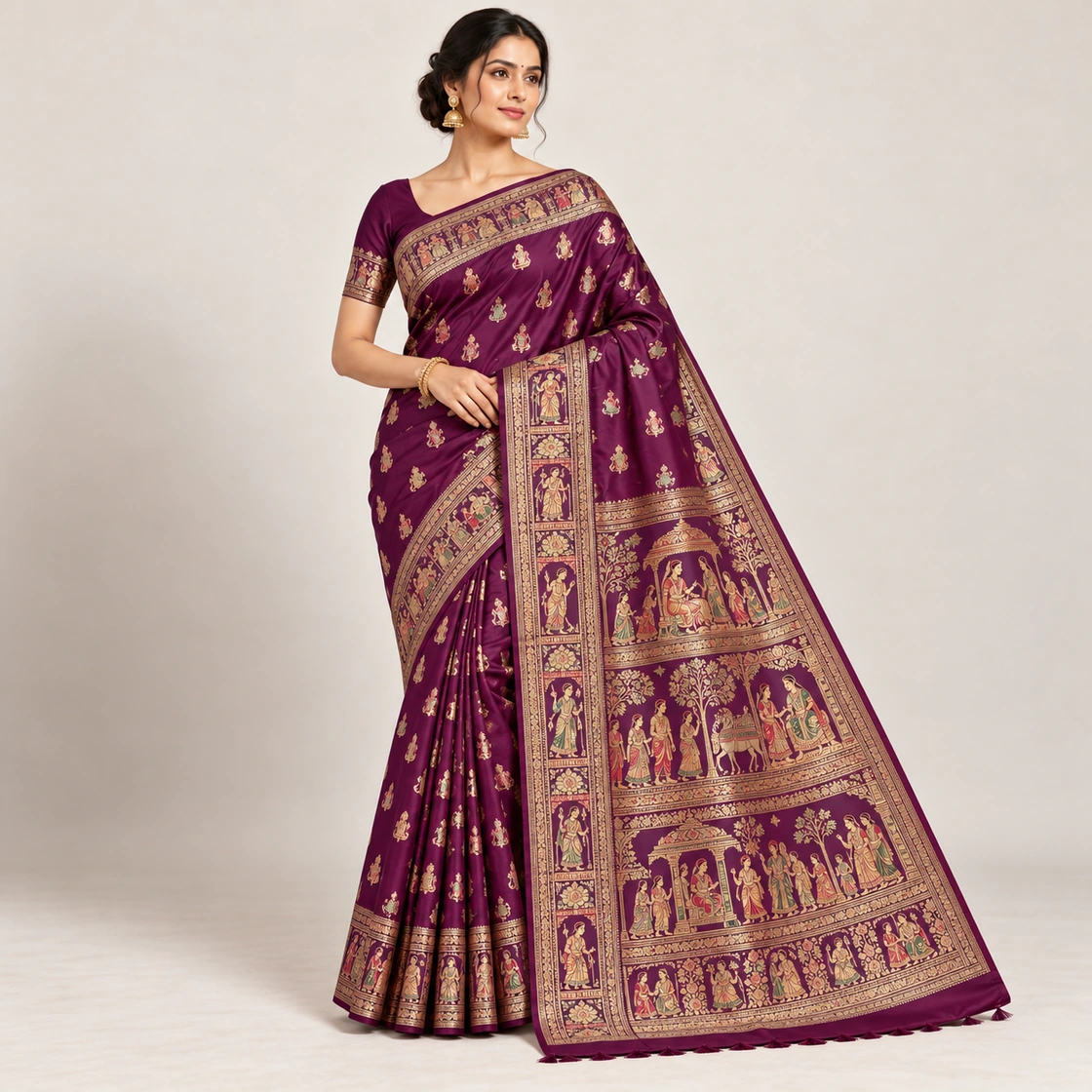
Both may draw the eye to the saree's end. A Paithani often builds its visual drama around peacocks, parrots, floral creepers, lotus and geometric arrangements. A Baluchari traditionally features recognizable human figures and narrative panels, sometimes arranged inside repeated arches or frames. A bird by itself is not proof of Paithani, but a well-known bangdi mor peacock-pair pallu suggests the tradition. A sequence of woven human scenes suggests Baluchari. Swarnachari takes the latter effect into more metallic-looking territory.
A Paithani pallu often features colourful peacocks, parrots, flowers and decorative geometry. A Baluchari pallu often contains people or mythological scenes organized like story panels. Both can be visually rich, but the subject of the decoration differs.
If the pallu looks like a colourful garden with distinctive birds, think Paithani vocabulary. If it looks like framed little illustrations with figures telling a story, think Baluchari vocabulary. Their materials, design structures and histories are also different.
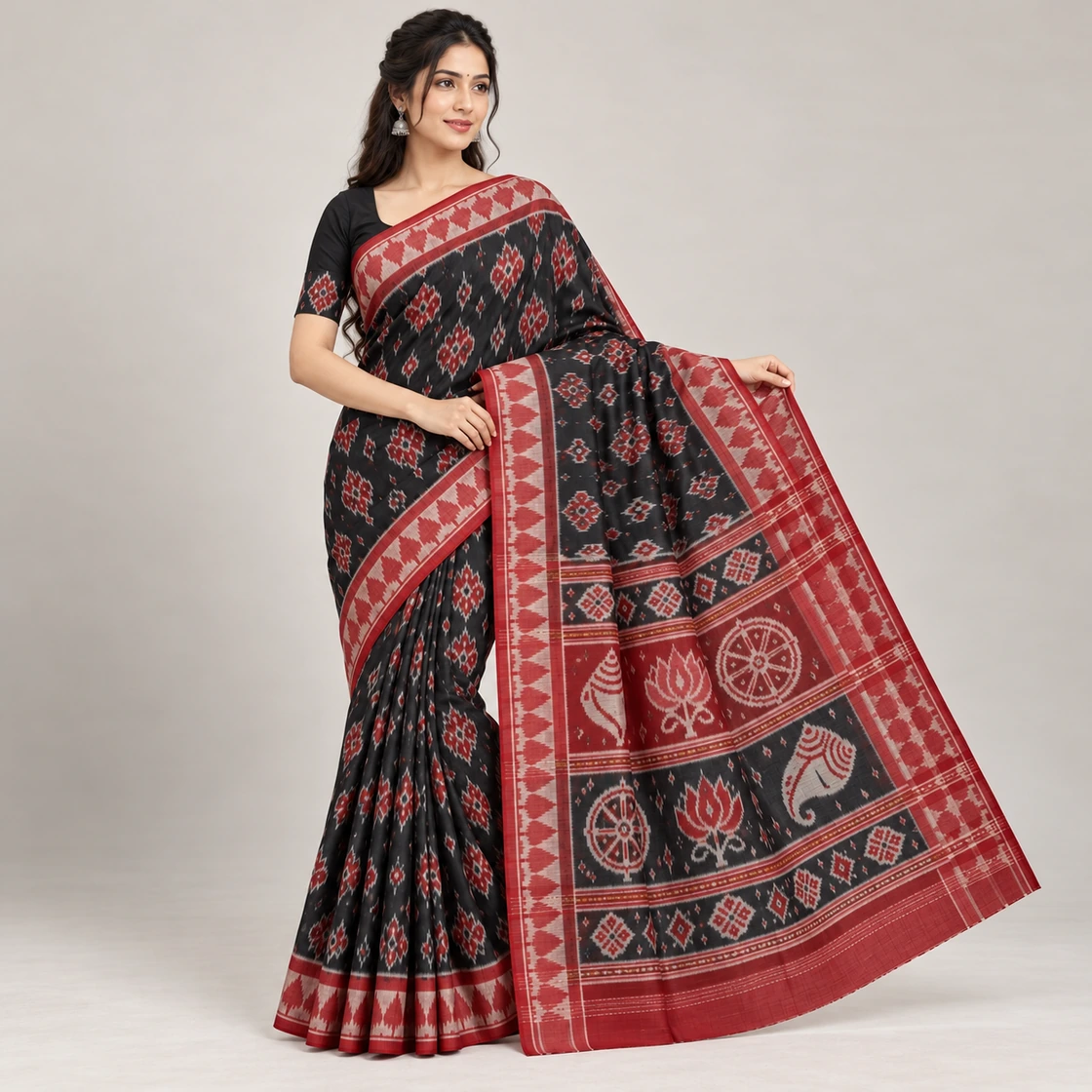
Patola, Pochampally and Sambalpuri: all may involve Ikat↗
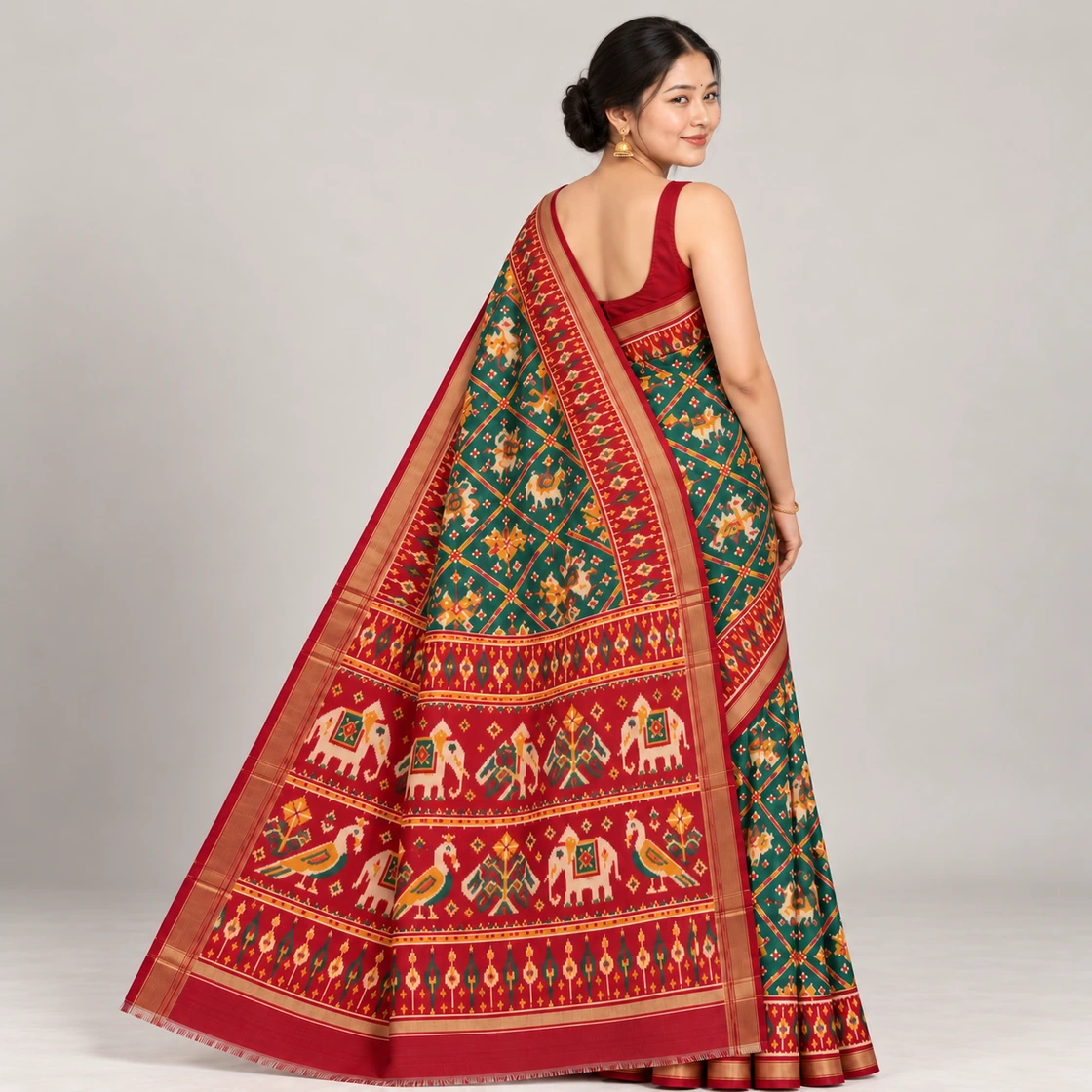
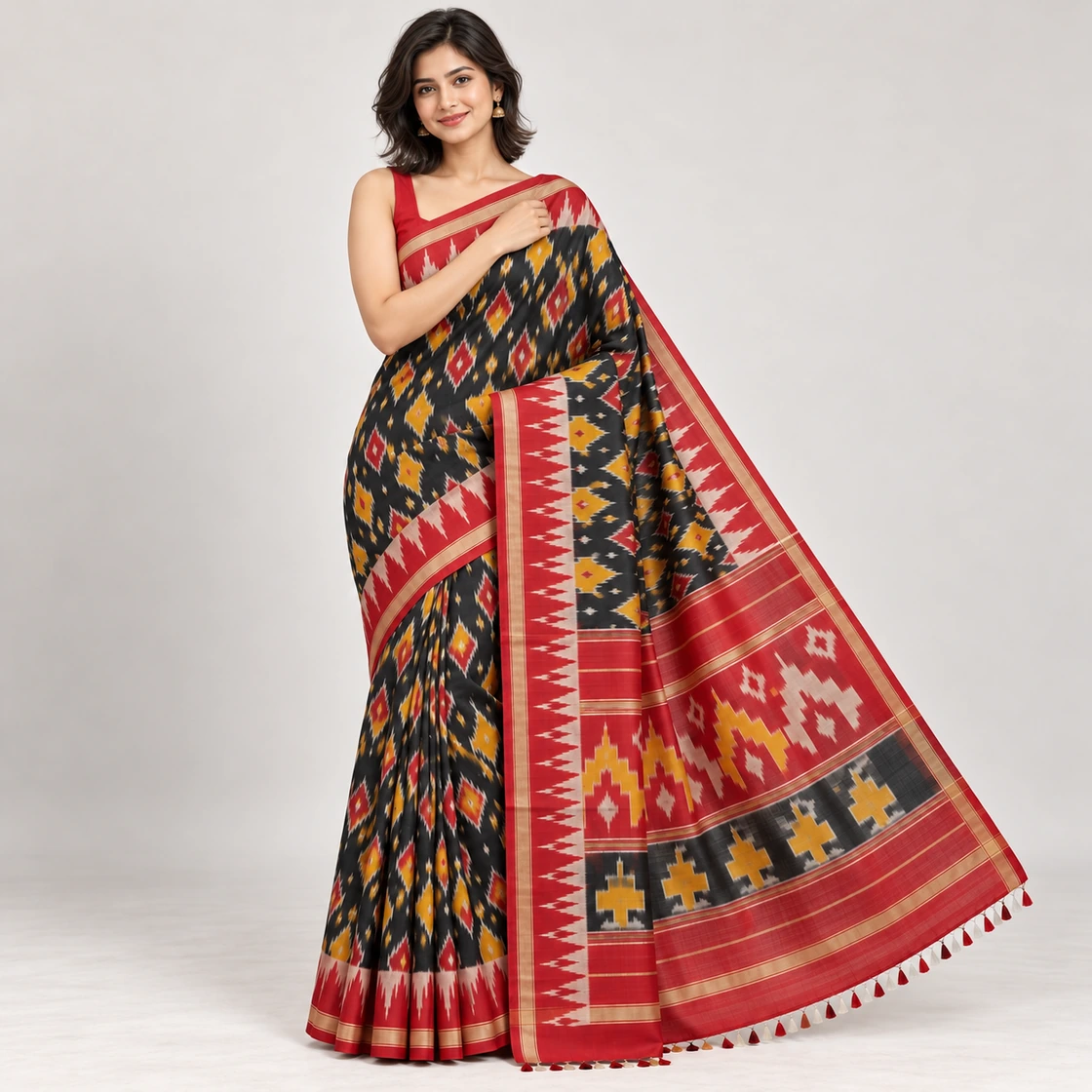
All three can be associated with yarn-resist dyeing, or Ikat. Patan Patola is renowned for its sophisticated double Ikat, often arranged in meticulously balanced geometry and repeated symbolic motifs. Pochampally is widely associated with bold angular diamond and geometric compositions. Sambalpuri uses Odisha's regional Bandha traditions, including both geometric and more curving symbolic forms. At a distance, these can overlap. The most important authentication question is not 'Does it look like Ikat?' but 'Where was it produced, which yarn sets were tied and dyed, and how was the cloth actually made?'
These are not interchangeable labels. Ikat tells you the colour-pattern technique; the regional name gives a textile tradition. Patan Patola is especially famed for sophisticated double Ikat; Pochampally is famous for bold geometric Ikat; Sambalpuri is a major Odisha Bandha/Ikat tradition with distinctive regional motifs and design practices.
Imagine three visually different repeating patterns: densely organized multicolour motifs, strong modern-looking diamonds, and Odisha-style motifs and symbols. They might lead you to ask about Patola, Pochampally and Sambalpuri respectively. They do not prove origin by sight alone.
Jamdani figured weaving and a representative Banarasi brocade
Not opposites.Jamdani names a technique — motifs inlaid by hand with discontinuous extra weft, traditionally on fine cotton. Banarasi names a place and tradition whose best-known sarees are silk-and-zari brocades. Banaras weavers make Jamdani-style sarees too. This case compares the technique with one representative kind of Banarasi brocade.
A classic fine Jamdani may look almost weightless, with small white or coloured flowers appearing to hover on a thin ground. A familiar Banarasi brocade may look much denser, brighter and more metallic. Both can use additional woven threads for motifs, however. The meaningful distinction is not simply 'Jamdani is light and Banarasi is heavy'; each word describes a different historical textile tradition and overlaps in certain techniques. Fine South Indian Uppada Jamdani adds another regional branch to the same general visual idea of delicate inserted motifs.
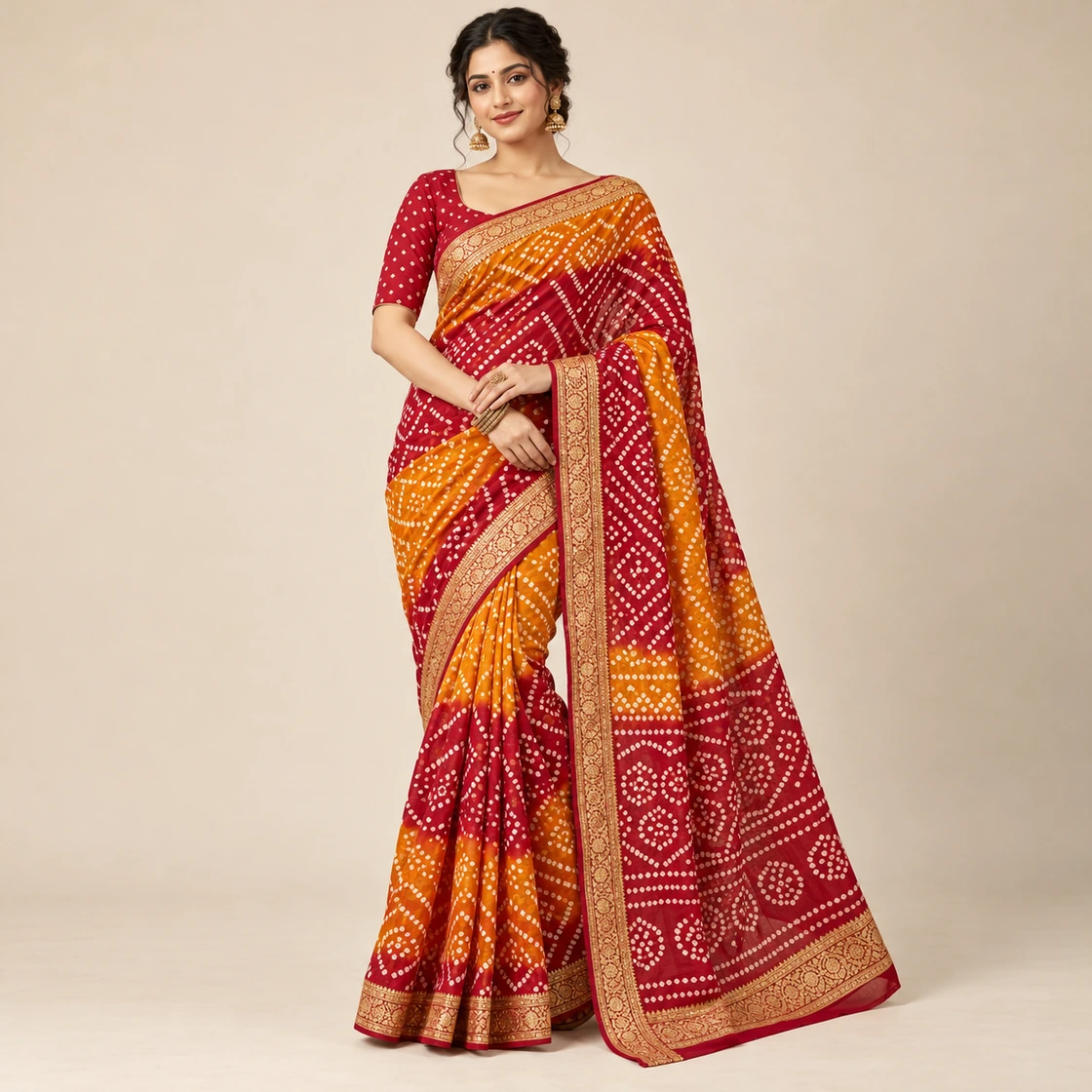
All four can be beautiful. The important point is that a design that looks like Ikat is not necessarily woven Ikat, and a printed dot pattern is not necessarily tied Bandhani.
These four words are often bundled together because they all can produce a festive look. They describe different things.
Brocade is a patterned fabric in which decorative designs are woven. Zari is the metallic-looking thread that may be used in that fabric or elsewhere. Zardozi is rich embroidery stitched onto a finished surface. Gota Patti is decoration made by attaching pieces of shiny ribbon or trim.
Thus, a saree can be silk brocade with zari, or a plain silk saree with zardozi, or a cotton saree with Gota Patti. These are not interchangeable phrases.
Buti, buta, jaal and Jangla: four visual arrangements↗
Start with a flower. Make it small and repeat it across a plain background: butis. Make one flower much bigger: buta. Connect flowers into a repeated network: jaal. Make that network a lush tangle of winding plants and blossoms: Jangla.
The four arrangements differ in their visual scale and coverage: individual small motifs, larger isolated motifs, connected networks and dense garden-like ornament. The terms are sometimes used with overlapping meanings.
Pure silk: A claim that the fabric's relevant fibre content is silk, not a claim about the saree's region, softness or pattern.
Silk blend: Silk mixed with one or more other fibres. A blend can be excellent, but it is not the same composition as pure silk.
Raw silk: May refer technically to an intermediate silk material, but commonly used in retail for silk cloth with a more natural, textured appearance; check actual composition.
Art silk: A commercial term for silk-like manufactured fibre cloth; it should not be treated as natural silk.
A smooth art-silk saree may look more lustrous than a textured pure-Tussar saree. Appearance alone does not resolve the material question.
Why two equally beautiful sarees may feel entirely different↗
Take a printed organza saree and a printed georgette saree with similar flowers. At first glance the patterns might be almost identical. Wear them, and the difference becomes obvious: organza often stands away from the body, giving an airy shape; georgette tends to flow down in softer folds. Neither look is automatically superior. One creates structure, the other movement.
Now compare smooth Katan silk with textured Tussar. One may look polished and formal; the other may look natural and quietly elegant. Again, the difference is not just “more expensive versus less expensive”. It is the personality of the cloth.