The Saree Atlas
Search
THE ILLUSTRATED REFERENCE

Glossary

A clear, practical reference to the textile words you may meet while browsing or shopping.

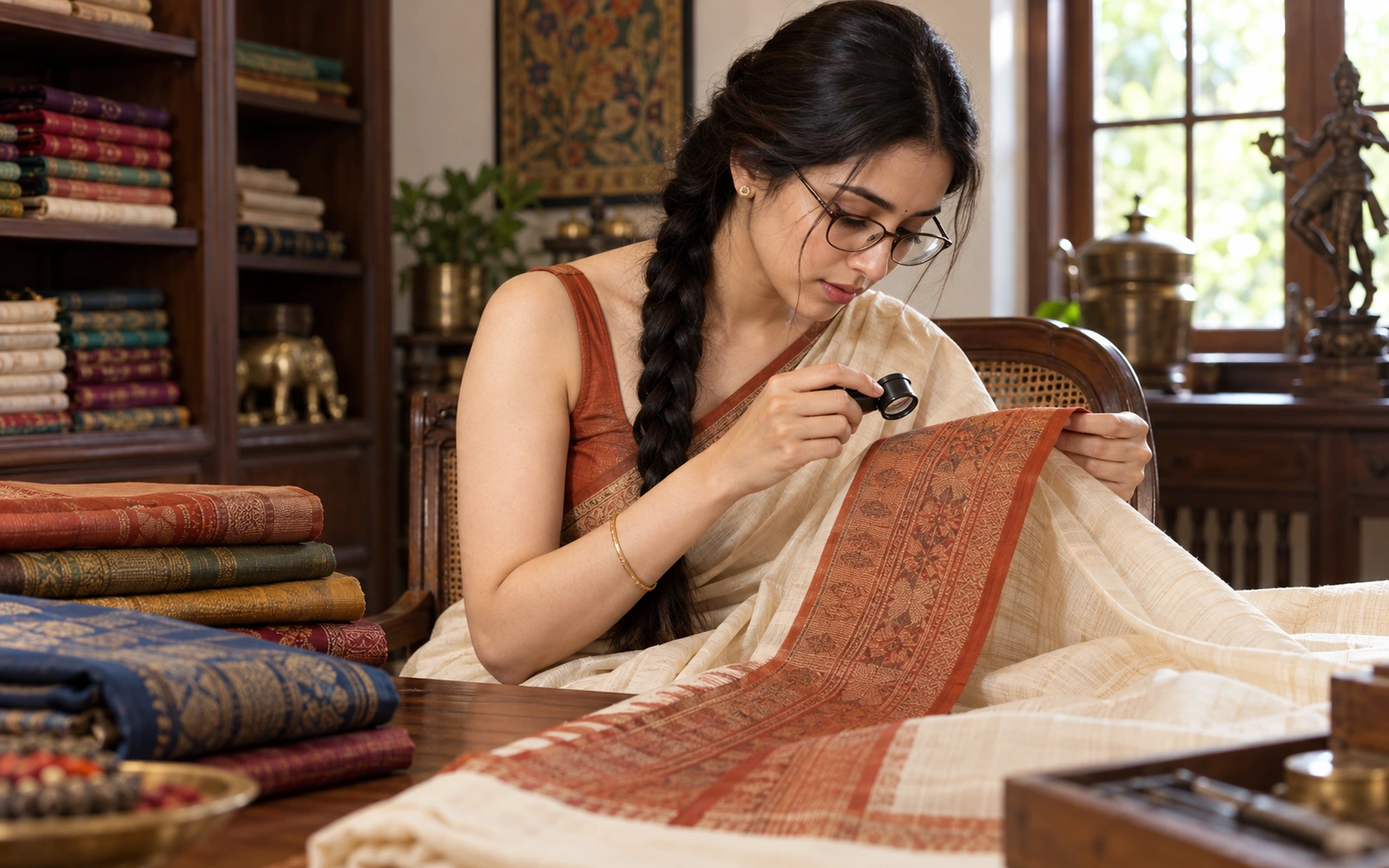
Saree enthusiast exploring textile samples and terminology
THE SAREE ATLAS · ILLUSTRATED REFERENCE
Plain-English glossary

Plain-English glossary for quick reference

ILLUSTRATED STUDY

Sixteen terms, illustrated

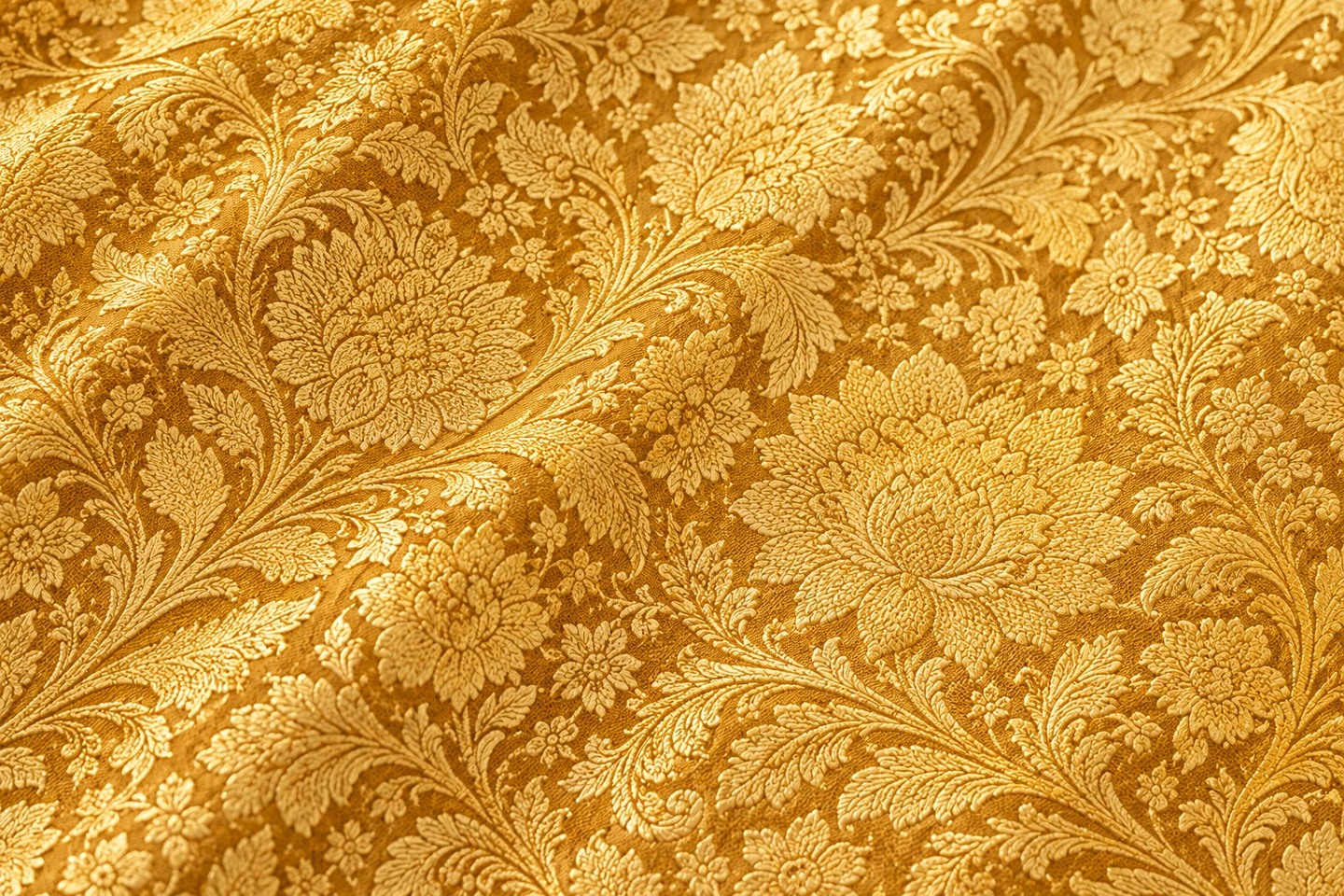
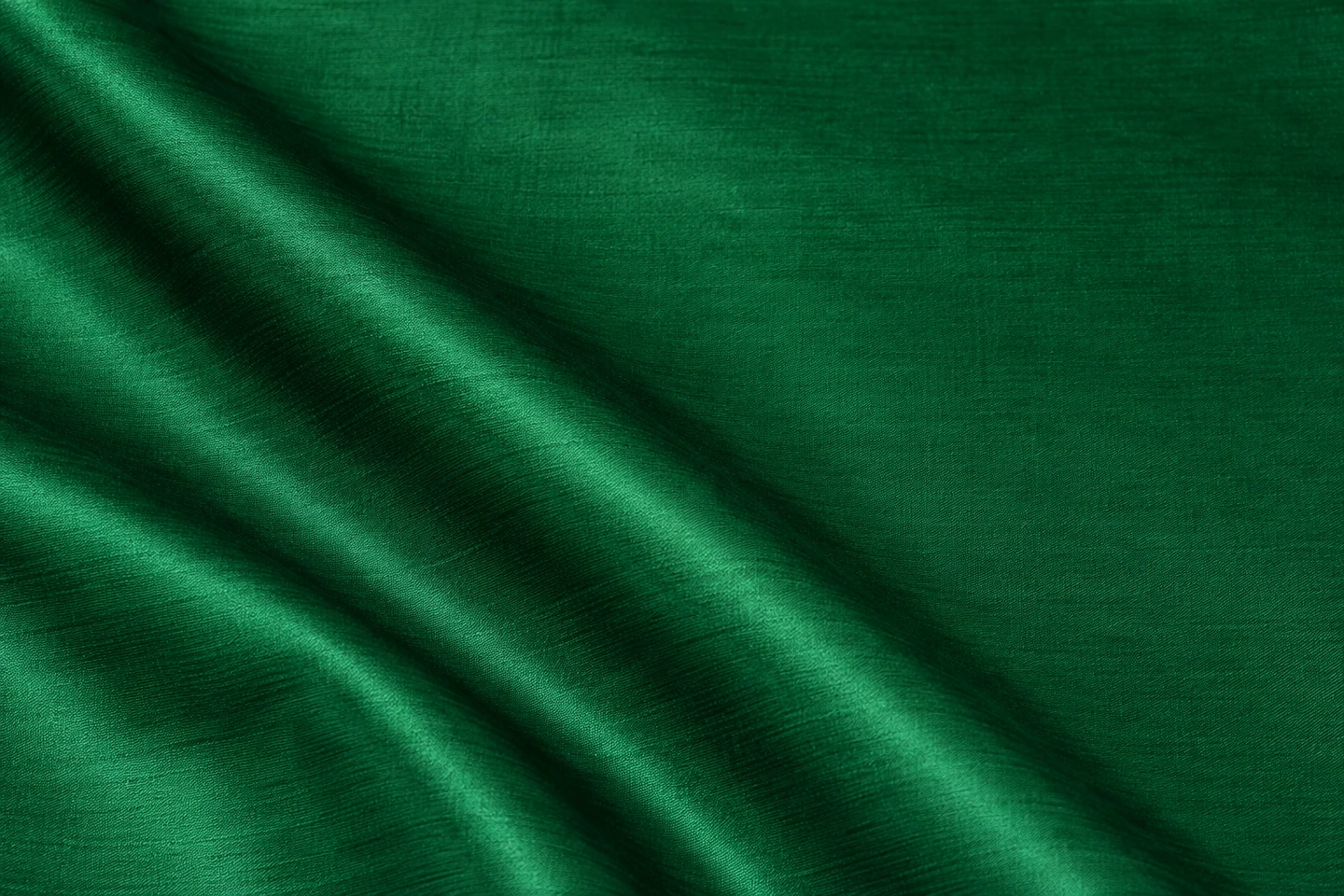
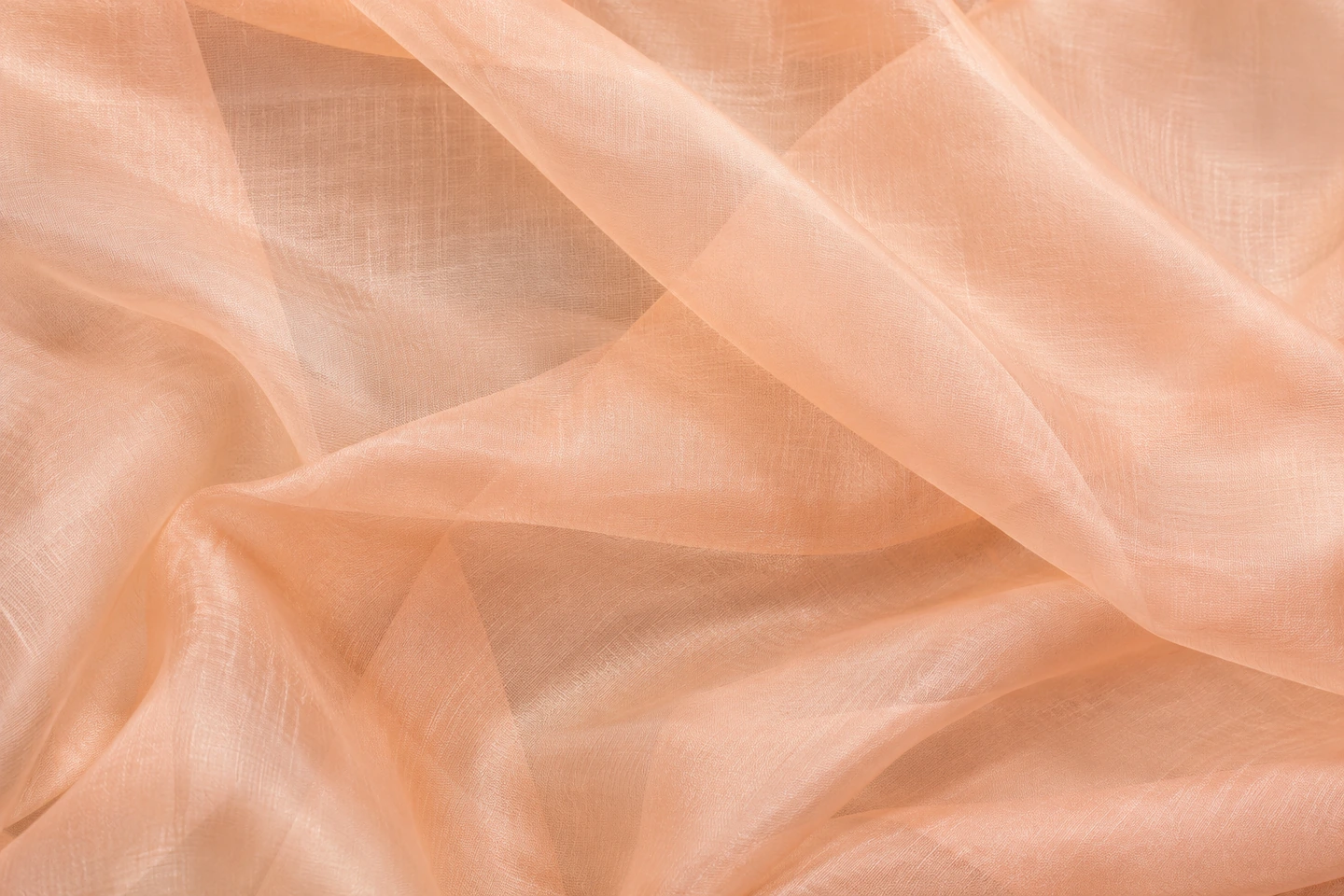
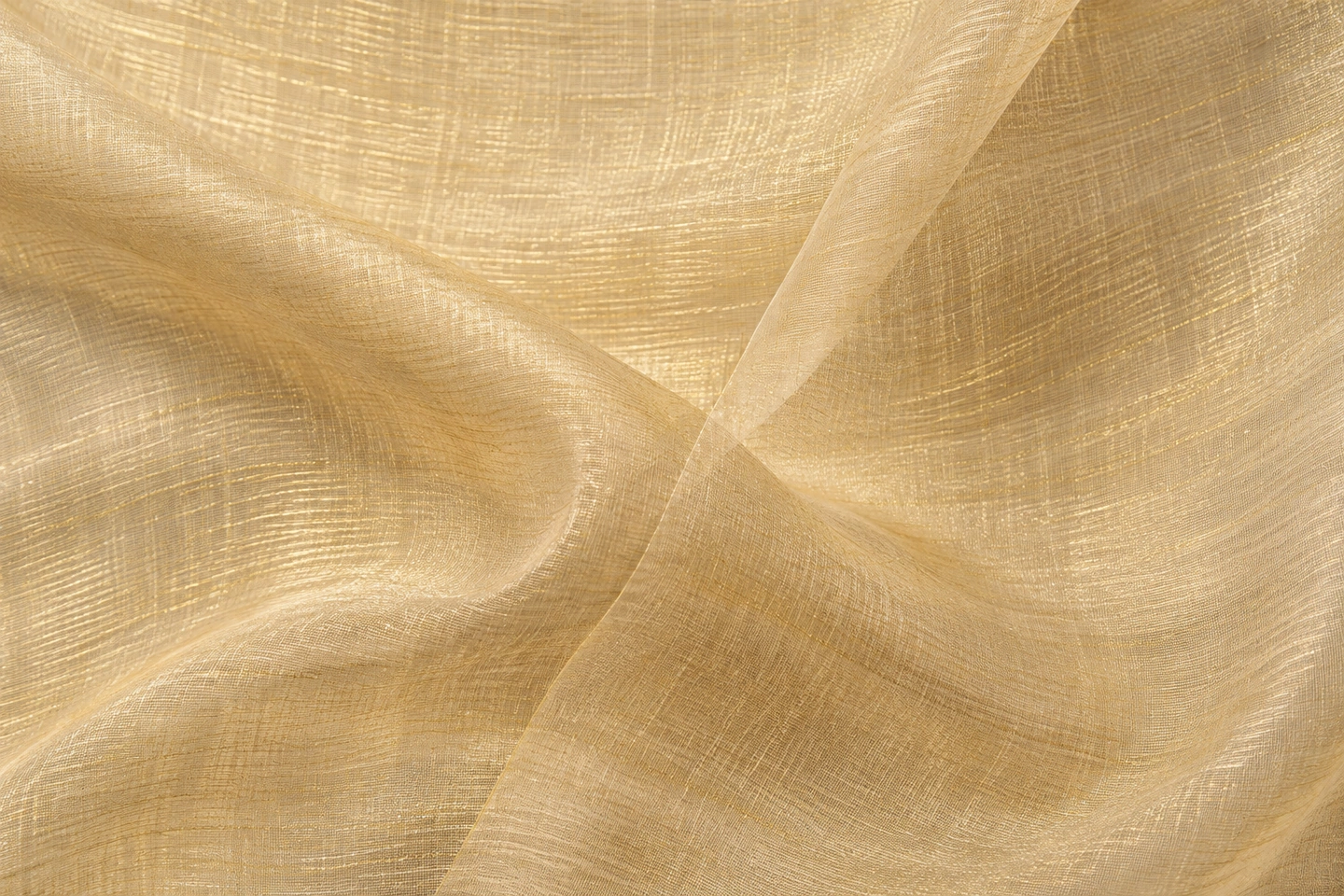
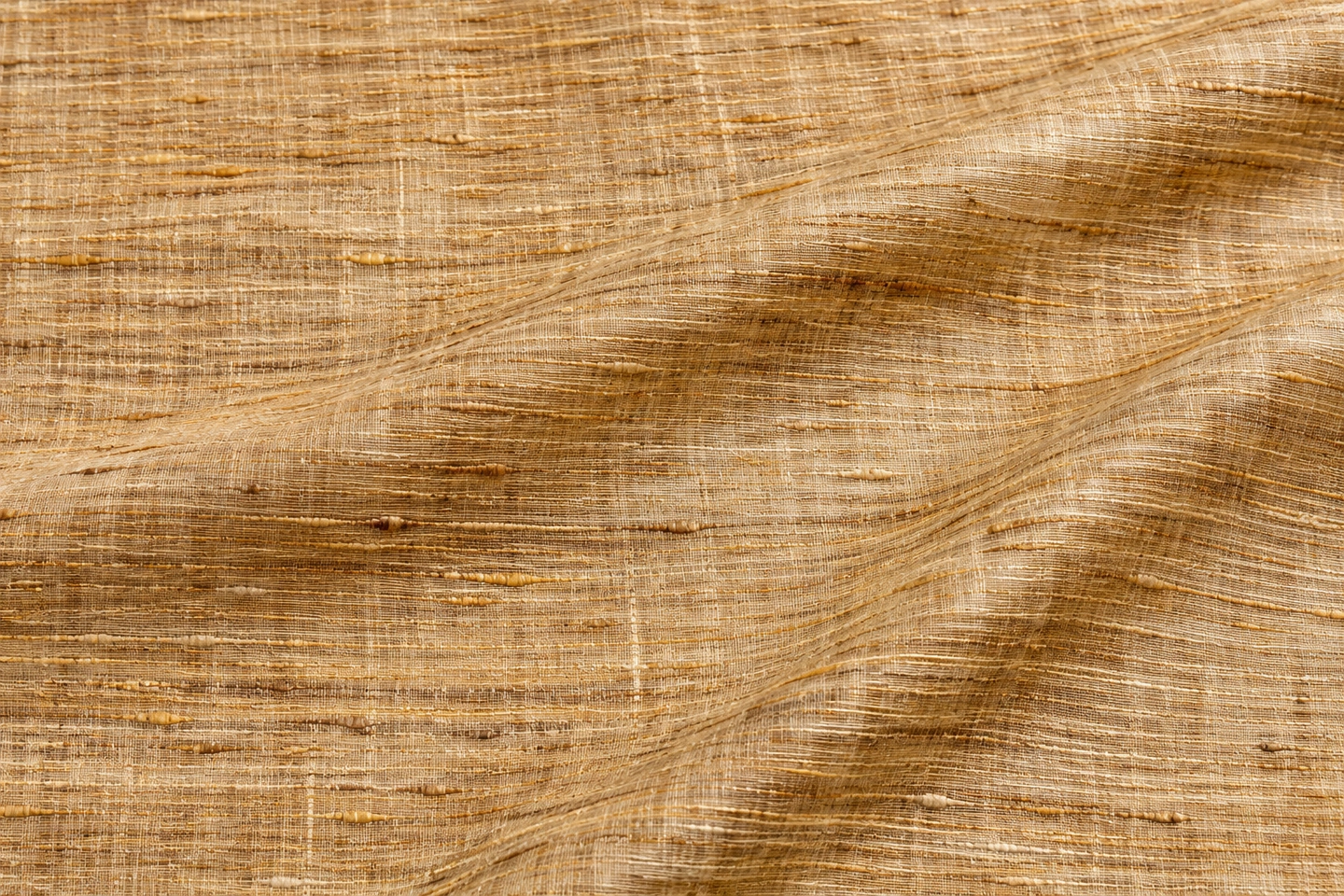
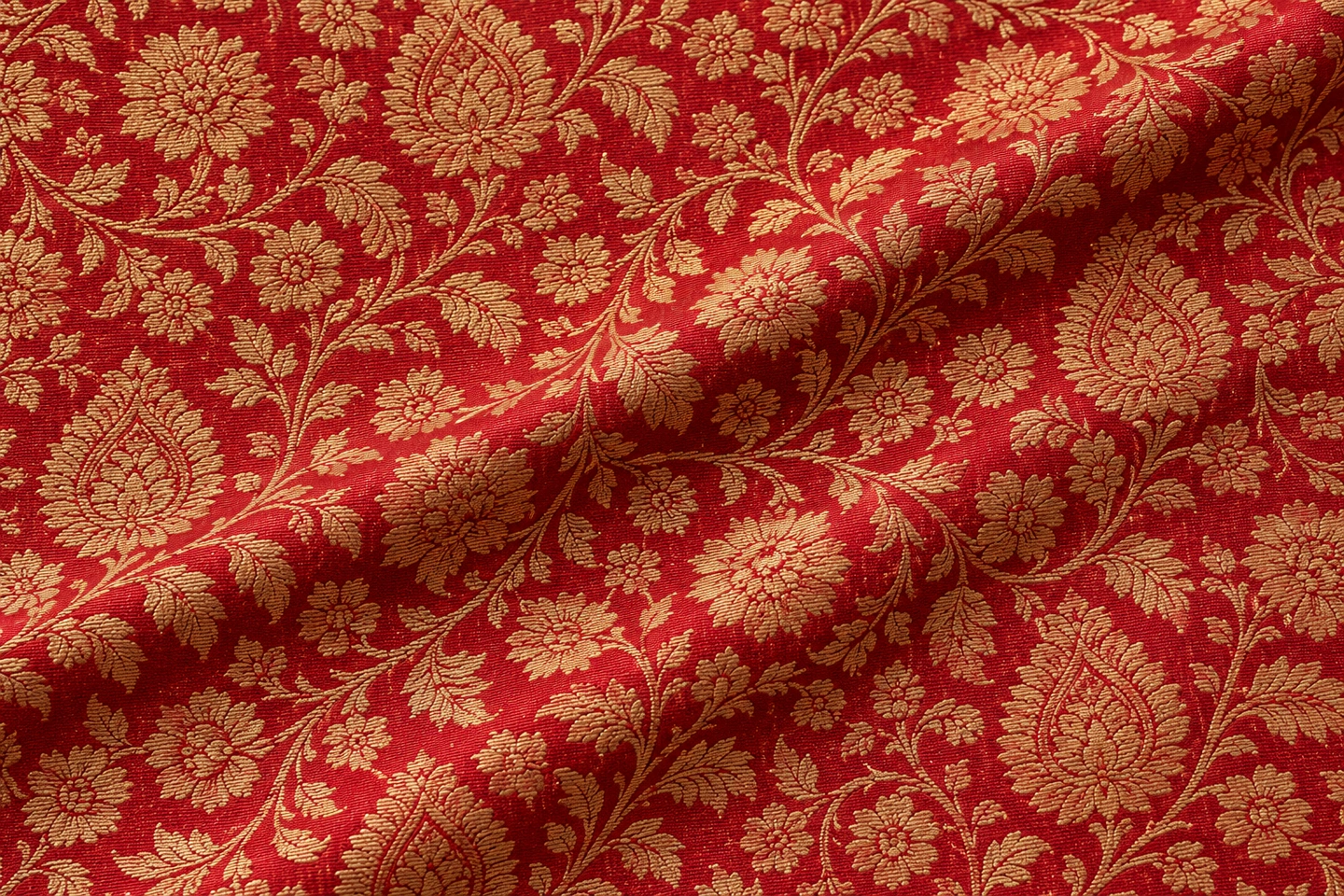
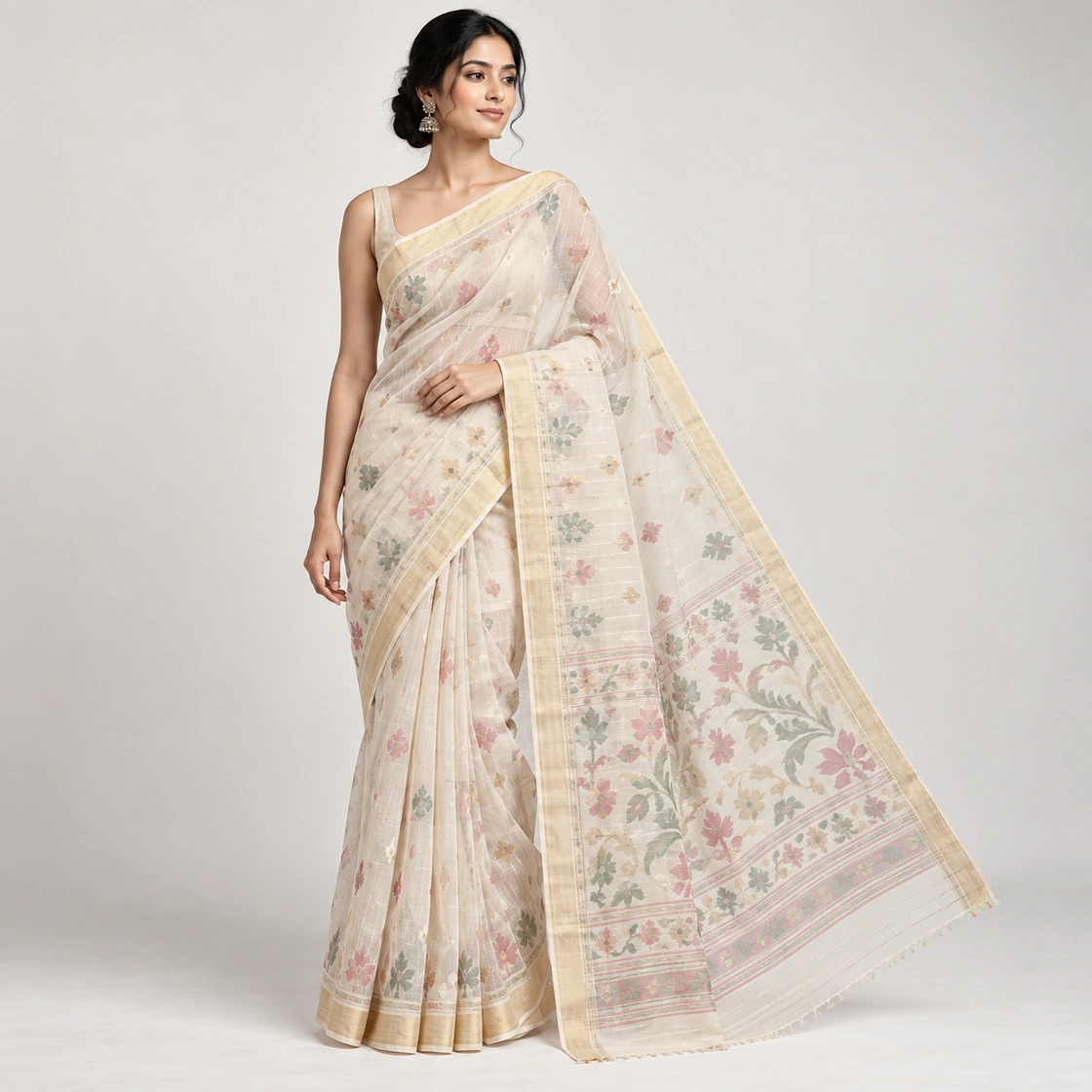
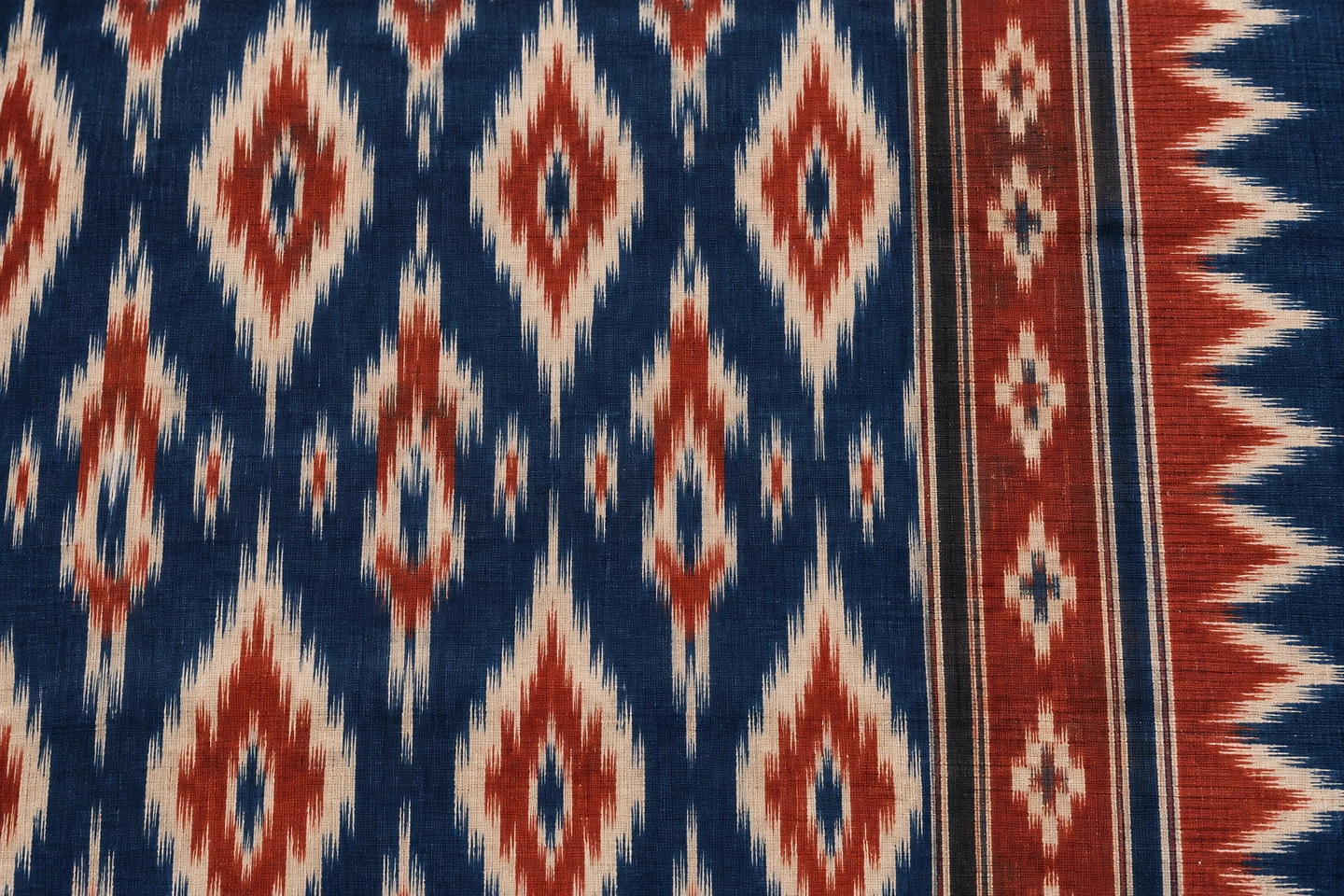
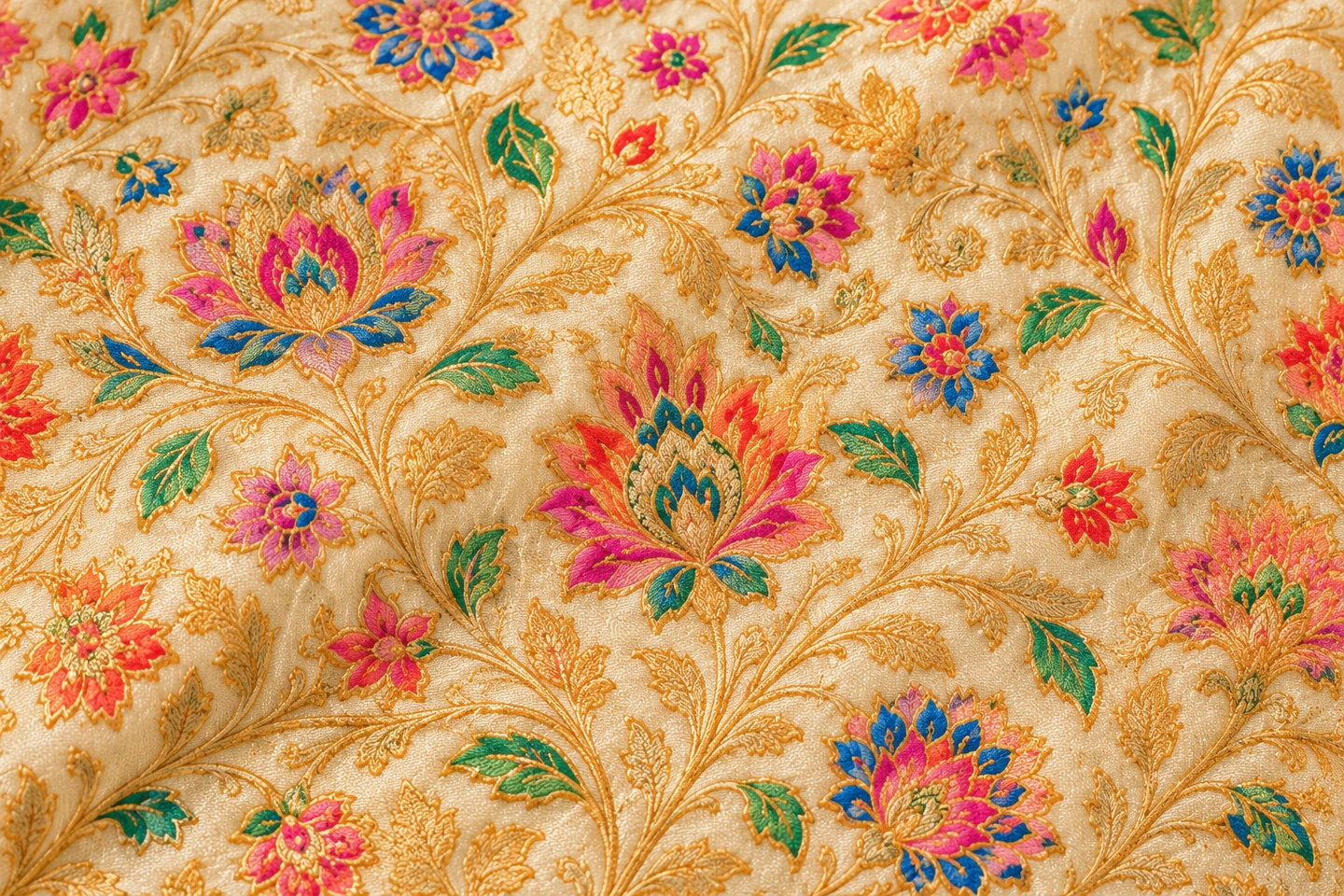
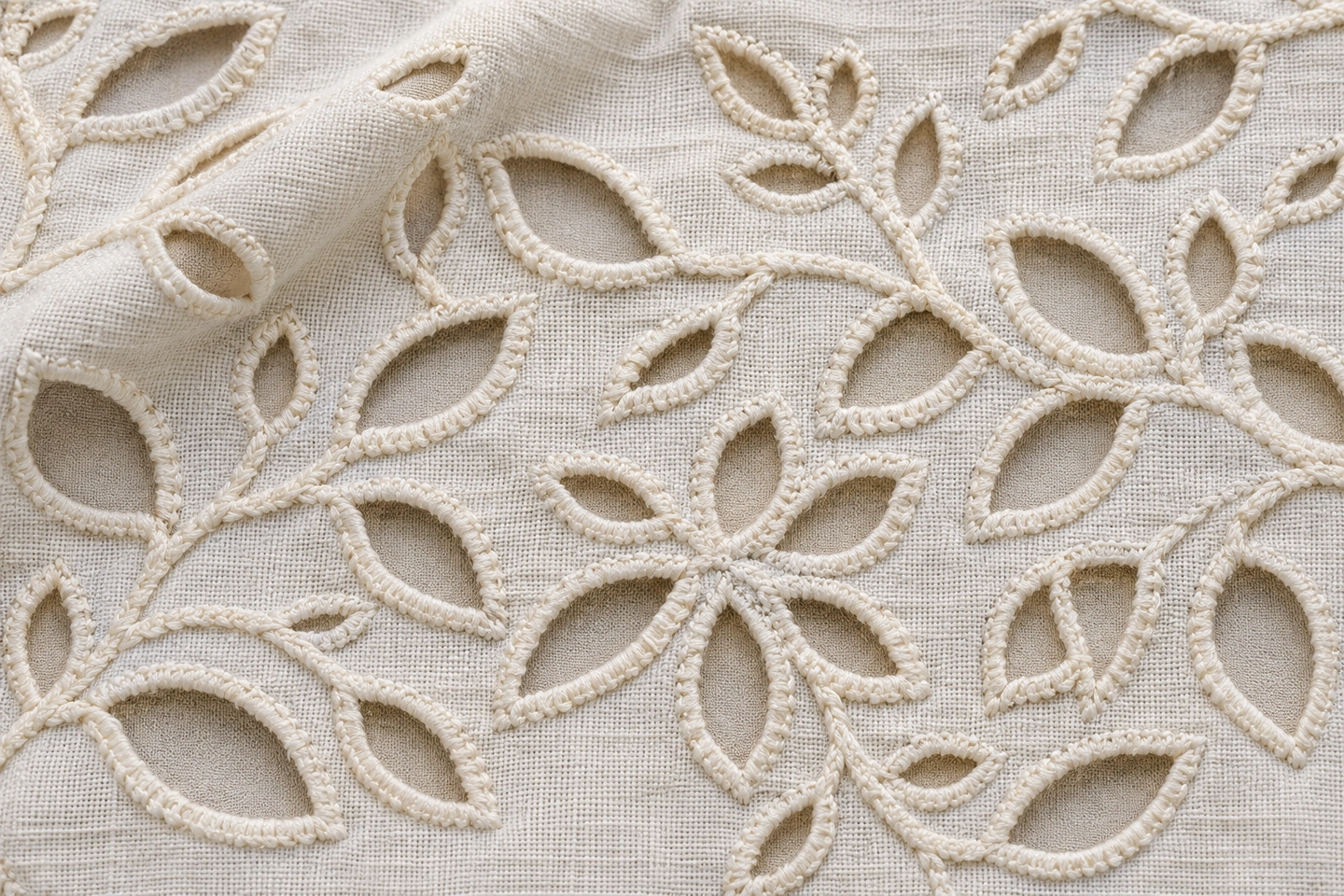
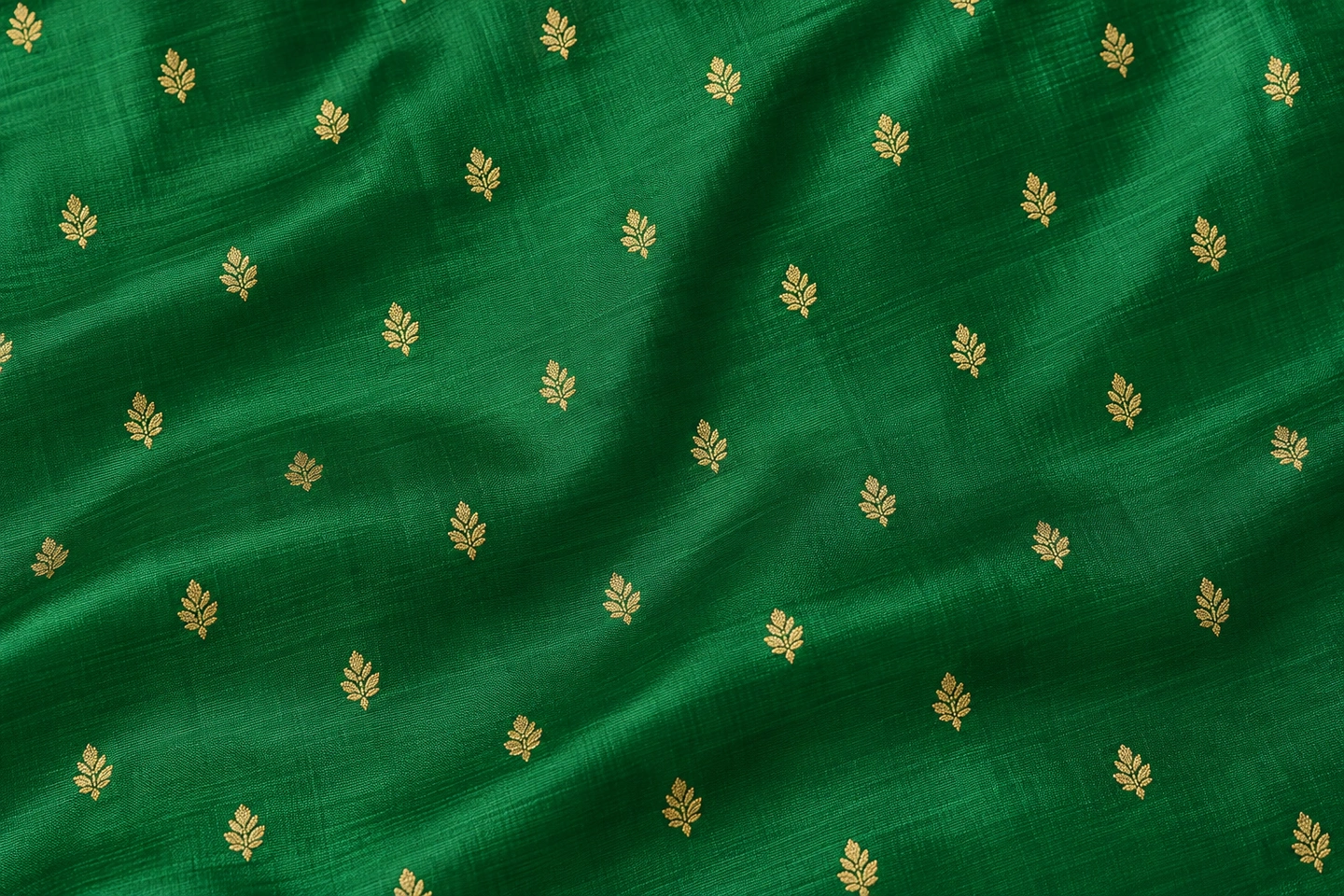
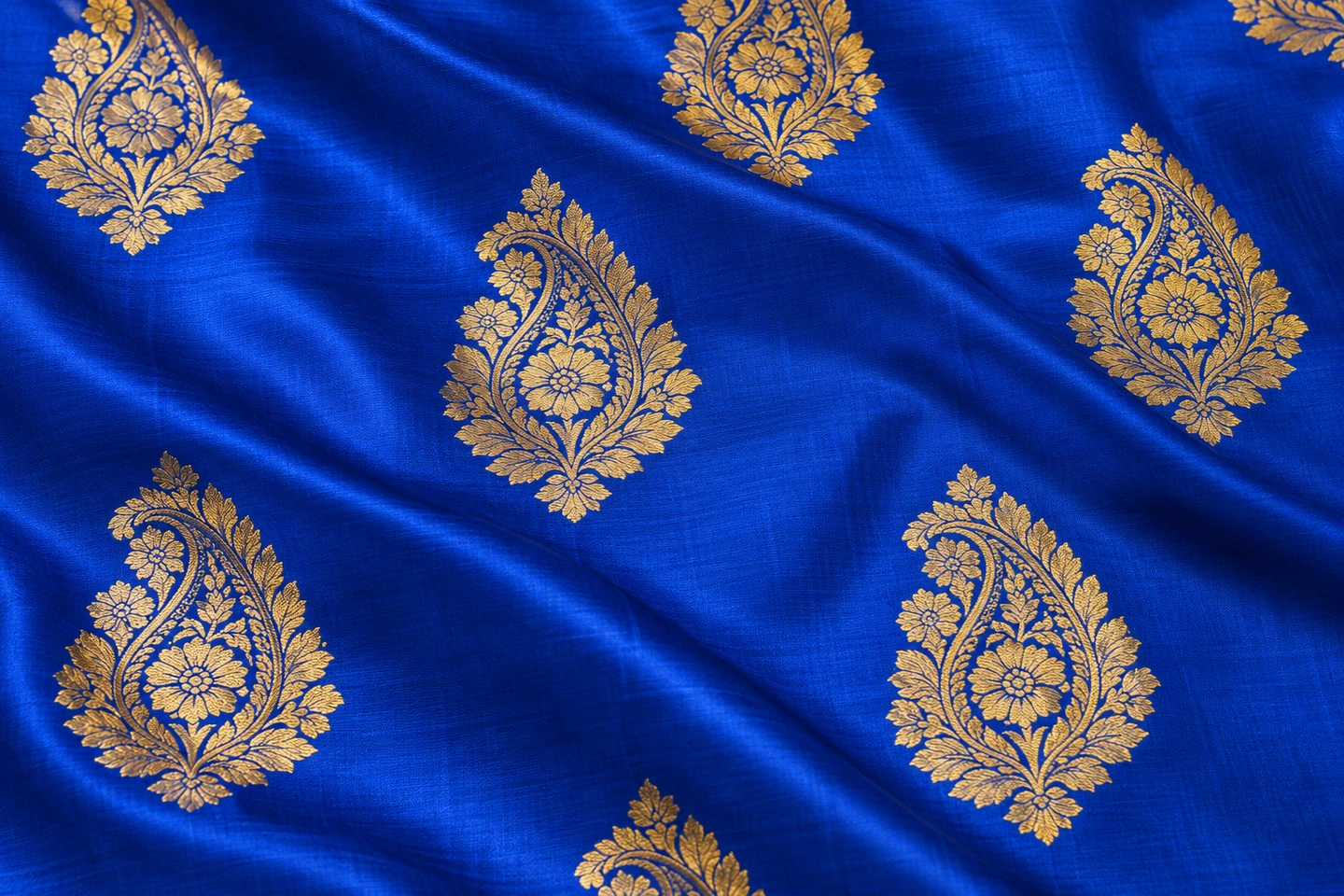
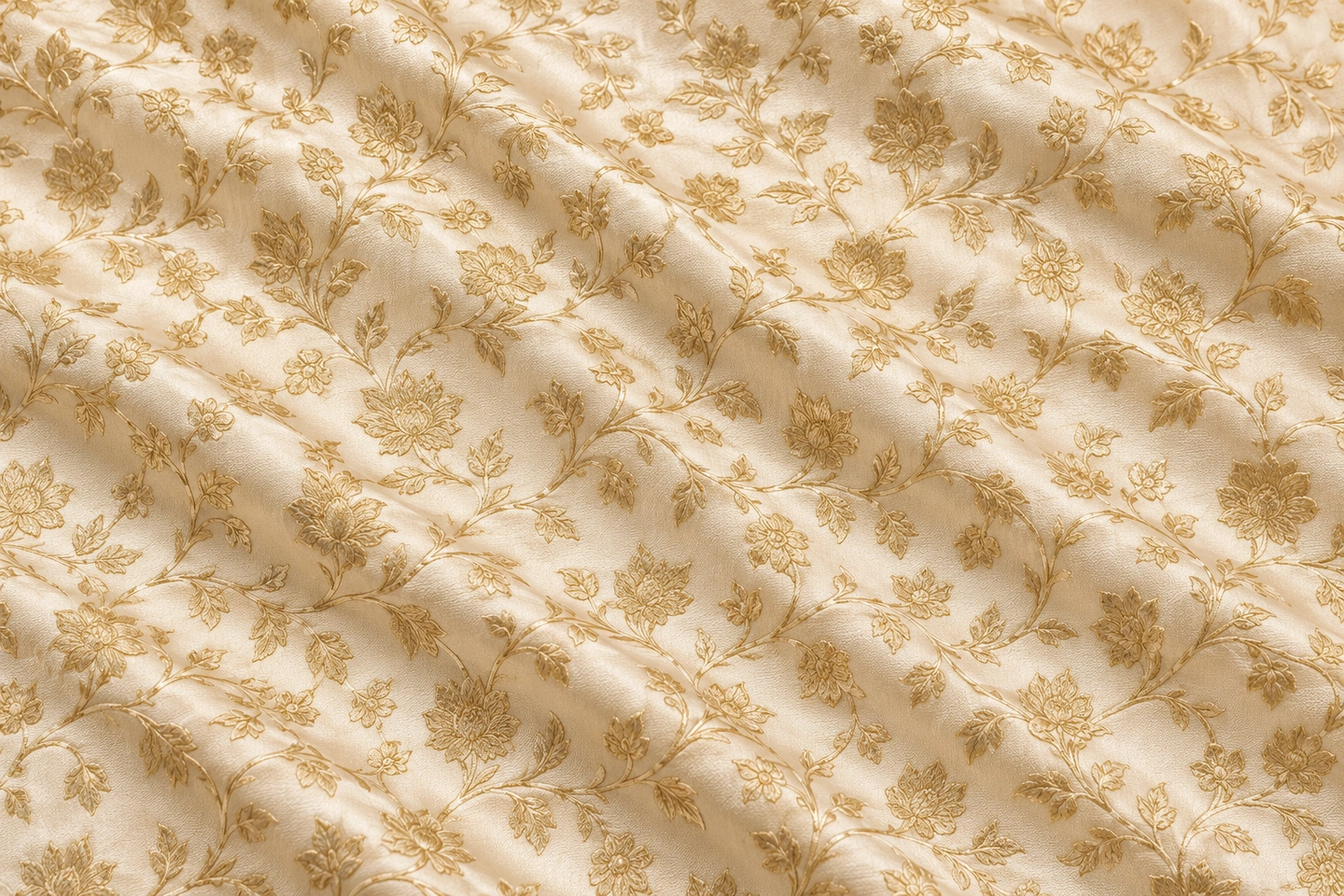
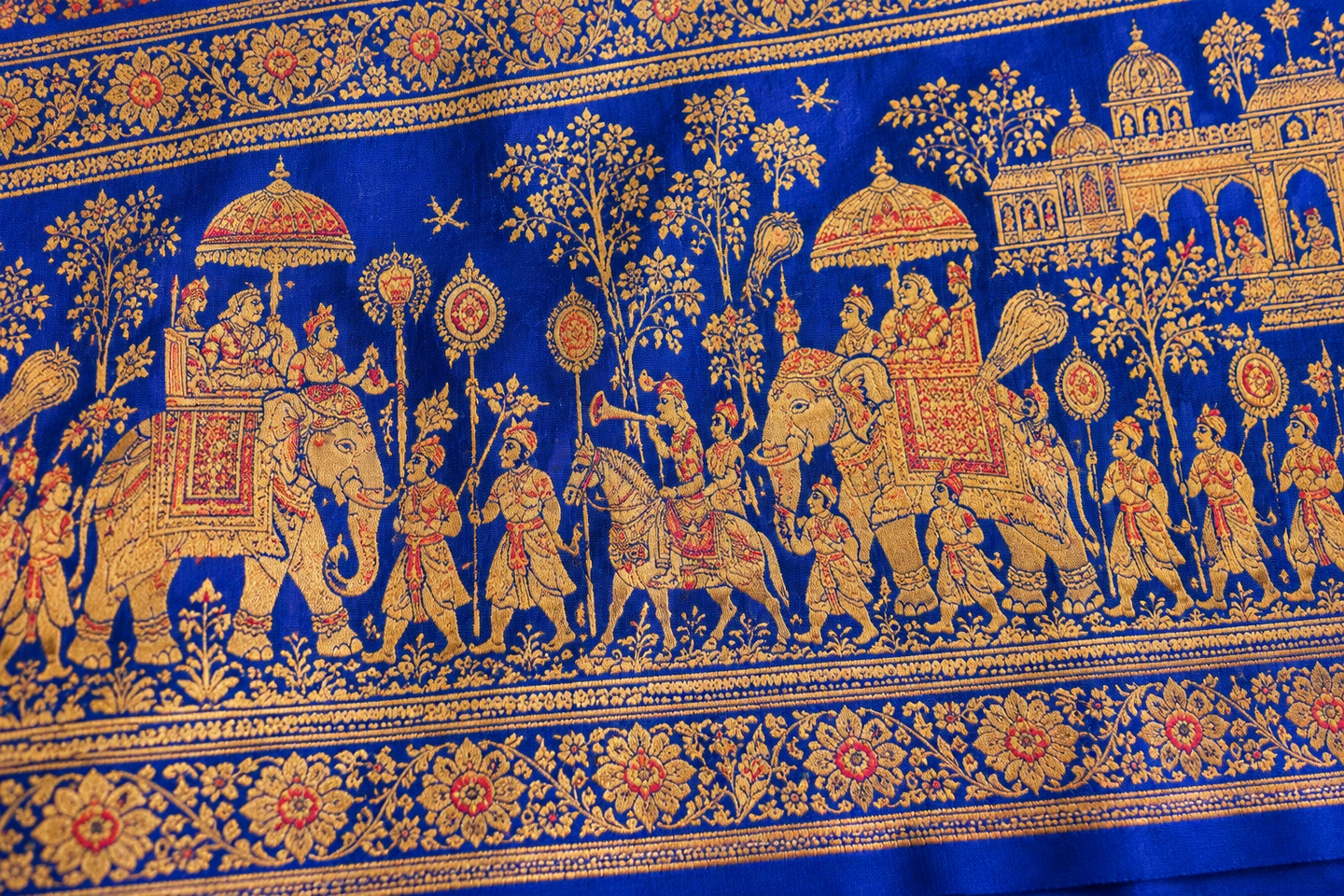
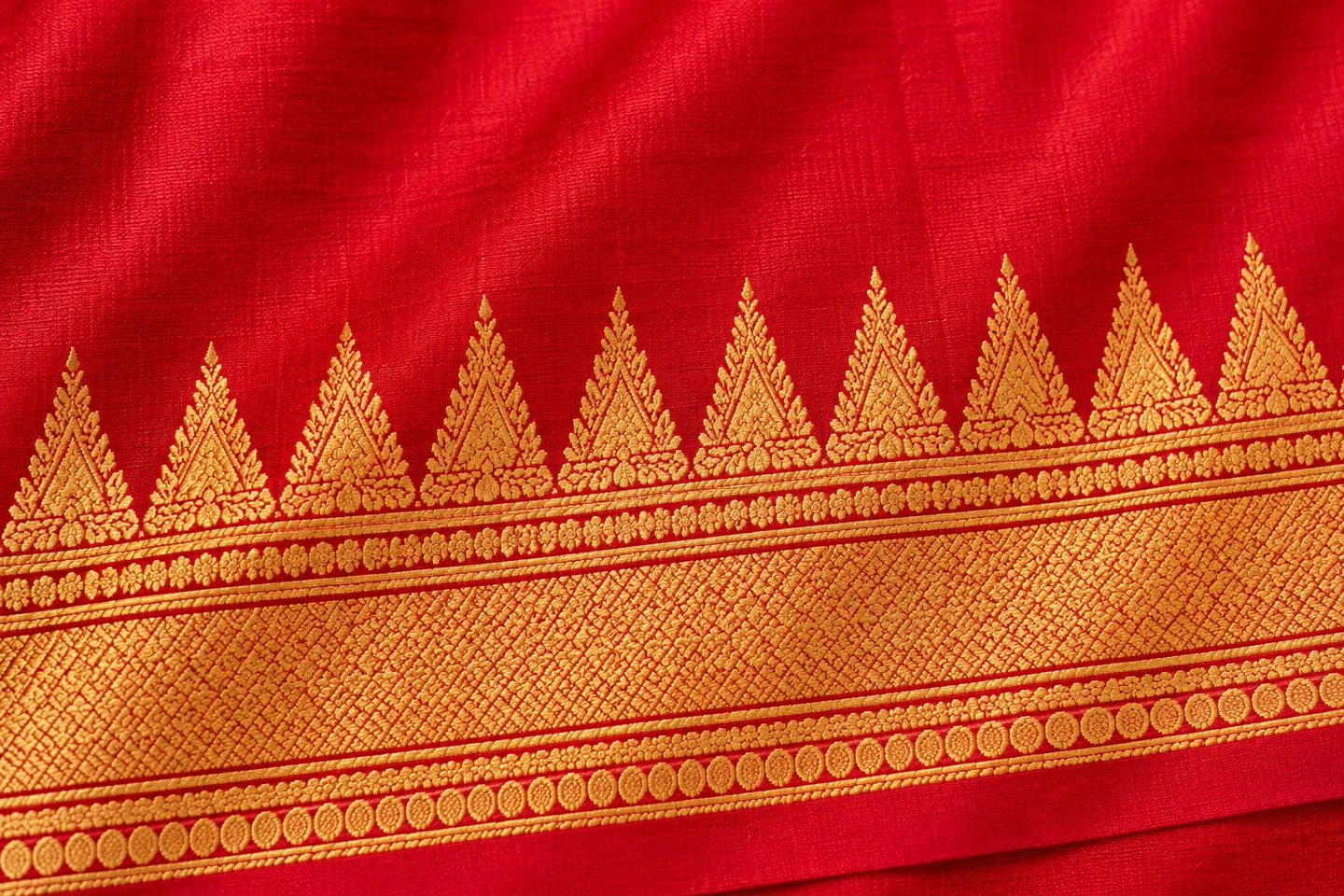
Illustrated examples of sixteen words you will meet often, grouped by what they describe. The images are illustrative examples rather than records of particular sarees; the complete glossary follows below.

Fabric and material What the cloth or its yarn is

Technique How the pattern is made

Motif, layout and construction Where ornament sits and how the saree is put together

Go to the complete glossary ↓

This is a quick lookup section, not a substitute for the fuller explanations above. Entries deliberately stay short. When a word is used loosely by shops, that is stated instead of pretending it always has one universal definition.

Materials, yarns and fabrics↗

Term Plain-English meaning
Art silk Artificial silk; a trade name for silk-like material, often viscose or polyester.
Charmeuse Light satin-faced fabric with a highly glossy front and duller back; can be silk or synthetic.
Crepe de Chine Fine, soft crepe fabric, often silk, with a lightly textured surface.
Ghicha / Gicha Irregular, often coarse silk yarn used for characterfully textured cloth.
Habutai Light, smooth plain-weave silk often used for printing.
Khaddi crepe Trade expression for a crepe-style cloth often described as handloom; not a silk-fibre species.
Mango silk Unstandardized commercial label; actual fibre content needs verification.
Mashru Traditional glossy-faced fabric, commonly using silk and cotton.
Noil silk Silk spun from shorter fibres; often soft and matte with small nubs.
Pattu Common South Indian word for silk, particularly in saree names.
Sico Retail abbreviation for silk–cotton; not necessarily pure silk.
Silk charmeuse Charmeuse fabric made specifically from natural silk.
Blended fabricCloth made with more than one fibre, such as silk and cotton.
BrocadeCloth with decorative patterns woven into it, sometimes using extra metallic-looking threads.
ChiffonVery light, sheer fabric that falls into soft folds.
CottonNatural fibre obtained from cotton plants.
CrepeA broad family of fabrics with crinkled or finely pebbled surfaces.
Dupion / DupioniSilk fabric often recognized by thicker and thinner places in its threads.
EriNon-mulberry silk often used in softly textured, matte fabrics.
FabricThe cloth made from yarn; not the same as its raw fibre.
FibreThe basic material from which yarn is made.
FilamentA long, continuous fibre; reeled silk can supply filament yarn.
GeorgetteFluid fabric with a lightly grainy surface, often silk or synthetic.
Handle / handWhat a fabric feels like to touch.
KhadiHand-spun, handwoven cloth; may use cotton, silk, wool or combinations.
KatanTraditional name for twisted silk yarn, also used for sarees woven from it.
KoraA variable trade name, often used for airy, crisp silk or silk organza in saree shops.
LinenNatural fibre obtained from flax plants and the cloth made from it.
LustreThe way a surface reflects light; does not mean it contains zari.
LyocellRegenerated cellulose fibre often used in soft, drapable fabrics.
MatkaSilk cloth commonly made from spun fibres, giving a textured surface.
ModalRegenerated cellulose fibre commonly used for soft fabrics.
MugaSilk especially known for its natural golden hue.
Mulberry silkWidely used natural silk produced by silkworms usually fed on mulberry leaves.
MulmulVery light, soft cotton fabric.
MuslinFine, lightweight fabric traditionally associated with exceptionally fine cotton.
OrganzaLight, sheer cloth that holds its shape; may be silk or synthetic.
PolyesterSynthetic fibre that can be made into several very different kinds of cloth.
Pure silkA claim about silk fibre content, not about handloom or zari.
Raw silkTechnically an intermediate silk material; often loosely used in shops for textured silk.
RayonBroad name for manufactured cellulose-derived fibres, including viscose.
SatinGlossy, smooth-faced fabric construction; can be silk or synthetic.
SheerTransparent enough to see something through the cloth.
Silk–cottonCloth containing both silk and cotton, in varying proportions.
SlubA thicker uneven section along a yarn.
Spun yarnYarn made by twisting shorter fibres together.
TissueSaree-shop name for shimmering, often metallic-effect cloth.
Tussar / TasarNon-mulberry silk often associated with a soft, textured lustre.
ViscoseManufactured cellulose-derived fibre; frequently soft and fluid.
VoileFine, airy fabric, often cotton or cotton blends.
WarpThreads running along the length of woven cloth; also called tana.
WeftThreads crossing the width of woven cloth; also called bana.
YarnThread made from fibres, used to create fabric.

Shapes, layout and saree anatomy↗

Term Plain-English meaning
Aanchal Another name for the pallu, the saree's shoulder end.
All-over Decoration across most or all of the body.
Ambi Mango/paisley-shaped motif; related to kairi.
Antique gold Muted old-gold colour effect, not proof of real gold content.
Bel Continuous vine, often with leaves or flowers.
Bel-patti Leafy vine or leaf-scroll design.
Body Main length/field of the saree outside the border and pallu.
Border Decorative band along the long edge of a saree.
Buta Larger individual motif such as a flower or paisley.
Buti Small decorative motif repeated across the fabric.
Chakra Wheel or circular symbolic motif.
Checks Crossed lines forming squares or rectangles.
Chevron Repeated V-shaped or zigzag lines.
Contrast border Border in a visibly different colour from the body.
Diamond motif Pointed four-sided shape repeated in a design.
Ganga–Jamuna Two long borders of different colours or treatments.
Ground Background cloth beneath or around a decorative motif.
Jaal Connected network of repeated designs.
Jangla Dense, elaborate intertwining floral/vine pattern.
Kairi Mango-shaped curved paisley motif.
Kalga Decorative plume-like or curving botanical motif; usage varies.
Khat Small check or square associated with Kota Doria fabric.
Konia Decorative motif placed at a corner, often where border and pallu meet.
Lotus Stylised lotus-flower design.
Motif One decorative shape, such as a flower or bird.
Munia Small parrot-like bird motif in some traditional sarees.
Narrative pallu Pallu with people or scenes arranged like pictures telling a story.
Paisley Curved teardrop or mango-like ornamental shape.
Pallu Decorative end usually draped over the shoulder.
Pattern The arrangement or repetition of decorative shapes.
Peacock motif Stylised peacock or peacock tail.
Selvedge Finished lengthwise edge of woven cloth, distinct from the ornamental border.
Shankha Conch-shell motif.
Shikargah Hunting-scene pattern with animals and sometimes people.
Statement pallu Fashion description for a strongly decorated or eye-catching pallu.
Stripes Parallel bands of colour or design.
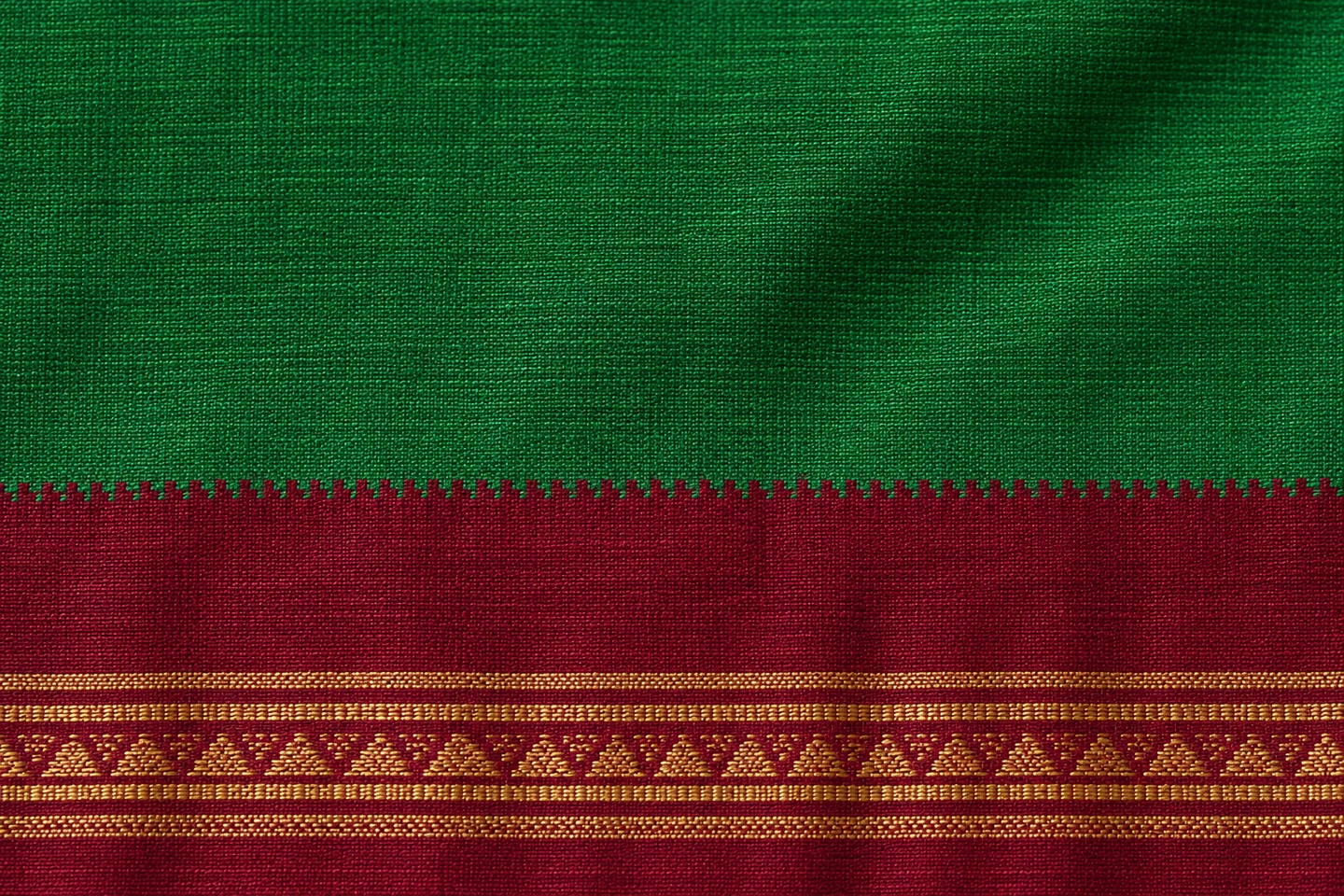
Temple border Border with repeated triangular or stepped, temple-like shapes.
Tone-on-tone Decoration close in colour to its background.

Decoration and pattern-making methods↗

Term Plain-English meaning
Ajrakh Traditional complex resist/block-print textile practice, often richly geometric.
Bandhani / Bandhej Tiny dotted designs made by tying cloth before dyeing.
Batik Decoration made by using wax to block dye.
Block print Pattern applied using carved printing blocks.
Chikankari Fine embroidery strongly associated with Lucknow.
Cutwork Context-dependent: may mean cut-out embroidery or cut-float brocade work.
Digital print Pattern placed on cloth using a computer-controlled printing process.
Double Ikat Both lengthwise and crosswise yarns dyed in advance to form the pattern.
Fekwa / Phekua Decorative weft carried across wider sections in certain brocade methods.
Gota Patti Shiny ribbon or trim applied in decorative shapes.
Ikat Design made by dyeing selected parts of yarn before weaving.
Jamdani Decorative weaving in which motifs are introduced into fine cloth.
Kadwa / Kadhua Individually worked woven decorative motifs in certain brocade traditions.
Kalamkari Drawn or block-printed textile decoration with a strong floral/narrative tradition.
Kantha Running-stitch embroidery associated particularly with Bengal.
Kimkhab / Kinkhab Name for especially sumptuous, densely ornamented brocade.
Korvai Traditional method used for joining certain contrasting woven borders.
Leheriya Rajasthani resist-dyed diagonal, wave-like stripes.
Meenakari Coloured thread accents within motifs in some brocade traditions.
Petni Joining approach associated with certain traditional contrast pallus.
Rangkat Multi-colour design arrangement particularly associated with Banarasi textiles.
Shibori Family of pattern-making methods using folded, tied, compressed or stitched resist dyeing.
Single Ikat One main set of yarns resist-dyed to form the design.
Tanchoi Fine, often richly repeated figured silk design tradition.
Tope Teni Traditional method of joining body and pallu sections in Ilkal sarees.
Zardozi Rich, often raised embroidery using metallic-looking elements and embellishment.
Zari Metallic or metallic-looking decorative thread; composition varies.

Regional saree names↗

Name Remember it by…
Arani Tamil Nadu silk tradition with varied rich borders and pallus.
Assam Eri Often soft, relatively matte silk character.
Assam Muga Natural golden silk.
Baluchari Figural story panels on a decorative silk pallu.
Banarasi Broad Varanasi tradition including florals, silk brocades and sheer styles.
Bandhani Tied-dot designs, particularly associated with Gujarat and Rajasthan.
Bhagalpuri Tussar Textured silk associated with Bihar's Bhagalpur market.
Bomkai Odisha tradition noted for distinctive border and pallu designs.
Chanderi Fine, often sheer cloth with delicate motifs.
Chettinad Colourful, boldly checked or striped cotton.
Chikankari saree Saree decorated with Lucknow-associated embroidery.
Dhaniakhali Practical Bengal cotton with characteristic borders.
Dharmavaram Ceremonial Andhra silk with rich borders.
Eri silk Non-mulberry silk often noted for a softer, less glossy texture.
Gadwal Often cotton body with silk border and pallu, plus variants.
Garad / Korial Pale Bengal ceremonial silks, frequently with red-bordered styling.
Gharchola Gujarati ceremonial grid filled with decorative dots and designs.
Ilkal Karnataka tradition with contrasting borders and striped pallu.
Kanjivaram The silk saree tradition of Kanchipuram, Tamil Nadu — also called Kanchipuram or Kancheepuram silk (GI: Kancheepuram Silk), sometimes spelt Kanchivaram; often strong body-border contrast and ceremonial pallu.
Kashmiri embroidery Paisley, chinar and floral embroidery on textile surfaces.
Kerala Kasavu Off-white or ivory cloth with gold-coloured border.
Kotpad Earthy-coloured textile tradition associated with southern Odisha.
Maheshwari Maheshwar tradition with geometric borders, checks and stripes.
Mangalagiri Often plain-bodied cloth with clean borders.
Murshidabad Light regional Bengal silks, often printed or painted.
Mysore silk Smooth, often simply bordered polished silk.
Narayanpet Telangana tradition with stripes, checks and borders.
Paithani Maharashtra silk famous for decorated bird/floral pallus.
Panetar Gujarati bridal style often ivory or white with red.
Pasapalli Odisha saree recognized by bold grid/check layouts.
Patan Patola Gujarat silk tradition famous for precise double Ikat.
Pochampally Telangana Ikat, often strongly geometric.
Sambalpuri Odisha Bandha/Ikat with characteristic regional motifs.
Swarnachari Metallic-looking narrative/pictorial silk tradition related to Baluchari.
Tangail Fine eastern Indian/Bangladeshi textile traditions with neat ornament.
Uppada Fine Andhra silk, often with delicate Jamdani decoration.
Venkatagiri Andhra textile tradition often valued for fine and delicate fabrics.