The Saree Atlas
Search

The illustrated reference · Learn

Style & Occasion

Which saree, which drape, which jewellery — and why it works. A guide to dressing for the moment rather than the price tag, with the reasons that make a look feel right.

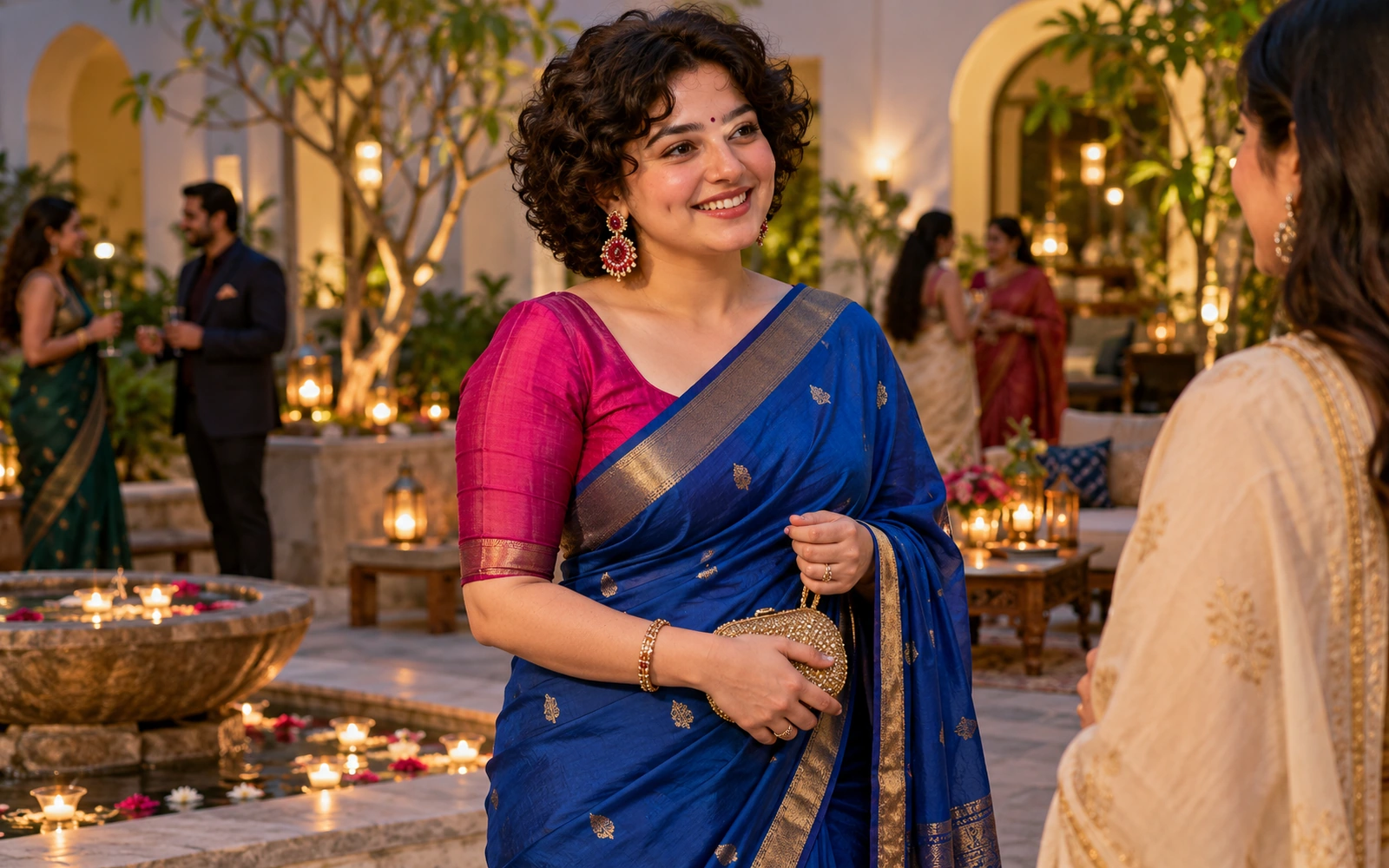
Elegantly dressed women in occasion sarees at a celebration

First principle

Every occasion has a register

A saree speaks before its wearer does. Four dials decide how loudly: sheen, weight, ornament and colour. Turn them all up and you have a wedding. Turn them all down and you have a perfect Sunday lunch. Most occasions want two up and two down.

SheenMatte cotton and linen → Tussar → mulberry silk → tissue and metallic zari.
WeightFeatherweight chiffon and mulmul → soft silk → heavy Katan and Kanjivaram.
OrnamentA plain body and slim border → scattered butis → an all-over brocade jaal.
ColourTonal pastels and ivory → jewel tones → high-contrast body and border.

These are styling conventions, not rules about who may wear what. Cotton can be formal, a bride can be understated, and a beautifully chosen quiet saree often wins the room.

Six occasions

What to wear, where — and why it works

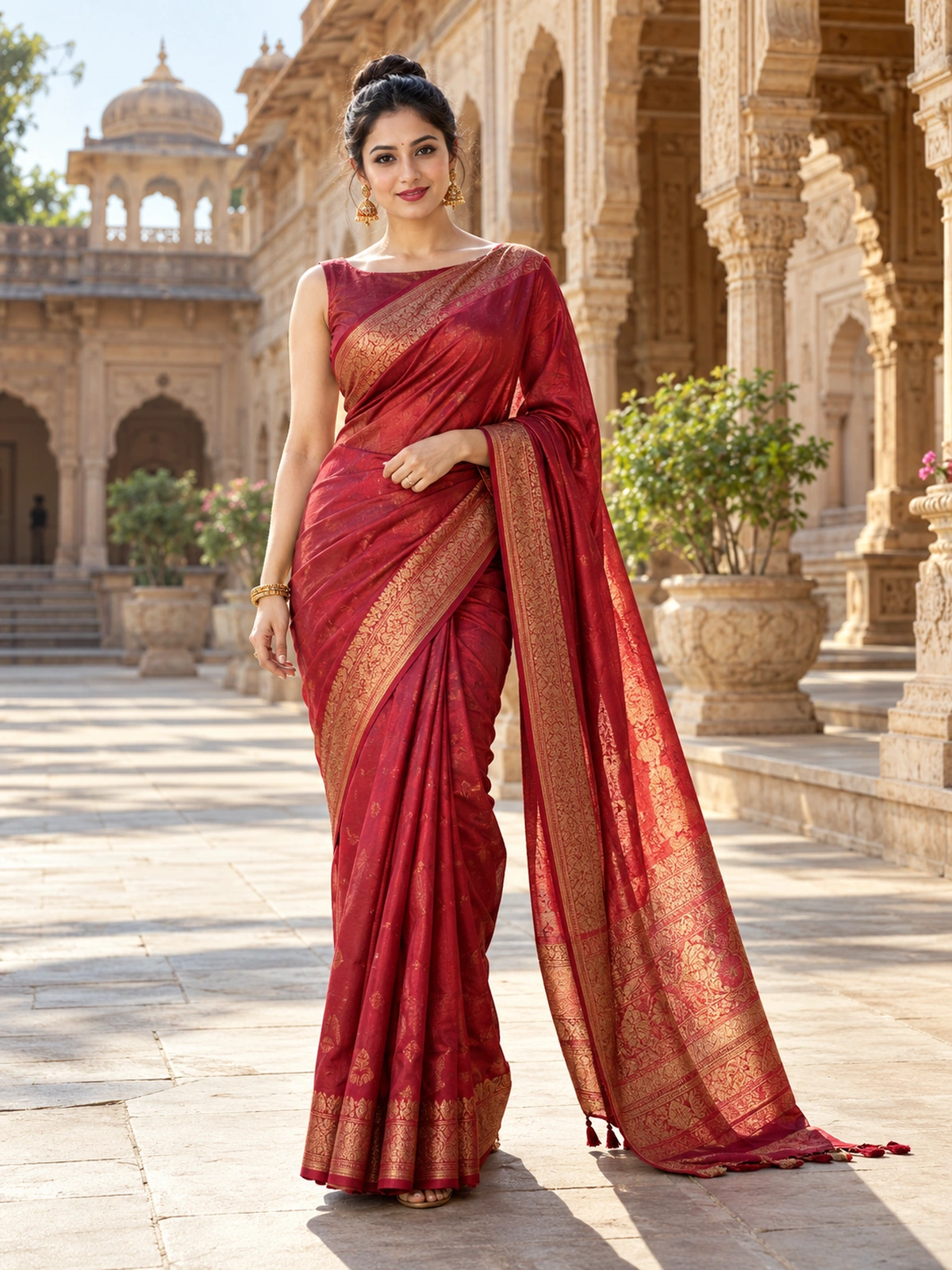
Woman in a crimson silk saree with an all-over gold jaal in a sandstone courtyard
Crimson silk with an all-over gold jaal.

01 · Weddings & receptions

All four dials, turned up — with intent

Weddings reward the full vocabulary: heavy mulberry silk, deep jewel colours and borders built like architecture. A Kanjivaram with a contrast korvai border, a Banarasi Katan brocade or a Paithani with a tapestry pallu all carry the occasion without trying.

The reception is a different evening. Lighting is warmer, the room is darker, and you will stand for hours. A lighter brocade, a tissue or an organza with fine zari keeps the glamour while losing several kilograms of commitment.

  • Colours: reds, wine, emerald, royal purple, mustard and gold; ivory-and-gold for South Indian ceremonies.
  • Guest’s courtesy: unless the family asks otherwise, avoid out-dressing the bride in her own colour.
  • Drape: pleated and pinned pallu for long rituals; an open pallu for photographs of the design.
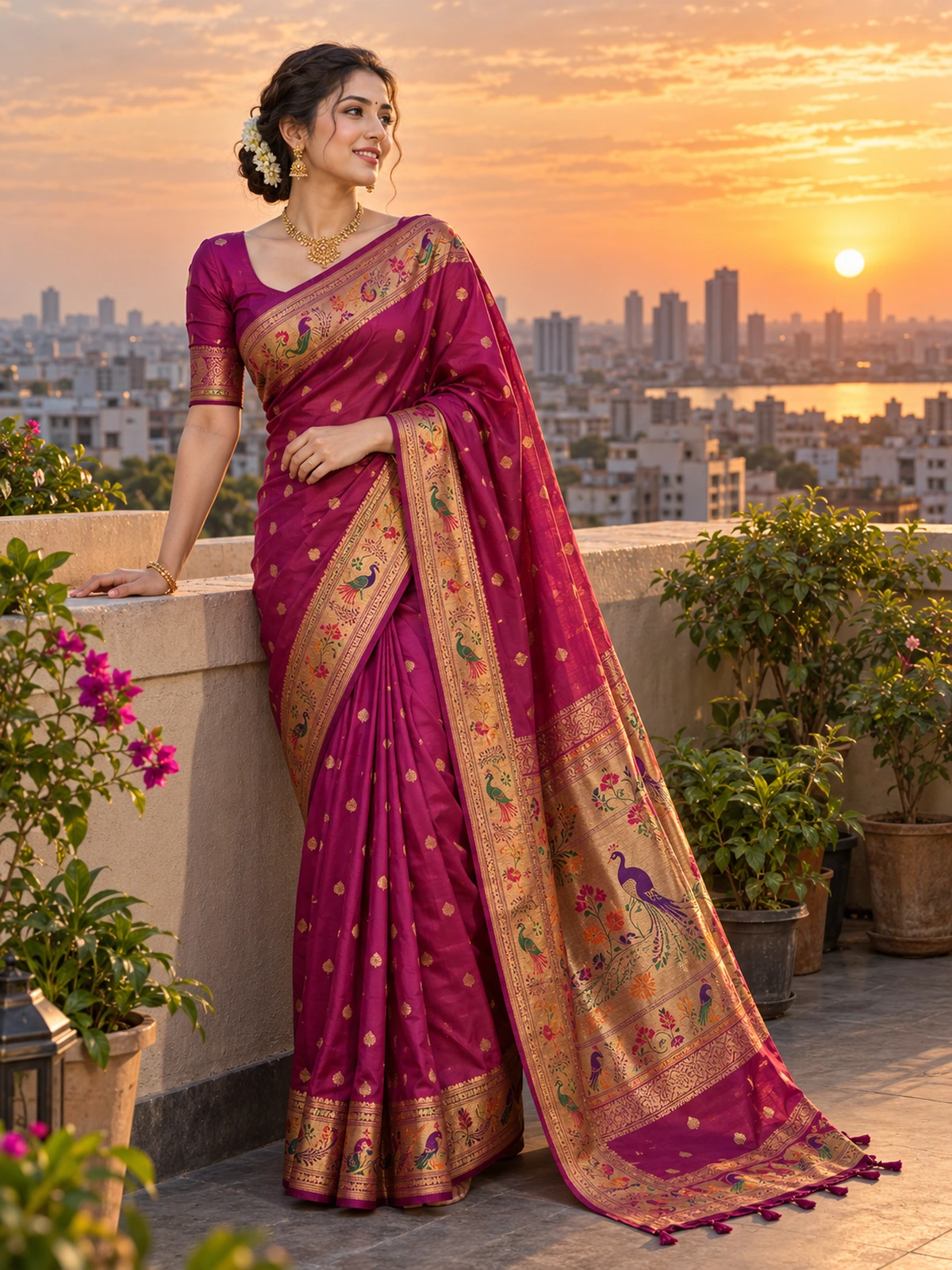
Woman in a magenta Paithani-style silk saree with a peacock pallu on a terrace at sunset
Magenta Paithani-style silk with a peacock-and-lotus pallu.

02 · Festive & traditional

Celebratory, but able to sit on the floor

Festivals ask for colour and tradition, but also for a saree you can cook, pray and greet a hundred relatives in. Silk is welcome; a mid-weight one with a generous border usually beats a ceremonial brocade.

Many festivals have their own beloved looks: the red-bordered white Garad and Korial sarees of Durga Puja, the gold-bordered ivory kasavu of Onam, Leheriya in the green and rain of Teej. Wearing the tradition of the festival is a lovely gesture, never an obligation.

  • Colours: marigold, magenta, parrot green, red and white, peacock blue.
  • Fabric: soft silk, silk-cotton, Paithani, Gadwal, Chanderi for warm days.
  • Practical: keep the pallu pinned near lamps, flowers and children.
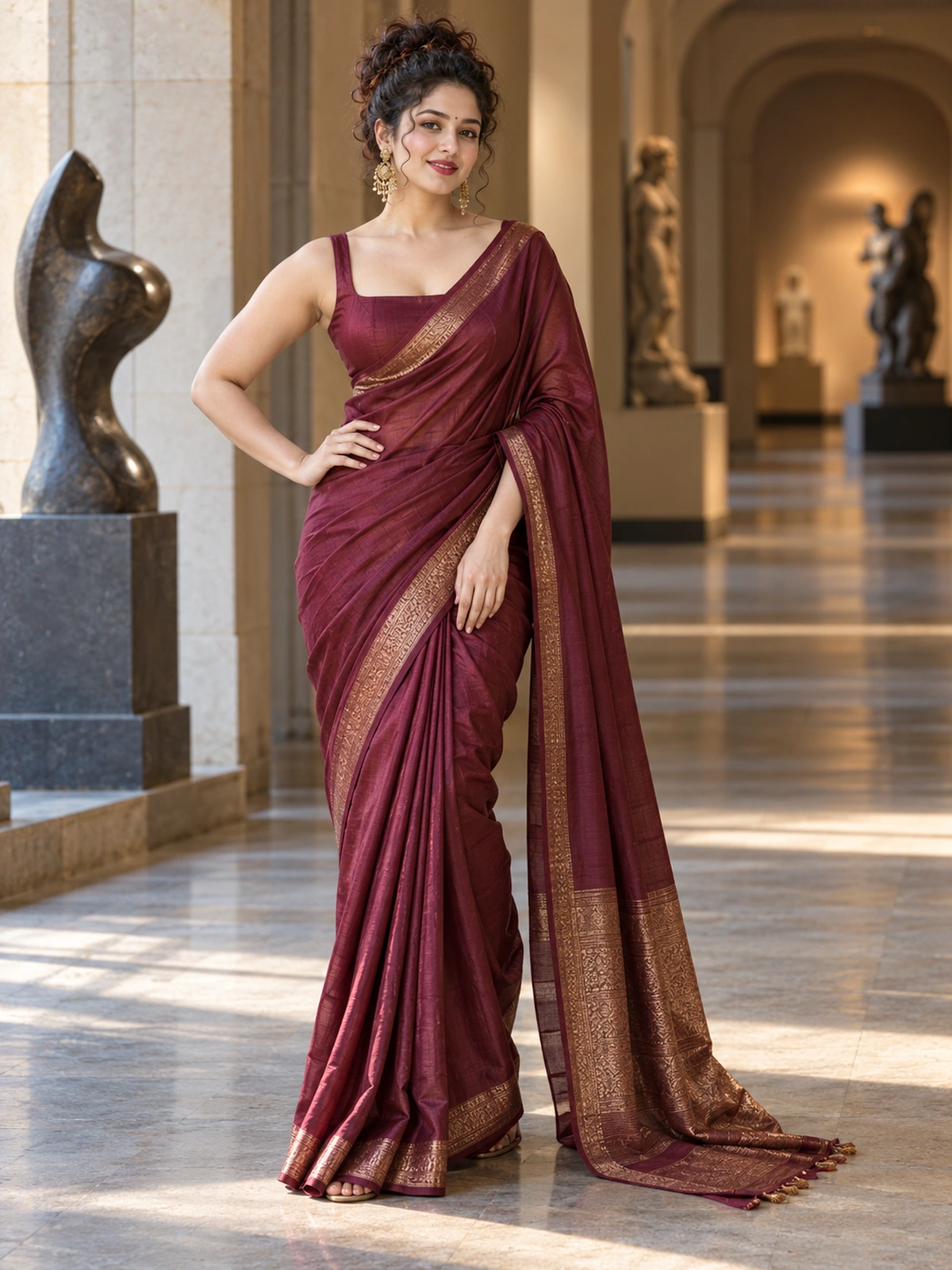
Woman in a deep wine silk saree with a slim gold border in a gallery corridor
Wine silk, slim gold border, one statement earring.

03 · Formal dinners & celebrations

Rich colour, restrained ornament

An anniversary dinner, an award evening, a milestone birthday: the register is high but the room is small. Here, depth of colour does the work that zari does at a wedding. Think tone-on-tone silk, a slim border, a beautifully woven pallu that only reveals itself when you turn.

This is the natural home of the understated Banarasi, the minimal-border Kanjivaram and the luminous Tussar — sarees that look expensive in conversation rather than across a hall.

  • Colours: wine, aubergine, bottle green, midnight blue, antique gold.
  • Jewellery: one focal piece — earrings or a necklace, rarely both.
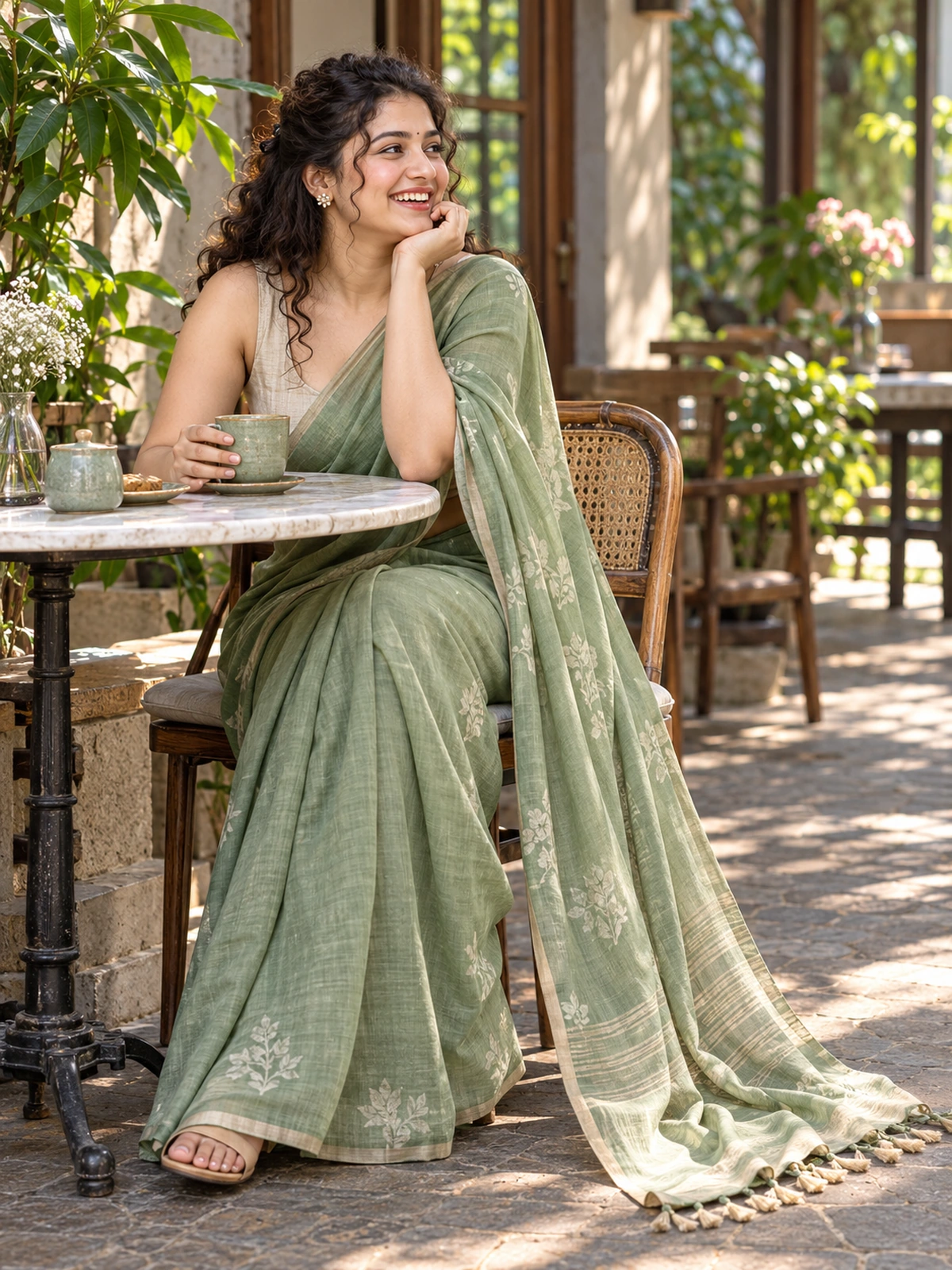
Woman in a sage-green cotton saree with ivory motifs laughing at a café table
Sage-green cotton with ivory floral motifs.

04 · Elegant daytime gatherings

Light, matte and quietly confident

Lunches, baby showers, gallery visits and the office celebration belong to daylight, and daylight is unkind to heavy shine. Choose breathable cloth with a soft hand: a fine cotton Jamdani, a Chanderi or Maheshwari, a Kota Doria, a linen or a light Tussar.

Pastels, ivory and sun-washed colours shine here. Let the weave be the detail you notice at arm’s length — the inlaid motif, the slubbed texture, the fine checked ground.

  • Colours: sage, powder blue, blush, mustard, ivory, indigo.
  • Jewellery: pearls, fine gold, or oxidised silver with cotton and ikat.
  • Drape: a neat Nivi with an open pallu; minimal pinning.
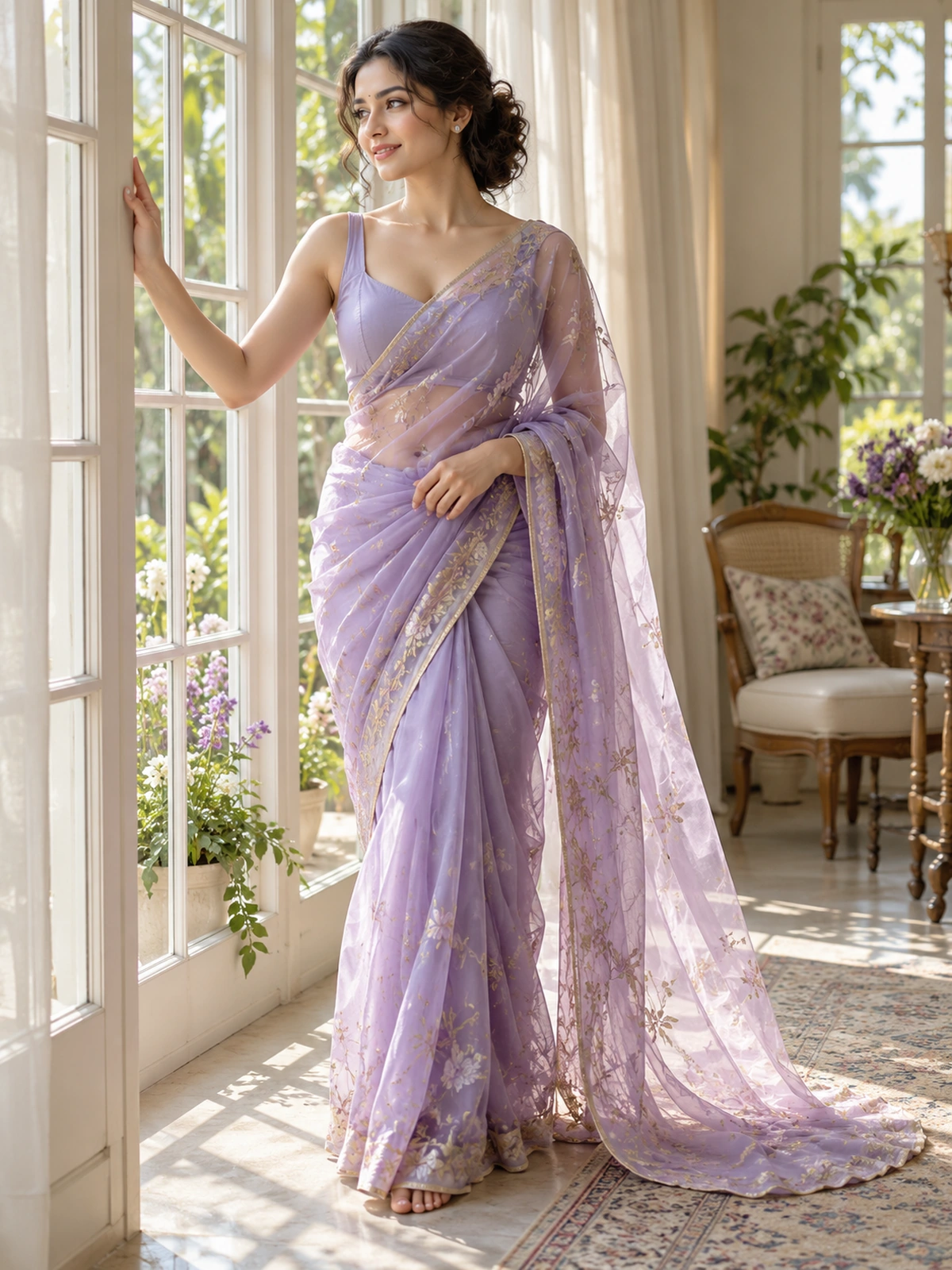
Woman in a lavender organza saree with silver floral embroidery by a sunlit window
Lavender organza with silver floral embroidery.

05 · Parties & evening events

Fluid drape, sharper silhouette

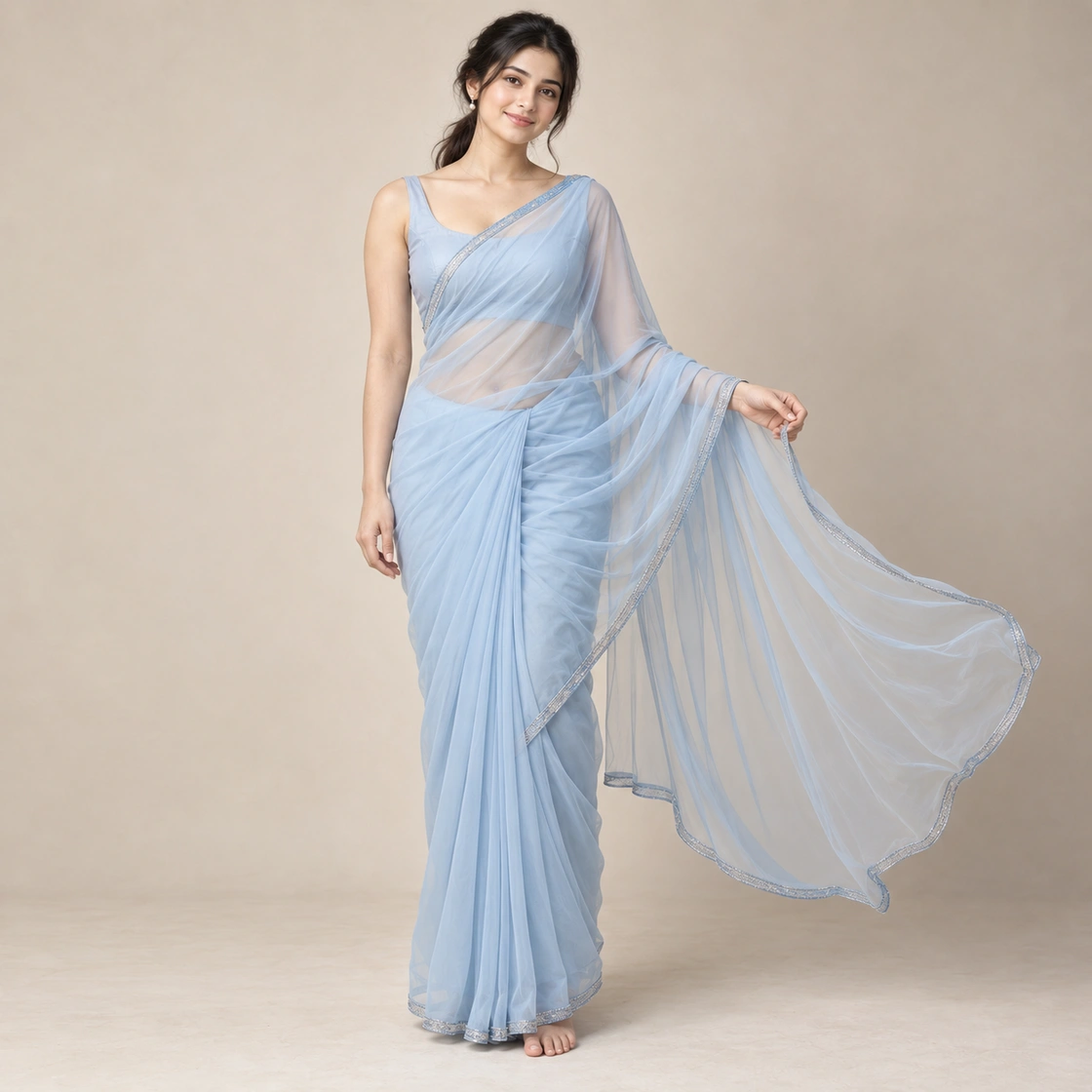
Cocktail evenings and sangeet nights favour movement and line. Chiffon and georgette fall close to the body; organza holds a sculptural shape; tissue catches the light from every angle. These are fabrics for dancing, not for sitting cross-legged.

Because the saree itself is lighter, the blouse becomes the statement: a sleeveless cut, a deep back, a contrast metallic or an embroidered yoke. Keep the drape sleek — fewer, slimmer pleats and a pallu left long.

  • Colours: black, fuchsia, emerald, metallic champagne, ice blue.
  • Fabric note: chiffon, georgette and organza describe a construction, not a fibre; ask whether it is silk or synthetic.
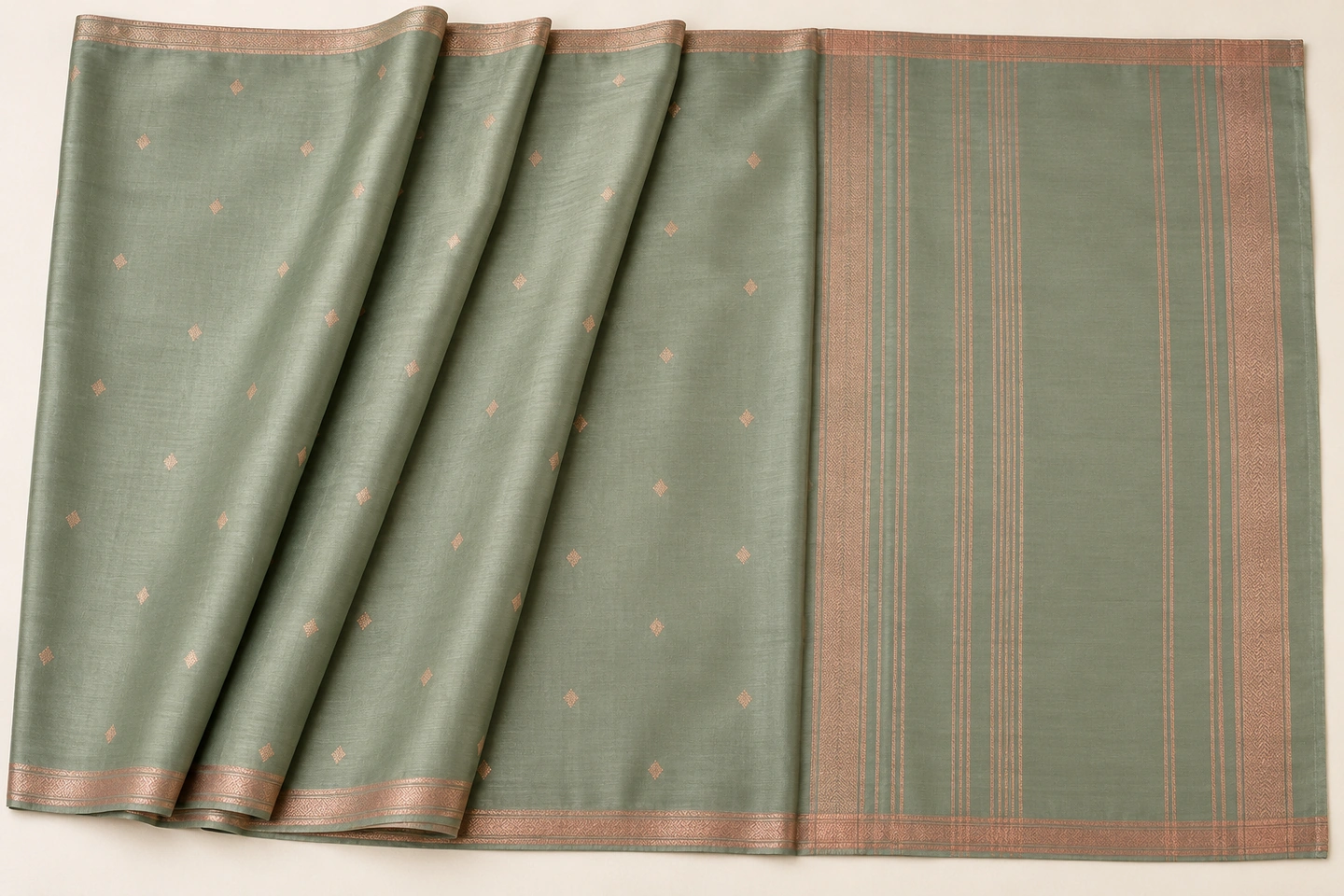
Contemporary-inspired Kanjivaram-style silk in sage with a slim copper-rose border
A contemporary reading: sage field, slim copper-rose border, quiet pallu.

06 · Contemporary interpretations

Keep the craft, change the proportions

The most interesting modern sarees do not abandon tradition; they edit it. A Kanjivaram in sage with a whisper of a border. A Banarasi with three butis where there were three hundred. An ikat in two colours instead of six.

Styling can be just as modern: a shirt-style or high-neck blouse, a fine belt at the waist, a structured jacket in winter, trainers at a festival, a pre-pleated drape for an evening on your feet.

  • Silk organza
  • Metallic tissue
  • Understated Banarasi
  • Pastel Chanderi
  • Minimal-border Kanjivaram
  • Fine Jamdani
  • Handwoven-look Tussar
  • Geometric ikat
  • Linen and linen-silk
  • Khaddi crepe
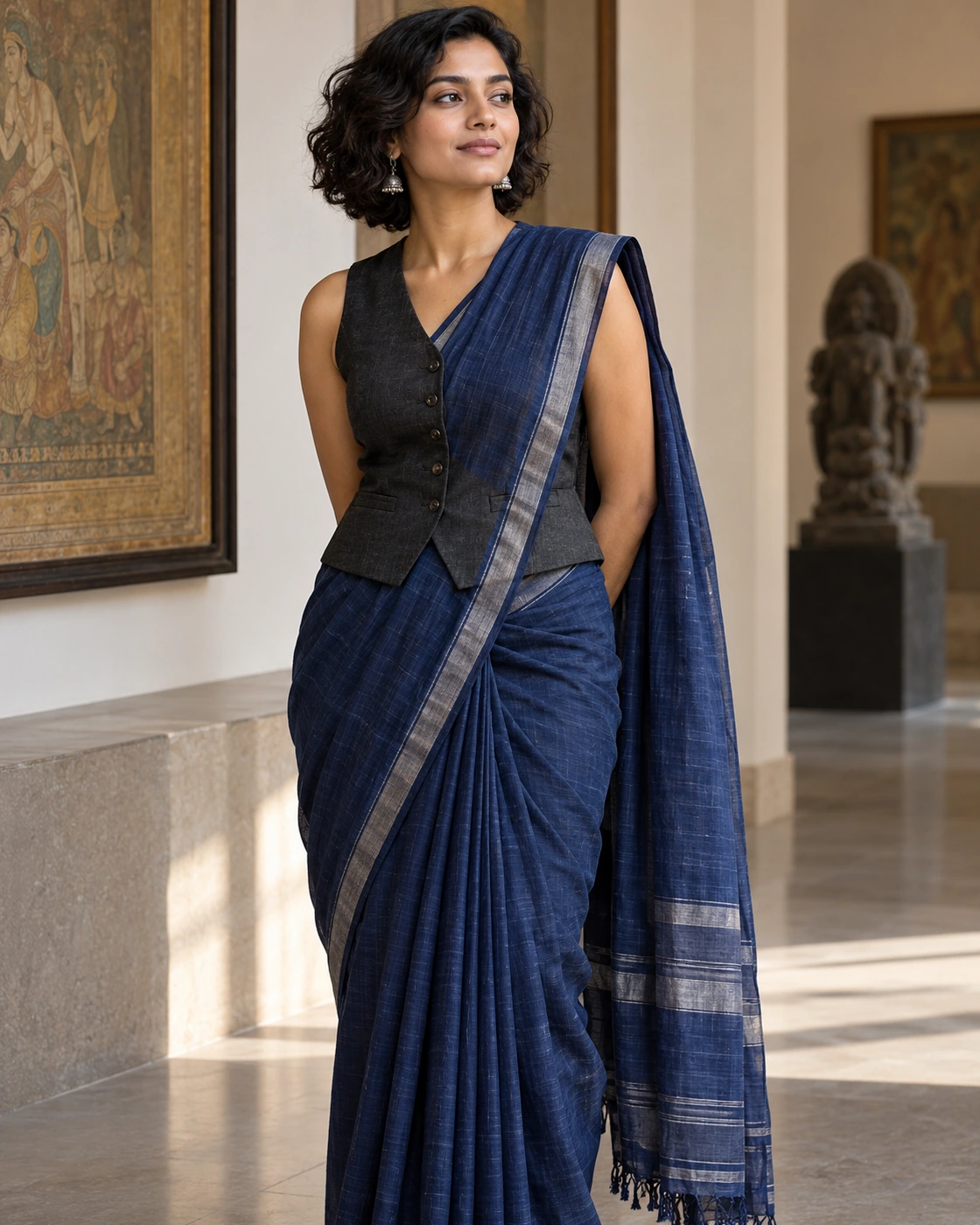
An adult Indian woman wears an indigo saree with a fitted sleeveless waistcoat.
Contemporary proportions An indigo saree worn with a fitted sleeveless waistcoat: the craft unchanged, the silhouette modern.

Organza, tissue and linen describe fabrics; Banarasi and Kanjivaram describe traditions. The two often overlap — an organza can be Banarasi.

Reading a look

Subtle or richly ornamented?

Two sarees can share a fibre and a tradition yet send opposite messages. Four comparisons explain most of the difference.

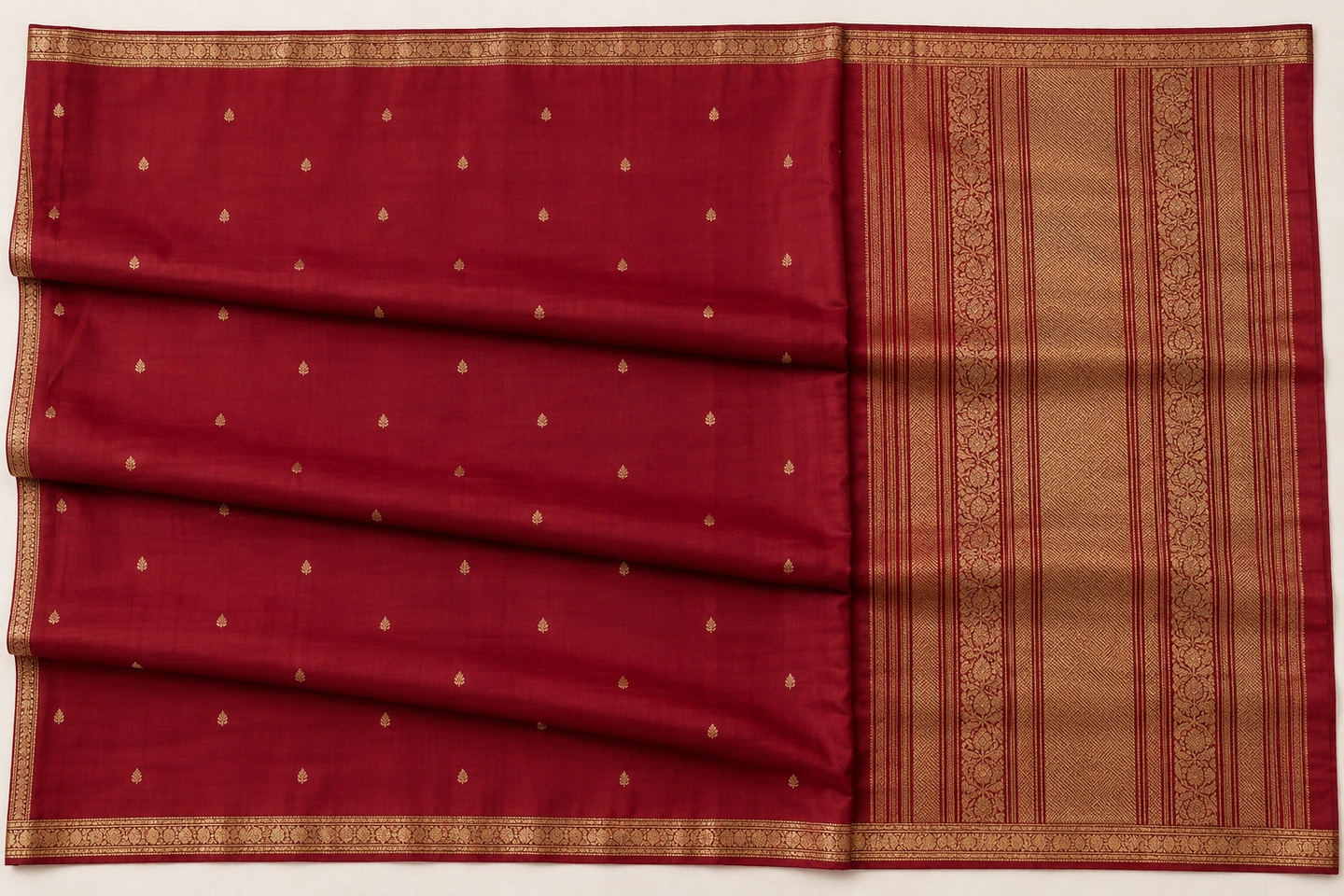
Understated Banarasi-inspired silk with sparse small butis
Understated
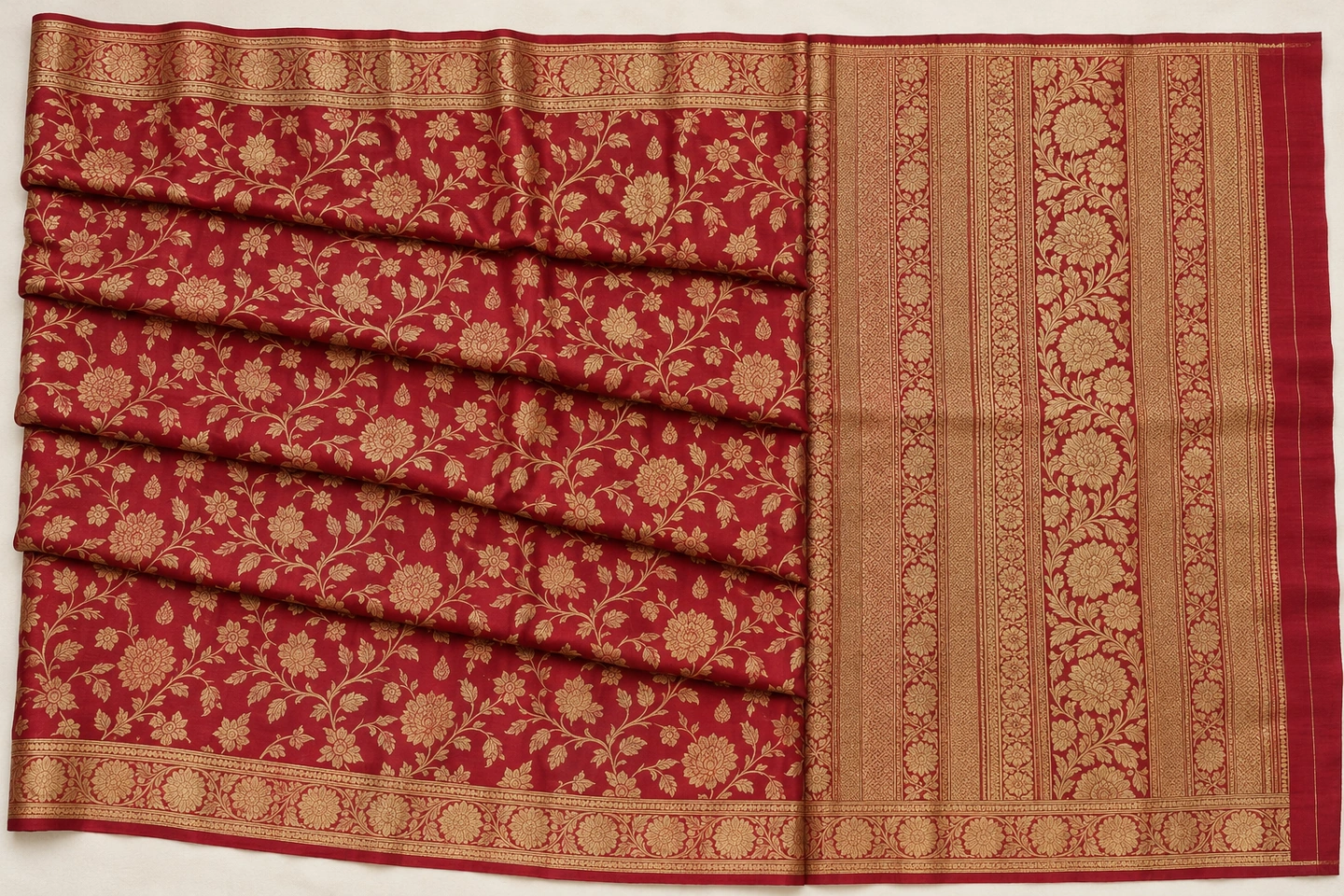
Richly decorated Banarasi-inspired silk with dense gold florals
Richly decorated

Ornament density

Count the plain ground between motifs. Sparse butis and a narrow border read as calm and modern; an all-over jaal reads as ceremonial. Both may be equally fine work.

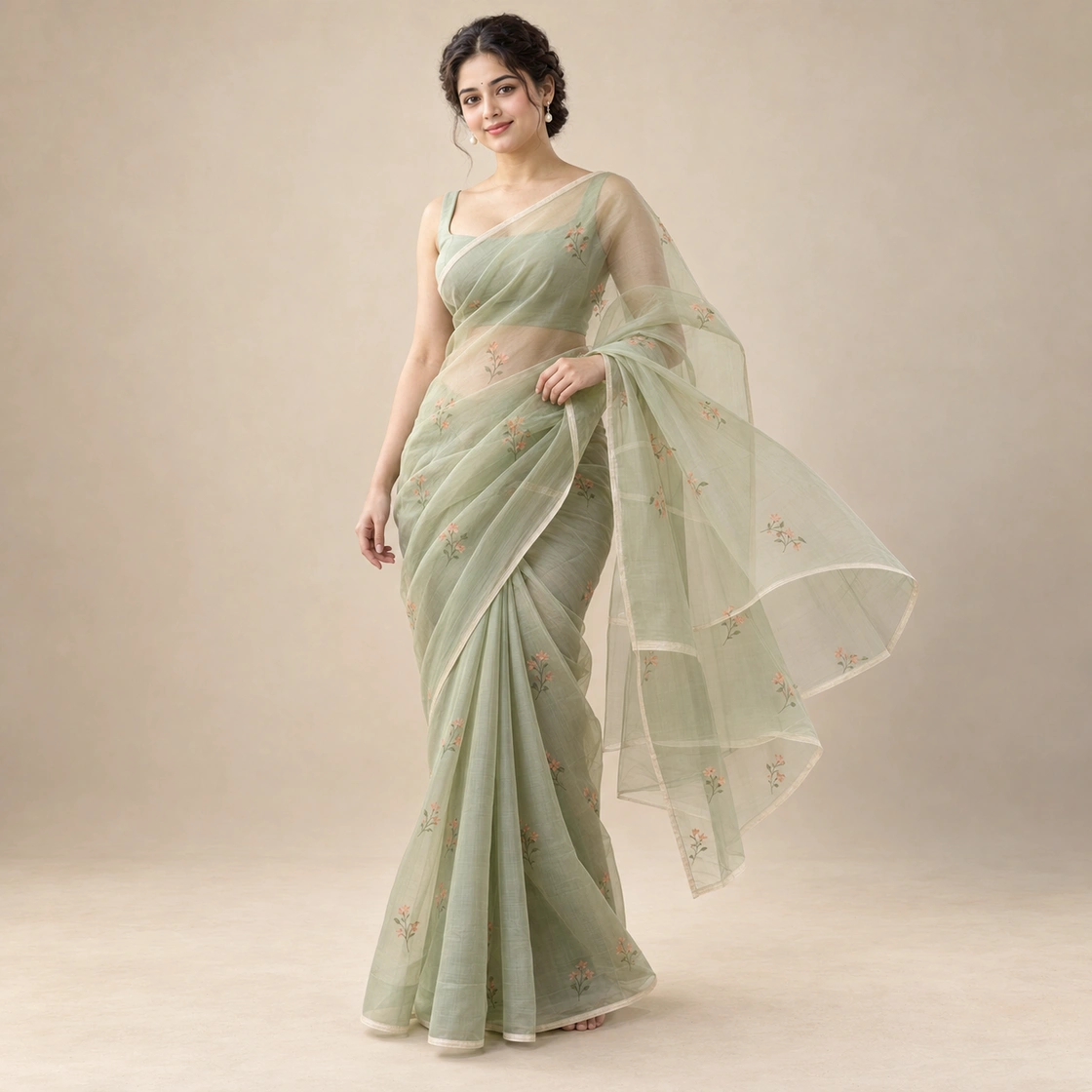
Organza holding sculptural folds
Crisp
Chiffon settling in soft folds
Flowing

Crisp or flowing

Organza and crisp silks add volume and structure; chiffon and georgette fall long and close. The drape often changes a look more than the print does.

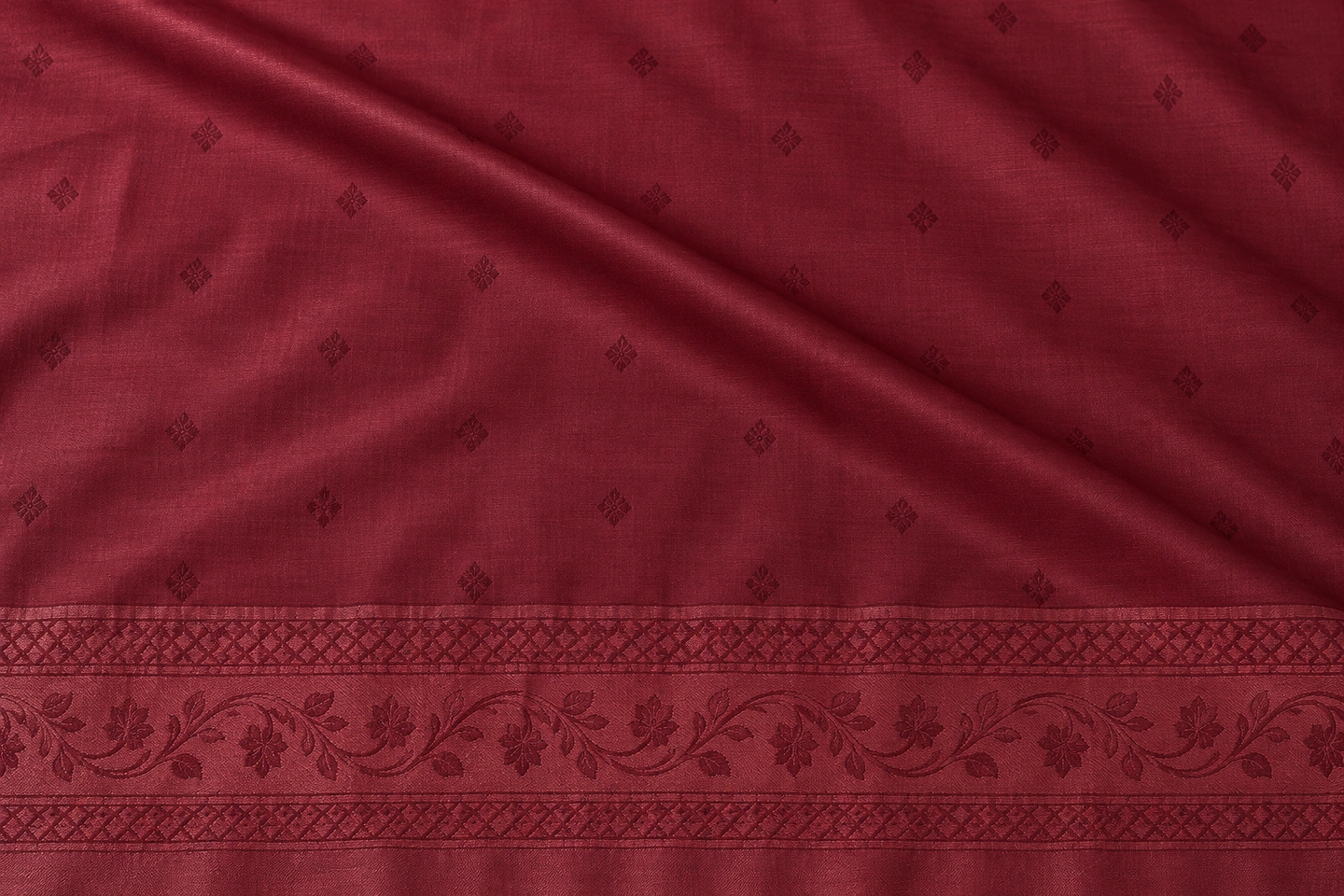
Tone-on-tone maroon silk
Tone-on-tone
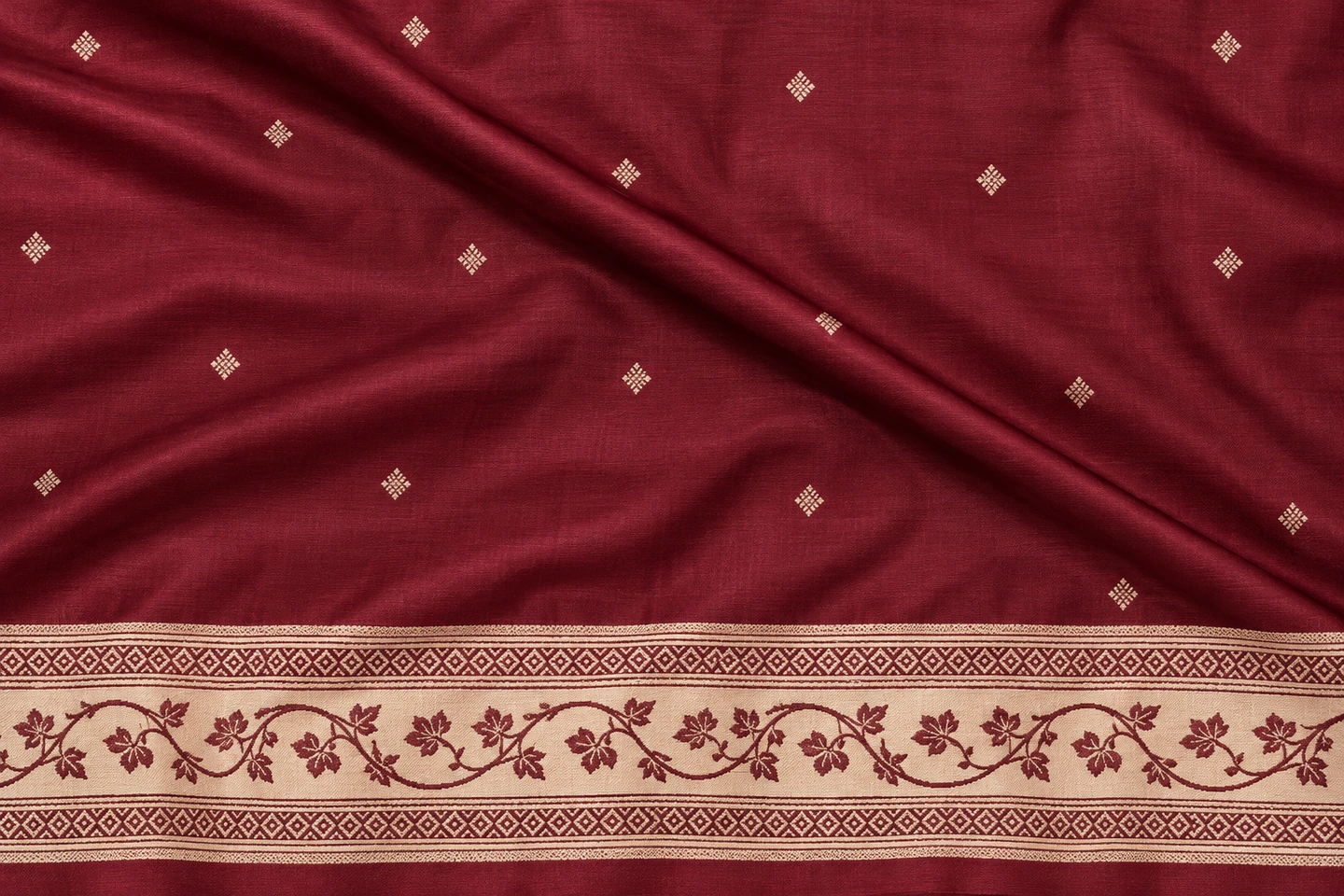
Maroon silk with ivory contrast border
Contrast

Tone-on-tone or contrast

A maroon motif on maroon silk is a secret revealed by light; a cream border on maroon is an announcement. Tonal for dinners, contrast for celebrations.

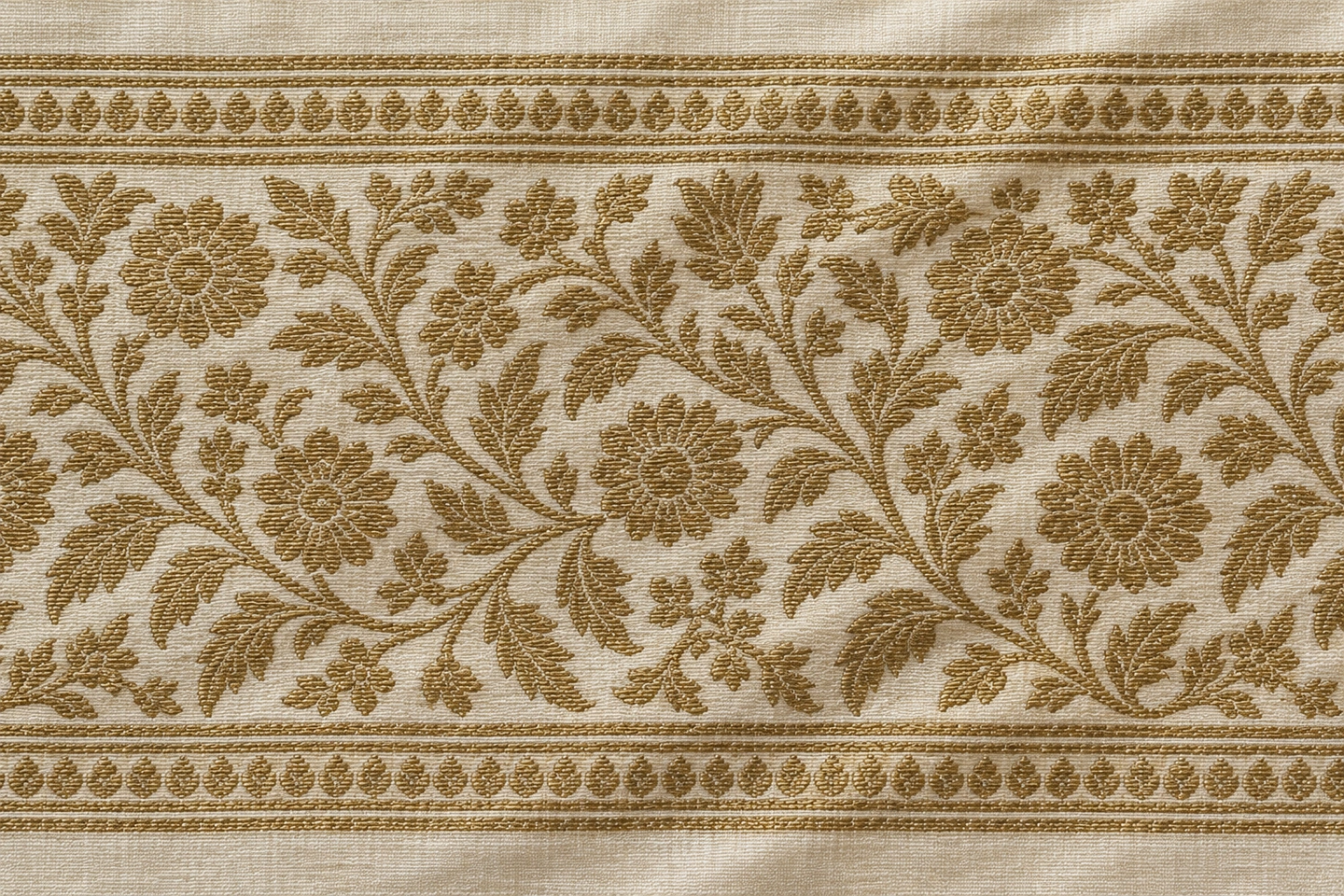
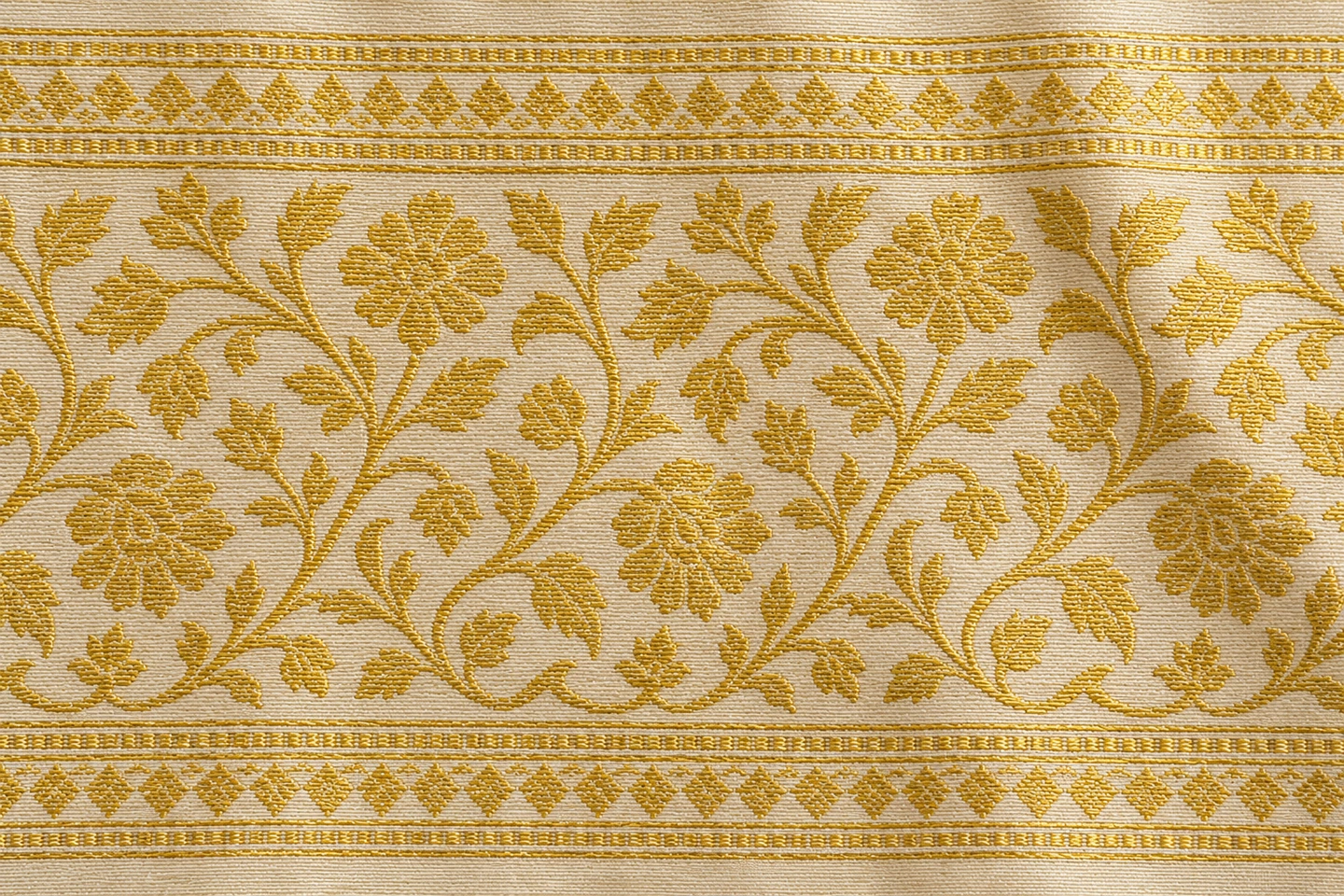
Antique-gold zari close-up
Antique gold
Bright-gold zari close-up
Bright gold

Antique or bright gold

Antique, bronze-toned zari feels heirloom and evening; bright gold feels festive and daytime-bold. These describe appearance only — colour and shine say nothing certain about metal content.

The finishing

Jewellery, blouse and drape

The saree sets the tune. These three decide whether the look is harmony or noise.

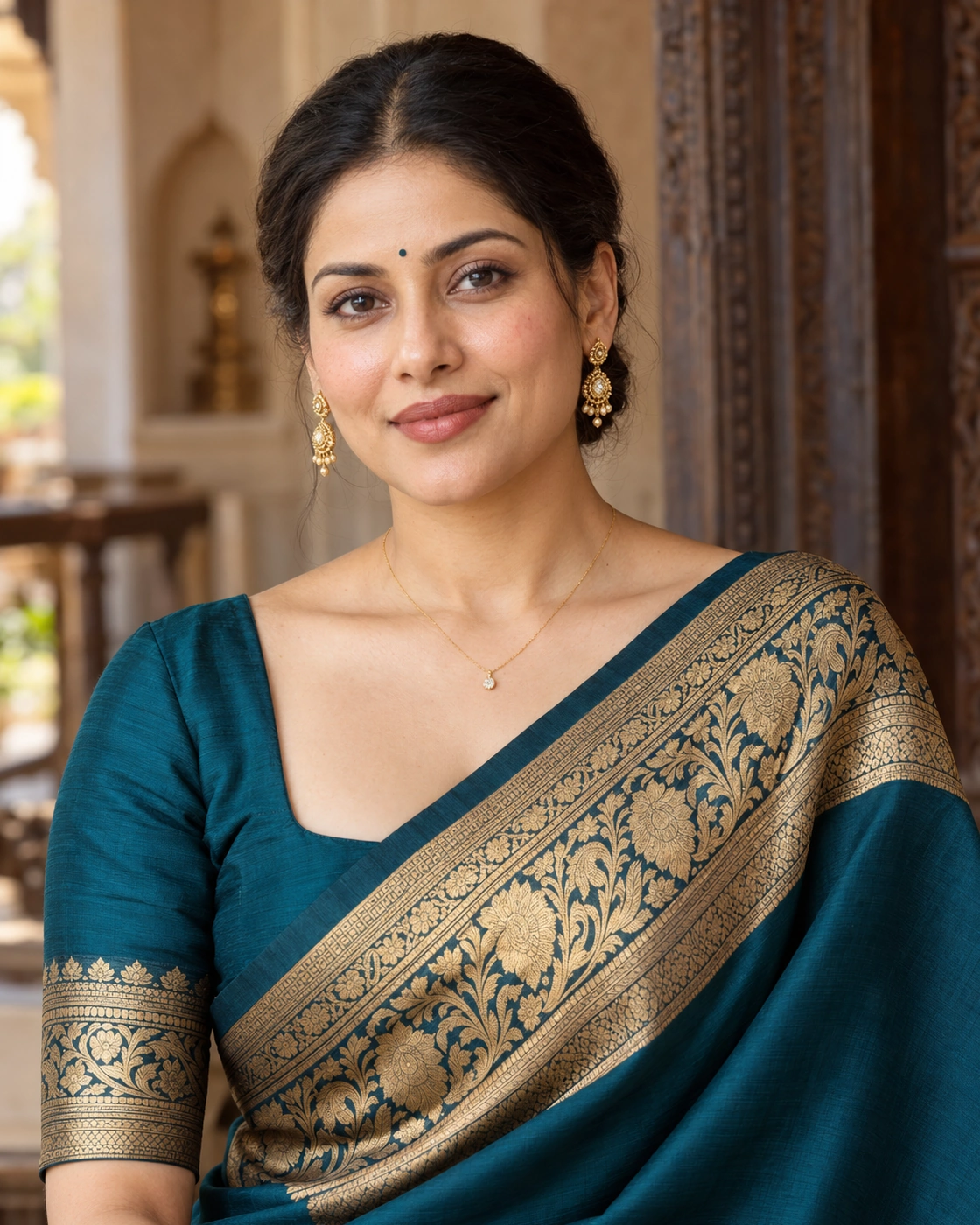
Woman in a teal silk saree with an elaborate gold zari border, gold drop earrings and a delicate pendant necklace.
A broad zari border with gold drop earrings and one fine pendant chain: the border leads and the neckline stays light.

Jewellery

  • Let the border decide. A heavy zari border wants lighter neckwear and a strong earring; a plain body can carry a statement necklace.
  • Match the metal to the zari. Gold with gold zari; silver or oxidised pieces with silver zari, cottons and ikat.
  • Classic partnerships: temple jewellery with Kanjivaram, kundan or polki with Banarasi brocade, pearls with tissue and pastels.
  • One hero. Choose the necklace or the earrings or the bangles to lead — not all three.
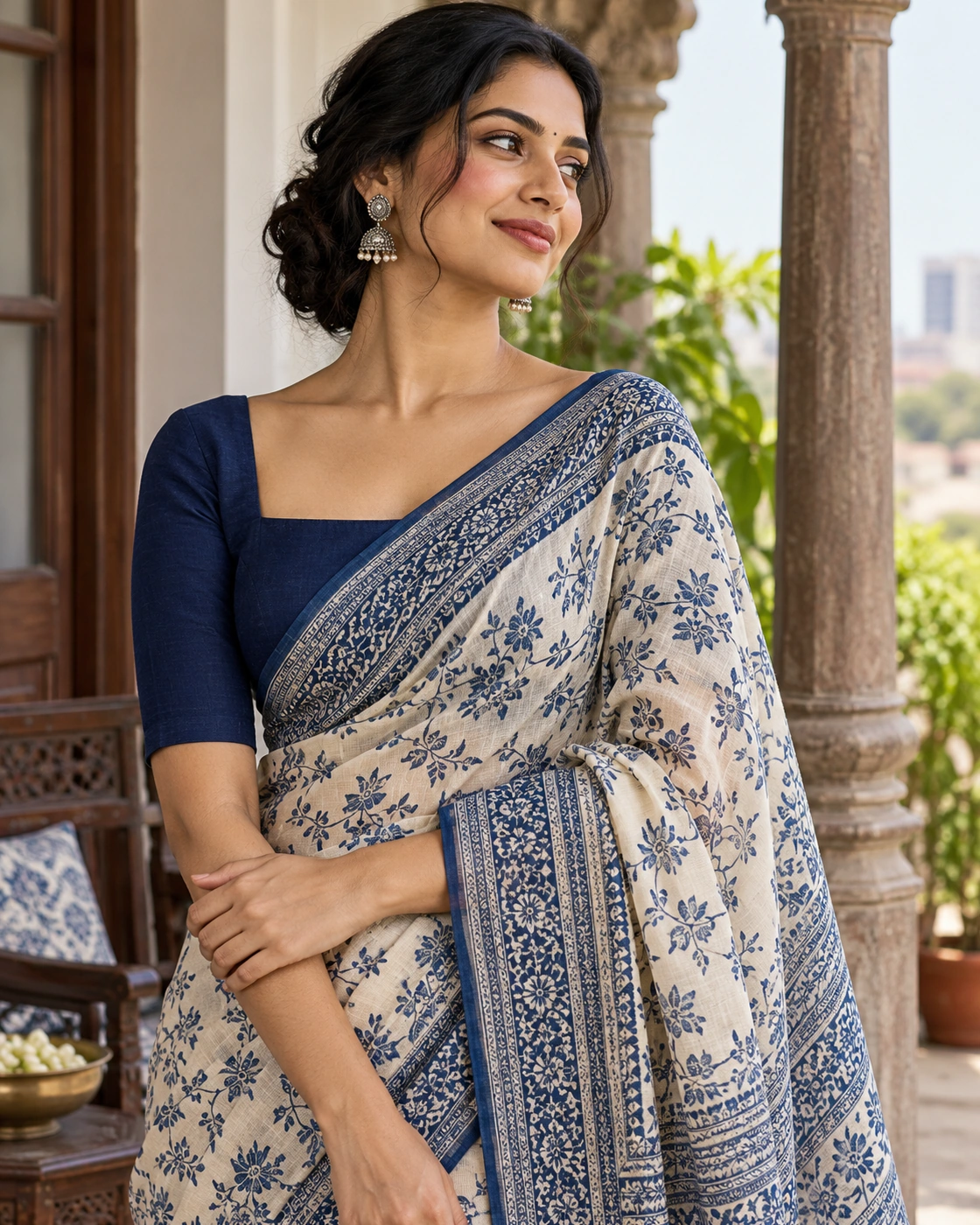
A plain elbow-sleeved blouse gives a patterned saree a calm frame.
A plain, elbow-length navy blouse gives a busy patterned saree a calm frame.

Blouse

  • Matching lengthens the line and suits rich, busy sarees.
  • Contrast sharpens a plain saree and photographs beautifully — the border colour is the safest contrast.
  • Sleeve by register: elbow-length for ceremonies and daytime; short or sleeveless for evenings.
  • For five tested colour pairings, try the Blouse Matchmaker.
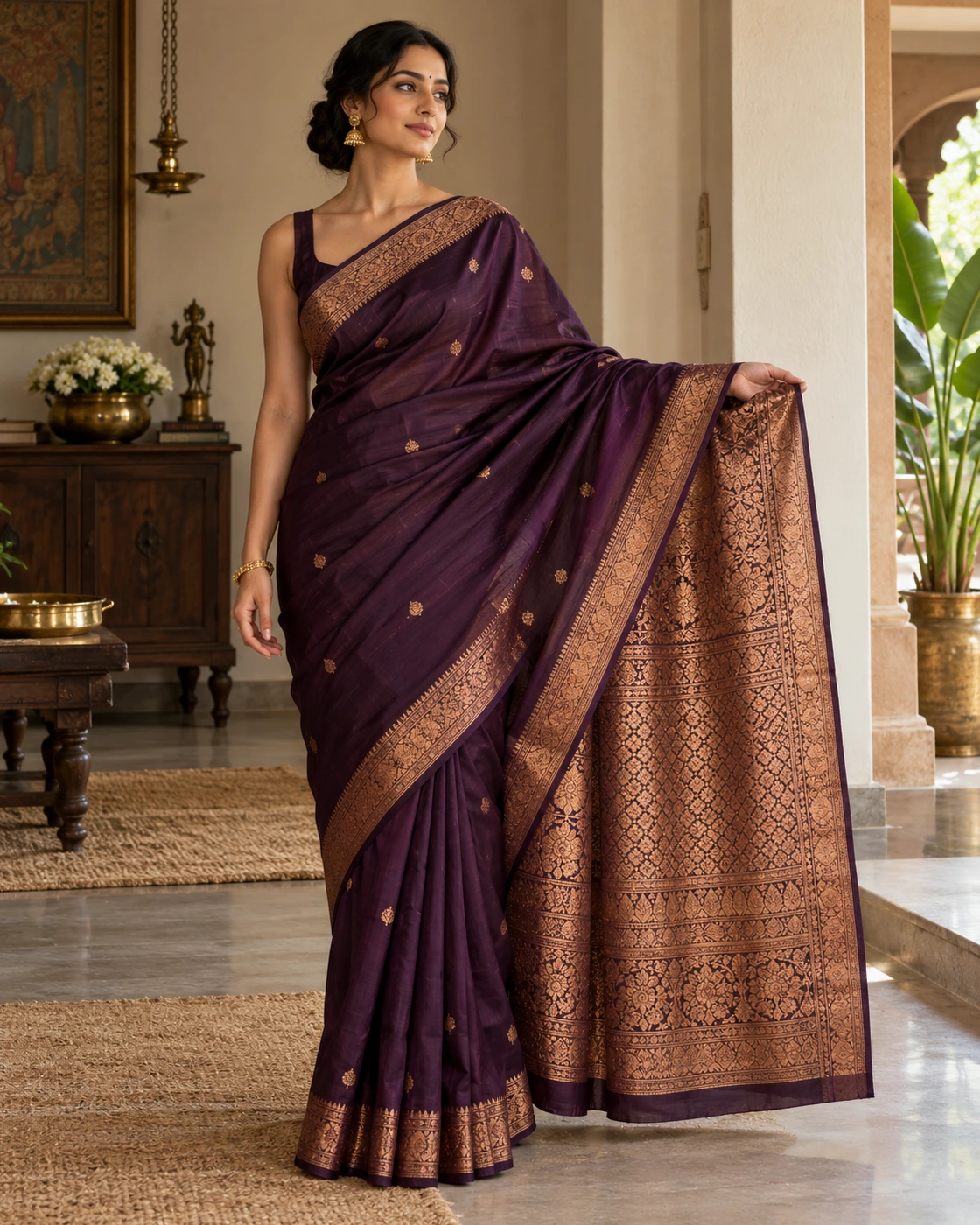
An adult Indian woman opens a patterned pallu to show its full width.
An open pallu, held out to show its full width and design.

Drape

  • Nivi is the versatile default; an open pallu shows its design, a pleated pallu stays put.
  • Seedha pallu (front pallu) displays a spectacular pallu across the body.
  • Bengali style flatters broad borders and red-and-white sarees.
  • Nauvari and regional drapes honour a tradition — and are wonderful to move in.
  • See all eight in Drape Styles.

Weather matters

Dressing for the season

Summer

Breathable, light and matte: cotton, linen, Kota, Chanderi, mulmul. Pale colours keep cool; heavy zari and dense silk are best saved for air-conditioned evenings.

Monsoon

Think drying time and hemlines. Quick-drying, darker or printed cloth forgives mud; keep precious silk and zari indoors. Leheriya’s rainy-season associations are lovely — but not waterproofing.

Winter

The season for denser silks, textured Tussar and deep colours. A fine shawl or a structured jacket over a saree is elegant, not a compromise.

If you remember nothing else

Five quiet rules

  1. Dress for the room, not the photograph. Ask how long, how hot, how formal — then choose.
  2. One hero per look. Saree, blouse or jewellery may lead. The others accompany.
  3. Scale ornament to distance. Big motifs for halls, fine weaves for conversation.
  4. Check in daylight. Showroom lamps flatter zari and hide transparency.
  5. Comfort is a style decision. The most elegant saree is the one worn with ease.